
We are celebrating 15 years — and counting — of stories that are deeply researched and deeply felt, that build a historical record of what the city has been.
We are celebrating 15 years — and counting — of stories that are deeply researched and deeply felt, that build a historical record of what the city has been.

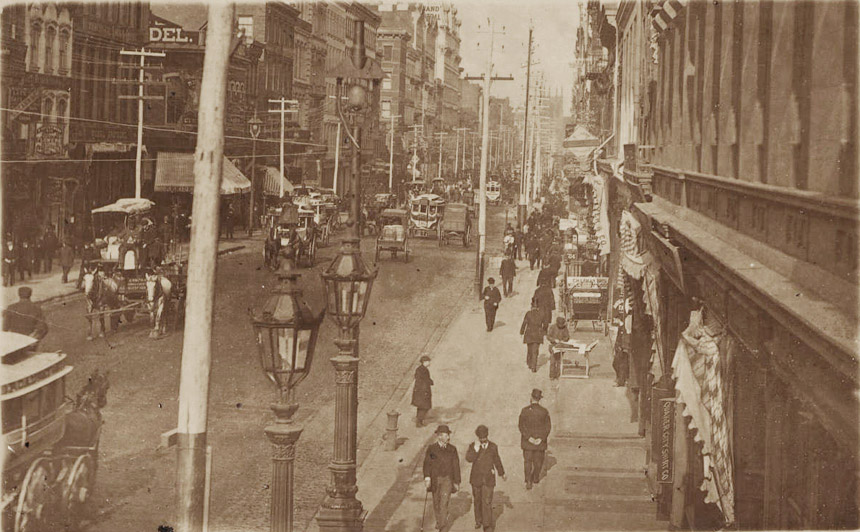
Our digs at the corner of Broadway and Houston, 127 years ago. Source: The New York Public Library, via SepiaTown
Sometimes taking a look at how we used to see and imagine the city is as valuable as looking ahead to its future, and we often do both. With SepiaTown, a user-generated map of wonderfully washed-out historical images from around the world, looking back in time and reflecting upon the city’s past has become much easier. Anyone who visits the site can contribute vintage photos, mapped to the places they depict, creating an expanding visual archive that includes the collections of libraries, historical societies, and mementos from your attic scrapbooks. Or you can just waste hours looking around at how your frequented spots looked over a hundred years ago.
While we’re still waiting for a historical sonic map of the world, many are looking ahead to how our cities will sound in the future. As we discussed last week, going on a slow walk through the city can make you attuned to just how noisy it really is. Enter design for a “vibrant calm,” as proposed by acoustic engineer Trevor Cox. With the possibility of very different sounding streets as internal combustion engines are phased out, Cox proposes we work out what we want to hear, rather than continue to simply abate noises. We tend to like a bustling city full of activity, so crafting our soundscapes in a similarly “vibrant” fashion — with attention to the aesthetic and affective dimensions of sound — could make for a better urban experience for all.
The Architects’ Newspaper takes a comprehensive look at Lower Manhattan development, examining its planning history, its cultural opportunities and the rise of residential options. High-rise living, however, is not the only way to provide urban density. Last year we looked at some strategies from around the world to get more livable units out of existing building stock by re-imagining regulation and re-designing for maximum spatial efficiency. Many of those examples were, unsurprisingly, from Japan. And one of the experts on small home design, Tokyo resident Azby Brown, is featured in an NPR story this week on micro-homes. Other cultures have lessons to offer, too. The video below shows two architects from Studio Mumbai installing a “poetic interpretation of how an Indian family of eight can live in harmony in a mere corridor of space” at London’s Victoria & Albert Museum:
The current spill in the Gulf of Mexico is on a scale of its own, but New York City does have its under-acknowledged comparisons. Oil and other contaminant spills in and around Newtown Creek, estimated at 17 to 30 million gallons over the past few decades, have had a subtle but major impact on the waterway and industrialized area between Brooklyn and Queens. With Superfund status for the area in sight, as reported by the New York Times, a cleanup of the area in its entirety could last for up to a decade. In the name of ongoing industrial clean-ups, yesterday Bloomberg announced the nation’s first municipal brownfield cleanup program, as part of PlaNYC. The program will enable the recovery of thousands of acres of contaminated land, coordinated for the first time by the City rather than the State Department of Conservation and the EPA.
On the brighter side of reclamation: dumpster pools! Next Saturday, as part of the third annual Summer Street initiative, you can dive into one of three long-awaited ‘deluxe’ versions of the water-filled dumpsters that premiered last summer. The portable (and clean) pools will be found on a car-free stretch from the Brooklyn Bridge to Central Park.
The Roundup keeps you up to date with topics we’ve featured and other things we think are worth knowing about.
The views expressed here are those of the authors only and do not reflect the position of The Architectural League of New York.