
We are celebrating 15 years — and counting — of stories that are deeply researched and deeply felt, that build a historical record of what the city has been.
We are celebrating 15 years — and counting — of stories that are deeply researched and deeply felt, that build a historical record of what the city has been.

The notion of multi-family housing in New York brings to mind unromantic concepts like density, (un)affordability or noisy neighbors. But maybe there are some simple ways to re-enchant the idea of dense urban living. This week’s feature offers one such strategy: identifying, mapping and analyzing those residential buildings that have proper names. 150 years ago, a residential structure for more than one family meant tenement, plain and simple. And in order to convince residents that sharing a roof and some walls with unrelated neighbors didn’t have to confer a social stigma, property developers had to do some marketing, 19th Century style. The practice of naming buildings is still in effect, but remains subordinate to the more homogenizing numerical identifiers of address or grid. Help tektonomasticians Haruka Horiuchi and Frank Hebbert put a more personal face on New York’s building stock by adding a building to their citywide map of named buildings. Here, the two of them describe what they are up to with this project in advance of their psychogeographic tour of the named buildings of the East Village and this weekend’s Conflux Festival. Read more below, join them this weekend, and contribute to their growing database.
Tektonomastics: The Building Names Project is a collaborative effort to map the named residential buildings of New York City and beyond. But first, what does tektonomastics mean anyway?
“Tektonomastics” is a made-up word, combining “tekto” — Greek for “building” — with “onomastics” — the study of the history and origin of proper names. More established branches of onomatology include toponomastics (the study of place names) and anthroponomastics (the study of personal names). We are starting a new branch — tektonomastics — or, the study of building names.
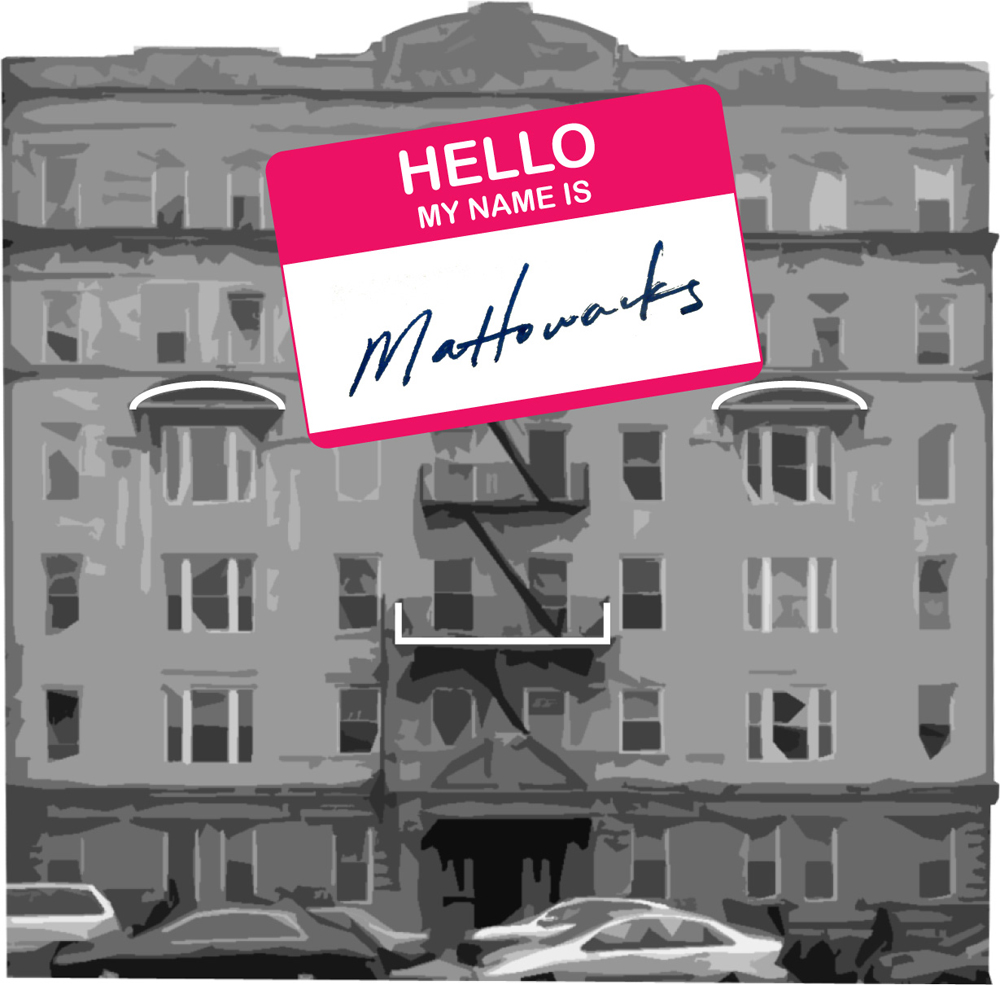
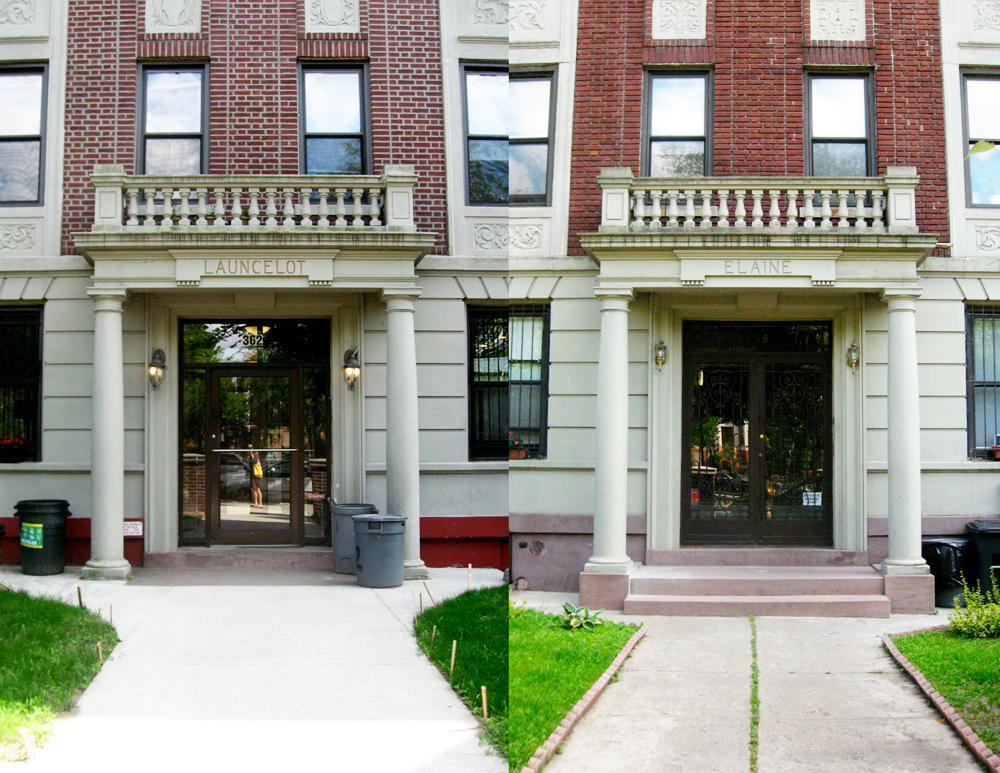
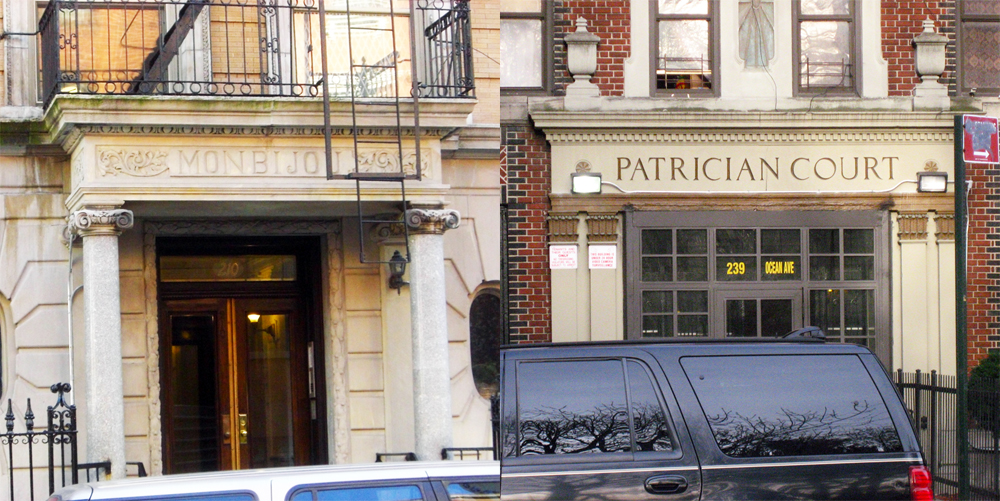
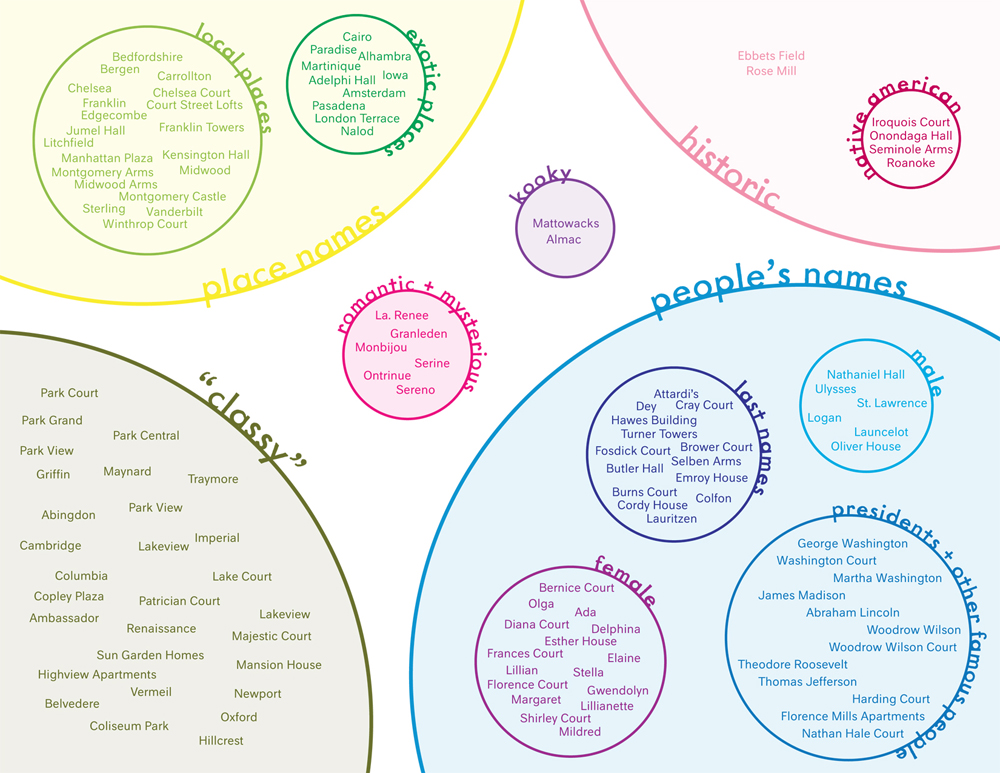
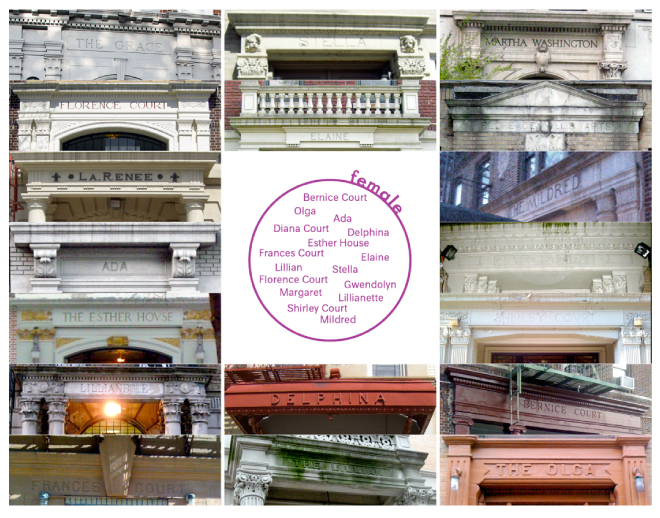
After moving to New York, we began to notice intriguing names on residential buildings around our neighborhood in Brooklyn. A lot of the names refer to notable people (Martha Washington,Woodrow Wilson, Abraham Lincoln), while others are typical “nice place” names (Majestic Court,Park Central, The Lakeview). But some are just downright quirky (Mattowacks, possibly a long-forgotten name for Long Island), and others are more enigmatic and poetic (Ada, Launcelot,Lillianette). Why did someone chose those particular names for buildings? Why don’t we call them by their proper names anymore? Was there a time when friends said, “Let’s meet at the Martinique at 6”? Or lovers wrote letters addressed to their sweethearts at Monbijou on East 17th Street?
We began noticing named buildings everywhere — in Astoria, Inwood, Chelsea, and more — and realized that they exist all over New York City. These eclectic monikers evoke a bygone era when owners, builders and designers identified their buildings with personality and humor.
Our own collection of photos of these buildings grew — but the city remains so vast. Enter the crowd: the map and building inventory are online, at tektonomastics.org, where anyone can put named buildings on the map. By taking photographs and plotting the locations of these buildings, we are creating a map of this forgotten landscape and helping these neglected titles live once more. Is there a named building on your block? If so, click here to add it to the map.
So, what qualifies as a named building?
1. The building name should be architecturally integrated. The name must be visible and the physical sign declaring the building’s name must be part of the building itself, not simply added on as an afterthought. For the most part, this means that the name will be carved into stone, or be made of wooden or metal letters that are attached to the building. Printed names on canopies and overhangs, decals attached to glass, or recently added marketing signs don’t count; names that reflect permanent identity are interesting, not those that can be changed on a whim.
2. The building should be primarily residential. Public buildings, institutions, hotels, etc. are usually already known by their given names. We are looking to learn the names of more modest buildings — buildings that would normally only be known to residents and neighbors. Besides, sometimes the most humble and ordinary buildings have the quirkiest names.
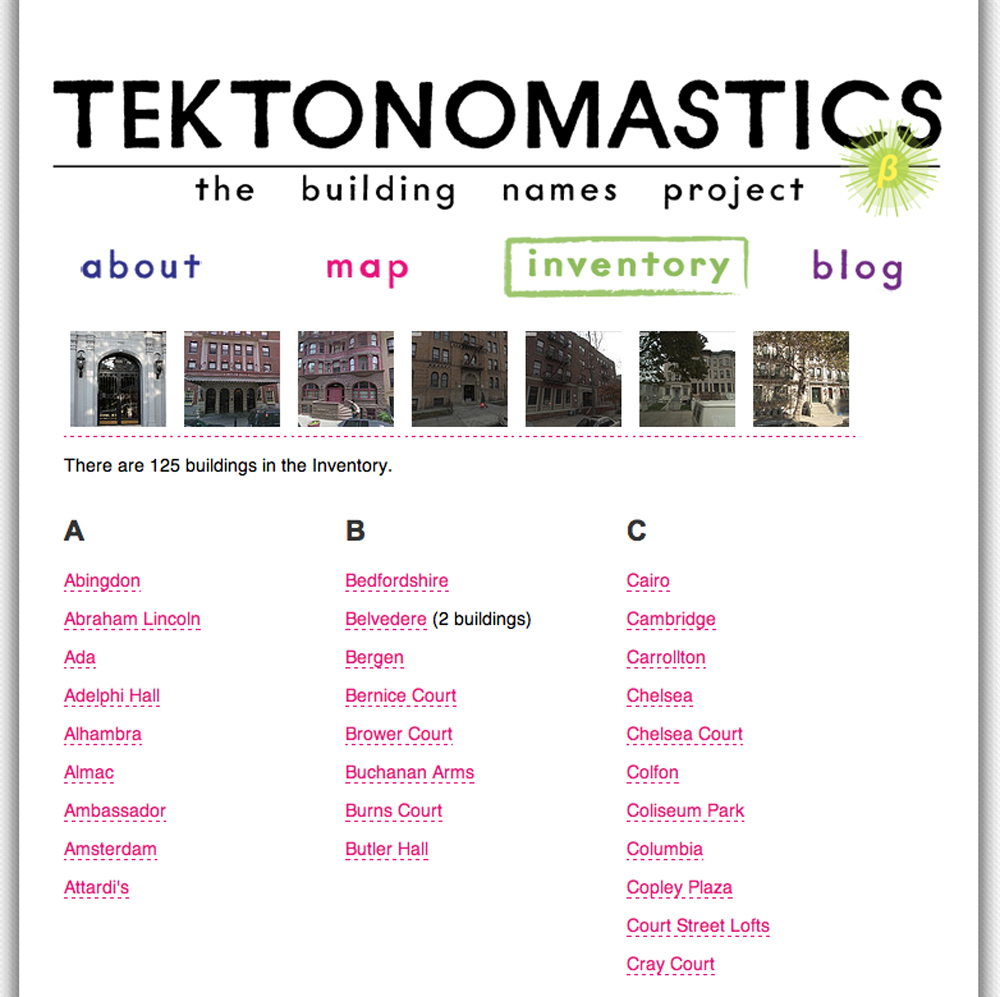
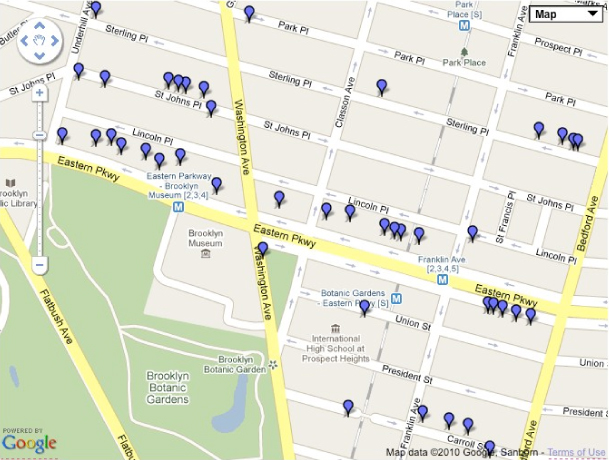
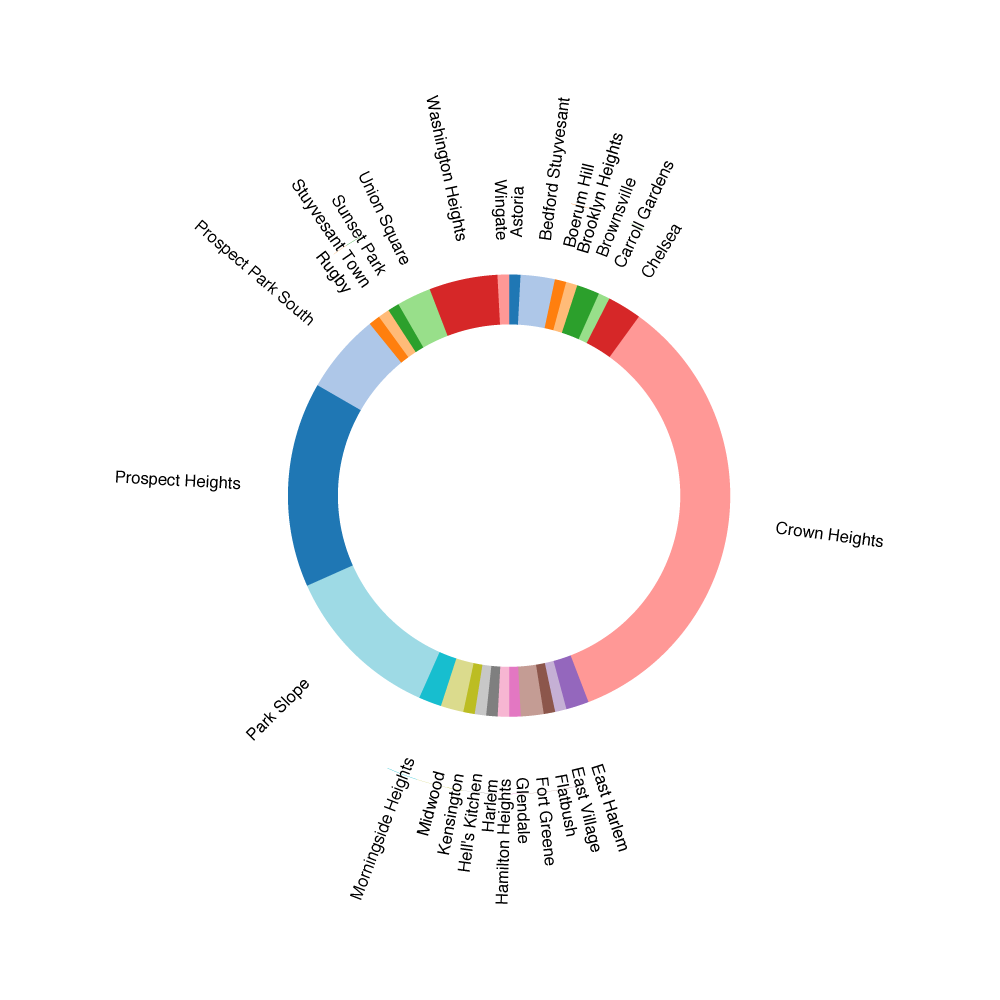
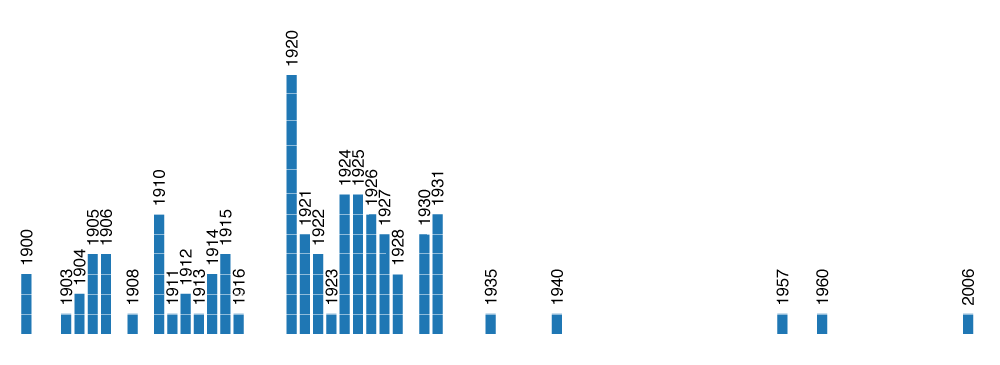
The inventory now stands at 125, growing in spurts since May, with contributions from a dozen or so spotters. Each named building in the inventory is geo-located on a map, and photographs of each building are stored on the Tektonomastics Flickr page. By hand, we add more information from the Department of Buildings where available, including neighborhood, year of construction, number of units, zoning, and more. By storing all of the locations and information in a database online, we can easily generate live-updated charts and maps; a full selection of up-to-date building stats can always be viewed on the data page of the Tektonomastics website.
What have we learned about the named buildings of New York City? Most are in Crown Heights and nearby neighborhoods, but this reflects our geographic bias, rather than a representative picture of where these buildings exist city-wide — or does it? Until all neighborhoods are canvased, we won’t know where the greatest concentration lies.
Why do these buildings have names? It seems that names were central to demonstrating the respectability of apartments as a new type of middle class dwelling. First advocated to American architects by Calvert Vaux in 1857, “French flats” were put forth as the ideal solution for an affordable and respectable form of dwelling for the urban middle class, better than a tenement but more affordable than a single family house. What better way to demonstrate this respectability than with a solid, English name like the Cambridge or the Oxford?
The very first middle class multifamily residence in New York City was named Stuyvesant Apartments. Commissioned by Rutherford Stuyvesant, designed by architect Richard Morris Hunt, and completed in 1869, this ur-type of multifamily living was directly inspired by the “French flat.” Though it’s unclear if the name Stuyvesant Apartments was actually carved over the entryway, the naming itself set a precedent for the slew of new apartment buildings that followed. The peak era of buildings in the inventory seems to be the ’20s.
As apartment buildings became more familiar, names helped give distinction and helped with the rental of units. If your street address wasn’t notable, the name could be. Some of these early building names were simply after their owner (like the Stuyvesant Apartments), but others were eclectic: The Knickerbocker, the Spanish flats, the Rembrandt, the Dakota, the Albany. Some of these early named buildings have since been demolished, but the names collected by this project so far display a similar diversity.
In 1984, Thomas Norton and Jerry Patterson published a guide to the named buildings of Manhattan (we discovered it some months after starting the map, and have so far resisted the temptation to cross-check results). They write: “The names of Manhattan’s apartment buildings, like the city itself, are inconsistent, surprising, and sometimes enigmatic.” Their guide contains nearly two thousand buildings in that borough alone, so we have some work to do. Join us on this unusual urban treasure hunt, anytime, at tektonomastics.org. Or, next weekend, as part of the Conflux Festival, you can become a tektonomatologist for the day, as we try to locate and research every named building in the East Village. Meet you at Monbijou?
Further reading on the history of multifamily housing in New York City:
A History of Housing in New York City (Columbia University Press: 1990) by Richard Plunz
Alone Together: A History of New York’s Early Apartments (Cornell University Press: 1990) by Elizabeth Collins Cromley
Luxury Apartment Houses of Manhattan: An Illustrated History (Dover Press: 1992) by Andrew Alpern
The views expressed here are those of the authors only and do not reflect the position of The Architectural League of New York.
Comments