

Series
New City Critics
Dispatches from the New City Critics fellows: new, fearless, and diverse voices to challenge the ways we understand, design, and build our cities.
We are celebrating 15 years — and counting — of stories that are deeply researched and deeply felt, that build a historical record of what the city has been.

Riding her bike is Robin’s favorite thing, so she’s been waiting by the door for what feels like hours while her mom prepares for the trek to the park, making sure the windows are shut, the cats have water, and the oven’s off. They live in Central Queens, where the neighborhoods of Rego Park, Forest Hills, and Glendale meet. From above, their part of the city appears relatively green. But one patch is a cemetery, another a golf course, and the third — Forest Park — is so close, yet out of reach. Though the park is only a mile away, to get there on her bike, Robin would have to brave Woodhaven Boulevard’s eight lanes of traffic, riding past gas stations and drive-throughs, across overpasses and underpasses that bend away from pedestrians. There are no bike lanes, no trails, let alone bike-friendly roads, so they drive.
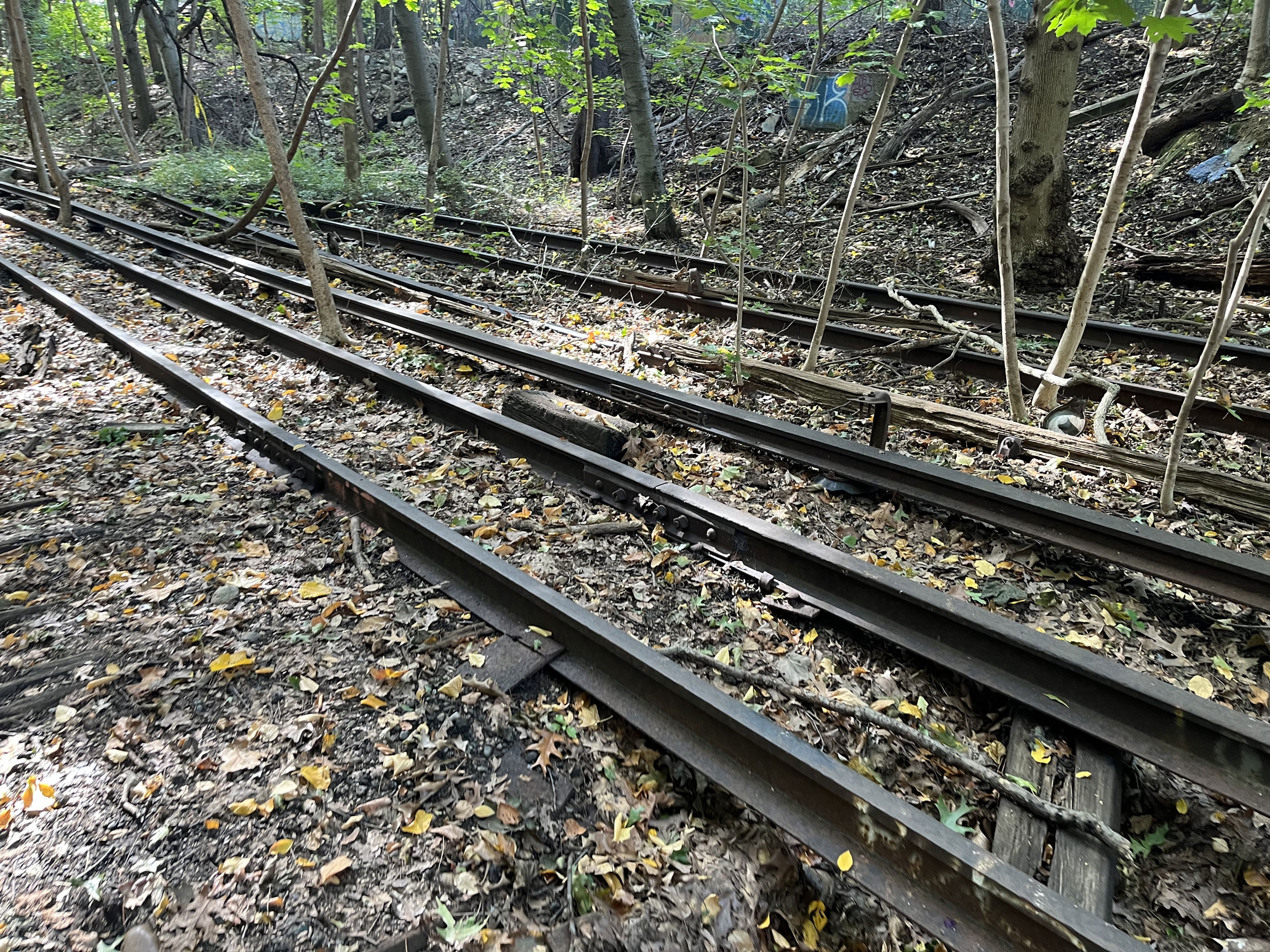
It’s a shame, really, especially when a stretch of old train tracks lies just beyond their backyard. Decommissioned after track fires in the 1960s, the 3.5-mile Rockaway Beach Branch of the Long Island Rail Road has since been overtaken by so-called invasive trees, weeds, and vines mingling with decades of debris: rust, bottles, scraps, fragments of rail half-swallowed by soil. Three and a half miles of abandoned, yet contested, infrastructure.
Robin knows the story well. Every time Uncle Jay visits from his apartment in Bed-Stuy, she hears the same pitch:
“Getting across this borough is a nightmare. If the subway got extended, I’d be here in half the time. And you’d be 30 minutes from the beach — wouldn’t that be amazing, Robin?”
She agrees with him and can already picture her bike loaded onto the subway with the Rockaways just a few stops away.
But Mom cuts the fantasy short. “That project will never get built — the stations, bridges, tunnels. Too expensive, too complicated, too disruptive. Plus, I wouldn’t want the M running 30 feet from our bedrooms.”
“You and more than 47,000 New Yorkers would be in Midtown without the bus transfer. No need for cars.” Uncle Jay insists. “Think about it — less traffic, higher property values, more jobs, a real economic boost.”
Mom shrugs. “Better to build the park. It’ll cost a fraction, impact less of what’s grown there, and it could actually happen. Wouldn’t biking to Forest Park be enough, Robin?”
Uncle Jay rolls his eyes. “A green trail is nice, but transit can change thousands of people’s lives, including ours.”
“Can’t we have both?” muses Robin.
On the way to Forest Park, Robin looks out the car window. For a moment she sees it: overgrowth cleared, sunlight threading through the canopy, people walking and biking while a train passes by, all of this happening atop the once-rusted rails. Then the car turns and Woodhaven Boulevard calls her back to its noisy reality.
The QueensWay — a proposal to convert the abandoned railway into a 47-acre linear park and cultural greenway — is projected to cost $122 million. Its first section, Metropolitan Hub, is budgeted at $46 million, partially funded and in the design phase. In October, more than $117 million in federal funding previously designated for the project’s second phase, Forest Park Grove, was rescinded. According to representatives from the Trust for Public Land and Friends of the QueensWay during an October 2025 Open House New York tour, the NYC Economic Development Corporation expects Metropolitan Hub to begin construction in 2026 and take about a year. As of that tour, no construction had begun on any portion of the abandoned train tracks, which are owned by the NYC Department of Citywide Administrative Services.
The QueensLink proposes to restore rail service — adding four new stations to extend the M line to the Rockaways via the A line — while also creating 33 acres of parkland directly atop sections of the same abandoned tracks. In 2019, the MTA estimated reactivating the Rockaway Beach Branch would cost between $6 and 8 billion. To further examine those figures, QueensLink commissioned a 2021 study by Transportation Economics & Management Systems, Inc. (TEMS) that projected a lower range of $3.4–3.7 billion. To study the project’s social, environmental, economic, and equity impacts, the US Department of Transportation awarded QueensLink $400,000 through its Reconnecting Communities Pilot Program. In January 2025, New York State approved $100,000 in matching funds, and QueensLink has since raised more than $100,000 through crowdfunding. In April 2025, the New York City Council approved Resolution 59-A, calling on the MTA to conduct a comprehensive Environmental Impact Study on the viability of the QueensLink.
When spending public money, it’s easy to want the future that lets the largest number of New Yorkers move more easily around the city they share. More parkland and a new subway extension are both possible in Central Queens. But the right of way is key. Adding park space at the northern (Rego Park) or southern (Ozone Park) ends of the line would serve neighborhoods that have less green space while still leaving room for a future train. Building Metropolitan Hub — in a section of the corridor too narrow for any practical overlap between tracks and park, just a few feet from Forest Park — would make future rail reactivation far more difficult.
The Rockaway Beach Branch corridor can hold more than one future, but only if the choice remains open.
The views expressed here are those of the authors only and do not reflect the position of The Architectural League of New York.
Dispatches from the New City Critics fellows: new, fearless, and diverse voices to challenge the ways we understand, design, and build our cities.