
Series
New City Critics
Dispatches from the New City Critics fellows: new, fearless, and diverse voices to challenge the ways we understand, design, and build our cities.
We are celebrating 15 years — and counting — of stories that are deeply researched and deeply felt, that build a historical record of what the city has been.

This past Valentine’s Day, I set out to Springfield Gardens, a neighborhood near JFK airport, to spend the day at a distribution site for the online retailer of all things heart-shaped and much more, Temu.
On my way, I caught glimpses of cradled tokens of love: bears made from swirling faux-silk, faux-roses, flopping plastic balloons, Hello Kitty bouquets, big heart-shaped boxes of chocolate. I passed young women selling trinkets between the A, J, and L platforms at Broadway Junction, and witnessed fleeting exchanges of eternal roses and crocheted dolls between vendors and customers.
I’d decided to spend this day of romance at a warehouse because, as a planner, I’ve always been interested in the ways that the internet, online platforms, and algorithms shape cities, their economies, and desire. As shopping has increasingly shifted onto screens, the everyday experience of buying and selling goods has changed too and, consequently, life and longing in New York City.
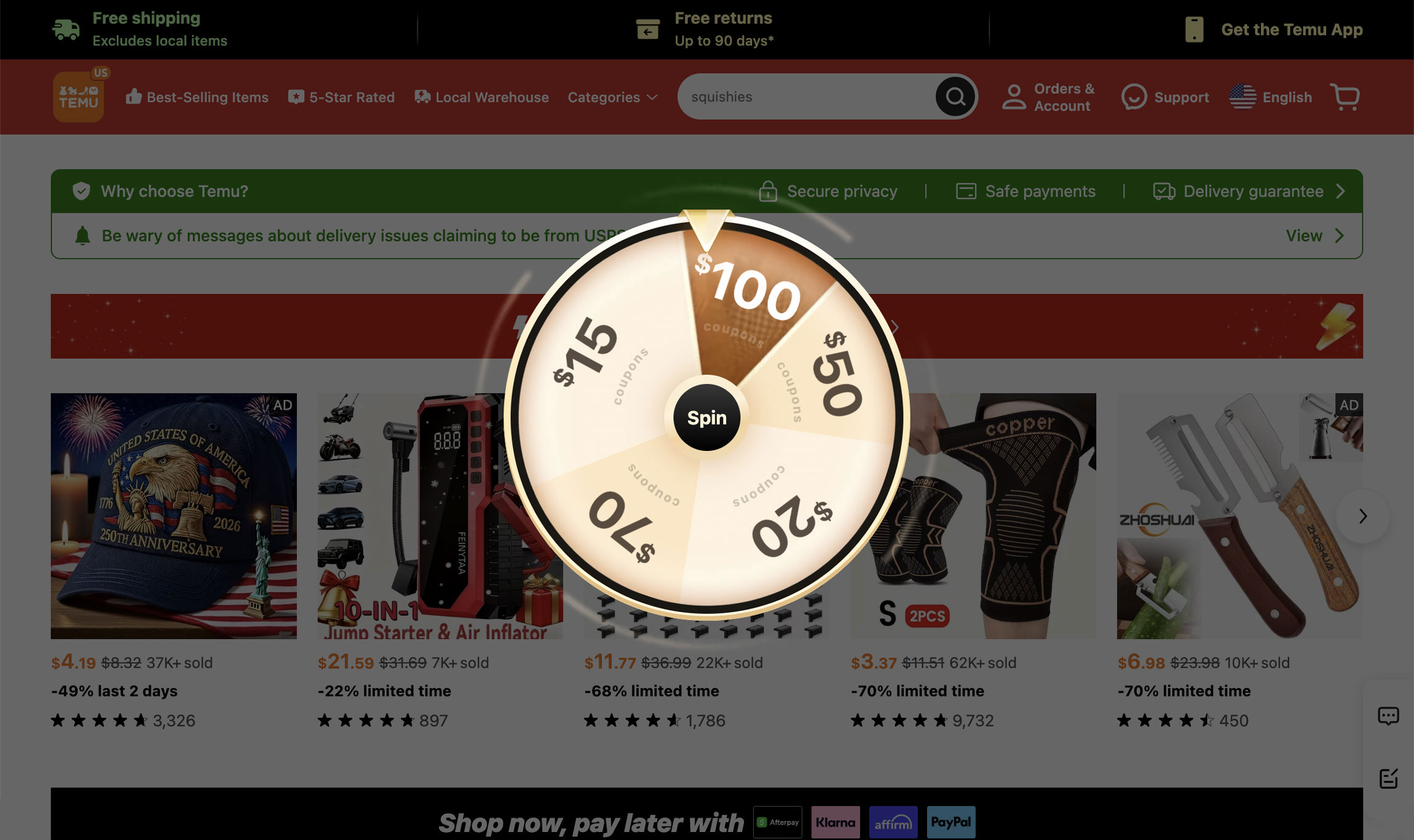
When it launched in the US in 2022, Temu, subsidiary to the multibillion dollar PDD Holdings, flabbergasted users with its impossibly low-price tags, most notably during a Super Bowl ad that aired in 2024, promising users that they too, could shop like billionaires. What I’ve found most compelling about the platform is the user experience: spinning offer wheels that gamify the act of shopping, a hyper personalized algorithm, and seemingly infinite availability. When I shop online, I get the feeling that I have plucked a product from a sea of all things, letting objects scroll on my phone like liquid until one fully captures my imagination. At times, my glazed-over inertia feels more bodily than psychological, a screen-addled disassociation.
In preparation for my Valentine’s Day excursion, I scrolled through the Temu website for gifts. I found that ubiquitous bear made of roses for $4, 50 heart-shaped balloons for $2, and one 63-inch heart balloon that fully obscures the figure of the person holding it, for just $6. I learned you can buy almost anything on Temu — from peptides to laptops to crystals. Friends asked me if I would order the often-memed Temu steak . . . I was tempted, but did not.
I arrived at the site, at a snug corner of a five-way intersection, in the afternoon. It was smaller than I expected, in a warehouse that Google Maps shows was, until 2022, a vacant auto body shop. Nearby appeared to be every kind of business associated with the global logistics hub that is JFK airport: luxury car and live animal shippers, customs dealers, and freight forwarders (intermediaries that help with customs clearances).
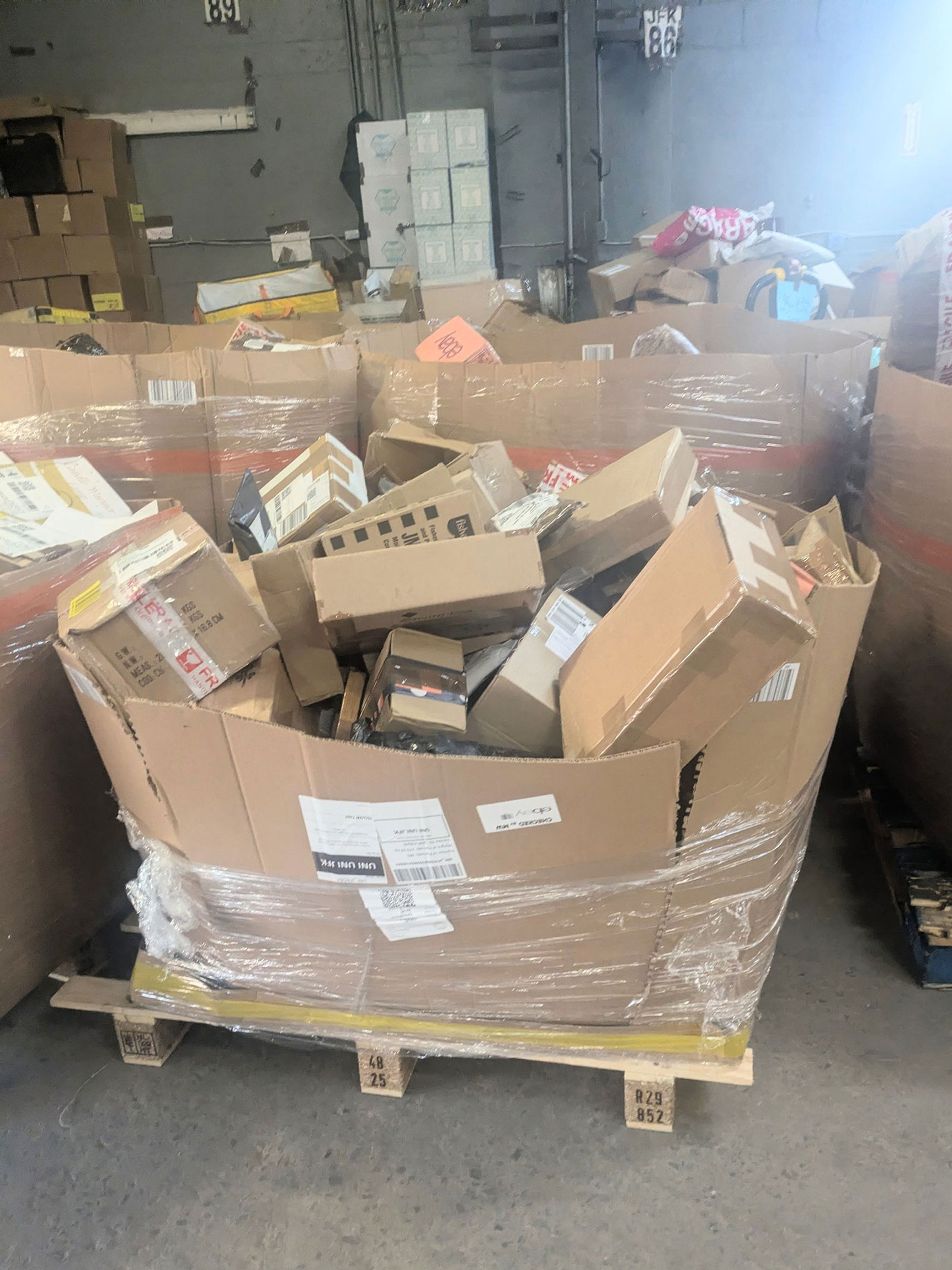
There was no one by the front entrance, but I noticed a laminated sheet of paper that read “UniUni Logistics.” To my chagrin, this wasn’t Temu at all. I walked around to the back of the facility. The environs were inscrutable to me and more than anything, anticlimactic. I found a storage yard tucked behind metal sheeting and barbed wire fence, strewn with the husks of ripped-open cardboard boxes, empty pallets, and plastic wrapping fluttering in the wind. I walked in through a loading entrance, where, a worker at the warehouse waved me over and I was able to see several stacked bins of packages. There was a language barrier, so we parted ways as he and the remaining three workers resumed picking packages from a sorting area and dropping them into large boxes.
Back home, I looked up UniUni. I found out it is a venture capital-backed, rapidly expanding delivery service, founded in British Columbia with an increasingly extended reach in the United States. They are a major delivery partner for Temu (hence the confusion). A partnership with Shein, a fast fashion retailer promoted via feverish “hauls” on TikTok and Instagram, further accelerated UniUni’s growth. They also provide delivery services to TikTok Shop, Ebay, small businesses through Shopify and Wix, and independent sellers on Amazon who choose not to utilize the conglomerate’s delivery infrastructure, among others.
Every day, one in three New Yorkers receives a package on their doorstep. Around 2.5 million of them are delivered daily in the city, a figure that has dramatically increased since the pandemic. To arrive at their final destination, these orders must all travel something called the “last mile”: a logistics term for the last leg of delivery from distribution site to eager customer. It is the last step in what is a largely frictionless, anonymous system where the customer knows very little about the labor and supply chains that fulfill the order, save an inscrutable tracking number. The details otherwise remain intentionally invisible to anyone clicking a “place my order” button. At their JFK site, UniUni serves as a last-mile staging ground, moving goods from this distribution site to the final recipient.
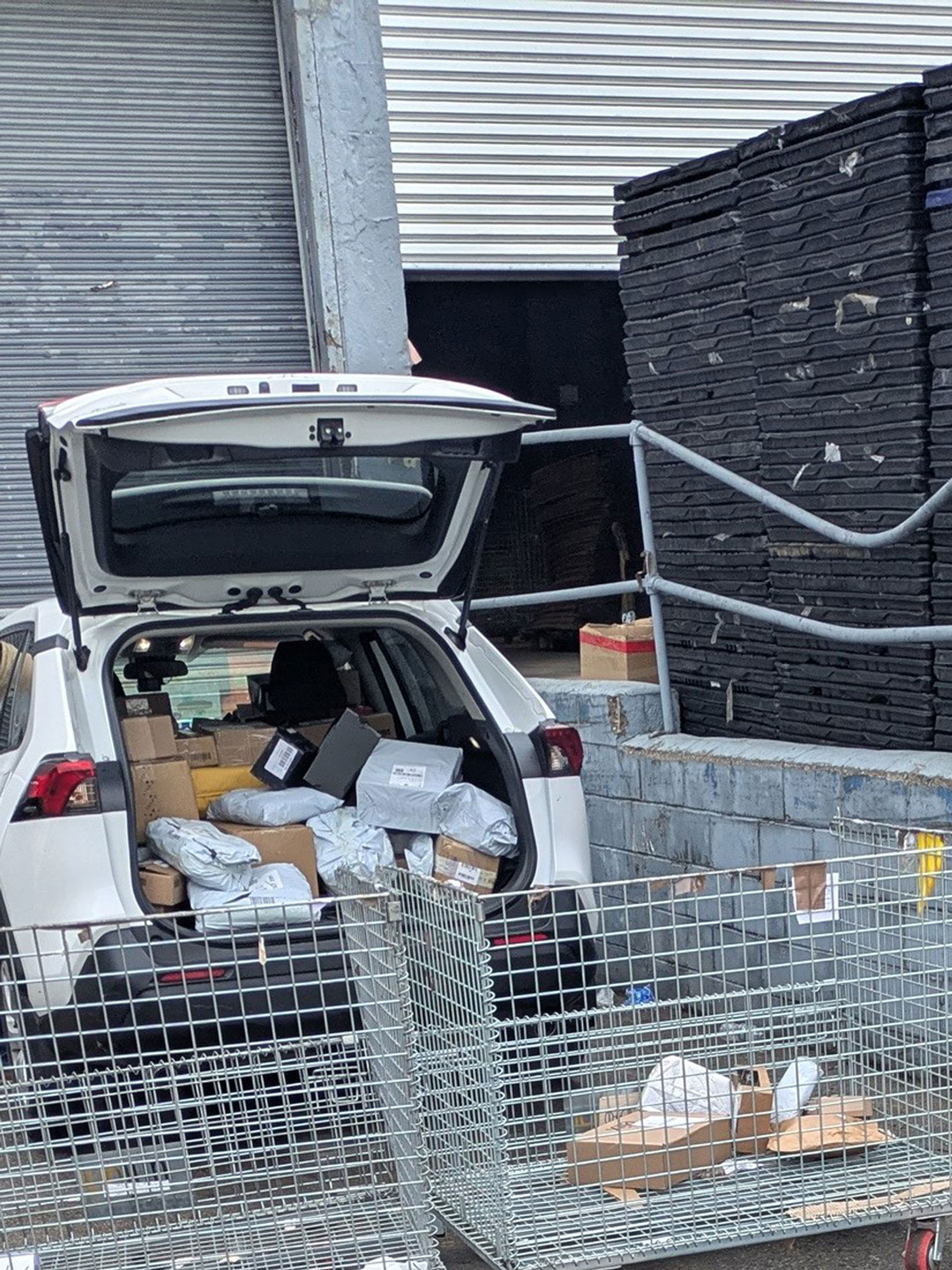
I hadn’t seen packages being loaded up for delivery, but a man who worked at the trucking business next door told me that this happens very early in the morning. And so, a few days later, I returned to the UniUni warehouse, this time at 7:30 am. The morning’s deliveries were already being prepared. Drivers piled packages up outside the warehouse and into vans in a Tetris-like collage, carefully fitting in as many plastic-wrapped packages as possible.
The last mile is often the most expensive part of the journey of a package, because it requires someone to physically deliver the package to your door. Benjamin Y. Fong, a logistics expert who writes a newsletter on the subject, told me that e-commerce is often quite inefficient from a social perspective, and that most of the time, it’s best for the consumer to complete the last mile themselves.
While longstanding legacy carriers like USPS and UPS fulfill the last mile with highly unionized workforces, UniUni largely relies on gig work. In the US, many of UniUni’s drivers are contracted; they drive their own cars and are compensated based on the number of packages they deliver. Reporting on UniUni has named some suspect labor practices, including accusations of paying drivers less than minimum wage without overtime, offering a lump sum of $2 or less per package delivered, and failing to pay wages entirely. New legislation recently reintroduced by Councilmember Tiffany Cabán would require last-mile companies that rely on gig labor to classify workers as employees rather than independent contractors. While the legislation is aimed to address the exigencies of Amazon’s labor model, the changes would apply to companies like UniUni.
Within the city’s industrial zones, the logistics sector has seen enormous growth. A report commissioned by the Department of City Planning estimates that an additional 2.2 million square feet of parcel delivery facility space will be required within New York City by 2035. Logistics centers for companies like Amazon and UniUni are in direct competition with legacy industries such as manufacturing that often pay higher wages and provide better jobs.
The labor practices are troubling enough, but no one has figured out how to address the environmental toll of last-mile logistics either. The city has piloted several efforts to reduce emissions, such as microhubs to minimize traffic, and the transportation of goods via water, aka “Blue Highways,” though none of these practices are yet widespread.
**
I order a set of small plastic bowls, and a fluffy orange bath mat from Temu. One day later, my order is shipped. Per the tracking email, it’s not UniUni shipping my package, but SpeedX, another rapidly expanding last-mile service relying on gig labor that promises to deliver “at the speed of now.” SpeedX has its own staging facility in the very same neighborhood near the airport as the UniUni warehouse, though when my package arrives the label cites its origin as Linden, New Jersey.
GOFO is another Temu-affiliated last-mile service that came up when I searched. I was able to visit their JFK-adjacent address only by attempting to sign up to drive for GOFO, who name many of the same partners as UniUni, with the addition of Walmart’s e-commerce marketplace. Veho, another VC-backed, Harvard Business School-founded, gig-powered operator, delivers for Macy’s, Lululemon, and Quince. According to their blog, “shipping is the new shopping.”
Demand for these gig-based services has grown exponentially, originally because international sellers of cheap goods required cheaper ground shipping alternatives to UPS, USPS, and FedEx; and now because customers have come to expect fast and cheap, or even free, shipping. Even the small e-commerce sellers are demanding cheaper shipping costs from their carriers.
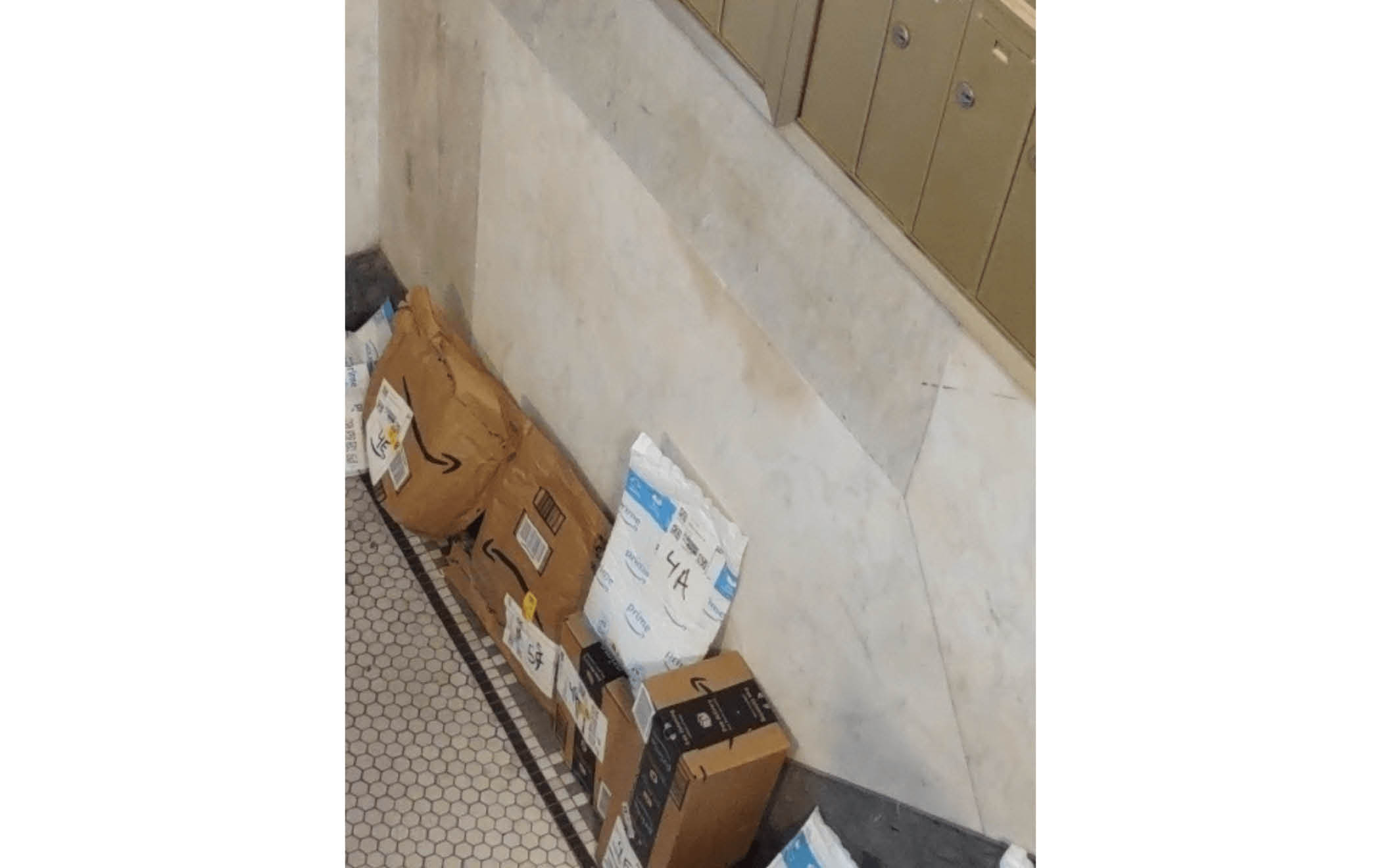
UniUni is among many of shipping options for TikTok shop, the platform’s integrated storefront that lets users buy products without ever leaving the app; what writer Mia Sato describes as “living within a 24/7 digital infomercial.” UniUni markets itself as a flexible, asset-lite last-mile service that can accommodate surges in demand from viral moments and viral products: the supply chain manifestation of desire that is aggressively generated and monetized. One day, I saw UniUni, Veho, and GOFO stamped packages in my building’s lobby, which made me feel like I was going at least marginally insane. These once-obscure intermediaries, direct derivatives of consumer desire and accompanying algorithms, had suddenly become visible all around me.
I wondered how many Labubus have passed through the UniUni JFK staging yard.
**
After receiving my Temu order, a series of offers started to flood my inbox, which I found mostly aggressive and bewildering, though at times, poetic:
“ATTENTION: NOW ONLY $5.24”
“You received a thank you award”
“Mysterious! Please”
“Accept it ASAP”
While Temu’s marketing and design utilize some of the most obvious ways of keeping users hooked, I did think about the amount of imploring content, targeted marketing and direct-to-shop advertisements I see every day. They seem to find me in moments of avoidance, or the times when I am least interested in the world around me.
It is strange that even in New York, with all the conveniences our dense urban living provides, e-commerce has such a hold. We live in a walkable city designed around proximity and neighborhood-level dependencies. Yet, a river of packages flow through the streets conveyed via intermediaries with interchangeable platform monikers with no interest in or even real relationships with the communities they serve.
But it can be hard to understand the impact these companies have on our neighborhoods.
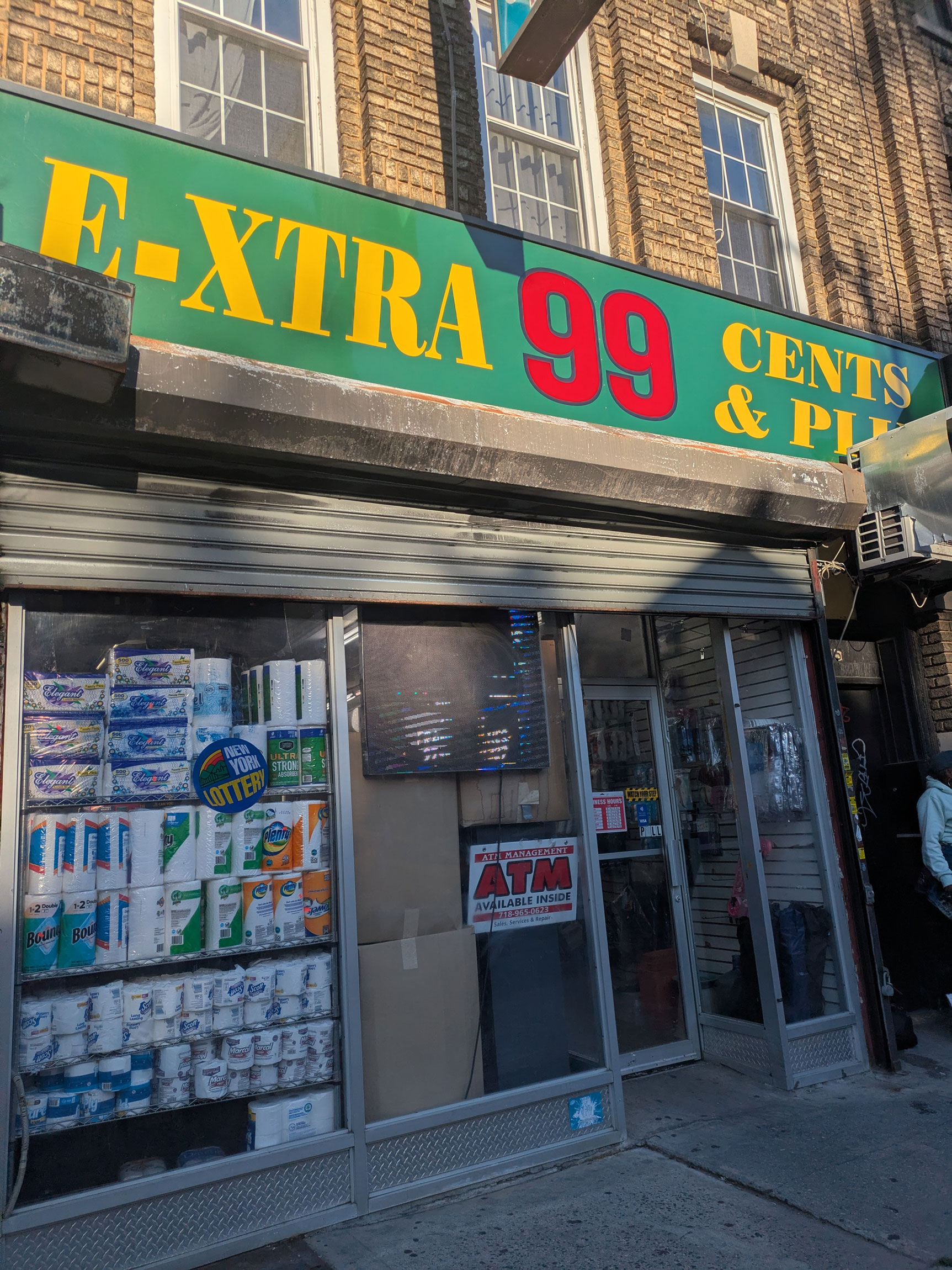
At E-XTRA 99 CENTS & PLUS in Crown Heights, I asked the owner if he worries about Temu or Amazon or any of the other e-commerce platforms. He nodded at me and said “Well, I do worry. But it’s self-explanatory so why would I worry?”
At a discount store near the Nostrand A stop, I asked another shopkeeper the same question. He regarded me with amusement as I put a pair of faux-fur lined gloves on the counter, which I was buying because I had lost one of mine on the train. He didn’t seem to understand the question, “Why would anyone shop online when they could come here?”
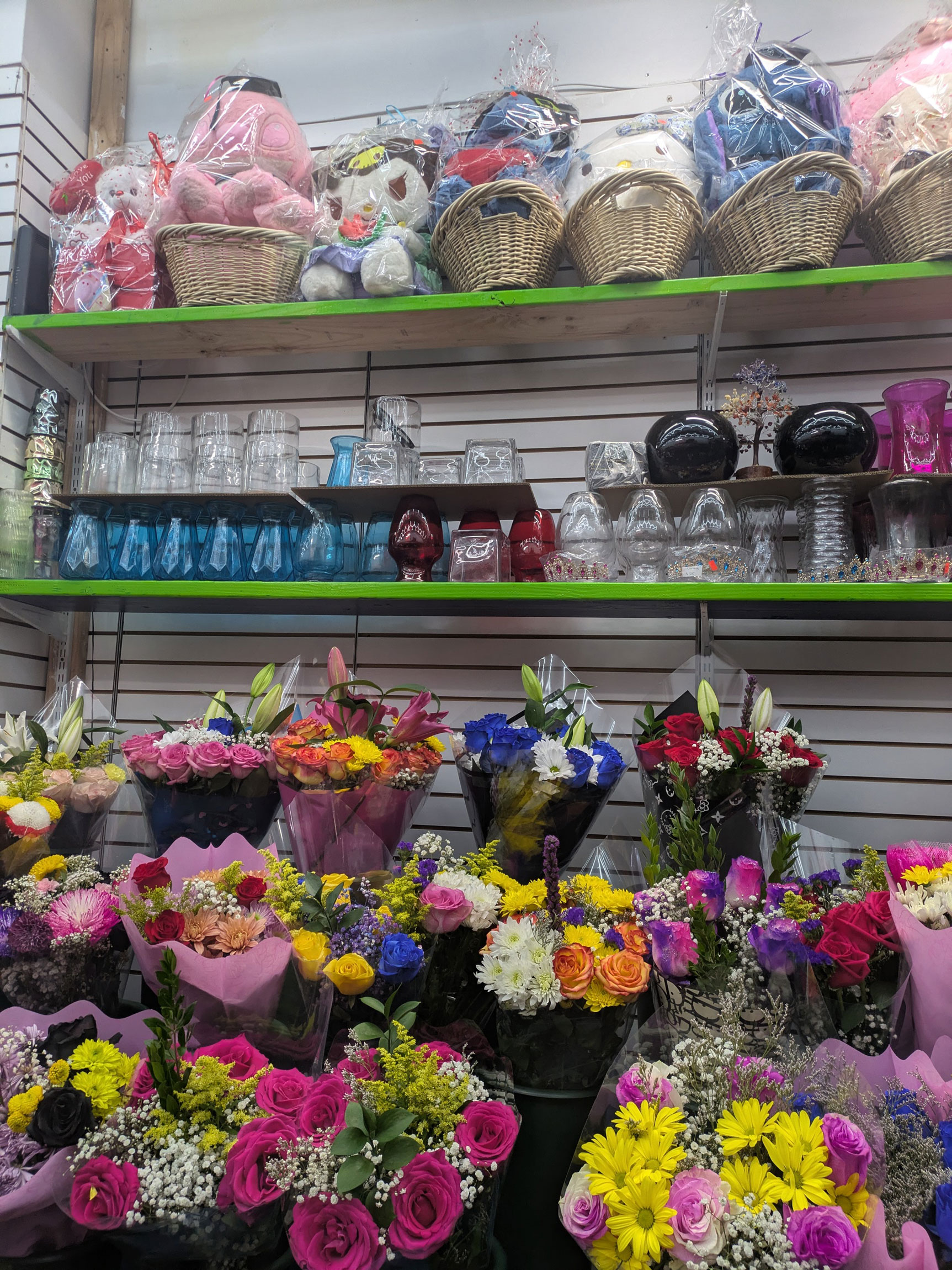
A flower shop recently opened near my apartment. Named Resiliencia Blooms Flower Shop — its signage glows bright in the evening. I’ve watched commuters enter and leave with a $15 bouquet, wrapped and ready to be gifted. I’ve stopped there in need of a last-minute present, dinner party offering, or a token of appreciation enough times that its environs are soothing in a way my phone could never provide. The bouquets sit in the window, next to baskets of stuffed animals and trinkets, which at times spill into the street.
E-commerce systems may not supersede immediate needs for, say, a pair of gloves or a dozen roses or a birthday card right this minute, but they do threaten brick and mortar businesses in the long run. More importantly, without them we preclude possibilities for conversation, a friendly exchange, a feeling of familiarity — all badly needed after looking at screens all day.
The views expressed here are those of the authors only and do not reflect the position of The Architectural League of New York.
Dispatches from the New City Critics fellows: new, fearless, and diverse voices to challenge the ways we understand, design, and build our cities.