
We are celebrating 15 years — and counting — of stories that are deeply researched and deeply felt, that build a historical record of what the city has been.
We are celebrating 15 years — and counting — of stories that are deeply researched and deeply felt, that build a historical record of what the city has been.


Photo © Gary Smith
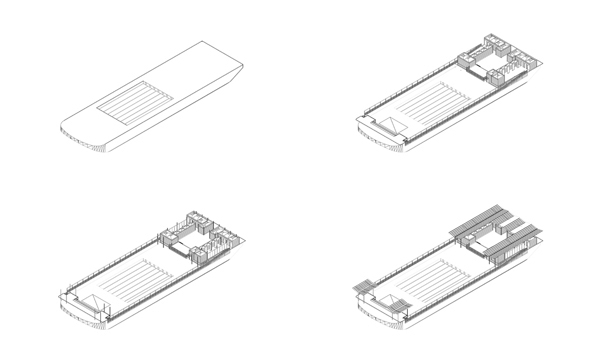
© Jonathan Kirschenfeld Associates
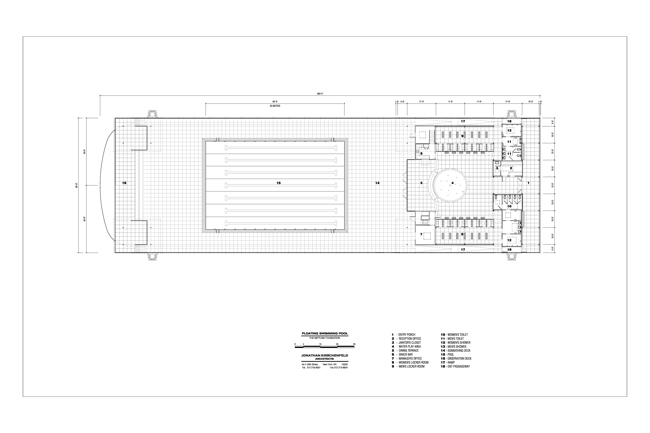
© Jonathan Kirschenfeld Associates
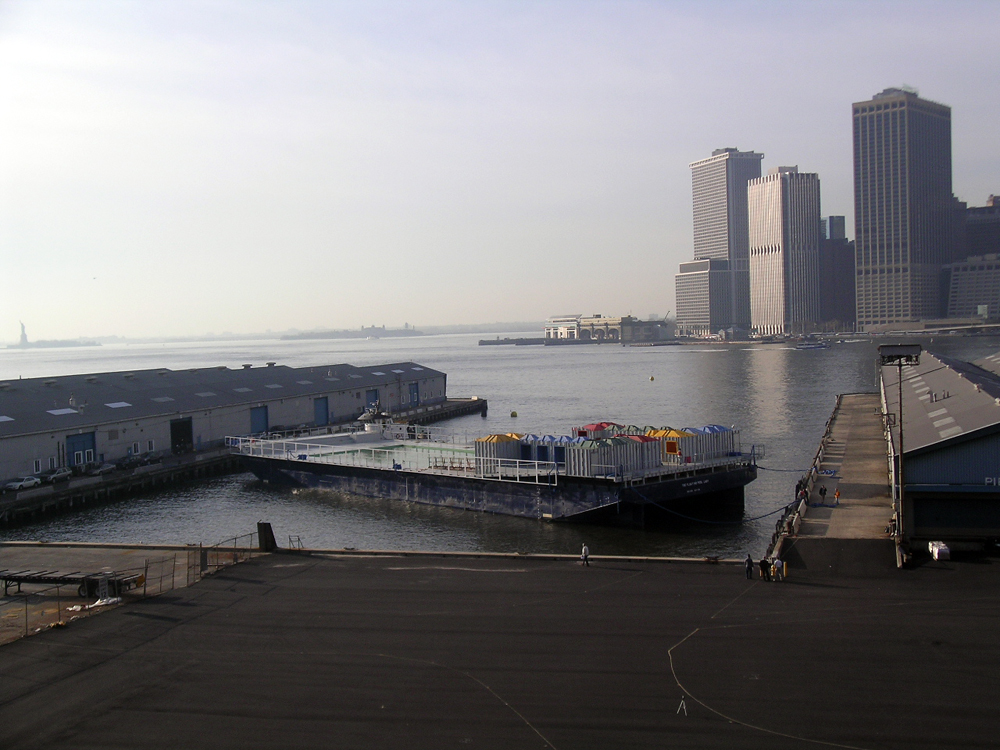
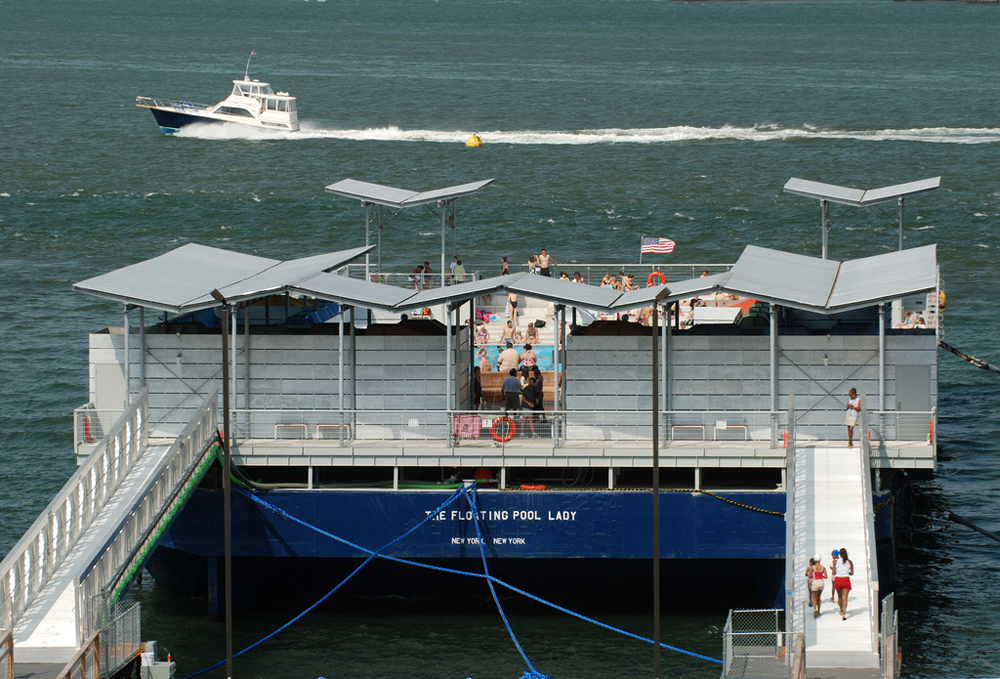
Ann Buttenwieser drew her inspiration for the Floating Pool from the public baths that dotted New York City’s waterfront in the 19th century, and then projected that vision into a contemporary amenity for underserved communities. After years of planning and development, in 1999 she found an equally enthusiastic partner in Jonathan Kirschenfeld, whose interest in waterfront use had led him to design a (yet-unrealized) 600-seat floating theater. Design of the project continued until 2004, when Kent Merrill, the naval architect working with Buttenwieser and Kirschenfeld, located a decommissioned river barge for sale in Louisiana. Shipyard construction on the Floating Pool began in Amelia, Louisiana in 2005, and after narrowly avoiding devastating damage from Hurricane Katrina, the barge made its 10-day trip to Pier 2 in Brooklyn in October 2006. The Pool docked there for retrofitting and final design until its opening on July 4, 2007 at Brooklyn Bridge Park. In 2008, the pool moved on to Barretto Point Park in the South Bronx, the only community district in New York without access to a public pool, where it will return for the next two summers.
Interview with Jonathan Kirschenfeld, Design Architect of the Floating Pool
How did the Floating Pool get started?
It started a little before 1999. Early on in my practice, I had more time to take my imagination to places it wouldn’t otherwise go. I started working on another floating project, a floating theater, learning what it was like to try to do a project without a client. I went around to community boards to ask for their support, I applied for grants. And during this process, I met a wonderful woman named Ann Buttenwieser, who was running the Parks Council, was very interested in waterfront issues, and was very supportive of an innovative project like this. But after two or three years I put it on the shelf for a little while. A couple years later, I got a phone call from Ann Buttenwieser. She said, “I loved the theater but I have been dreaming of making a floating swimming pool, would you be interested?” I had never worked on a pool before, but what does that matter? I said “Of course, let’s get started!”
That must have required a distinct approach to your research.
I was pretty familiar with regulatory, city and approving agencies. I learned early on that this was going to be a very difficult project to categorize. Was it a boat or was it a building? Who regulates: the Coast Guard or the building department? Of course, it ends up being both.
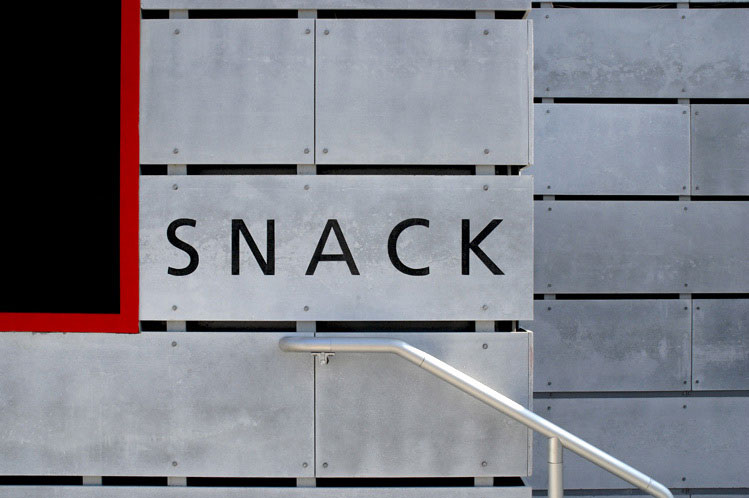
At the beginning, we were talking about making the pool something that was self contained, off the grid, fully powered by sun and wind, something that you did not need to plug in to land-based utilities. Given the budget, however, we decided to do a basic version first. There were a lot of issues aside from the very difficult one of how to take a rusting, 260-foot long, steel barge that used to haul cargo up and down the Mississippi and completely restructure it to hold a pool, a mechanical area and a whole series of structures that included a snack bar, changing rooms, bathrooms, a manager’s office, a reception area, and a staff room. We ended up cutting a huge rectangle out of the deck and dropping it down – after cutting through some very large trusses – to what is now the pool bottom. We had to buff out a series of attachments on the deck, but you’ll see, if you look carefully, circles, triangles, and little remnants that ultimately highlight the history of this barge.

© Doug Cabot
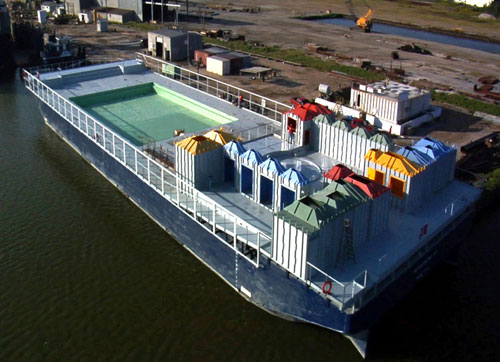
© Brad Kelly
© Gary Smith
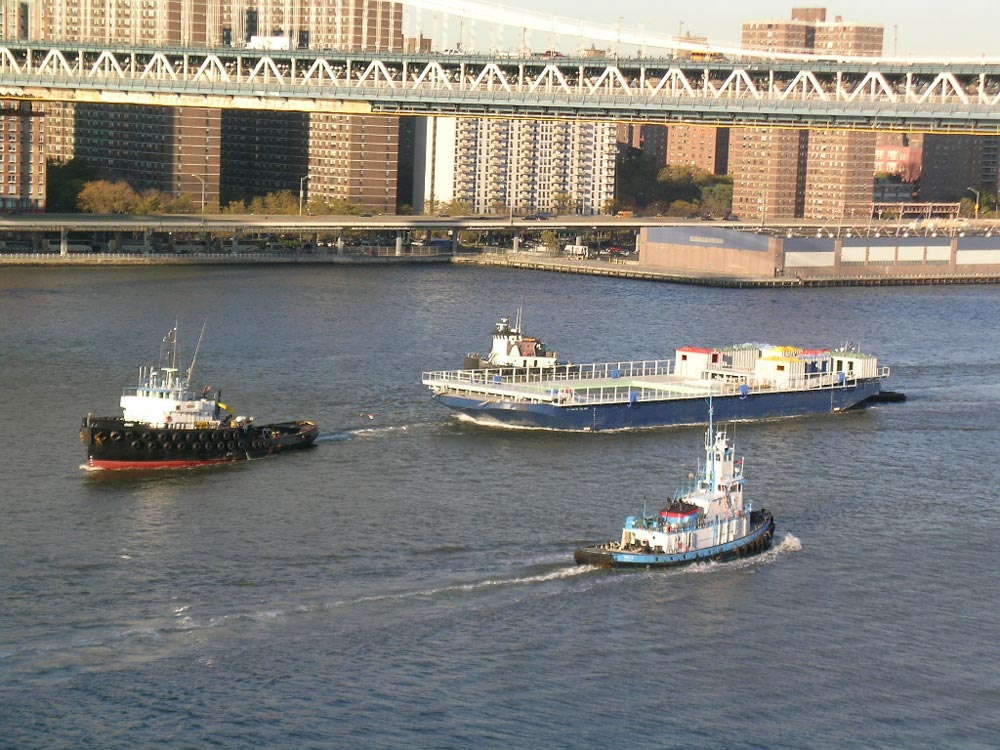
© Stefan Danicich

© Jonathan Kirschenfeld
© Jonathan Kirschenfeld
In the basic version, the not quite off the grid version, what infrastructure does it tap into when docked?
Each summer the barge was going to be at different waterfront area enabling folks to have an instant amenity. One of the issues with siting the barge had to do with the infrastructural cost involved in mooring it in any one place for just one summer. To spend hundreds of thousands of dollars to bring a water line, a sewer line, and an electrical line to the pool that is going to be there for two months is, in a sense, contradictory to its desired effect.
We’re in the process now of talking to a variety of stakeholders and funders to do a version that is completely off the grid. We’d like to be working with manufacturers who see this as a demonstration project for new technologies in the environmentally progressive world.
What was the construction process?
We completed 60% of the construction in a New Orleans shipyard — mostly the steel work and the yard specific tasks. The rest was kind of standard architectural construction, which we knew would be more effectively and economically done in New York.
Initially it was going to be a spud-moored barge, which is what you typically see, where you have a spud collar and a piling driven into the river bottom and the barge moves up and down with the tide but doesn’t move laterally. But it was very expensive and we couldn’t find the spuds in time, so we decided on a system of six anchors, which turned out to be much less costly and still very effective. For the three months that the pool was at Brooklyn Bridge Park there was very little movement on deck, it seemed stable as a rock.
We started the ten-day process of pulling the barge up from New Orleans without knowing where it was going to go. It was a little risky. We had not received permission from the Department of Environmental Conservation yet, which was a major piece of the approval puzzle. After an intense three month period of time, filled with meetings every week with the State, the City, the Department of Parks and Recreation, the architects, the engineers, and many, many lawyers, it was decided in March of 2007 that the pool would open by July 4th in between Piers 4 and 5, where Brooklyn Bridge Park would be, to introduce this incredible amenity to the community at large. It was a huge gamble, but we had a tremendous group of motivated people and great government officials supporting us.
It was sort of like preparing for a dinner party. You are never quite ready but at a certain point you just sweep unfinished things under the rug and welcome your guests. So we swept a little of the debris underneath the table, where no one could see, and watched the place fill with kids for the first time in the seven year saga of the pool.
© Philippe Baumann

© Timothy Schenck
© Timothy Schenck
© Timothy Schenck
© Karl Jensen
How was Barretto Point chosen as the next site?
Ann’s intention, and the mission of the Neptune Foundation, was always to give the pool as a gift to New York City, so it was the Department of Parks and Recreation that needed to site it in a place that they thought was most effective. Hunts Point is the only community board in all five boroughs that does not have public pool, so they really focused on that community. They had just finished a beautiful park, Barretto Point Park, and spent a few months with the NYSDEC working out a long term permitting agreement.
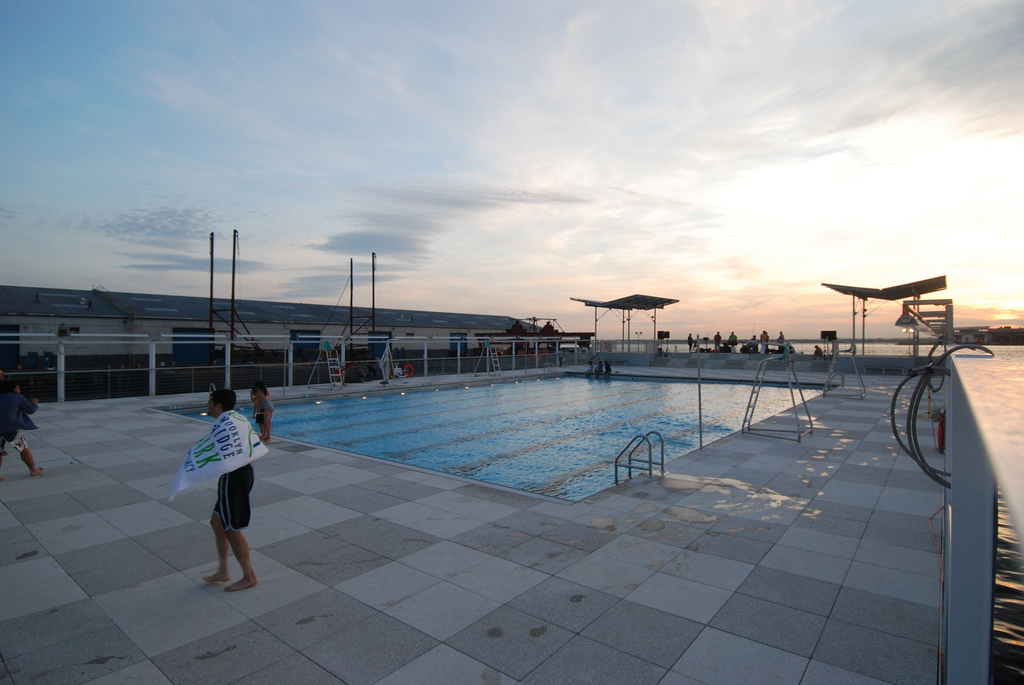
It was moved at five in the morning in a beautiful mysterious fog up into Barretto Point Park and moored off a beautiful grassy knoll. So now, instead of taking a gangway from what was essentially a large parking area, you walk through the park and up the 90 foot-long gangways onto the pool, where you look onto quite an interesting urban waterfront. It’s not quite the Brooklyn Bridge and the Statue of Liberty and Lower Manhattan, but it is equally arresting. The pool has been a tremendous success up there and my understanding is that it will stay there for several years. The last count showed, I think, a typical crowd of 1,200 kids a day.
The exigencies of working in the public sector and having to deal with the costs of doing an innovative temporary structure like this involves having to evolve the idea over time. One of the most fascinating things about the project is that it can move. While the pool, for now, is in the Bronx, either this version or another version will be a peripatetic project, where its arrival is awaited and its departure mourned. That’s what excites me ultimately about the temporary nature – it has more the quality of life than something built with brick and mortar.
Ultimately we like to see the pool as a Trojan Horse, which gets people really excited about the waterfront. Ostensibly, this could push the political process forward, prompting local community groups to advocate for more access to the waterfront, for better water.
When you are trying something new it is very difficult for people to believe in it until it is physically there. With the floating pool, the only way that people were finally convinced that this was a real thing and that it needed to open was because we dragged it up from New Orleans.
A lot of these ideas have the spirit of kids putting a carnival together in the backyard. It’s meant to be so low tech and so imaginable — all you have to do is stack some boxes and put up some curtains and that’s enough to create a space that reminds of one being in La Scala. For me, that’s the pleasure of the temporary and of using materials that are common or readily available. You can create something that seems much richer and more evocative of buildings but with materials that are still meant to be suggestive of a temporality, of something that doesn’t always exist, that isn’t there forever. The pleasure of the temporary is in the idea of the circus coming to town, setting up the tents, providing this amazing new world and then skipping out and leaving; it has all the elements of great architecture and great theater. But until you build it folks have a really hard time believing it can be done.
Seven years later the pool is built and now we are starting to get a tremendous amount of enthusiasm, but it took a very long series of efforts and obstacles and tremendous amount of persistence on the part of the design team, on the part of the client, the Neptune Foundation, to make it real. These urban issues are the reason I am an architect and live in New York City — playing with the incredibly vibrant line between public and private, how you do it, how you make things feel alive, how you create urban spaces that are an active part of the city, where unexpected things happen. That is what gets me up in the morning.
© Philippe Baumann
The views expressed here are those of the authors only and do not reflect the position of The Architectural League of New York.
Comments