
We are celebrating 15 years — and counting — of stories that are deeply researched and deeply felt, that build a historical record of what the city has been.
We are celebrating 15 years — and counting — of stories that are deeply researched and deeply felt, that build a historical record of what the city has been.

We first became aware of Scott Nyerges when he participated in a panel discussion about urban agriculture held earlier this year at UnionDocs, where he spoke about his year-long photography project documenting life at Eagle Street Rooftop Farm. Before 2010, Nyerges’ concentrated his creative endeavors on experimental filmmaking. His films explore and evoke natural systems through abstractions created using a technique that involves painting pigment and solvent onto celluloid strips, and then capturing and animating the resulting reactions. His work has been recognized at a number of film festivals internationally, and footage from his 2008 short Autumnal was licensed for use as reference material for the famed origins of the universe sequence in Terrence Malick’s 2011 film The Tree of Life. In his photography, Nyerges applies his ecological sensibility in a different way: observing and documenting the environment of New York City. His latest photography show, Hidden in Plain Sight: Dispatches from Bushwick and Beyond, opens on Saturday, August 4th, at Bushwick art gallery/cafe/bakery Sweet and Shiny. Here, Nyerges shares a selection of images from that show and describes how the quiet physical traces of the street life of a neighborhood help him tell a bigger story.-V.S.

BKST., Brooklyn, 2012 | All photos by Scott Nyerges
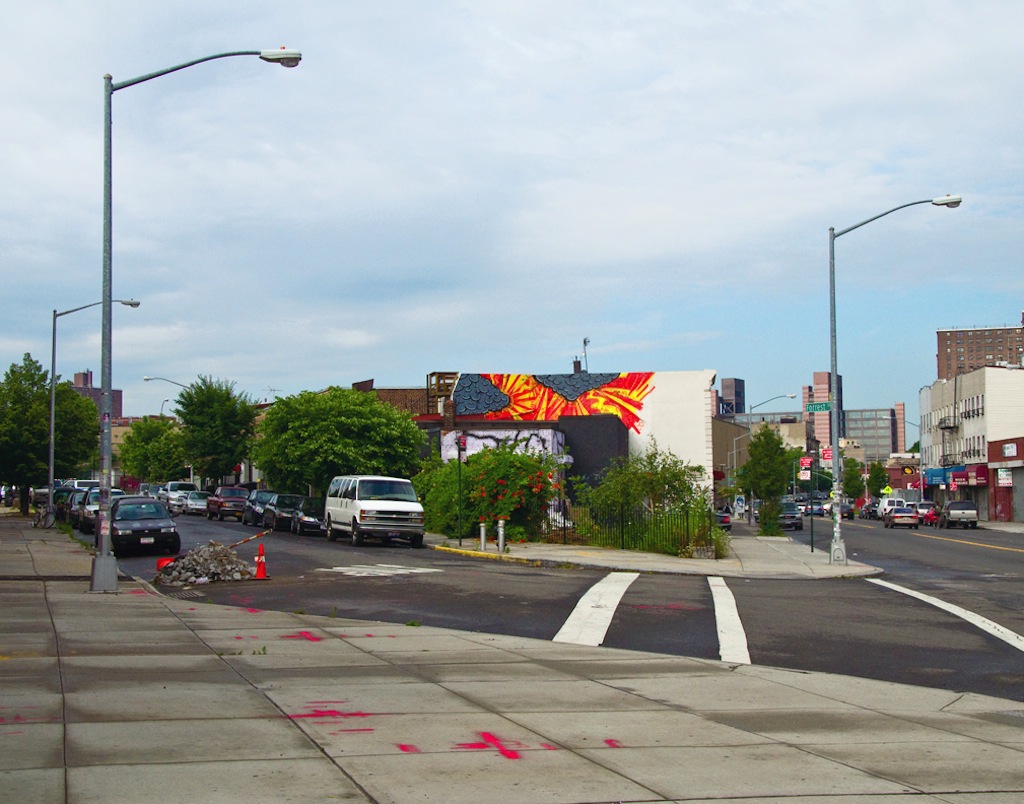
Orange Storm, Brooklyn, 2012
Street art changes like the weather (even if the weather is only an orange thunderstorm atop an abandoned luncheonette). Walls become a communal collage of decals, posters, words and slogans. They spread like weeds, accumulating layer upon layer until they’re painted over by landlords, degrade in the elements, or are simply covered over by other stickers, stencils and tags. Some last only days; others last for months or even years, vanishing gradually as they tear, fade or chip off. They become familiar, like neighbors, and yet remain mysteries. Who is the artist who has plastered jellyfish all over Greenpoint and Williamsburg? How does Bast make his or her elaborate stencils like the ones on Wyckoff Ave near the Jefferson L stop? Is that a real Shepard Fairey across the street from The Anchored Inn?
Castoffs double as décor, shoes especially. They appear on stoops and sidewalks and fences, free to a good home. They flock together like birds on a wire, dangling from their laces. Look close enough, and you may see a message written on their soles. Who tossed that pair of Nikes onto that power line across Moore Street? Did anyone give those purple suede boots a good home? And what thoughtful person placed those white pumps so carefully beside that dumpster? There’s a narrative attached to everything, but they speak to me only in questions I cannot answer.
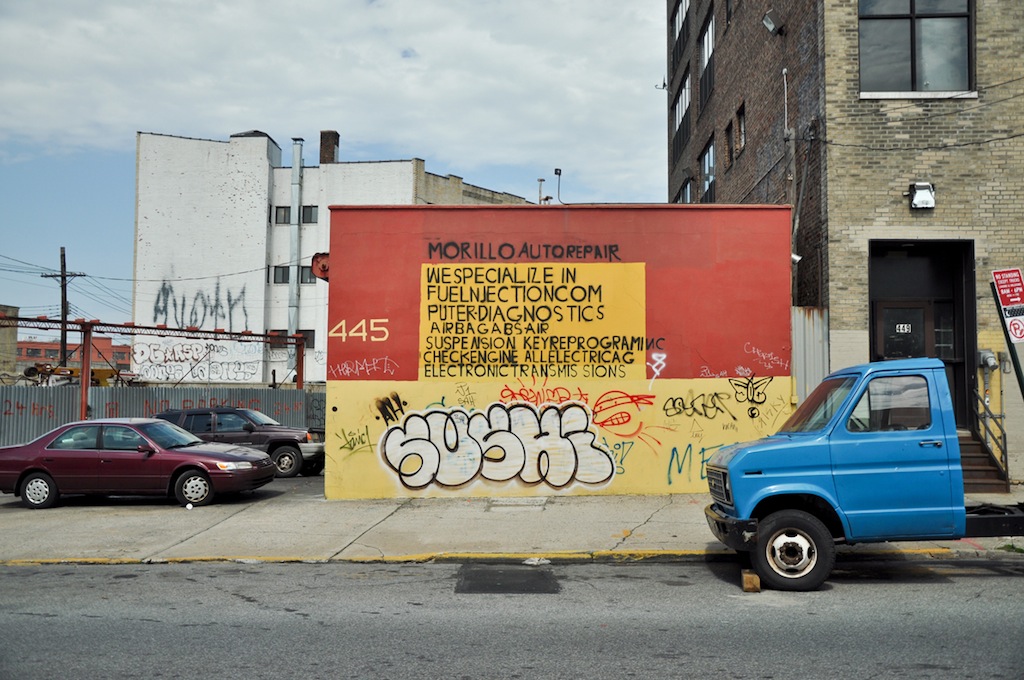
Garage Triptych 1 (Sushi), Brooklyn, 2011
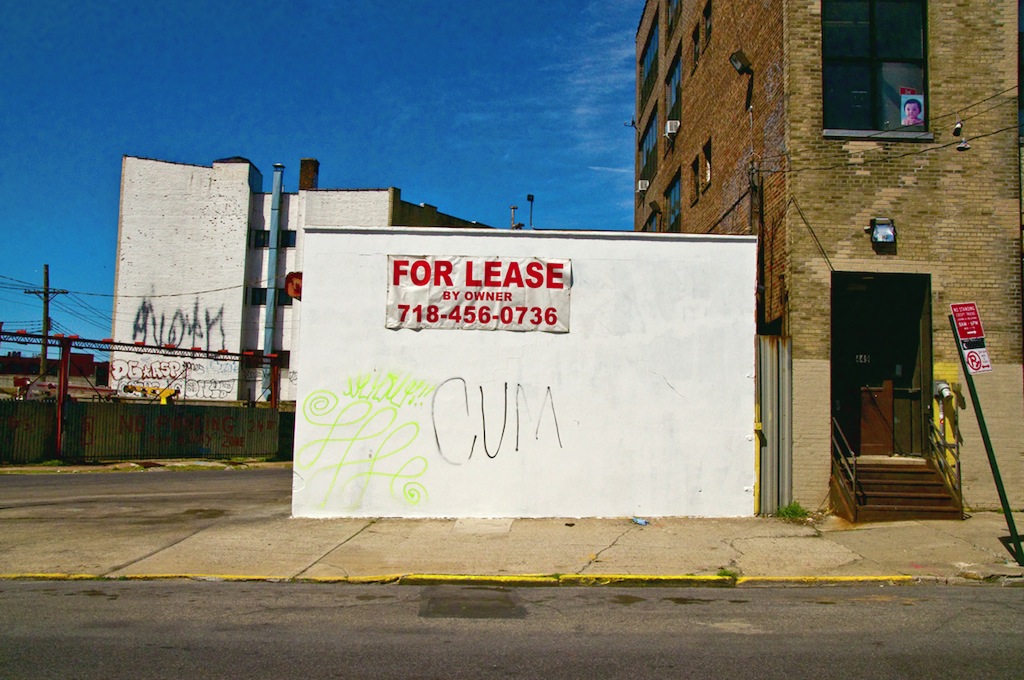
Garage Triptych 2 (Cum), Brooklyn, 2012
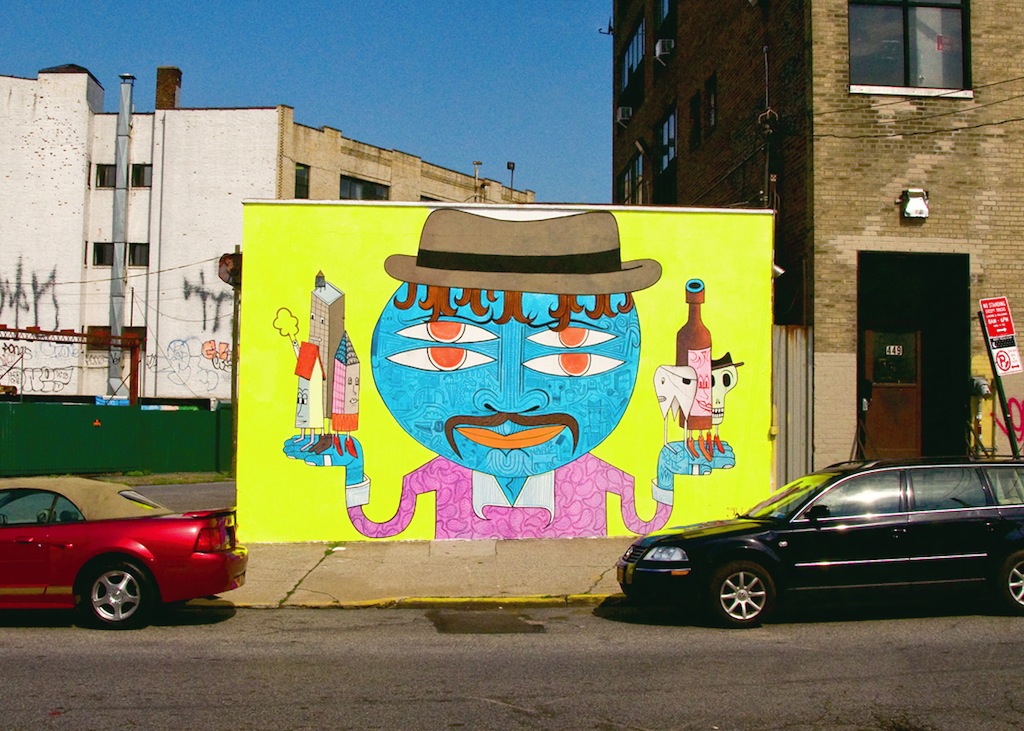
Garage Triptych 3 (Four Eyes), Brooklyn, 2012
One of my favorite series of images is of a garage on Troutman Street and St. Nicholas Avenue. Once a gas station, it was an auto repair shop until last year. Then, one day, the junked cars were gone and the building had been repainted white, covering the red-and-yellow paint scheme, itself marked by countless taggers. By early summer, the garage had been covered again — this time by a vibrant yellow mural. And art is contagious. The surrounding structures, once bare, have themselves been decorated by artists as well: a faux bodega storefront on a garage; a forest full of bears on an old workshop; goats and a boat on another warehouse.
This collection of photographs, shot between 2010 and 2012, documents the rapidly changing landscape of Bushwick, Greenpoint and Williamsburg, capturing traces that the massive influx of young people leave on their environs. Often derided as faceless, idle “hipsters,” these newer residents of Brooklyn have in fact breathed new life into areas once considered a no man’s land, leaving vibrant street art and thriving businesses and activities in their wake. In doing so, they are defining a new sense of community and following in the footsteps of generations of New Yorkers who have left their mark on the fabric of this city — often hidden in plain sight.
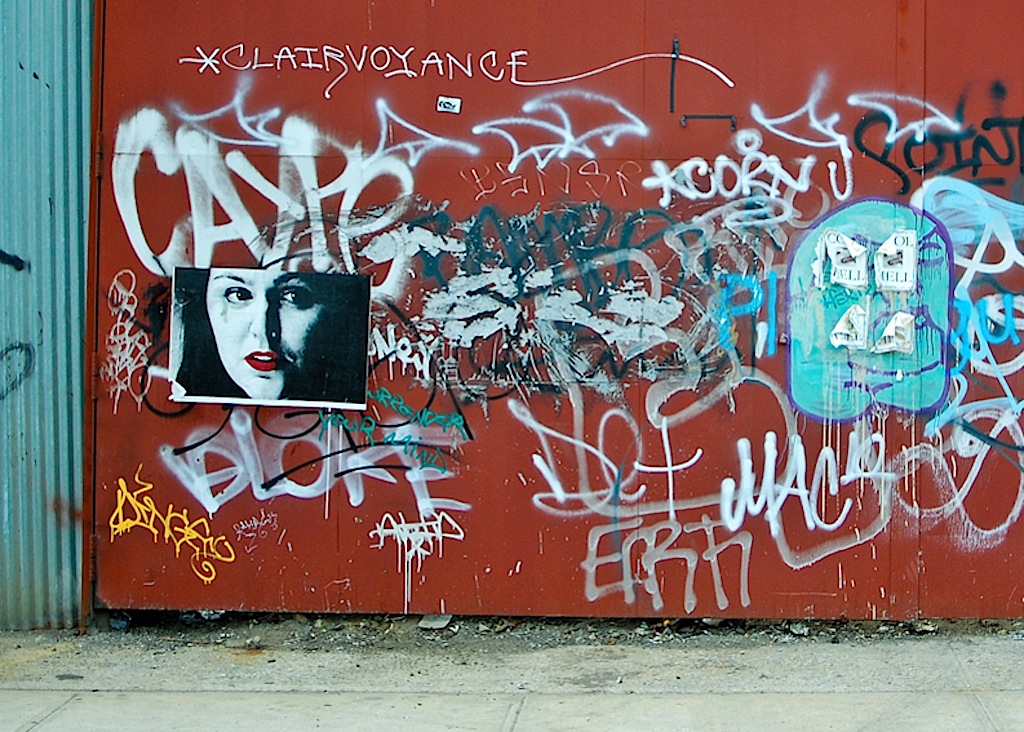
Clairvoyance, Brooklyn, 2012

Joys of the Sullen, Manhattan, 2012
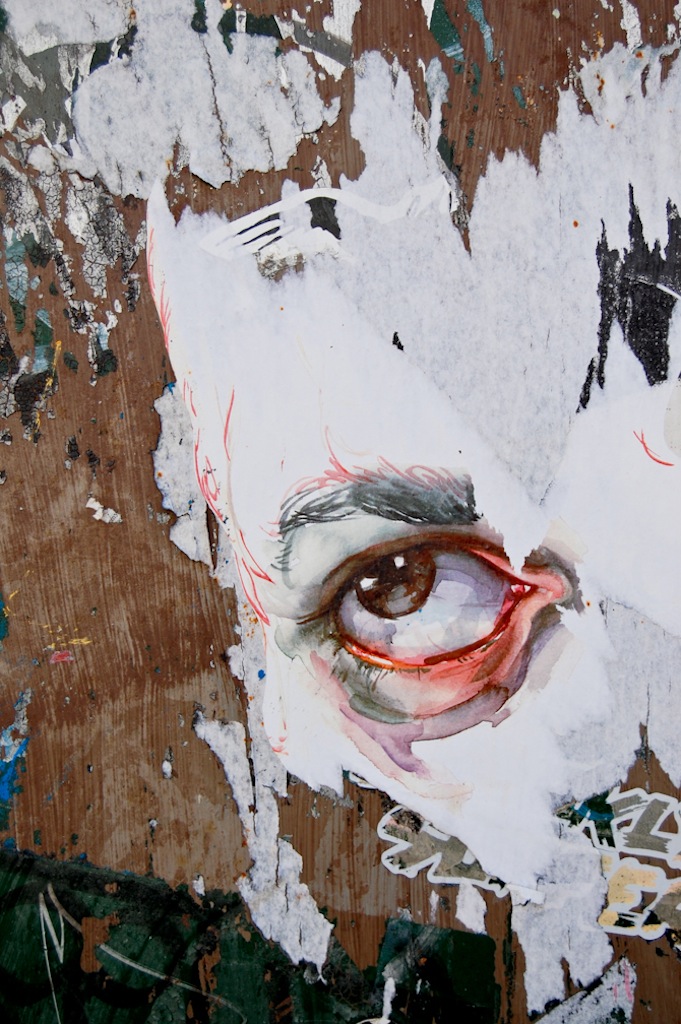
Bleary-eyed Brooklyn Morning, Brooklyn, 2011

Sunny Day Red Dress, Manhattan, 2011
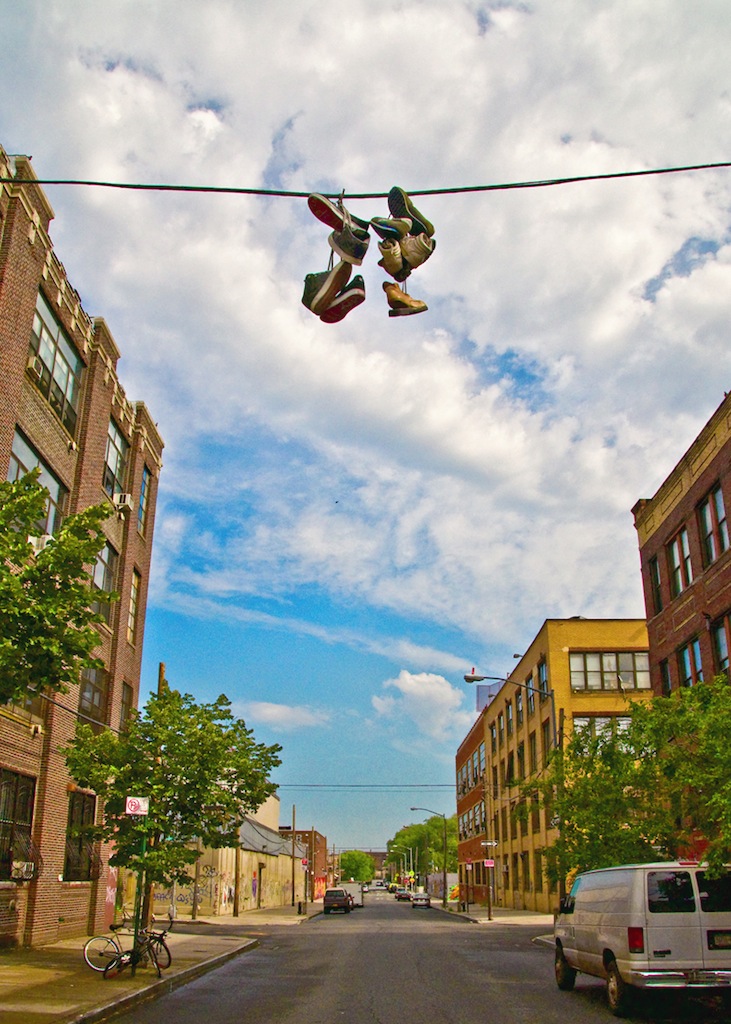
Untitled (shoes on a wire), Brooklyn, 2012
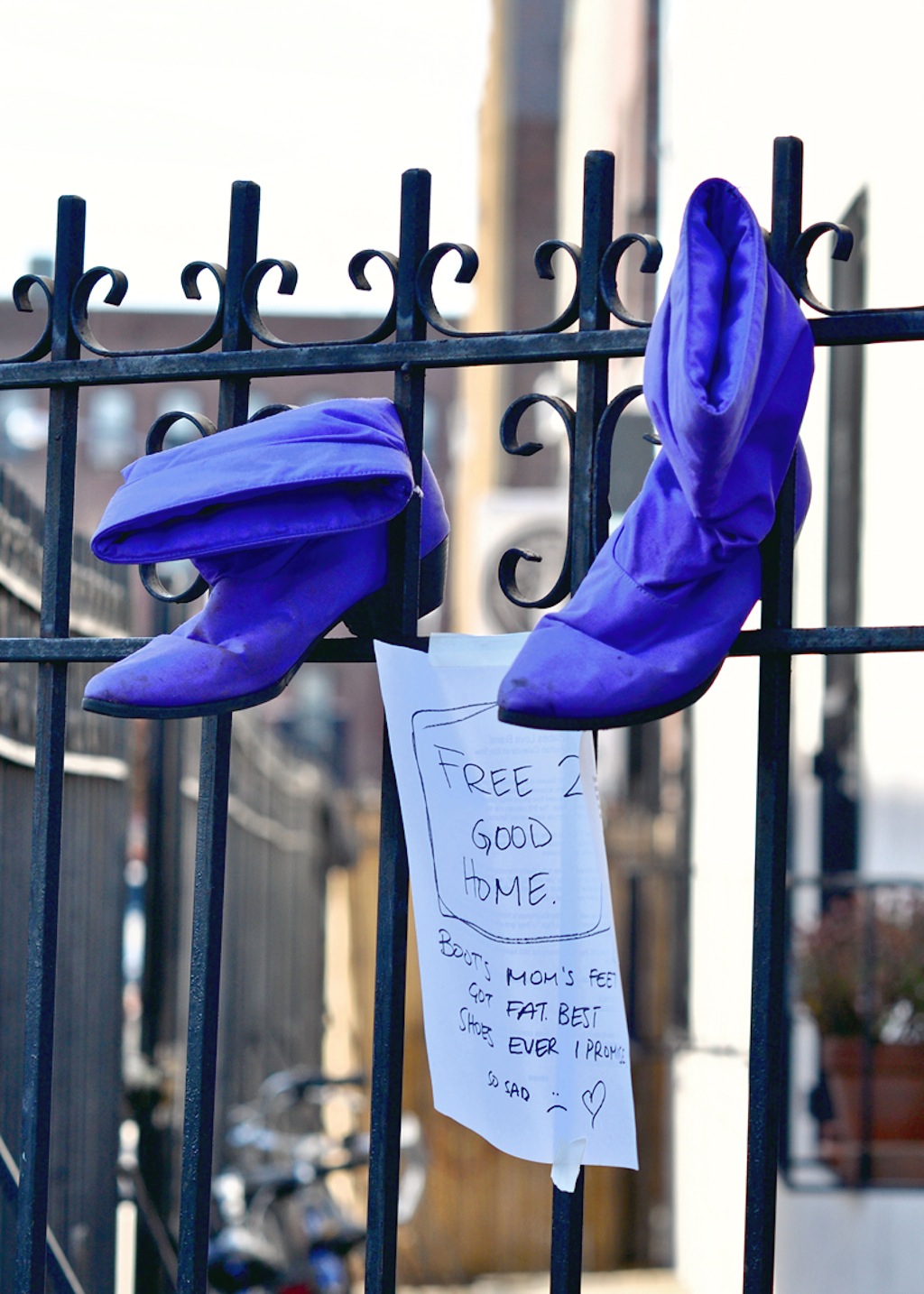
Mom’s Feet, Brooklyn, 2012
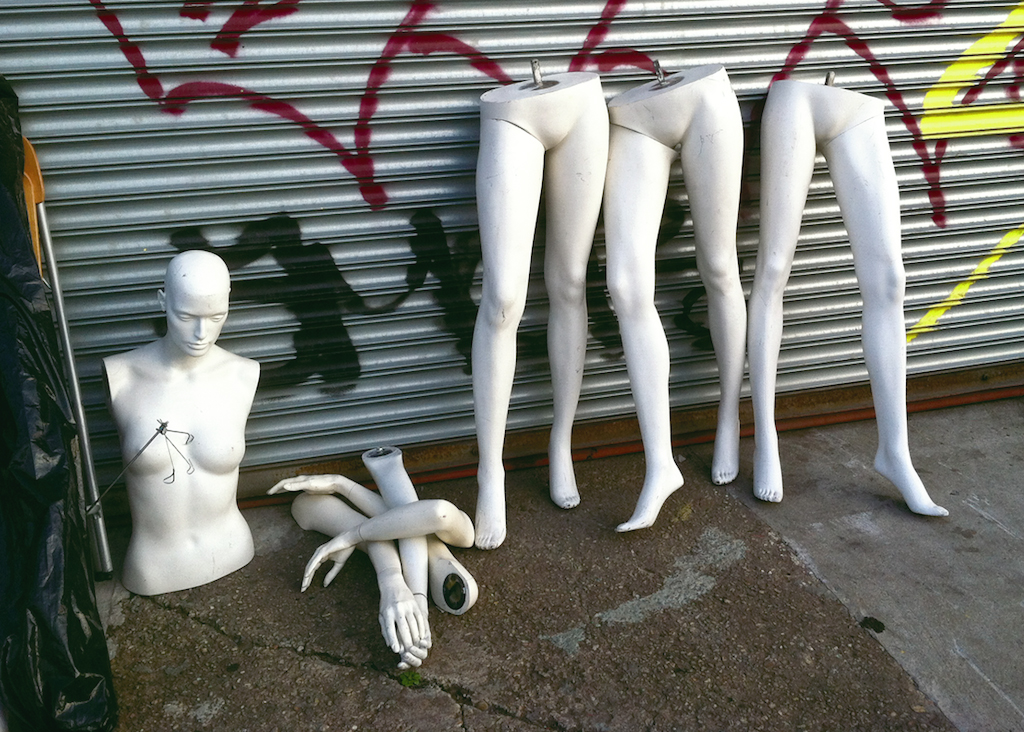
Where the Bodies are Buried, Brooklyn, 2012
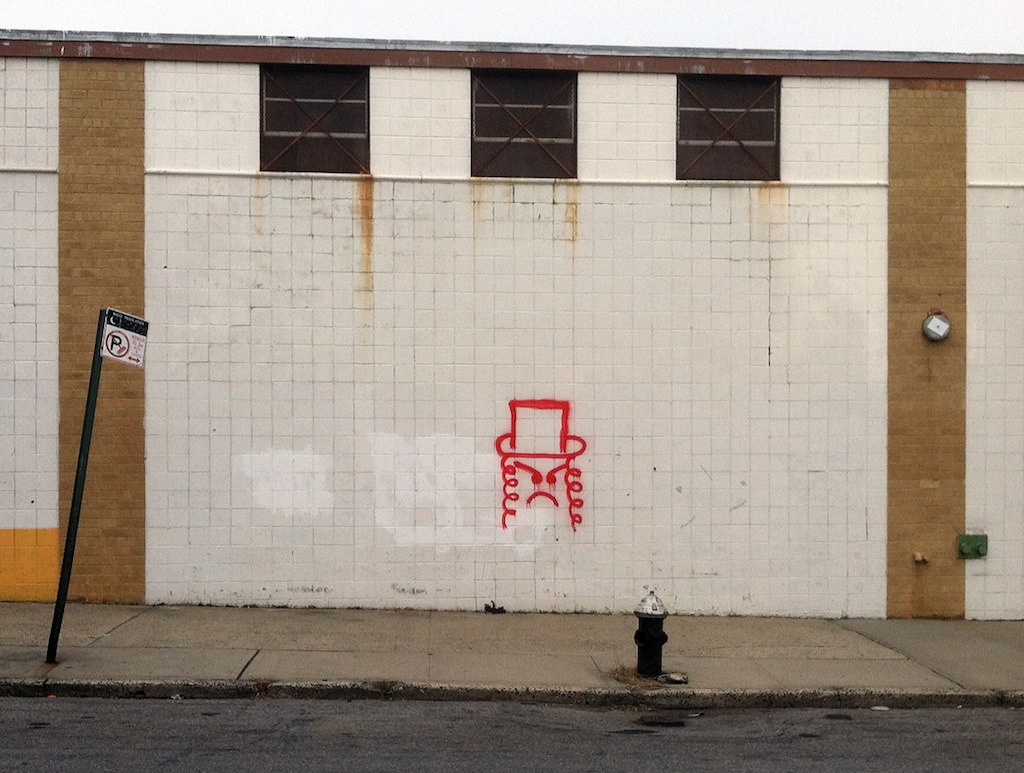
I’m Seeing Red, Brooklyn, 2011
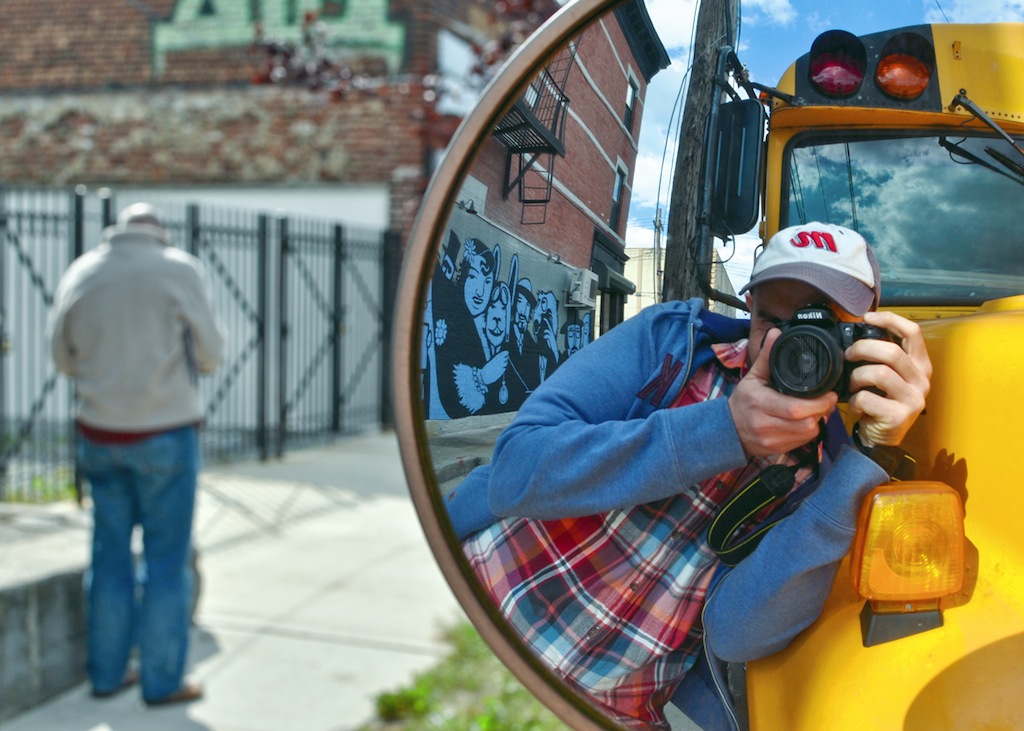
We Too Are One, Brooklyn, 2011
The views expressed here are those of the authors only and do not reflect the position of The Architectural League of New York.