We are celebrating 15 years — and counting — of stories that are deeply researched and deeply felt, that build a historical record of what the city has been.
We are celebrating 15 years — and counting — of stories that are deeply researched and deeply felt, that build a historical record of what the city has been.

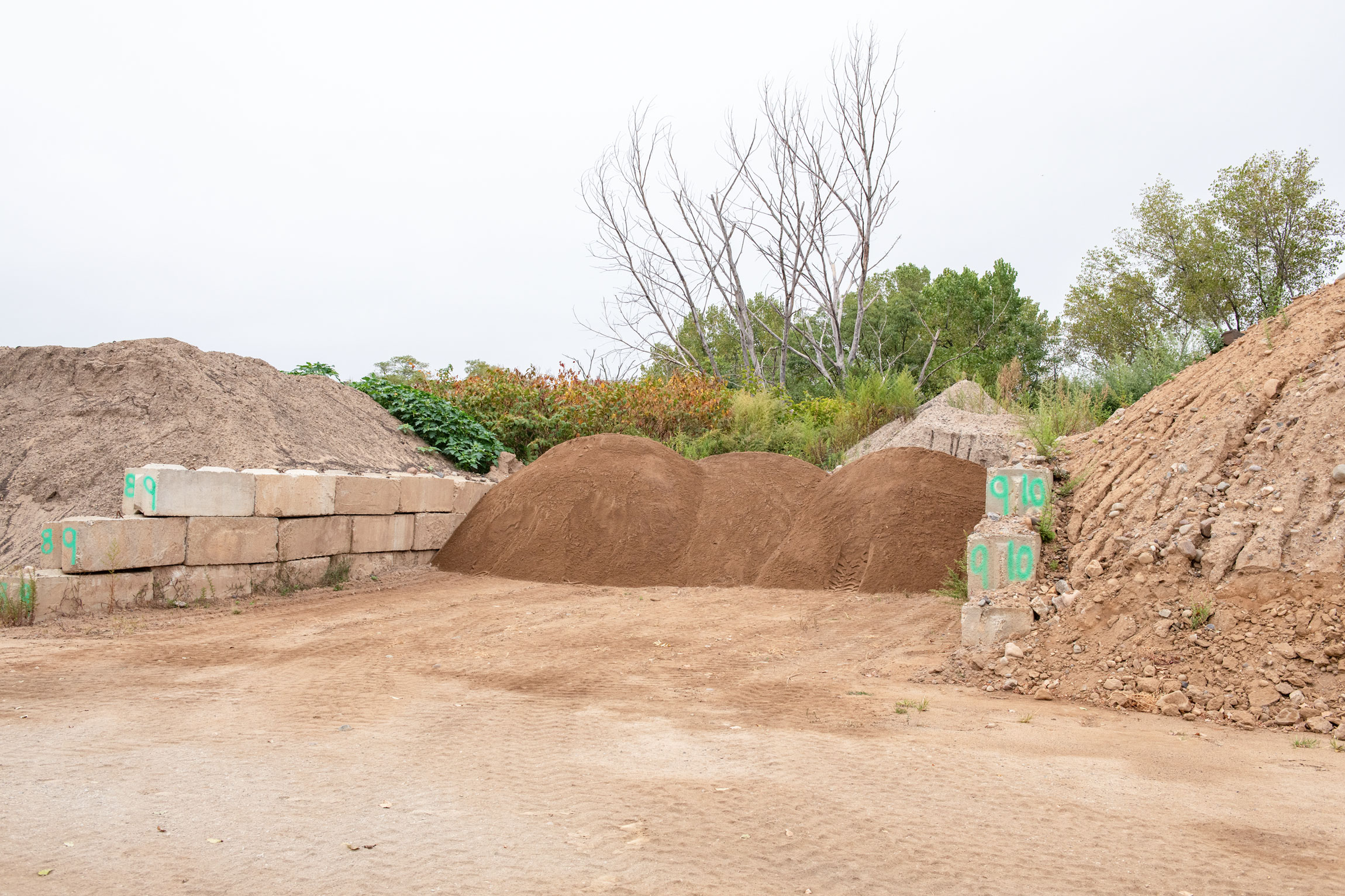
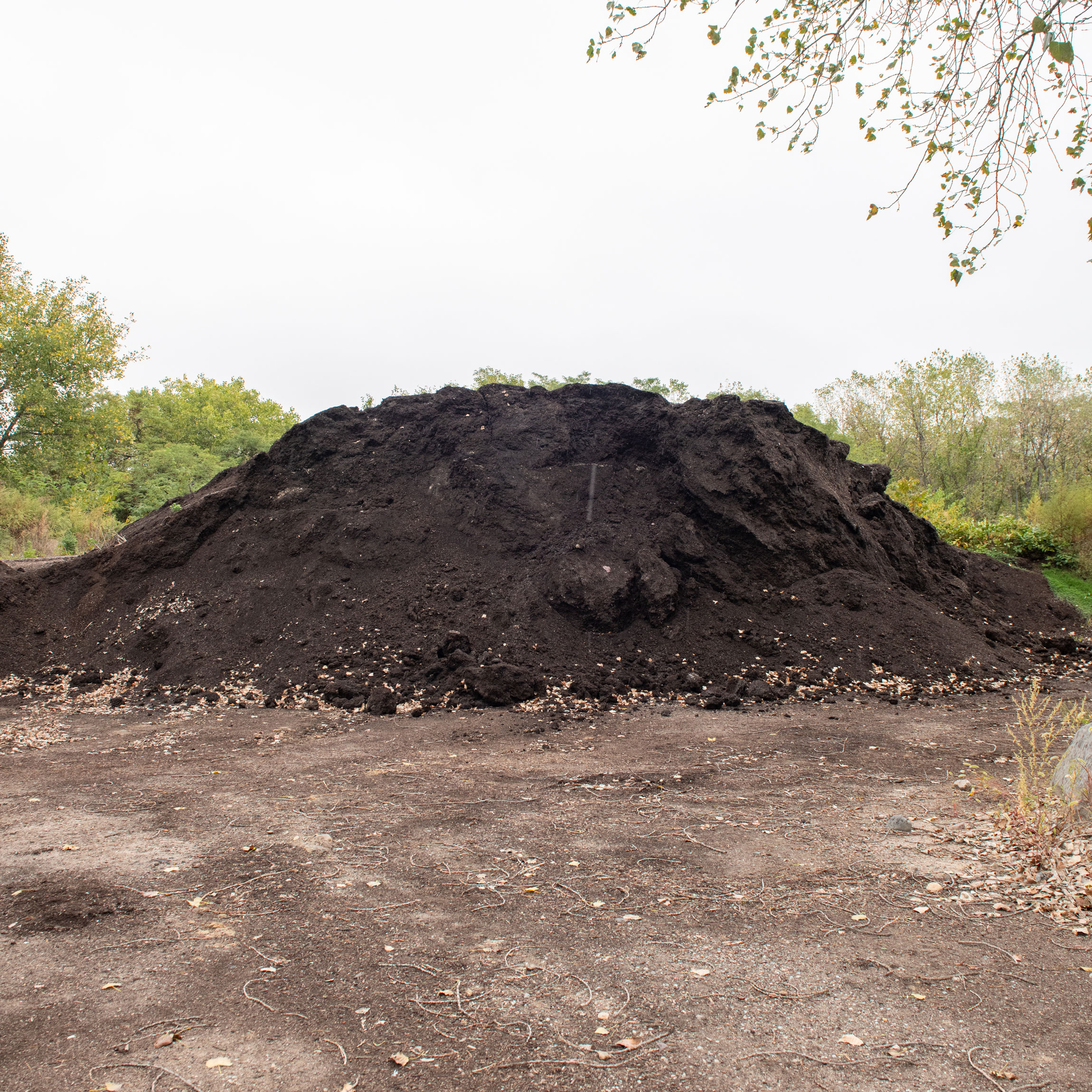
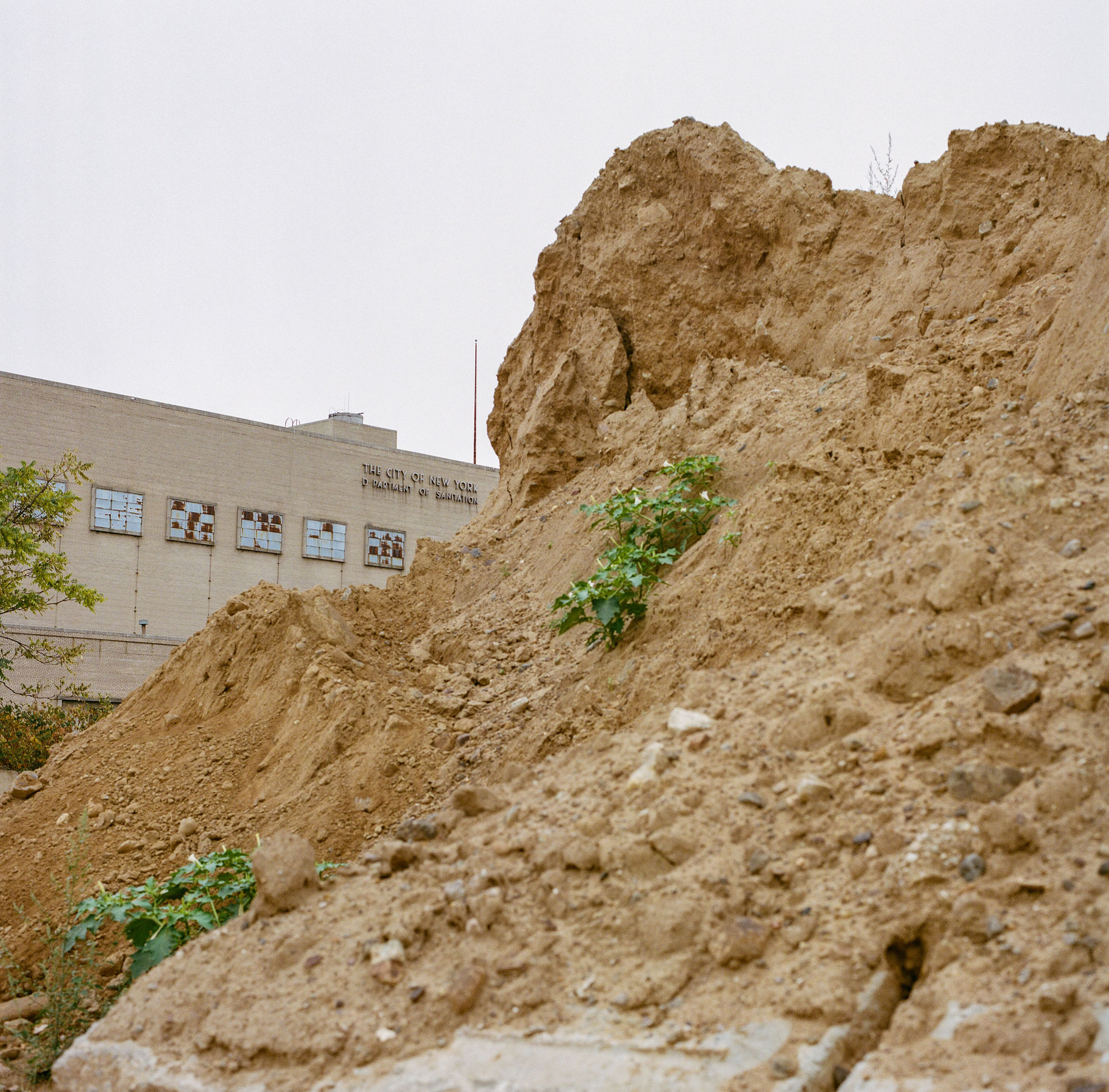
At the city-owned Clean Soil Bank, weeds rise from a 3,000-cubic-yard pile of sifted soil, which has been removed from a construction site in Manhattan and waits to reenter the urban metabolism. The slow-growing jimson weed hints at a broader tension: in New York’s construction industry, speed and profit may be at odds with environmental sustainability and circular economy — but the true value of soil cannot be rushed.
Last month, in the first of a two-part series on the afterlife of construction spoil, Lynnette Widder looked at the long and wasteful journeys that New York’s soil makes after excavation. Now, Widder takes us behind-the-scenes at three major players in the soil recycling economy: Faztec Industries in Staten Island, the Clean Soil Bank in Brooklyn, and the Posillico Wash Plant on Long Island. All three are located in New York’s hinterlands, but they vary in almost every other respect, ranging from low-tech to high-fidelity, from small footprint to suburban sprawl, from public ownership to private industry. Following along as these key urban resources seek new raisons d’etre, Thad Russell’s photographs capture the material, often messy realities of soil shifting.
The salt marshes of Arthur Kill have a sediment bottom up to nine meters deep and thousands of years old. The native estuarine wetland, low-lying and cut by creeks, is a model of resource cycling: The nutrients needed for current aquatic plants, animals, and birds remain available; whereas residual matter is sequestered far below the surface where it can do no harm. Resources move through New York City in an approximate analogy to the flows and sinks within a salt marsh, although rarely as gracefully. While the edges of the Arthur Kill marsh may be more or less neatly mapped, the city’s metabolism resists geographic bounding. The urban hinterlands are, as anthropologist Chloe Ahmann has written, locations “far enough from the city center for the location of nuisance projects but close enough to provide needed benefits.” But in a globalized economy, far or close can be a matter of miles or of continents.
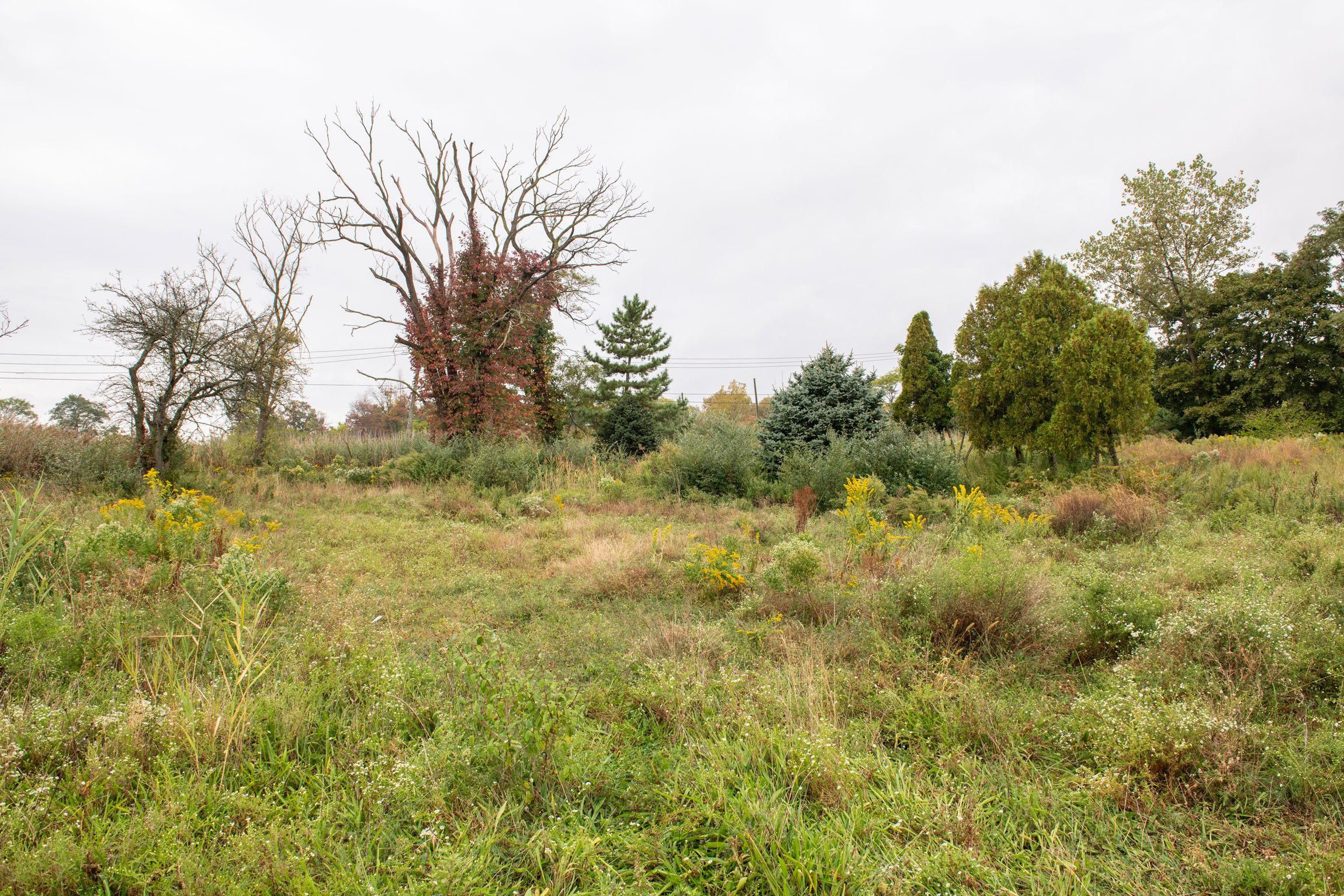
New York Route 440 cuts across Arthur Kill, dividing north from south, on its way to meet Interstate 278. During one September visit, lush spontaneous vegetation marking the end of a wet New York summer bounded both sides of the limited access roadway. From a contemporary perspective, the selection of this fragile, productive ecosystem for the site of Fresh Kills, once the largest landfill in the world, could seem like madness. But prejudice against marshes is biblical in origin. Amid burgeoning human settlement the demand for resources and the need to evacuate waste has often prevailed over waterfowl and mollusks; interest in conserving marsh ecosystems is a relatively recent phenomenon.
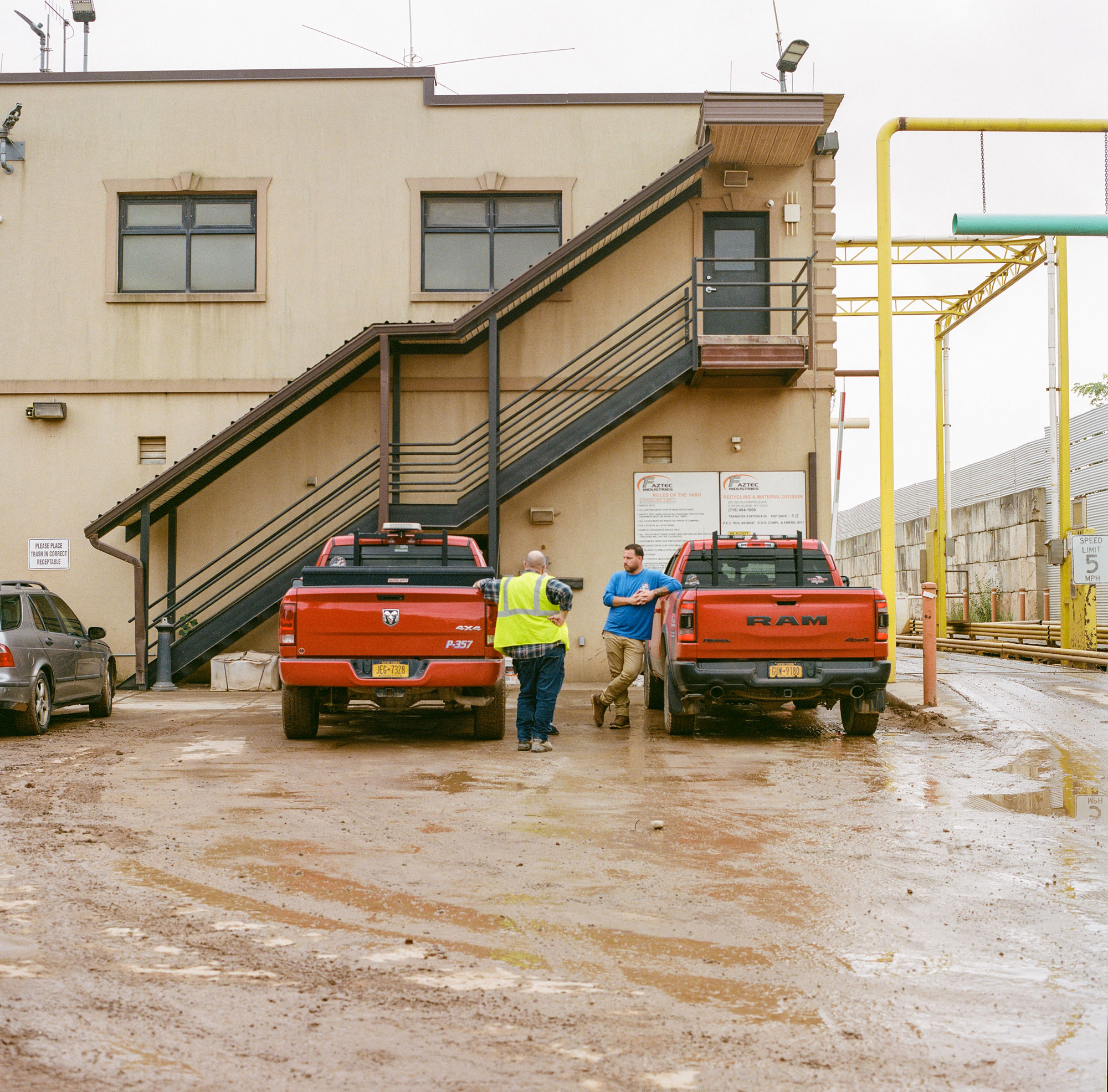
Staten Island visitors can get a vague sense of an earlier landscape as they kayak through stands of phragmites and porcelain berry at two city park preserves near Freshkills Park, Old Place Creek Park, and Saw Mill Creek Marsh. But the urban hinterland persists. An asphalt plant stands amid the preserves; directly adjacent to it is an enormous fulfillment center, the Matrix Global Logistics Park. Just south from there, across Bloomfield Avenue, is Faztec Industries, one of the many sites at which New York transitions its sinks into flows.
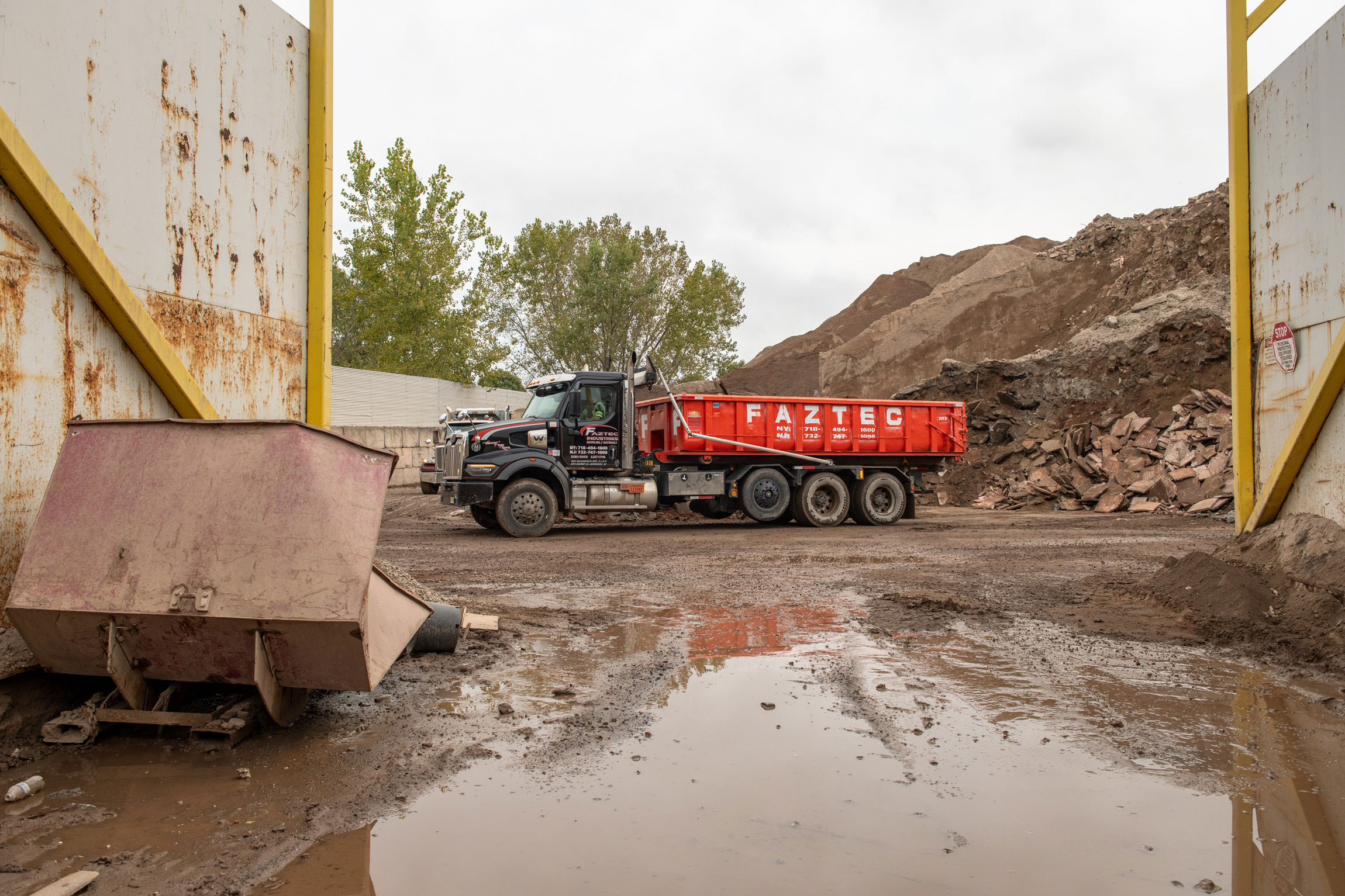
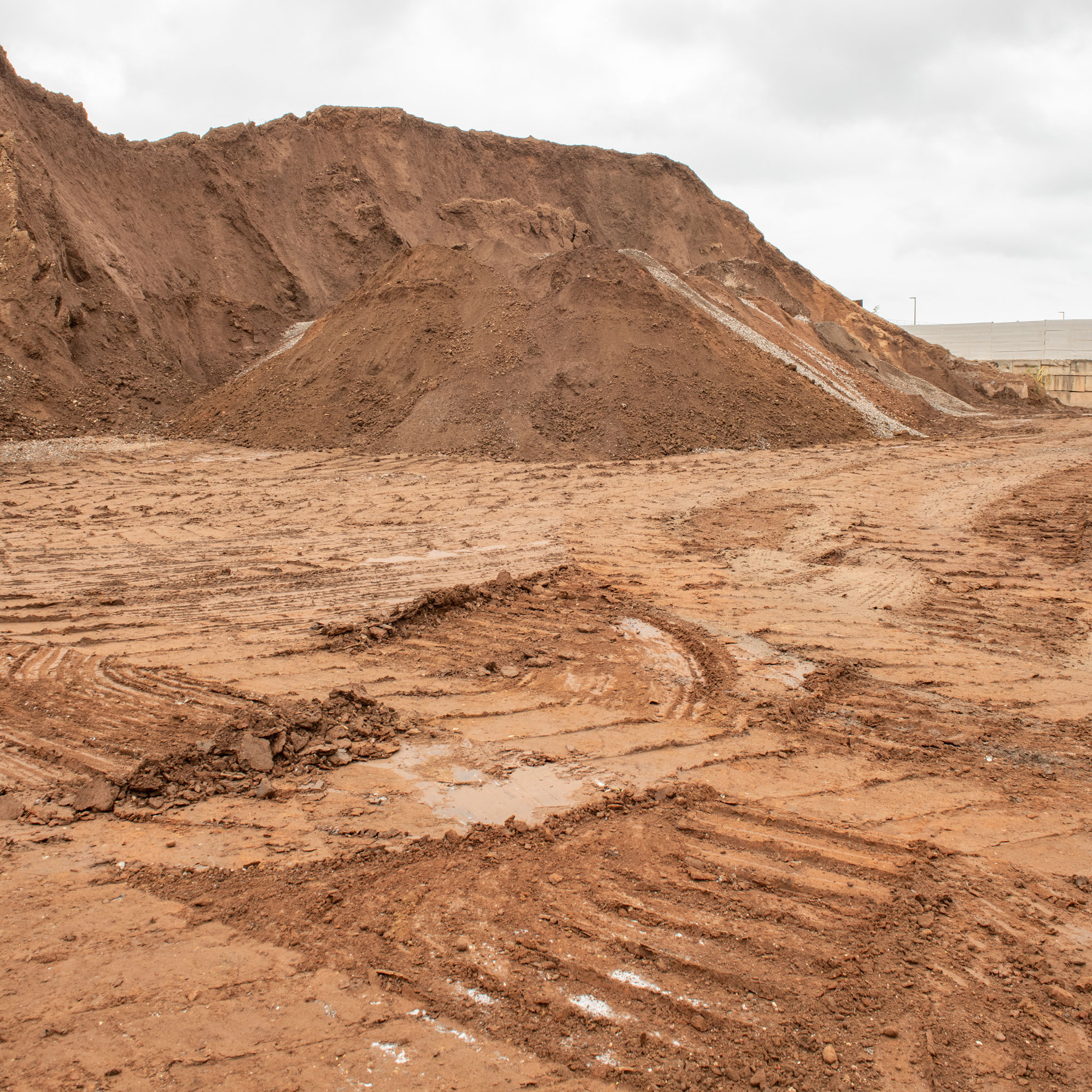
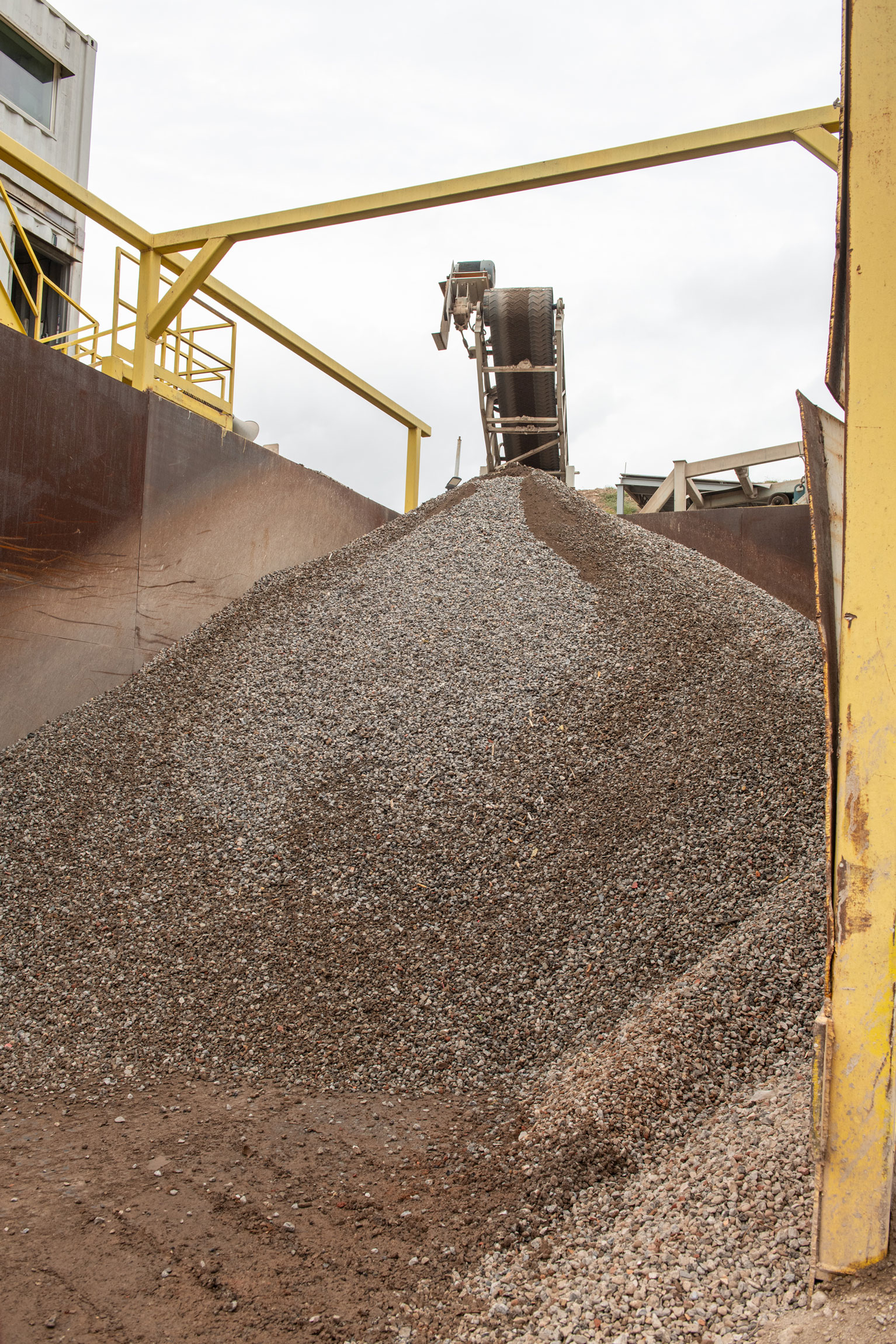
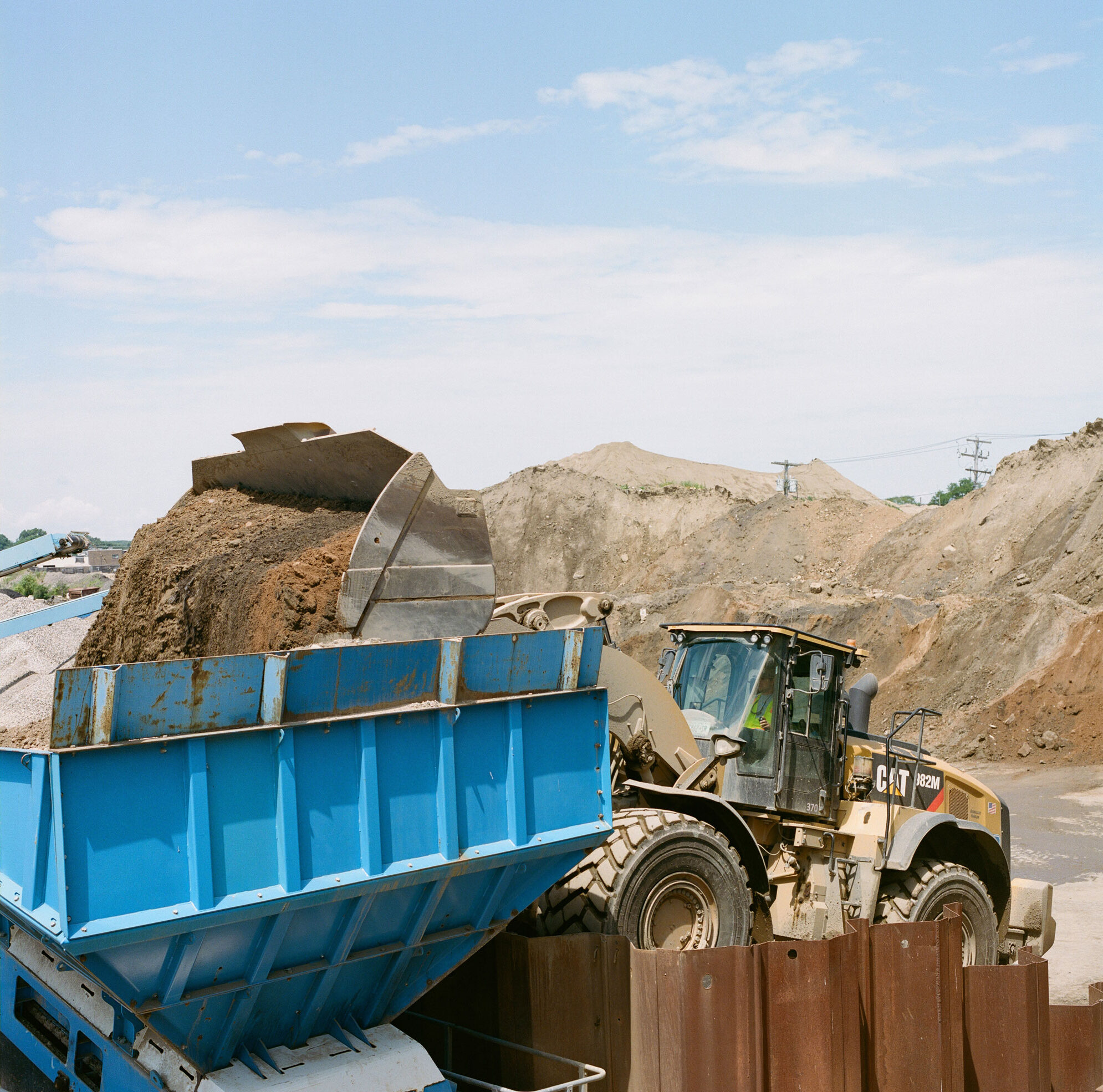
Formerly an excavation material hauling and building supply yard, Faztec was reconceived as a soil transfer station after the closure of Fresh Kills. It is a place to return to productive use what might earlier have been landfilled. The Faztec yard retains all the hallmarks of heavy industry: dust, noise, diesel engines, waste. The bright oranges, yellows, reds, and blues that might once have colored machinery, trucks, and steel trusses are dulled. But as much as they are signs of the enduring demand for industrial-type productivity within the city’s limits, Faztec’s rougher edges are also object lessons. To make cities cleaner is not to eliminate things that are dirty and loud and mechanical. Rather, environmental conscientiousness demands rethinking the larger systems that these sites and industries facilitate and, at least in some cases, keeping their functions as close as possible, instead of displacing them to sacrificial landscapes less equipped to oversee them.
Development around Arthur Kill proves that, in a pinch, economically productive land use still wins out over environmentally-productive wetlands in New York State. Although New York City no longer has a manufacturing economy, the more than 1.8 million packages delivered here each day require fulfillment centers somewhere. Matrix Development Group, owner of the new fulfillment center, touts its contiguity with Port Liberty New York, proximity to the Port Newark Container Terminal, accessibility to area highways and, not least important, tax-abated status and low labor costs.
Before the site could be redeveloped for its anchor clients, Amazon and IKEA, it had to be regraded and raised above the floodplain. Building the 1.77-million-square-foot facilities required that 4.69 acres of state regulated wetlands be infilled with 6 million tons of screened, recovered soil, which Matrix bought from Faztec, half a mile down the road. According to NOAA’s sea level rise mapping tool, the site is now as safe from flooding as the naturally higher land to its west, at least until sea level has risen by about three feet.
In some sense, the transfer of soil from Faztec to marshland infill is another in a long history of poor ecological decisions. But once that decision had been made, the short transfer distance was a means to mitigate the project’s environmental impact. According to research on New York City excavation spoil by Dan Walsh, scientist and author of the most thorough study to date of the environmental cost of New York City’s soil shifting, 95 percent of soil excavated here is trucked out an average of 45 miles before it can be screened or processed, at a carbon cost of approximately 12,000 tons of CO2 per year. To meet soil demands within the city, that same material must be trucked back in, compounding the emissions burden. For comparison, 1,000 square feet of enclosed space in the city produces operational carbon at a rate of about 5.4 metric tons of CO2 per year. In the Matrix case, supply’s proximity to demand — a shortened journey between the resource-in-flow to its eventual sink — offset the carbon emissions from soil hauling substantially.
Calculated in terms of avoided emissions, the more local transfer sites can process and return to value locally, the greater the ecological benefit. The few remaining in-city sites for excavation processing keep trucks off highways and retain local soils within a tighter loop. But appetite for open land in growing cities is insatiable, and soil shifting — long pushed to large tracts at the city’s edge — is not shielded from property pressures. What to do with all the land-hungry functions that provide infrastructure for all the people a city serves? And how to incorporate into the calculation of relative costs and benefits those impacts on air quality, carbon footprint, and environmental justice that might otherwise go uncounted?
In the New York City soil economy, these questions find many possible answers. The back-of-house urban operations occurring along the periphery range from bespoke to high-tech, from small to large scale. Some are motivated by common good, others by monetizing circularity, while others still simply participate in a nationwide waste industry dominated by a few large players. At Faztec, the NYC Clean Soil Bank, and the Posillico Wash Plant on Long Island — all possible stations along various pathways that connect excavation to reuse or, in less fortunate cases, to landfill — different forms of value prevail, shaping the metabolic flow of an essential urban resource.
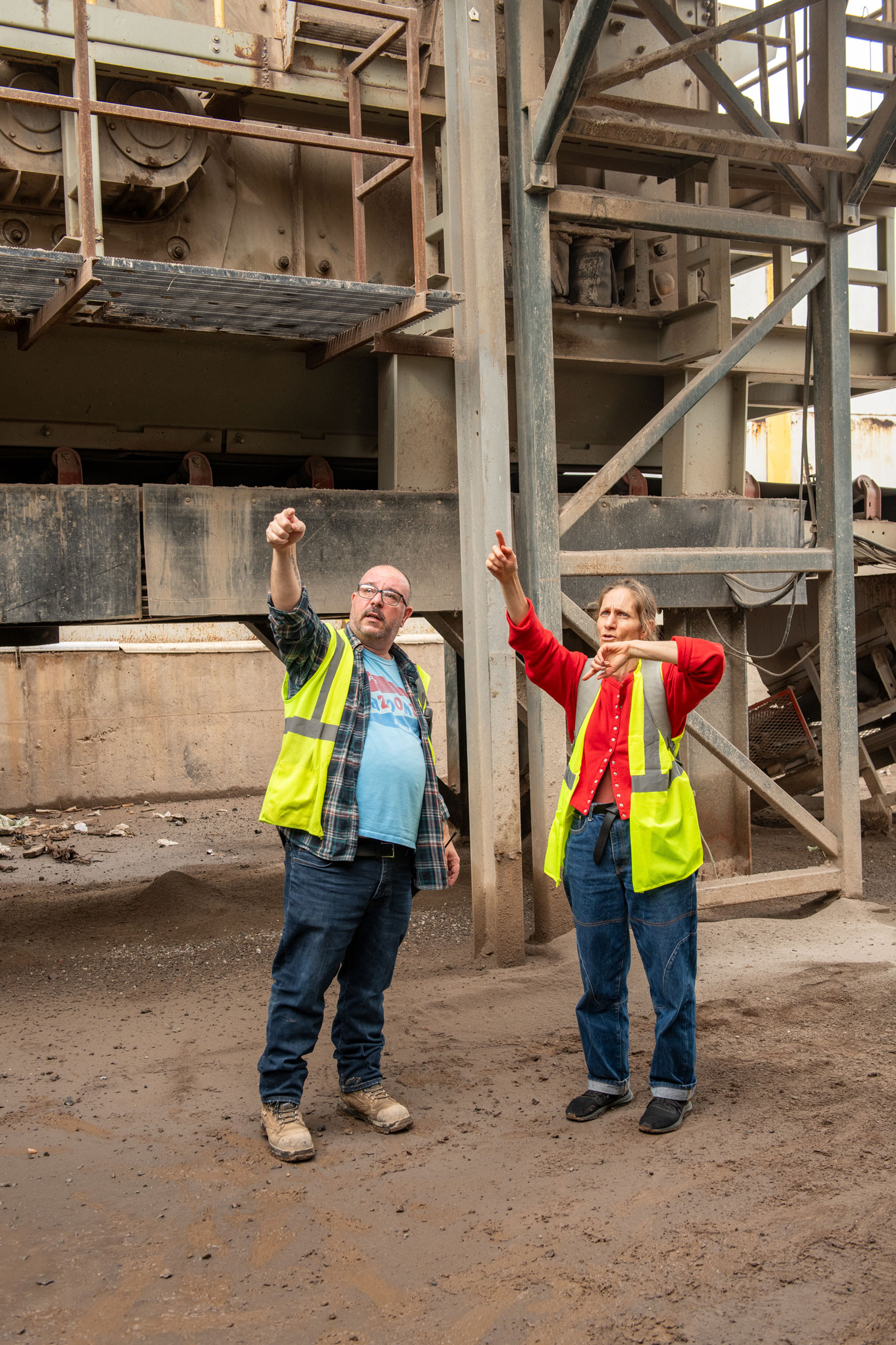
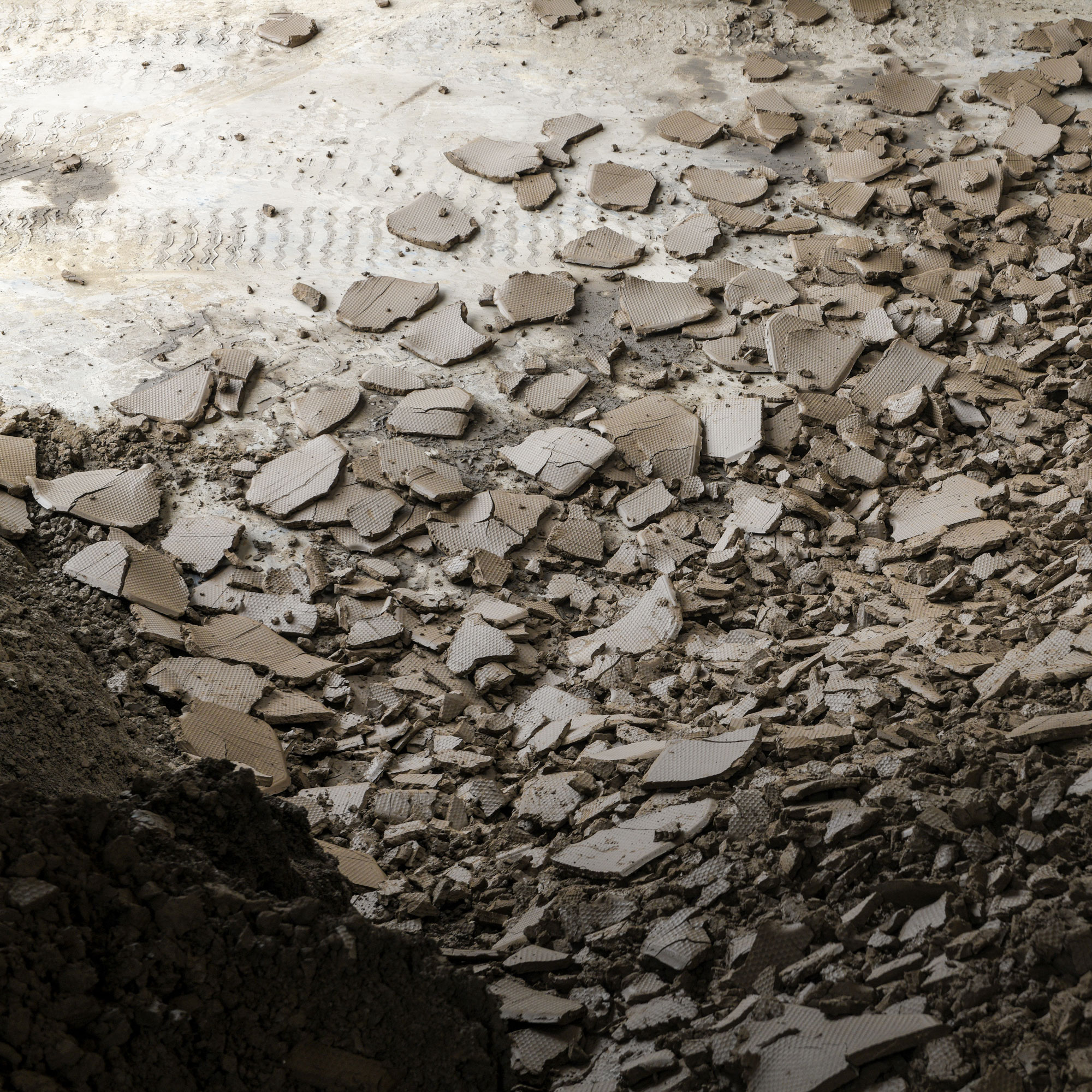
At the Faztec gate, weigh station scales verify what trucks are dropping off. An excavator moves the payloads into a pile for the front-loader, which carries the material to the screener. Sifted soil drops into piles and is then stored until it can be resold. The effort to recycle excavated soil is, nonetheless, ancillary to Faztec’s primary business. The transfer station exists to make hauling fast and profitable: Trucks can get there and then back to an active construction site for the next pick up in less time. The faster the screened soil passes through the facility, the more space there is for new deliveries. With each delivery comes a tipping fee. With each load of soil sold comes additional revenue, value from waste. It’s a great business model when supply and demand are in balance.
At the time of its development from 2017 to 2020, the Matrix site was a boon to Faztec. More demand translated into lower tipping fees and expanded business, plus additional profit from soil sales. It was an environmental net positive as well, at least in terms of hauling. The continuous flow of material moving through Faztec exemplified efficiency in the soil-shifting system, with the shortest possible distance from the location of the excavation spoil to its so-called sink, the site of its reuse.
This kind of alignment is rare, however. For Faztec, operations and profit margins vary dramatically depending on local demand. The baseline costs of operation are substantial: Even if only to make room for new incoming spoil from hauling contracts, Faztec has to keep material moving around the yard. As a result, machinery works hard here, with a five-year-maximum lifespan. When space is at a premium, because soil isn’t moving quickly enough, disposal costs go up to cover more expensive hauling to other sites and to compensate the loss of revenue from soil sales. In other words, lower flow rate means an increased cost of operation at Faztec, which in turn pushes the prices charged to excavators higher. Those would-be clients are then more likely to send spoil to landfills with lower tipping fees in other states.
All this matters beyond the company’s balance sheet. Waste is heavy. The diesel fuel that moves it has environmental consequence. When the flow rate doesn’t favor local processing, the environmental impact of New York’s construction metabolism gets worse. But the New York City construction market is driven by time-to-completion, not environmental efficiency. Without motivation for matching flow and sink, the circular system that worked around the development of the Matrix site remains an exception.
Another version of this same system could instead foreground public benefit by using screened soil as part of local climate response. Wet summers and rising water levels pose real danger to low-lying areas in Staten Island and throughout the city. Dan Walsh’s study proposed that screened city spoil could be used to construct a protective berm along all of New York City’s 520-mile waterfront. At present, the most comparable initiative is the East Side Coastal Resiliency Project, which includes raised parkland, berms, floodwalls, and flood gates to protect lower Manhattan. The first phase was completed in October 2024 at a cost of $163 million. Multiplying the effort across the whole city may become a necessity, but for now, it’s hard to imagine who would pay for it.
Instead, public participation in the soil shifting system has taken the form of the municipally owned and operated Clean Soil Bank. Over years in the New York State Department of Environmental Conservation, Walsh recognized the importance of excavation as “underpinning” all construction activity in the city, and realized the inefficiency of a system that sent excavated materials out of the city to arbitrage differences in environmental regulation, only to have that same material, minimally processed, reimported for use as backfill or in land forming. Walsh reimagined underused or vacant sites belonging to city agencies as local neighborhood depots and sought to organize a just-in-time delivery system that would take uncontaminated deep strata soil deposits from excavation sites more or less directly to other nearby construction sites that were nearing completion, to backfill foundations or regrade sites. A new municipal division, he proposed, could assume the thorny responsibility of testing and verifying the material.
The result was ultimately the Clean Soil Bank, begun when Walsh was head of the Mayor’s Office of Environmental Remediation under the second Bloomberg administration. The City’s facility is located, like its private counterparts, on peripheral marshland. It operates on the parking lot of a defunct incinerator on Forbell Street in East New York, Brooklyn, adjacent to the site of the former Fountain Avenue Landfill.
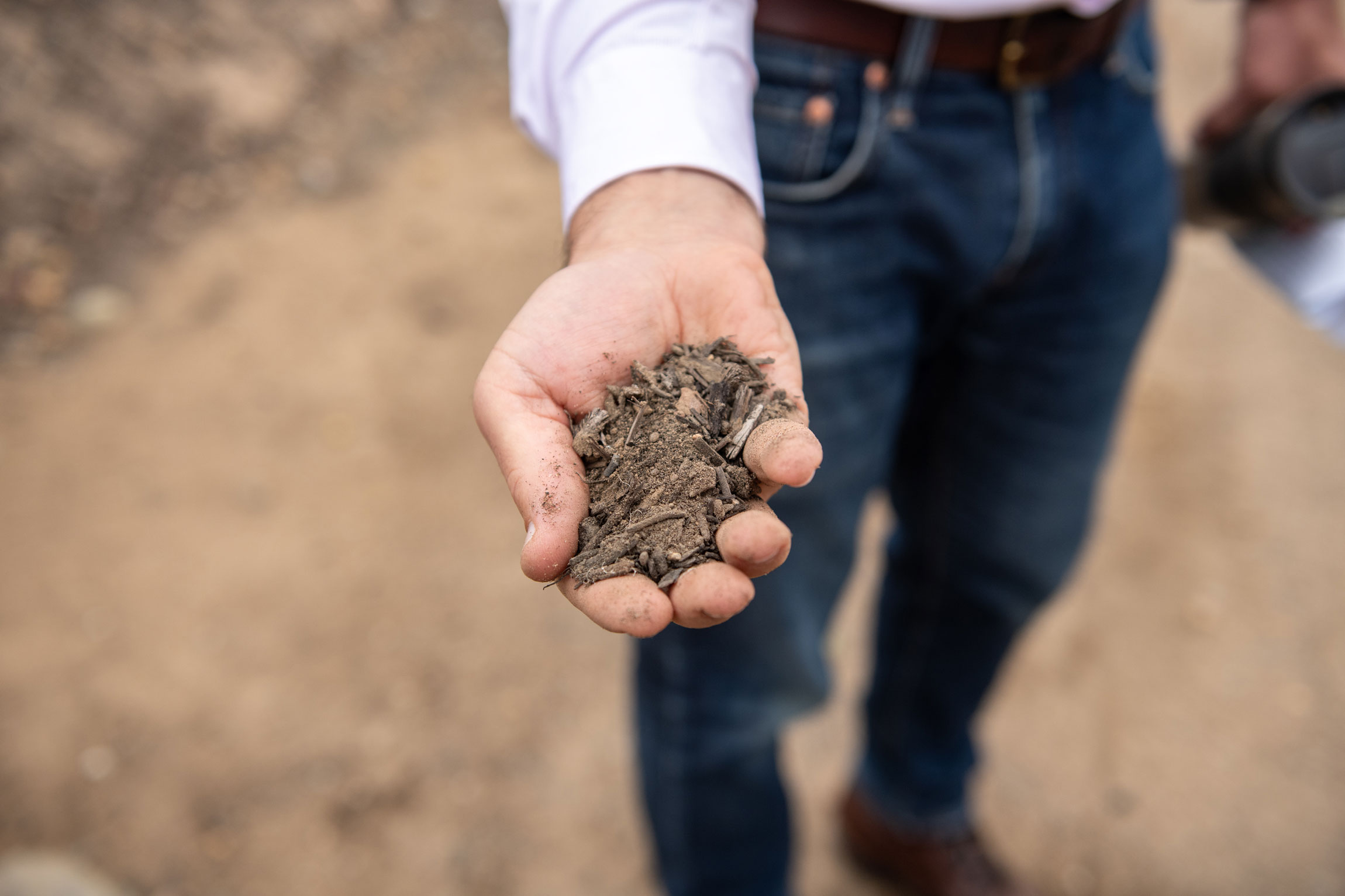
Each day, trucks arrive at the Soil Bank from 7 am until 1 pm, with the last truck no later than 1:30. The materials they deposit are delivered to a screener via front-end loader and sifted before they are homogeneous enough for reuse. Depending on the moisture content in the soil and its composition — loam, sand, and clay are the components of any soil — the screener can sift anywhere from 20 to 90 cubic yards per day. Most soil industry facilities, including Faztec and the Soil Bank, dry screen what arrives in hoppers, first to remove rocks, reinforcing bars, chunks of concrete, and other undesirables, then to ensure the size of the resulting particles is consistent. Each final destination and use case for screened soil will specify a different particle size, so that the appropriate size screen has to be installed in the hopper to ensure that the screened outputs — gravel, soil, sand — meet specification. Because the Bank has only one small hopper, screen changes can slow down processing and, because of labor requirements, increase the cost of operations.
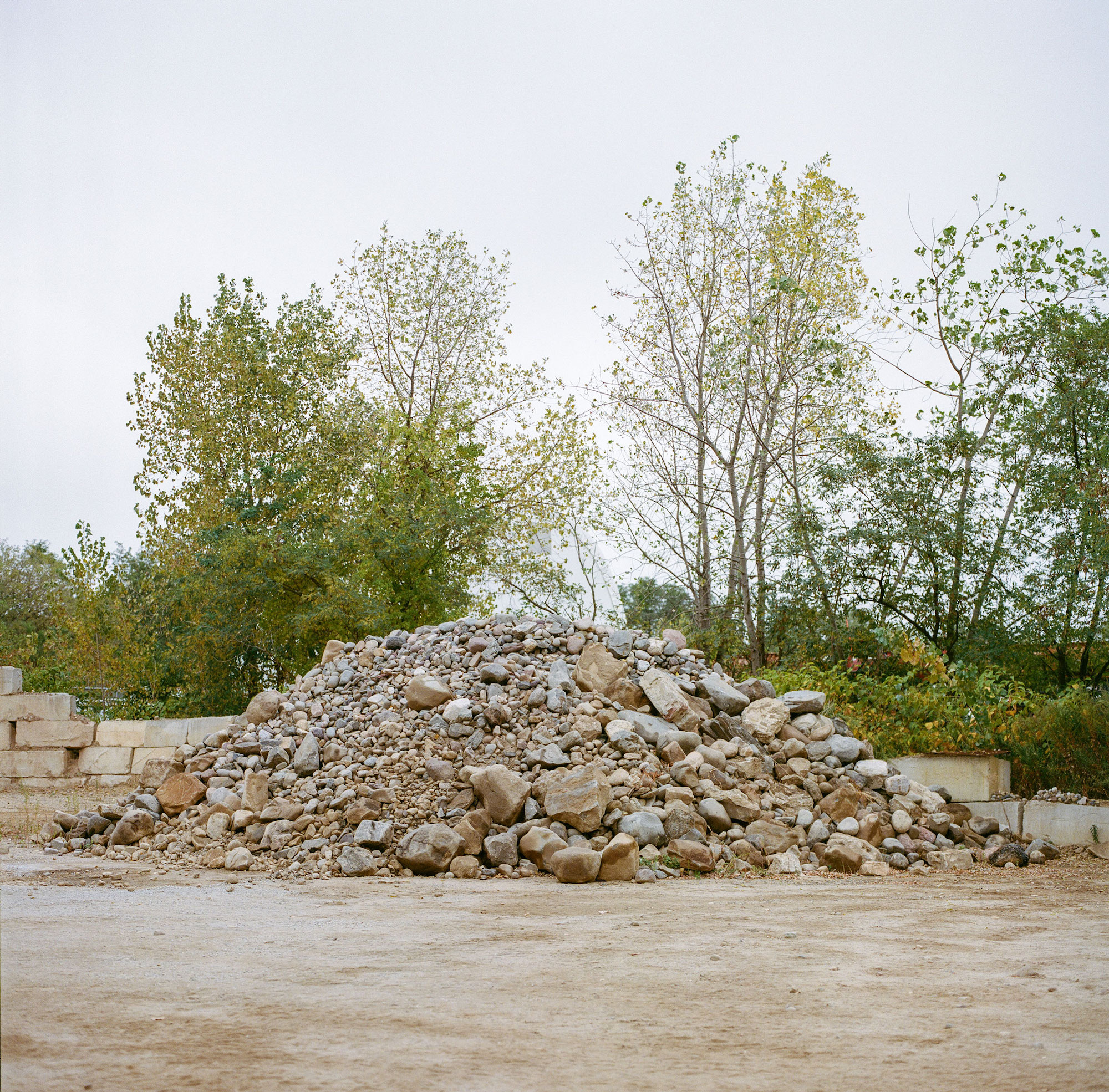
Inventory is arrayed along the edges of the site as it stretches back and away from the street. The bins are divided by stacked concrete blocks and numbered in green spray paint. The bins hold between 2,000 and 3,500 cubic yards of material, and each contains materials from a single site, since the unique composition of any given batch of screened soil determines its best re-use. In addition to reclaimed spoil, the Bank also stores compost and topsoil made by mixing excavated soil with that compost. Rocks, beloved of gardeners and landscapers who can figure out how to transport them, are mounded up in a far corner.
Separation based on geological makeup and site of origin can also slow down the process. And if the origins of the materials processed here make the work of the Soil Bank complex, the intended destinations for the screened soils introduce even more variables. Some product is picked up, by appointment, by home gardeners and community gardens, but in quantities that might not warrant the Soil Bank’s existence. Demand from other city agencies is more substantial, but each end re-use for the soil received, screened, and returned to circulation by the Soil Bank carries specific requirements.
In one Parks Department project, for example, Soil Bank material is being used for street tree planting and tree ball backfill. The soil has to be combined in a three-to-two ratio of soil to compost, after which ammonium nitrate, to support tree growth, is broadcast on top by hand. Bin 9 holds soil that was sourced during the renovation of the former Empire State Dairy on Atlantic Avenue in a process that began long before the excavator’s truck reached the gates of the Soil Bank. A state-managed remediation process deemed 40 percent of the material excavated from the site to be unusable, but the remainder, with a high sand content geologically typical for that part of Brooklyn, cleared regulatory hurdles and passed through the Soil Bank’s quarter-inch screener. The result is suitable for filling DOT crash barrels.
Material recovered at the Soil Bank is of central importance to several city agencies, and further opportunities can easily be found across municipal works. For example, as the New York City Housing Authority undertakes to refurbish its buildings, shifting from heating oil to electric heat pumps and removing old in-ground oil tanks, each hole will require backfilling. Sourcing the soil internally, from the Soil Bank, would mean only modest savings in dollars: If the volume of each hole is estimated at 200 to 500 cubic yards, then the cost of backfilling 50 or more factors out at about $4,000 to $5,000 per site. But there are other values at stake: The foregone carbon emissions from locally sourcing recycled soil could amplify the City’s larger environmental commitments.
When soil from the Soil Bank was used to cap a contaminated site at Hunts Point in the Bronx, the total estimated savings were $40,000 to $50,000. For private developers, these are sums that might not be worth worrying about; their projects’ financing is based on estimated time to completion, and in that context “just-in-time” delivery is worth a premium. Finance for municipal projects follows more stable budget cycles instead. For city government, which has motives beyond profit, there is real value to be found at the Soil Bank, where work may be slower but comes at a lower carbon cost. This slower processing rate meant that the Soil Bank had to decline when a golf course on Long Island called seeking a clay-silt mix for paths and shells for the sand traps. There are plenty of places to get local soil on Long Island, whereas this is the only facility that can save the city on hauling and processing twice over, minimizing local air pollution and carbon emissions. Nevertheless, like the Soil Bank’s private counterparts, the facility faces growing pressures in the intractable competition for open land: The site is tentatively slated for future public-private housing development.
The slower through-put rate of the Soil Bank means more habitat for disturbed nature from nearby Spring Creek Park. In late summer, plants flourished in the soil stored in bins along the Soil Bank’s perimeter. Sparse but well-established, they seemed to root equally well in all the soils, whether sifted or still containing larger rocks, auburn-sandy or ebony-mulched. Ragweed, mugwort, and jimsonweed: one native, one introduced from Europe for beer-making, and the last, originating in Central America but recorded in the 1670s in Jamestown and now found around the globe. In photographs, the plants provide dimensional referents: this is how high the soil piles, how broad it spreads, how finely or coarsely grained it lays. They also mark the passage of time: this is how long, and for what seasons, the pile has resided here.
Long Island has, from earliest colonization, been New York City’s productive hinterland, a source of food, water, and wood to fuel the city’s growth. Over time, agriculture gave way to the management of other resource flows underpinning human settlement. Contemporary Farmingdale, once adjacent to an aquifer that supplied water to Brooklyn, is a case in point. By 1950, the same area was host to a landfill, absorbing waste from a growing suburban commuter population housed in brand new cul-de-sacs. Today, fertile soil and accessible fresh water aquifers now make for verdant, irrigated memorial plots in the privately-owned, 839-acre Pinelawn Memorial Cemetery.
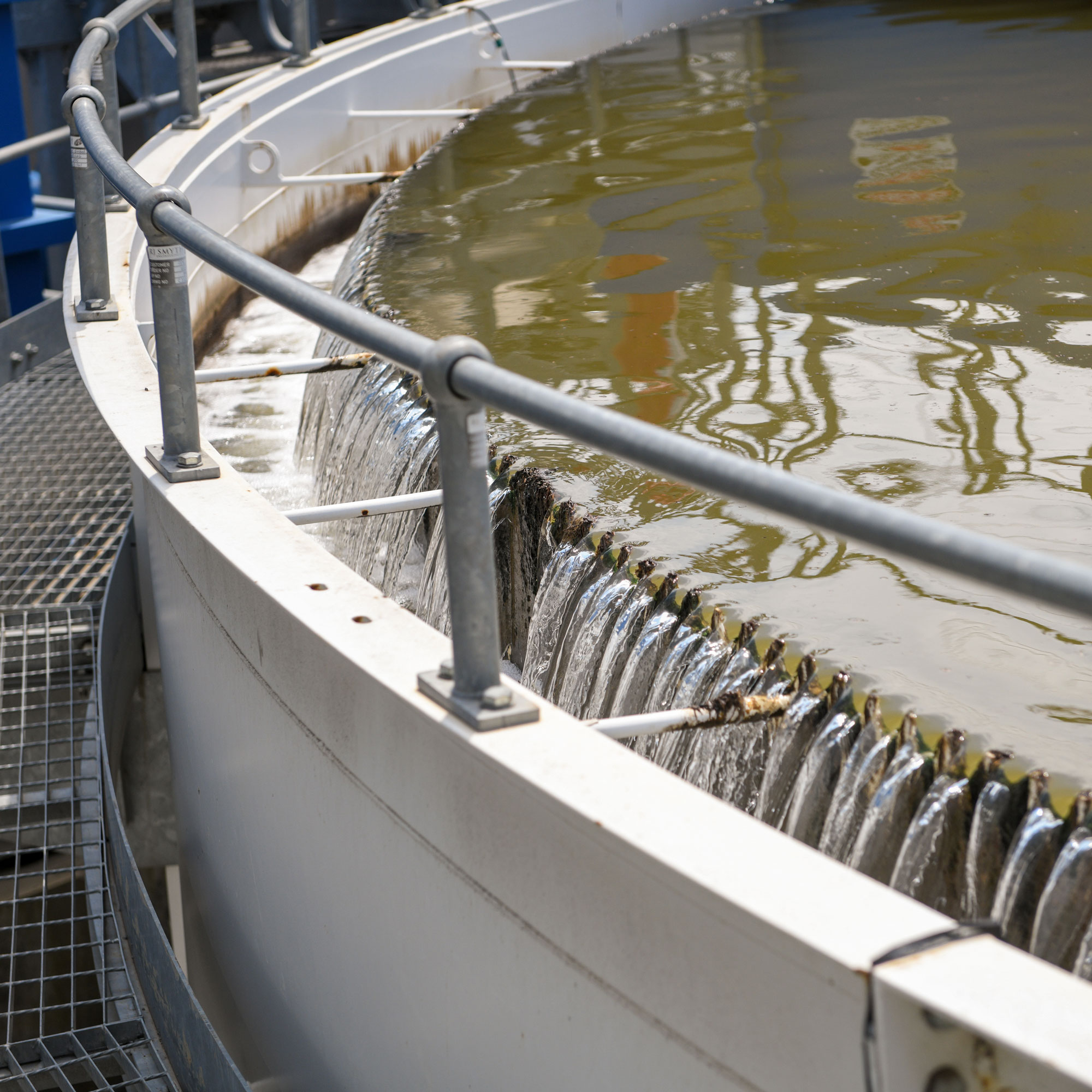
For Posillico Materials, water is no less essential, although in this case the water used for operations is sourced from run-off captured on site and from the adjacent airport runways. Posillico is a four-generation, family-owned construction logistics operator. In 1971, the company began to supply paving material for an extensive local road and water infrastructure construction project from its asphalt plant on the Farmingdale site. In the ’90s, the plant was upgraded to accept and reuse post-consumer asphalt, and in 2019, the company expanded its operations to include soil washing at the Posillico Wash Plant.
Soil washing ingeniously magnifies the value that can be derived from soil shifting by increasing the amount of saleable material that can be recovered from the admixture of soil, rock, debris, and chemical substances extracted during construction excavation. If more material of a higher quality can be derived from waste, the cost of hauling is more easily offset by sales. The result can be tipping fees low enough to be competitive, despite the higher operating costs of washing technology — and a circular economy in which one industry’s waste becomes another’s feedstock.
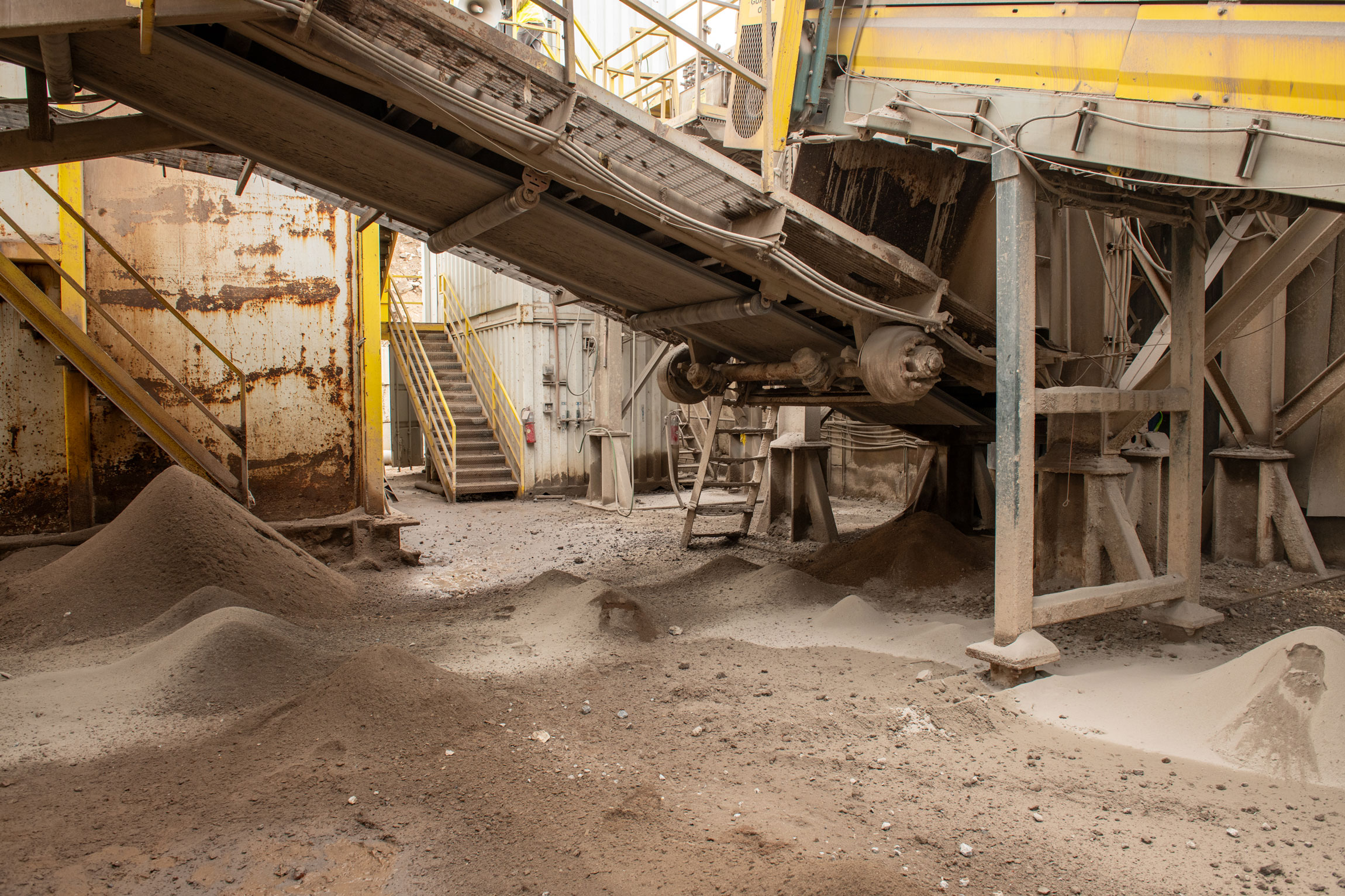
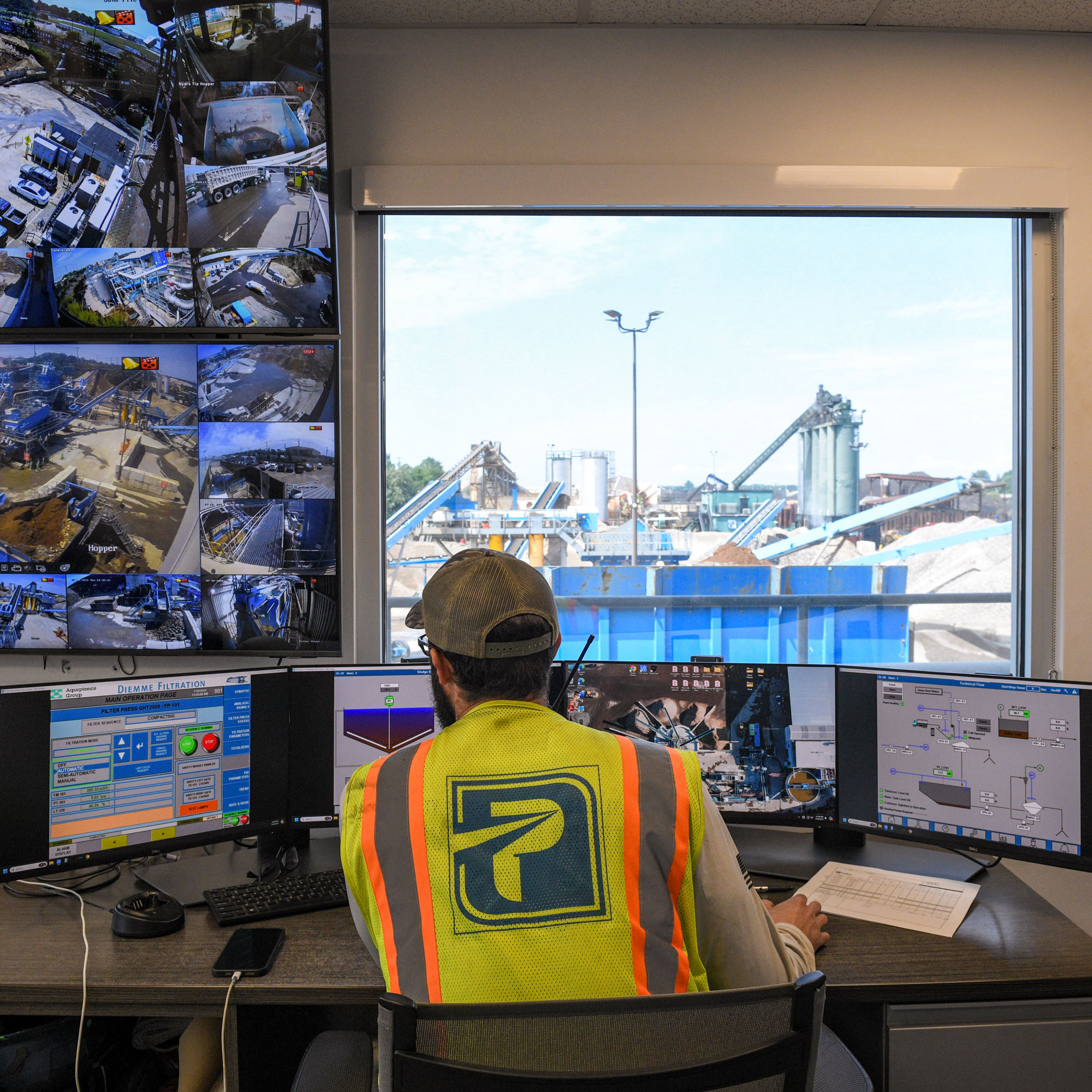
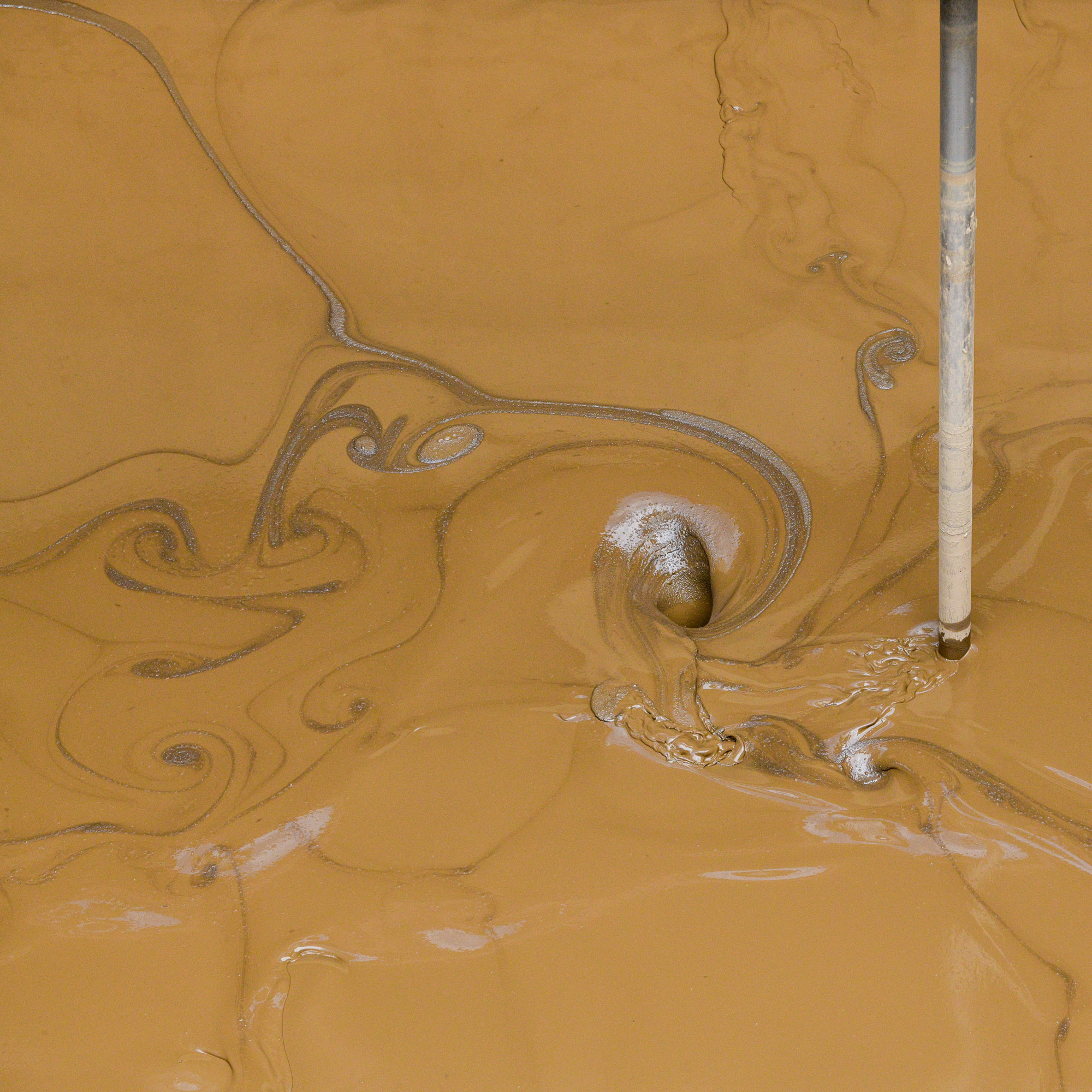
Rather than the slow and expensive process of dry-screening over multiple rounds, Posillico Wash Plant only dry-screens for rocks and larger elements at the beginning of its process. A front-loader moves spoil from the tipping pile to a hopper with a two-and-a-half-inch screen. The sifted spoil is then deposited on a conveyor belt which runs past magnets that remove ferrous metals. Next, the spoil is mixed with water at a rate of 66,000 gallons per minute to make a slurry, which runs through conduit where it is forced across a series of screens to produce aggregate that conforms to engineering specifications: three-eighths of an inch, three-quarters, and “oversized,” for example. The resulting aggregate has also been “washed” of residual soil. Each sized aggregate or particulate is funneled via conveyor belt onto a pile from which it can be sold. The sorting technology can differentiate materials so precisely that the outputs meet engineering requirements usually reserved for virgin materials. Sand for concrete or masonry grout; gravel for concrete aggregate, bearing capacity, or water permeability. Posillico’s plant can sort up to five different end products at once, based on what kinds of excavation material are being delivered. Capacity is a staggering 350 tons per hour.
Across the entire campus of the wash plant, the only diesel-powered vehicle in operation is the front-loader that moves spoil from the tipping pile to the washing line intake. From that point on, water is the primary vehicle for moving soil, and pumps are the mechanical means of conveyance. Even on a hot, dry August day, there was little trace of dust on the sky-blue steel from which every element of the plant is constructed.
Simple answers to complex questions are only very rarely good ones. To envision an environmentally sustainable future for soil-shifting in New York means confronting often contradictory challenges and trade-offs. Electrify the vehicles hauling spoil? The weight of batteries with enough capacity to move heavy payload can undo the efficiency of electrification. Keep everything close by? Leaving soil and rubble on urban land that can serve higher uses seems wasteful in a constrained city. Prioritize the circular economy? The existing system already demonstrates the complexities of matching demand to supply.
Perhaps this is a moment for the public sector to lead by scaling up best practices it already models. A city-owned and operated exchange, fully utilized and ready to serve all agencies with their soil needs, could prompt a necessary reconsideration of how soil brokerage works more generally. Although soil recycling remains primarily a private enterprise, the public sector has every reason to intervene.
Meanwhile, businesses respond to their regulatory environments. Since 2022, New York State has mandated the use of recycled materials in highway construction, primarily through recycled asphalt. The Posillico Wash Plant, by virtue of its asphalt recycling capacity, contributes to meeting that demand locally. But a mile of interstate highway consumes more than 38,000 tons of construction aggregate in addition to all that asphalt. Thanks to the soil washing infrastructure on its site, the company stands to contribute, and gain, even more. The siting of facilities in and around the city also calls for careful consideration of costs and benefits, and collective choice to prioritize common good. In the context of the city-led development of “blue highways” to transport goods by water rather than via trucks on congested roadways, a Staten Island location close to the water might win out as the less carbon-intensive option.
A salt marsh is an imperfect model for the movements of New York City’s excavation spoil. Nevertheless, the marsh offers insights for reconceiving urban resource flows and sinks. Material cycles at different rates within the salt marsh, introduced from places far away by water, weather, and wind and consumed, at least in part, by plants and animals. Excess and waste are accommodated close at hand, though sedimentation, perhaps for some later use — or released farther afield, carried away by the same currents. Within New York’s human systems, matter likewise moves in, out, and through. Attending to its source, flow, and final destination is as important as counting carbon atoms for a city that aspires to environmental equity.
All photographs copyright Thad Russell
The views expressed here are those of the authors only and do not reflect the position of The Architectural League of New York.