We are celebrating 15 years — and counting — of stories that are deeply researched and deeply felt, that build a historical record of what the city has been.
We are celebrating 15 years — and counting — of stories that are deeply researched and deeply felt, that build a historical record of what the city has been.

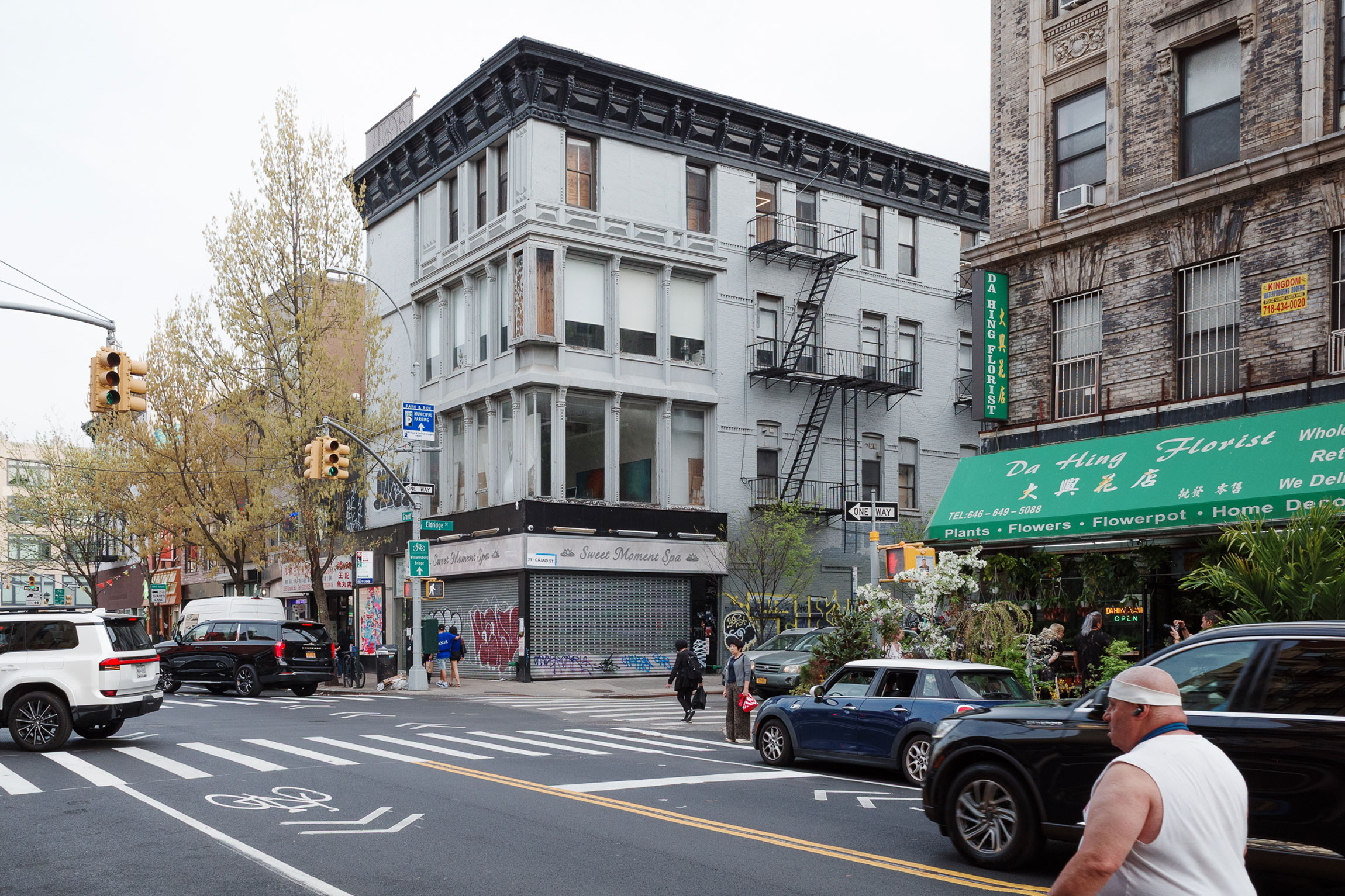
This story is already out of date: New changes have come to the blue-grey cast-iron building at the corner of Grand and Eldridge Street where our story begins. Crudely taped to the outside of 291 Grand Street is a Department of Buildings vacate order for “the entire ground floor commercial space,” signed March 23, 2026. The order cites “full height partitions and suspended ceilings” — an illegal redesign that recreated the interior as a movie set and a fire hazard in one swoop. These are just the latest in a long line of ad hoc interventions that, over the course of 137 years, have kept this historic cast-iron building flexible and functioning for communities of users. But with real estate pressures intensifying, that flexibility is at risk, as advocates seeking to protect buildings like this one from demolition (and replacement with luxury rentals and boutique hotels) reach for one of the few tools available: the Landmarks Preservation Commission. What’s lost when city policy values aesthetic integrity above all else? Here, architects Violette de la Selle and Wes Hiatt lead a tour through the history of 291 Grand and two other neighborhood buildings, making the case for a new preservation model that preserves vibrancy, utility, and affordability alongside cornices and columns. – SP
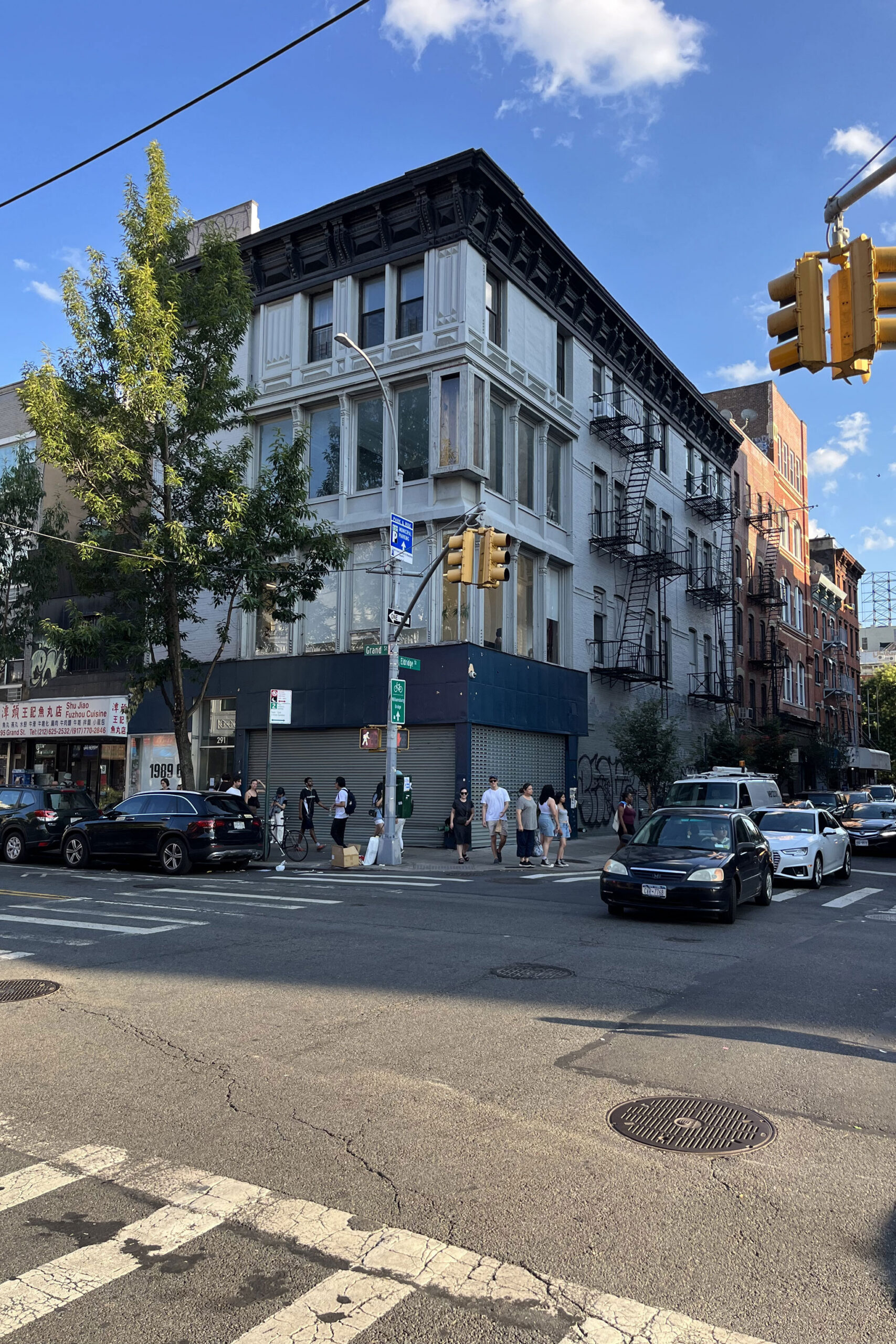
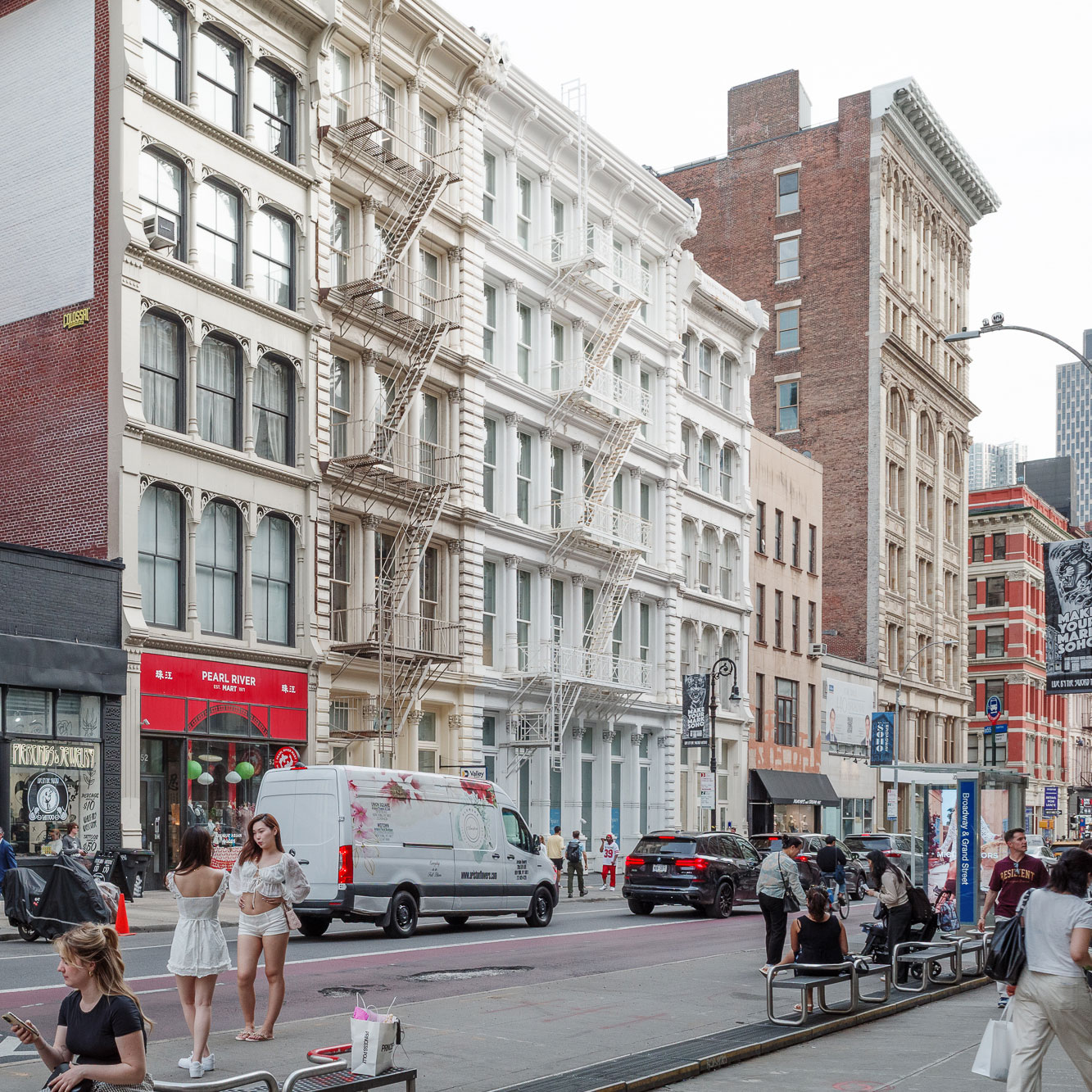
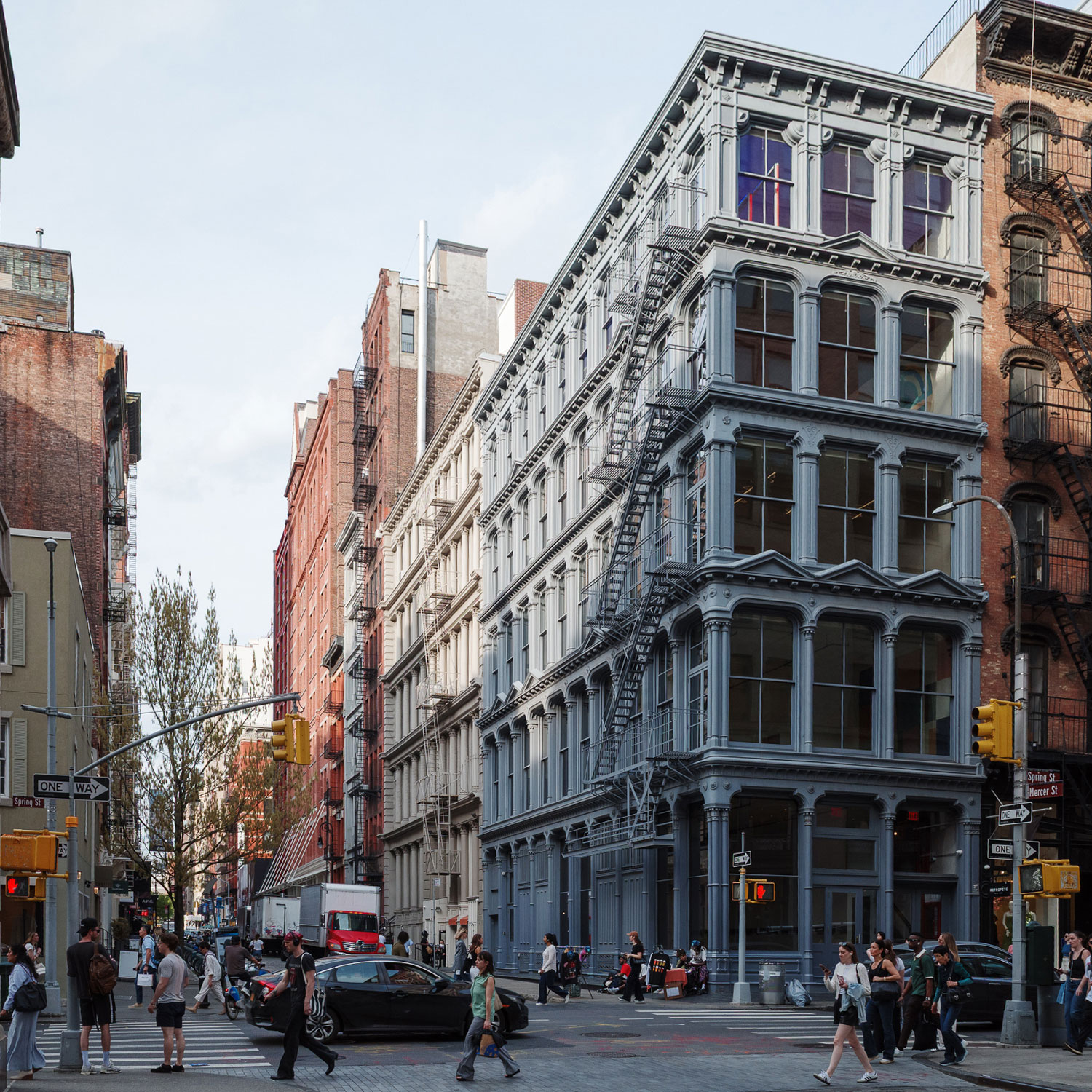
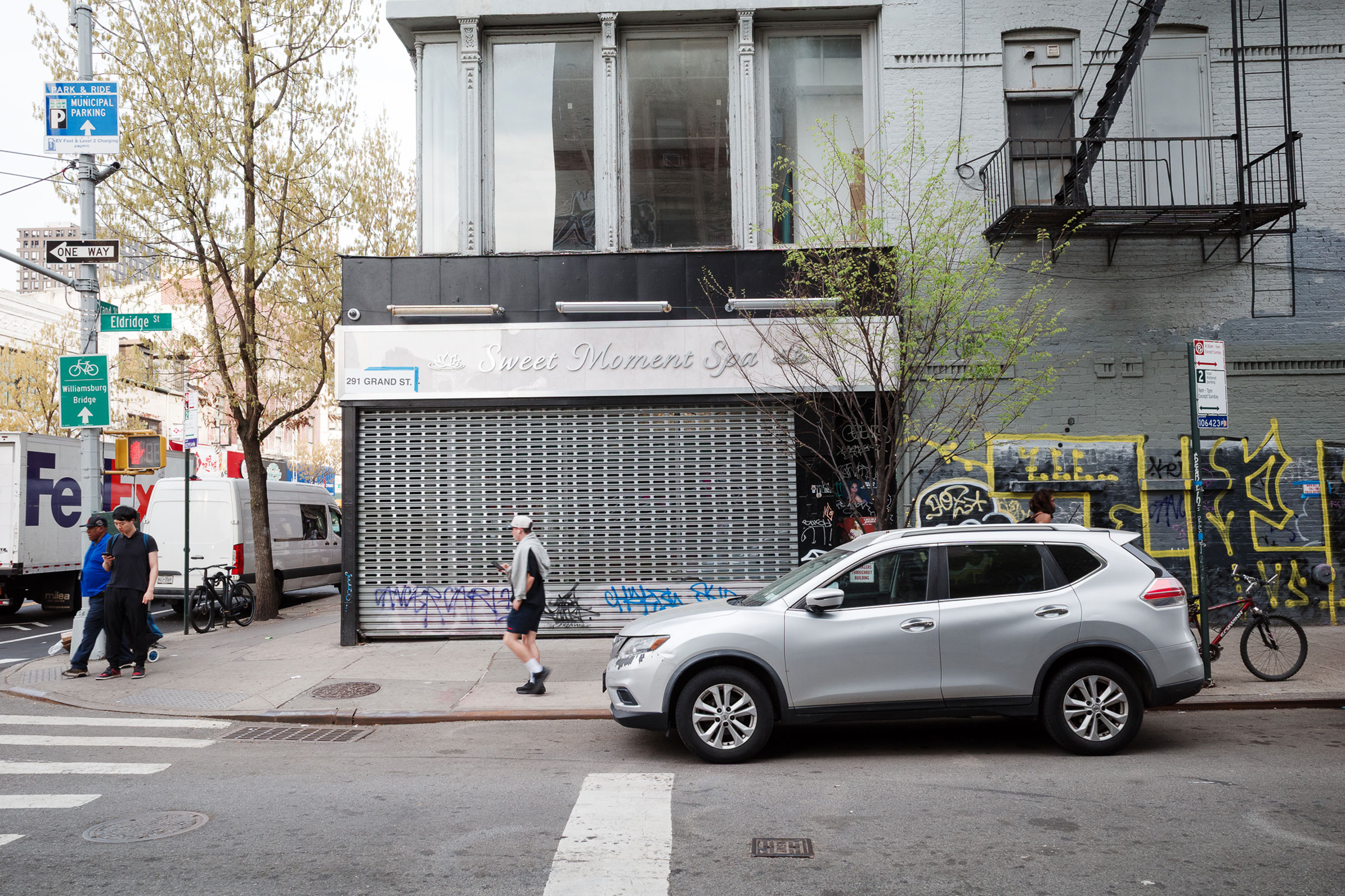
On the corner of Grand and Eldridge Streets, where the Lower East Side and Chinatown begin to blend, stands a blue-grey, four-story building, its cast-iron façade composed of ornamented columns and lintels surrounding large plate glass windows. The structure looks much like many other lower Manhattan loft buildings, especially the ones that have come to define the neighborhood of SoHo, just a few blocks west. There, ornamented façades like this one are strictly controlled as part of the SoHo-Cast Iron Historic District.
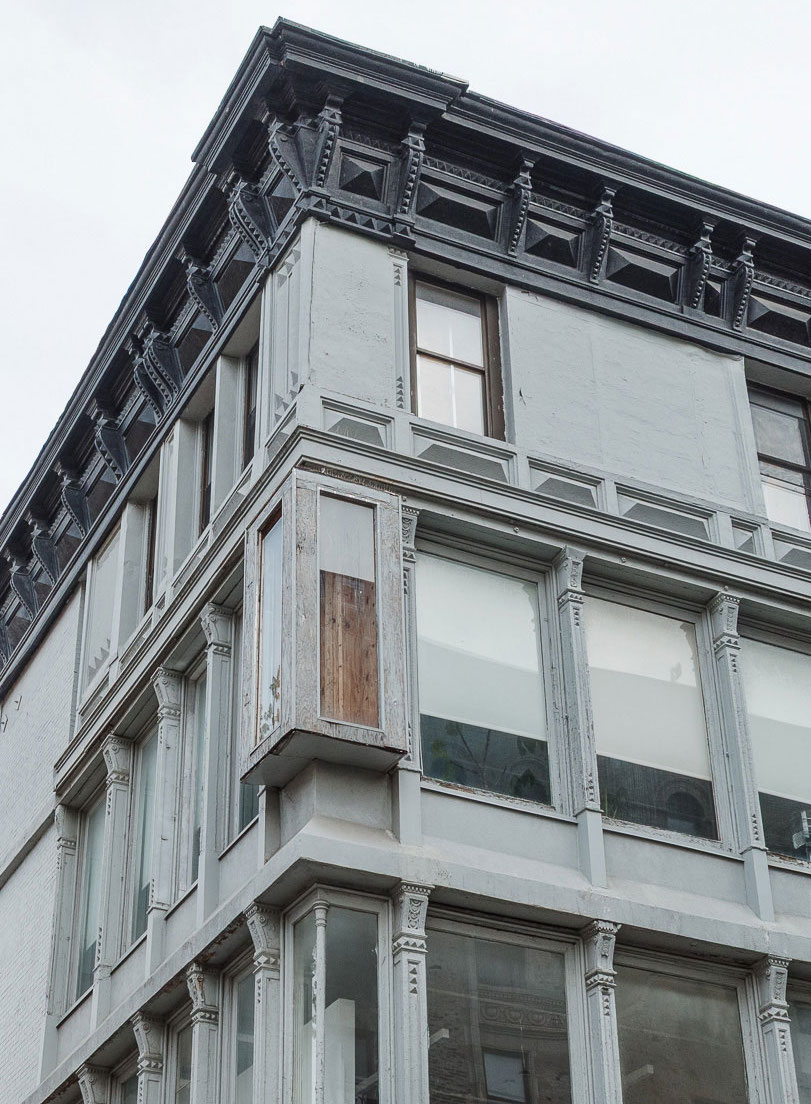
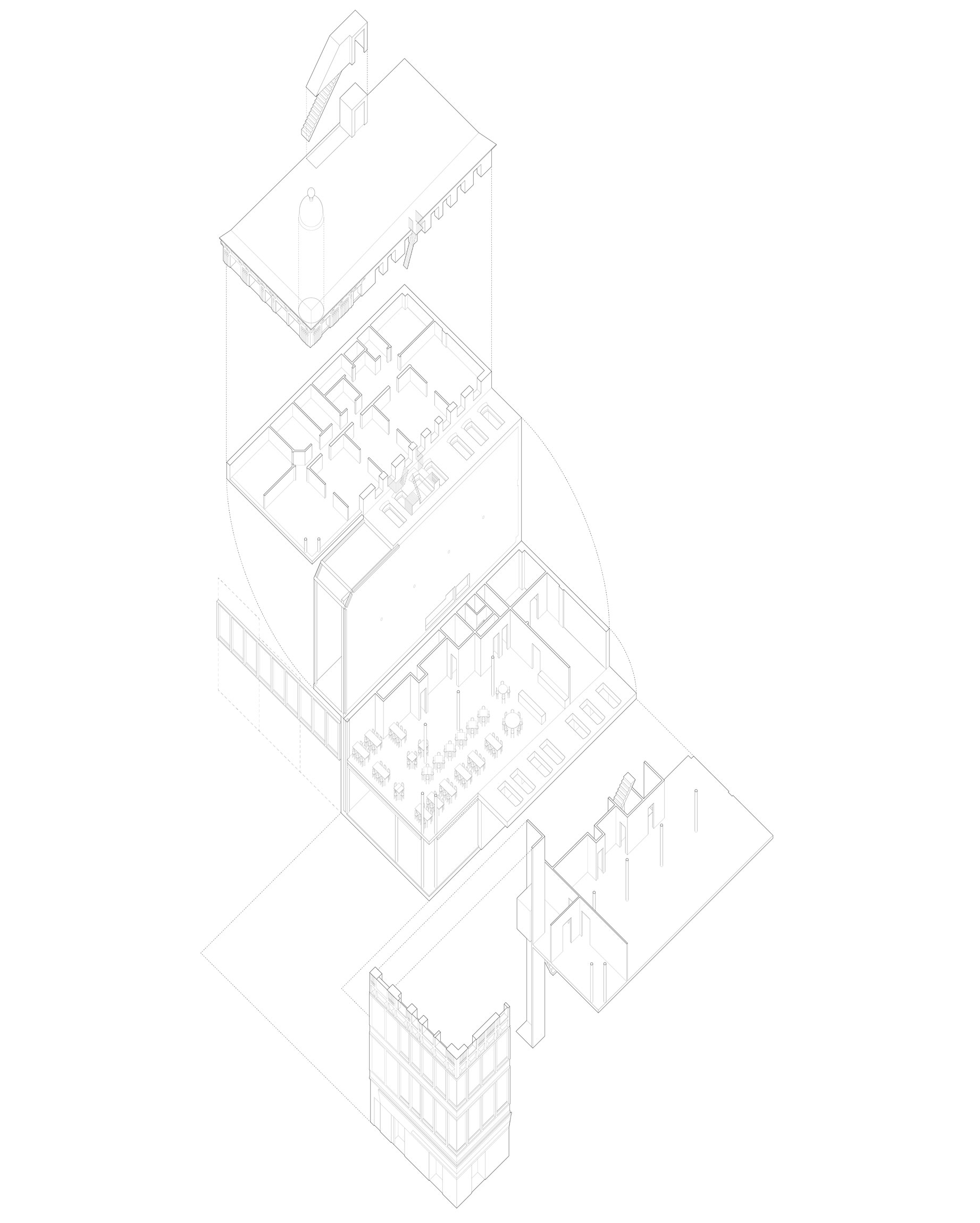
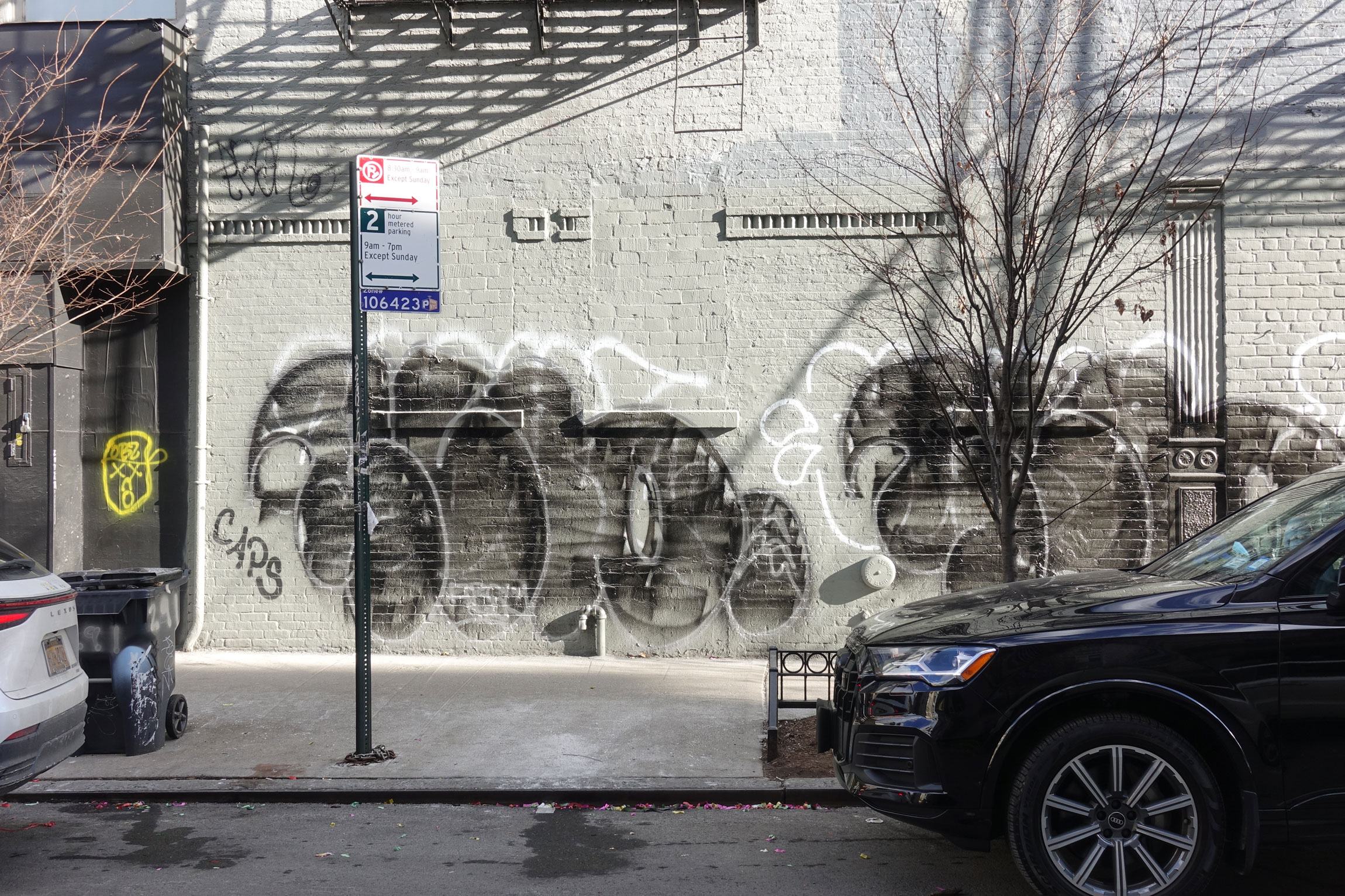
But look closer, and you will see that 291 Grand Street is less polished. You can pick out a weathered plywood vitrine precariously jutting out at the corner of the third floor. On the second and third levels, cast-iron spandrel panels once present below the windowsills are missing, replaced with a layer of stucco in one case and oversized signage in another. The bay of windows at the north-east corner of the building has been bricked in to accommodate a freight elevator.
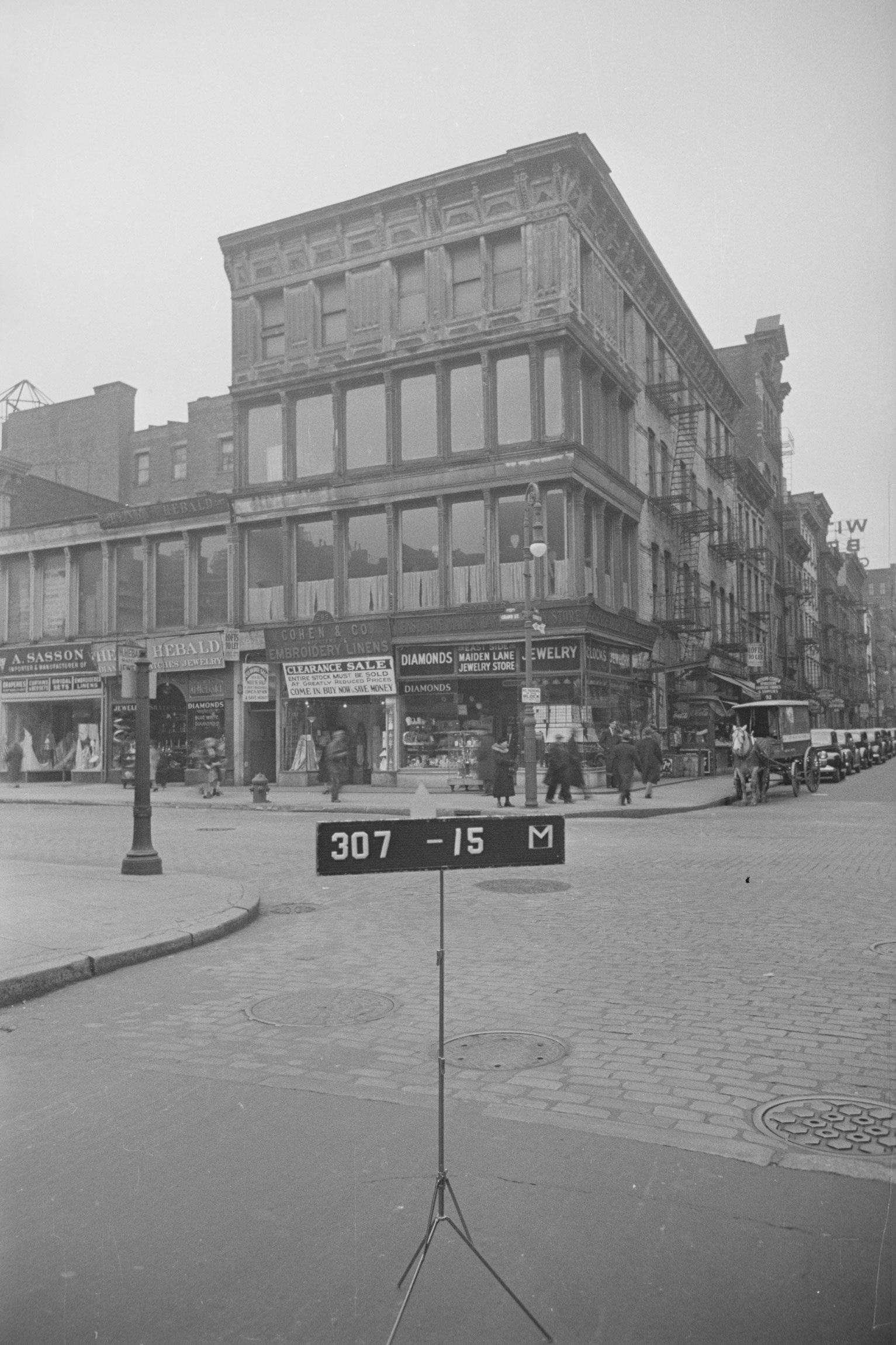
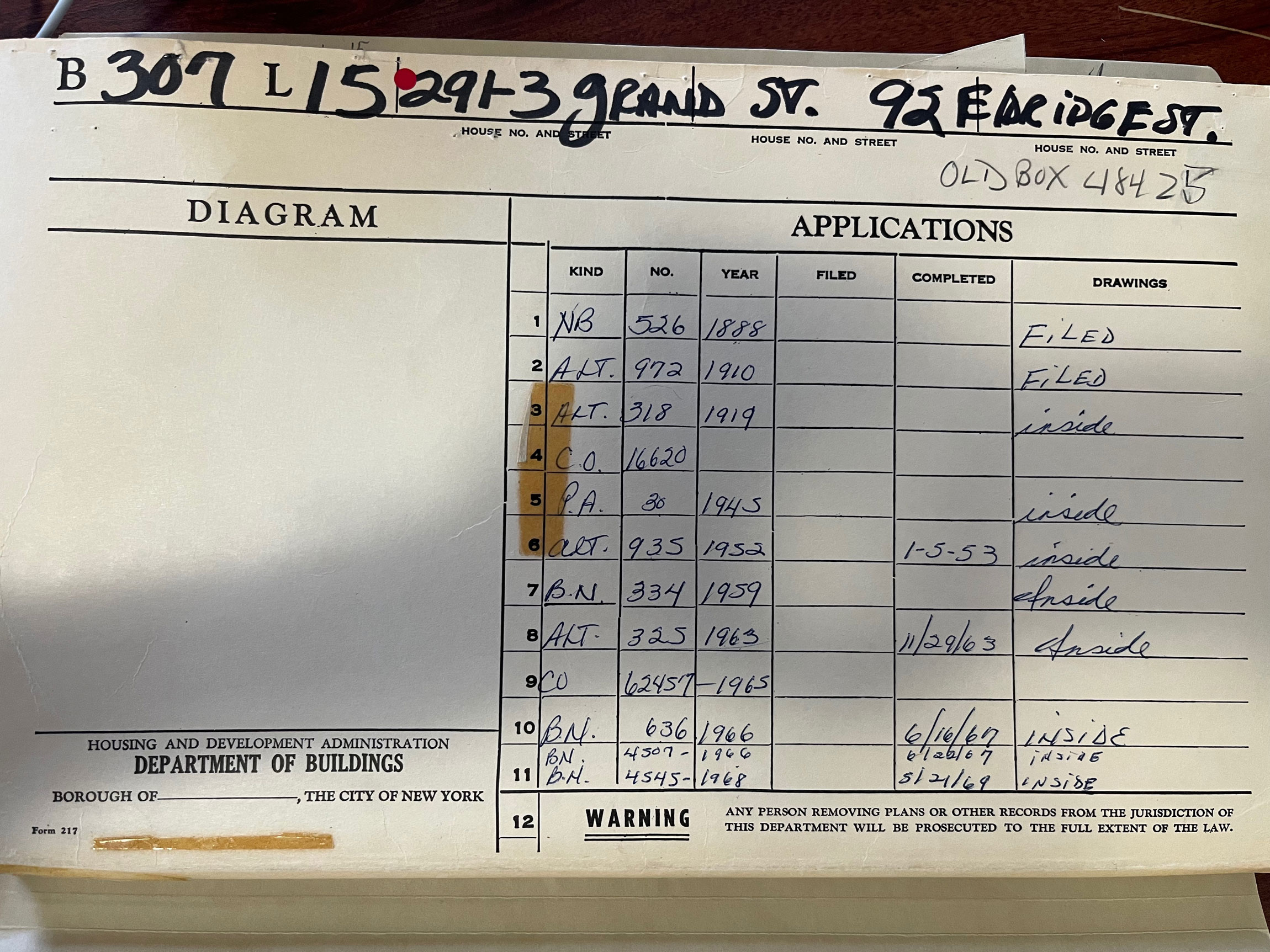
City records reveal these changes happened little by little. Building permit records found in the Municipal Archives reveal that 291 Grand was built in 1888 with a brick envelope and a cast iron façade, common in Lower Manhattan of the mid-to-late-1800s. Elevations detail the totality of the original ornamentation, much of which has since been modified or torn off while newer features have been crudely affixed. All of the cast iron façade panels were in place when the 1940s New York Department of Finance tax photographs were taken but a dome which originally topped the corner had already been removed. In 1963, an alteration package was submitted to the Building Department for the introduction of the elevator. The oversized street-level signage begins to appear in photographs taken in the 1980s.
The façade at 291 Grand indicates interventions to meet the needs of the day: incremental updates to ensure continuous use rather than to adhere to a prescribed aesthetic regime. Such piecemeal interventions also suggest that decisions to alter the building were made economically, only where necessary, with materials chosen based on cost rather than “authenticity” to its origins. This pragmatic and cost-conscious approach, making discrete alterations to a building that allow it to function differently, is far less environmentally damaging than scrapping the building to rebuild on the same site would have been.
In New York City, the Landmarks Preservation Commission (LPC), which has protected more than 1,300 acres on the island of Manhattan, is the only municipal body that can permanently protect a privately-owned building from demolition. While landmark designation can keep an historic building in place, it can also prevent the sorts of adaptations and evolutions that allow a building’s community to survive. Unlike the ad hoc changes to 291 Grand, transformations to landmarked structures are scrutinized by the Commission and must not mar the street façade.
The Lower East Side and Chinatown below Houston Street make up the largest swath of undesignated urban fabric in Lower Manhattan, hemmed by historic districts and sparsely dotted with individual landmarks. Ironically, because the historic buildings in this neighborhood are unprotected by the LPC guidelines, they are also unconstrained by them. In the absence of rules, the buildings have been able to transform inwardly and outwardly to accommodate many diverse uses, evolving to reflect the differing needs of generations of New Yorkers.
In contrast to the model of preservation administered by the LPC, the centuries-old buildings of the Lower East Side stand as manifestos for an alternative: Buildings need not remain bound to their original designs — pristine and immutable — but rather should contribute meaningfully to their communities, taking on different aspects as they age in order to adapt to the changing circumstances that keep them in use. What if preservation frameworks could embrace and even facilitate degrees of change rather than requiring abrupt “high-fidelity” restorations?
On average, a building in a US city survives about 80 years before demolition, so, having hung on for 137 years, 291 Grand has fared quite well. But while the façade has remained mostly the same, the building has resisted performing as a single entity wrapped in a pristine envelope. Its rectangular floorplates first hosted a dry goods store and its inventory, with the owners’ residence on the top floor. In 1930, manufacturing occupied the fourth floor, a synagogue the third, a restaurant the second, and multiple shops could be found at street level. In 1965, the building largely contained dry goods retail again, with related offices and storage space. For a stretch in the last 10 years, art galleries occupied every floor, and today a spa occupies the ground floor. Over time, changing interior uses called for improved vertical circulation, more display cases, less ornament, more signage. Bearing the evidence of countless modifications, the building makes the case that change is critical to endurance, and that mutation is therefore a technique for preserving buildings.
But the one type of change that no building can sustain is obliteration. Since the turn of the 20th century, the neighborhood around 291 Grand has seen waves of demolition. The area became synonymous with overcrowded immigrant housing and disease in the 1890s; in subsequent decades, blocks of tenements were cleared in the name of health, as Title I of the National Housing Act empowered municipal authorities to raze neighborhoods and the relocate tenants in anticipation of new workforce housing. With each new wave of demolition, it is impossible to ensure that affected individuals, families, or businesses will remain or return.
Demolitions have steadily increased over the last two decades, including catty-corner to the site, where a trio of three-story, 19th-century buildings were cleared to build a seven-story rental tower: The Artissima opened at 282 Grand Street in 2023. Such changes can be expected as the zoning here permits building 85 feet tall or taller — three or more stories above any of the buildings currently on the block. Taller buildings would mean more rentable units, producing more profits for their owners; any of the aged buildings can be demolished without justification.
Today, art galleries occupy three floors of 291 Grand and many more have proliferated in the neighborhood. In the eyes of developers such as those behind a rental property like the Artissima, the art-friendly environs are an amenity on which to capitalize. Galleries, as well as the places artists live and work, are commonly seen as an accelerator of gentrification; in a real estate dynamic where artist activity in a neighborhood is valued as a counter-cultural draw, even the artists and their galleries may be eventually displaced.
To avoid the wholesale erasure of these historic blocks, residents and community advocates may reach for landmarking as one of the few tools available to stop change in its tracks. But this mode of architectural preservation is a blunt instrument that would not only end but even reverse the ad hoc transformations that have kept 291 Grand affordable and useable throughout the building’s lifetime. Consequently, preservation could unintentionally contribute to community displacement.
The link between historic preservation and displacement is clear in neighborhoods like the West Village and SoHo, which first received designations in the late 1960s and ’70s. Vicki Weiner’s research details how educated and increasingly wealthy owners protected the buildings in these neighborhoods from demolition by instrumentalizing historic preservation. These activists, convincing self-advocates, eventually brought the Landmarks Law into being.
Significantly, in seeking an effective, universal framework for preservation, these owners gradually retreated from safeguarding established businesses, institutions, or at-risk populations, and abandoned goals beyond “the regulation of aesthetics.” Today, these neighborhoods concentrate some of the city’s most costly (and meticulously restored) real estate.
Enshrined in the New York City Administrative Code in 1965, the “Landmarks Law” created the LPC and defined its mandate (in definitive backlash to the demolition of Pennsylvania Station): to police the façades of buildings, discouraging any visible changes and allowing historical appearance to supersede other considerations such as use, energy performance, economic viability, or the conservation of building material. There are upwards of 38,000 landmarked properties in New York City, and 157 historic districts across the five boroughs.
The LPC monitors alteration projects in listed districts by referencing a narrow set of inputs, primarily the Department of Finance’s tax assessment photographic survey from the 1940s, a purely aesthetic reference point from a single moment in time, chosen only based on the availability of historical images. Through what has gradually become professional orthodoxy, the review process treats the building as two distinct entities: a street façade, which remains aesthetically immutable, and an interior, which can be aggressively transformed.
This approach forgoes possible synergies with, for example, sustainable building practices. Historic structures sequester carbon; for most buildings, renovations to the floors, structure, or walls are more material-intensive than those to the façade. If we prioritize preserving the interiors of buildings — the already mined, fired, or milled material they contain, or in other words their embodied carbon — older buildings become “climate assets that we cannot afford to waste.”
Interventions to prevent this waste are sorely needed. At present, the rate of building demolition in the neighborhood of 291 Grand Street is double that of construction, and the new construction rarely replaces the affordable units that are lost in full, incrementally scaling back the community’s stock of affordable housing and small businesses. City data shows that within this ZIP code, 200 buildings have been demolished in the last 20 years, compared to 36 a decade earlier. As new construction in the same area, at the rate of roughly 50 buildings per decade, replaces demolished structures, market-rate condominiums and rentals replace small-scale manufacturing, mom-and-pop commerce, and tenement housing.
Fixing or renovating a building, rather than demolishing it, significantly mitigates carbon consumption: While older buildings require updates to perform economically, installing new heating and cooling technologies and better sealed windows and doors, the costs of such interventions are dwarfed by the carbon expenditures of erecting new buildings. A building such as 291 Grand appears to be a double asset: While it is already built and continues to be used, it also models how waves of change can be allowed to transform historical buildings like this one.
Facing a dearth of affordable housing, accelerating global warming, and intense development pressures that seek primarily to optimize square footage and profits, how might we best protect the LES and Chinatown — among lower Manhattan’s last affordable neighborhoods — from the next wave of indiscriminate demolition? New York City policy has long prioritized aesthetic continuity over other forms of preservation: protecting the historical aesthetic of a building while displacing the people inside it. The strictures of preservation, as currently practiced, can make it impossible for legacy owners and tenants to maintain their stake over time. Can we formalize in preservation policy what has until now occurred ad hoc in buildings like 291 Grand? Can we broaden our definition of what makes a successful preservation project?
Two preservation case studies in the Lower East Side and Chinatown — one successful and the other not; one driven by pragmatism, the other by aesthetics — suggest a different model: one that gives communities the power to direct change on their own terms, that preserves affordability and aims to retain working class businesses and residents, and that promotes a more expansive understanding of what about a building is worth preserving in the first place. Change is inevitable, but its scope and who benefits from it are up for negotiation.
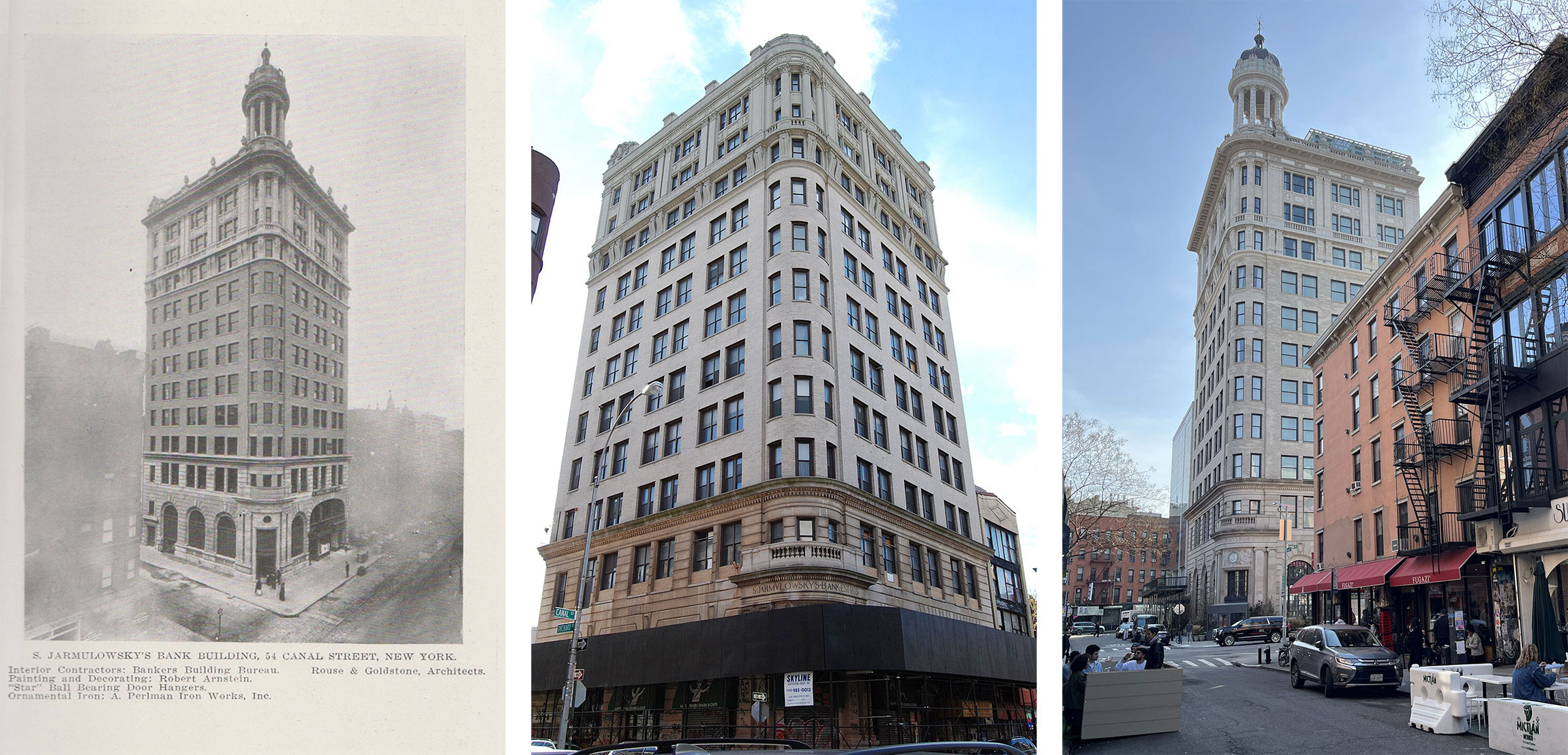
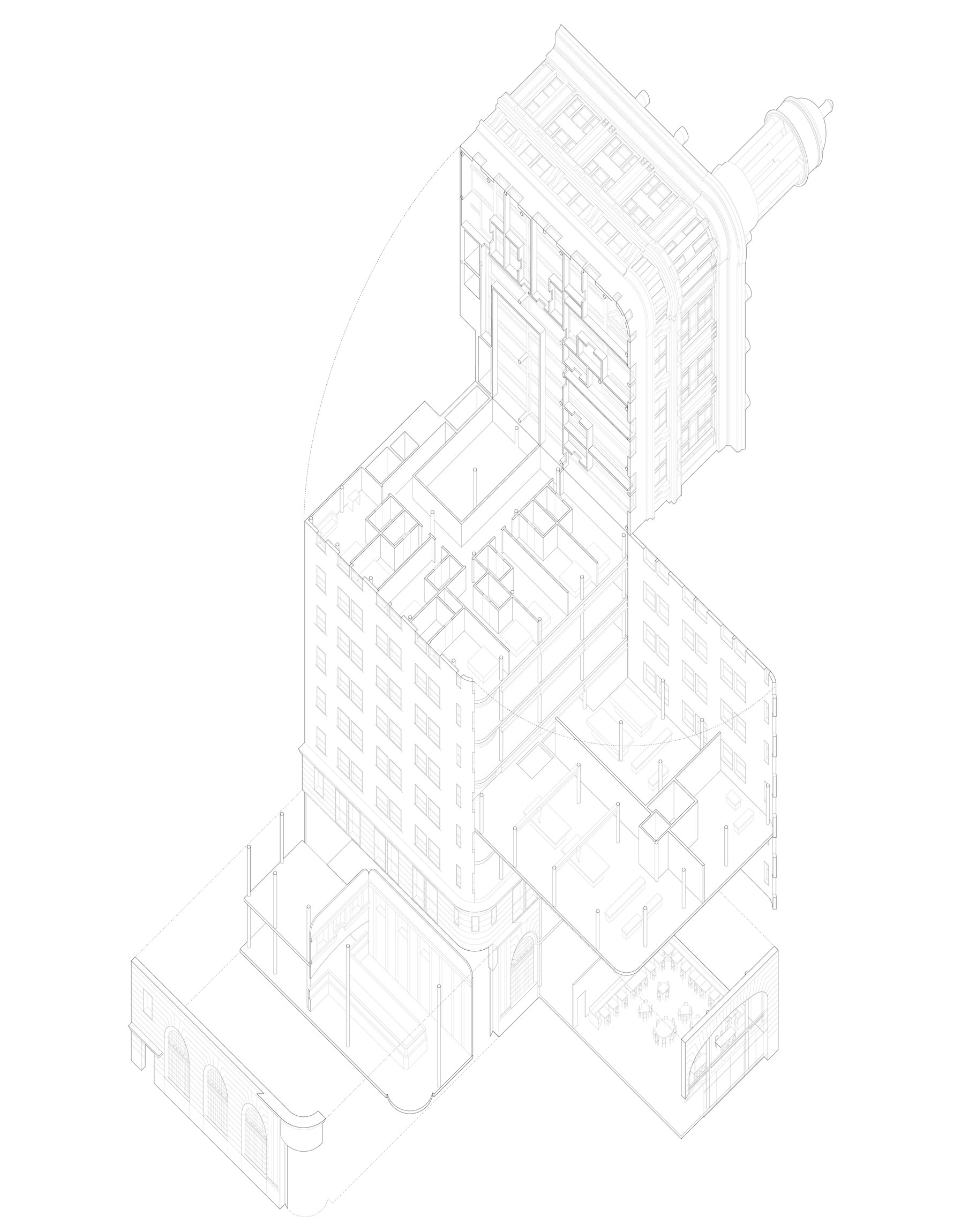
Nine Orchard, the boutique hotel that in 2022 took over the S. Jarmulowsky Bank Building at the corner of Canal and Orchard Street, seems to substantiate fears that an aesthetic-only preservation paves the way to gentrification. Completed in 1912, just four blocks away from 291 Grand, the building is still unique in the neighborhood for its “skyscraper” height — 200 feet, or seven stories taller than neighboring structures. Commissioned from the architects Rouse & Goldstone, the structure was intended to be the seat of Sender Jarmulowsky’s immigrant savings bank. That business would only occupy the two levels of the stone base, while the upper levels, clad in brick and terracotta, were to be tenant-occupied office spaces. Until the 21st century, various banking establishments operated from the building’s lower floors, but as no neighborhood businesses sought out the office space, waves of manufacturers — textile, garment, piano — came to occupy the lofts above. In 2006, the building was purchased by a developer; in October 2009, it was designated an Individual Landmark by the LPC with no stated objection from the owner; and finally, in 2011, it was sold again, to the owners that would fulfill its landmark potential at last.
With its distinguished design, and much of its original façade in place, the Jarmulowsky building made a strong candidate for designation. It represents a significant aspect of the neighborhood’s history: at the time of its construction, the East Side (now known as the Lower East Side) was crowded with poor, Eastern European immigrants to whom Jarmulowsky could provide banking services, when many treasury-backed banks would not. Jarmulowsky became extremely successful and influential in this pursuit, and his “rags to riches” story endows the building with a “special historical or aesthetic interest or value as part of the development, heritage, or cultural characteristics of the City, state, or nation.”
Until its designation 17 years ago, the Jarmulowsky building exhibited the same wear and tear and record of ad hoc interventions as 291 Grand, and over the years many of the façade’s ornamental elements had fallen gradually into disrepair. The transformation of the building — back into its past self — took more than ten years. Since 2009, the building’s outer façade has been meticulously restored with replicas of the lost ornamental elements and a recreation of the circular pavilion or “tempietto” that previously topped the prow of this corner building. Landmarking bluntly erased any evidence of the gradual change that defined this neighborhood for centuries. Fully restored, the building reopened its doors in 2023 as a fastidiously appointed luxury hotel. The banking spaces of the base now host the hotel’s entertainment amenities (two restaurants, and in the banking hall, a bar), while the upper floors, once rented to small manufacturing operations and then converted for tenants, have been filled with hotel rooms.
Once a building has been recognized as an individual landmark, any changes that would affect the bulk or involve any work on the façade trigger an LPC review. This requires meticulous documentation and treatment of the historical fabric visible from the street. LPC compliance can also require massive investments of time and capital. Experts such as historic preservation consultants can facilitate the review, increasing the cost of the project. Subsequently, skilled preservation craftspeople or builders willing to work in outmoded techniques must agree to navigate a lengthier construction timeline with more layers of scrutiny.
While the careful treatment lavished onto the Jarmulowsky building certainly honors this building’s historical appearance, it is also a clear illustration of what formal preservation tools and professional orthodoxies fail to protect. Throughout the neighborhood, centuries-old buildings remain in place but not technically intact because their occupants and owners prize the main resource they offer — space — without fetishizing their appearance. Instead, users adapt space to address changing needs and economic realities.
In renovating a designated building like Nine Orchard, cost and project duration are such that only corporate developers who expect high returns on investment can undertake the project. As a result, a different valuation of space takes hold. Nine Orchard rents its commercial space at nearly 20 times the rate per square foot listed in a two-block radius. The Jarmulowsky building exemplifies typical tradeoffs under the current preservation paradigm — building aesthetics are preserved, but the continuity of the community is imperiled.
Tenement buildings offer another example of gradual and pragmatic change. The block of 11–15 Clinton Street, between Stanton and East Houston, is a typically unruly collage of storefronts, signage, and fire escapes. These addresses map an arc of urban change and changemaking in New York City: from the speculative redevelopment of New York’s antebellum fabric in the early 20th century, to overcrowding and the development of regulatory apparatuses to mitigate it, with New York State’s first Tenement House Act of 1867 and subsequent revisions; from disinvestment and tax delinquency at midcentury to the indiscriminate demolition of “obsolete” tenements in their wake. In opposition to the latter phenomenon, the buildings at 11–15 Clinton Street now evidence the reinvestments of the 1980s and ’90s — specifically, infusions of capital by way of community development corporations (CDCs) that creatively leveraged government subsidies to improve living conditions and maintain affordable housing units.
Both CDCs and the historic preservation movement emerged out of midcentury urban crises — deliberate neglect, redlining, arson, and federal urban renewal — but they developed along different social, racial, and political trajectories. New York’s early CDCs took root in the low-income Black and Latino neighborhoods of Brooklyn and Upper Manhattan, where they focused on rebuilding communities through grassroots organizing and economic self-determination. Seeing an opportunity to house families affordably while reducing blight in their neighborhoods, CDCs sought to reuse and maintain existing buildings.
Tenements, brownstones, and other 19th-century housing stock were repaired and reorganized to accommodate new standards for safety and health. Living quarters were updated with sprinklers and mechanical systems, while layouts were reconfigured to provide larger rooms, private bathrooms, and other improvements. CDCs prioritized community stability, with practical necessity trumping aesthetic orthodoxy. Today, the row of two (once three) tenement buildings at 11–15 Clinton Street tells a story of incremental change motivated by both development pressures and community-led reinvestment.
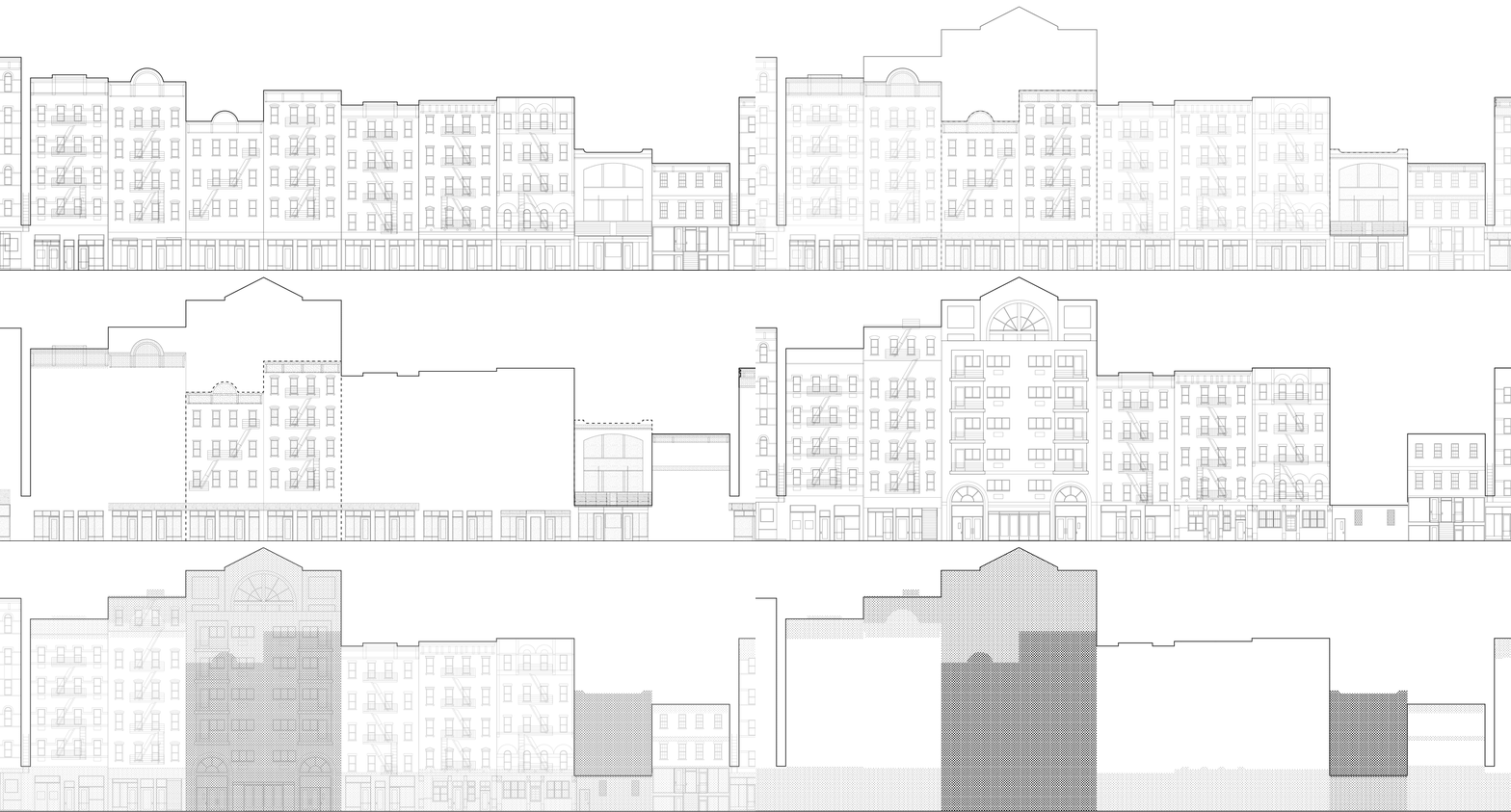
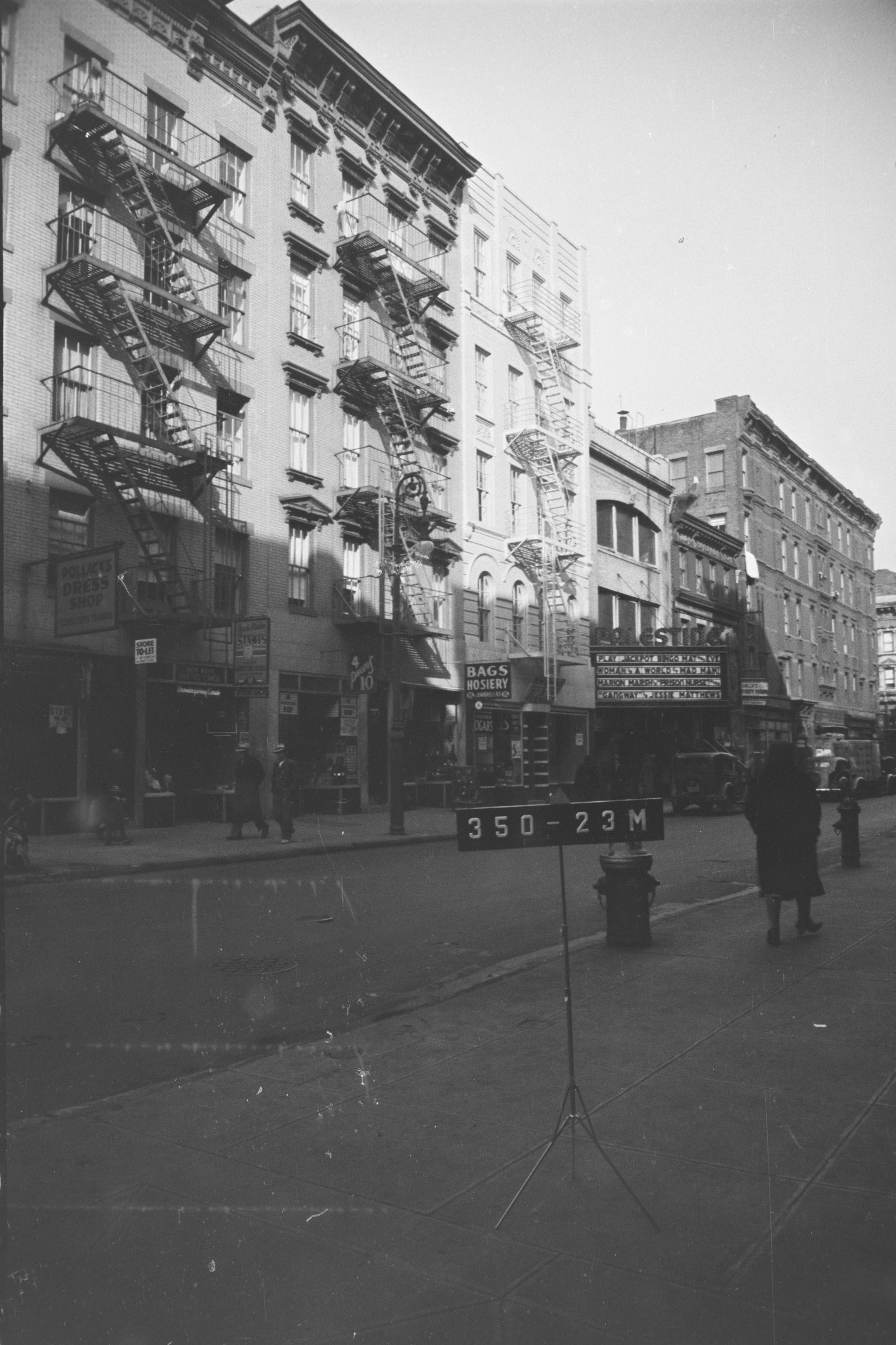
An 1868 maps shows twin three-story brick houses fronting the street at numbers 11 and 13 with additional buildings in each of their rear yard. It would have been commonplace at the time for the buildings to have been hastily transformed to house multiple families (one per floor) and perhaps shops downstairs, though they had initially been constructed as single-family dwellings. The increasing need for housing gave rise to additional three- or four-story structures in the rear yard, also parceled out into tight residential quarters. Number 15 shows a five-story, Pre-Law tenement building (built before the city’s first housing regulations) occupying the full width of the lot and scarcely allowing for a rear yard. By the 1890s, the low-rise townhouses, shops, and workshops lining this stretch of Clinton Street were replaced by denser tenements: a nearly identical pair of 1890s Old-Law tenements at 11 and 13 Clinton (built under the 1879 Tenement House Act), with typical dumbbell-shaped plans allowing only a modicum of light and air into the building.
By the 1920s, the Old-Law tenement at 11 Clinton had been demolished to make way for the Palestine Theatre. This marked a net loss of 18 overcrowded dwelling units and two shops, while the change in use and significant turnover in the ground-floor storefronts throughout the block indicate a robust street life. Buildings were continuously modified to serve the community’s commercial needs.
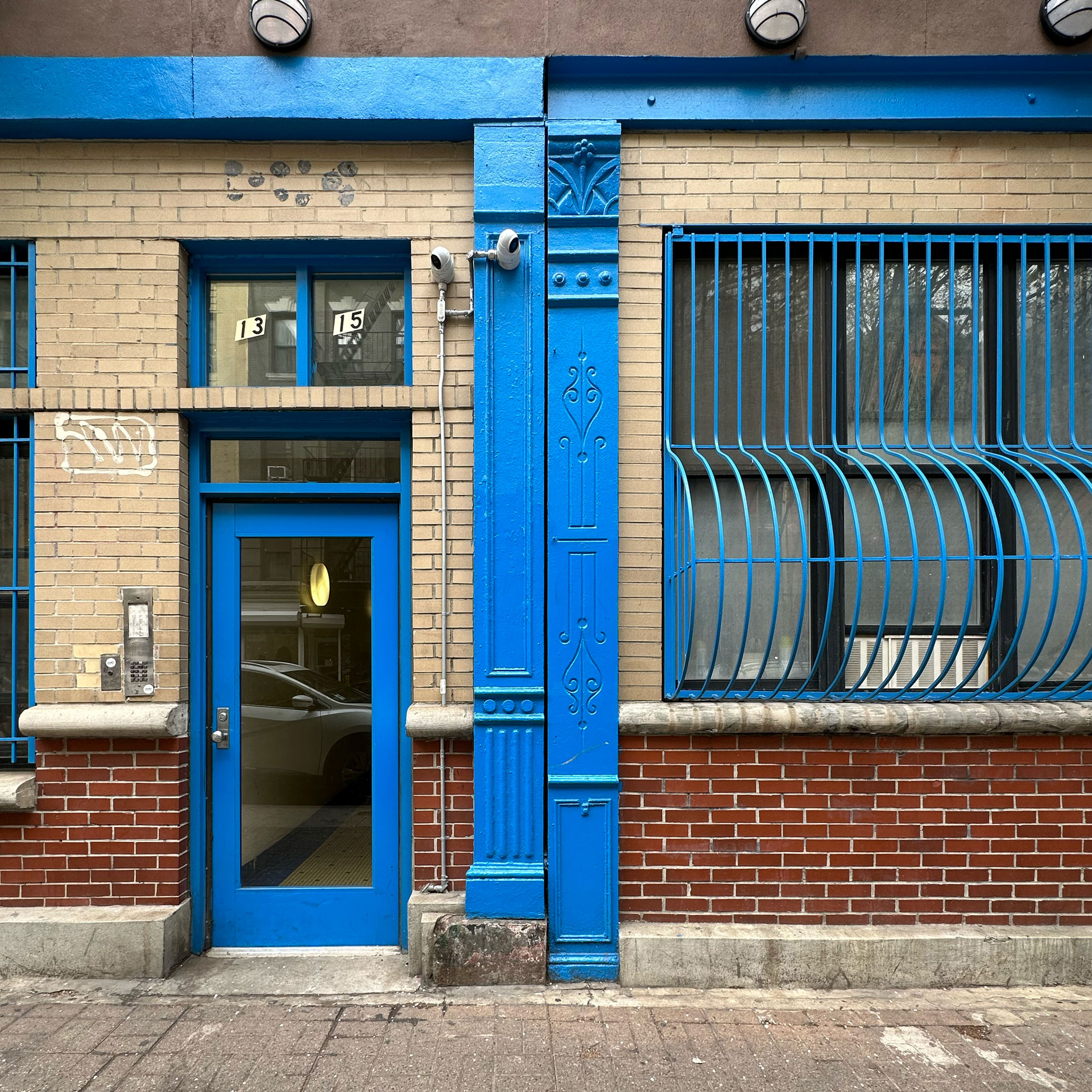
By the 1990s, landlord neglect and tax delinquency led to abandonment, blight, and even demolition for many tenements. In 1991, a local CDC called the People’s Mutual Housing Association of the Lower East Side, later the Lower East Side People’s Mutual Housing Association (LESPMHA), purchased both 13 and 15 Clinton, leveraging a Housing Preservation and Development program established in the 1980s through Mayor Ed Koch’s “Ten-Year Plan.” The buildings and their tax lots were combined in 1994, the structures renovated and brought up to standard. Since then, the large storefront windows of both buildings have been reconfigured to align with the two new commercial units and the two buildings’ shared entry. These renovations have produced 19 guaranteed, long-term affordable units. To this day, the LESPMHA provides property management and tenant services to the building, renting units to households with incomes ranging from 50 to 80 percent AMI. The CDC manages 31 buildings throughout the Lower East Side and East Village, each with its own unique history, each with LESPMHA’s signature blue fire escapes and metal ornamentation.
The Clinton Street buildings illustrate how conservation can align with community needs. Instead of demanding aesthetic purity through individualized landmarking, the strategic use of government subsidy and CDC stewardship allows affordability, habitability, and community continuity to be prioritized over the purity of exterior form. Although the façade and material qualities of these buildings changed significantly, that trade-off (common across CDC-led rehabilitation efforts) reframes preservation as a social and pragmatic rather than purely aesthetic project. In this sense, CDCs formalize the logic of reinvention already so embedded in the built environment of Chinatown and the Lower East Side.
These neighborhoods have sustained themselves for generations through incremental change. This change through necessity resists the rigid orthodoxies of formal preservation, offering instead a rooted, vernacular model. In neighborhoods where change is a defining condition, preserving an openness to this change — while protecting the communities most vulnerable to its pressures — may be the most faithful preservation of all.
The patchwork history of 291 Grand Street offers a lesson for preserving the Lower East Side and Chinatown of the future. What new uses will there be tomorrow? The building’s staying power invites us to imagine a preservation framework that takes versatility as a virtue and change as a constant. Today the building is at a crossroads: Galleries occupy most of the building, a common sign of gentrification to come. Rather than a model of preservation driven by landmark designation that will be mobilized for profit, as exemplified by the Jarmulowsky Building, the city should incentivize a more inclusive model of preservation — one that values the incremental, open-ended trajectories that sustain buildings and communities like that of 291 Grand and Clinton Street.
A more flexible approach has proven successful elsewhere. In the United Kingdom, a graded listing system establishes different levels of protection with corresponding degrees of allowable change. While imperfect and tied to aesthetics as well, this system acknowledges that not every structure warrants the same degree of control. Some buildings can accommodate considerable alteration if their core spatial or functional characteristics are maintained. Historic England, the public entity that administers the legal protections to listed building in the UK, offers a guide for “Adapting Historic Buildings for Energy and Carbon Efficiency” and details how a listed building can navigate regulation involved in a change in use while adhering to their own criteria. A similar gradient approach in New York could help reconcile development pressures with the need to retain the city’s social and economic fabric.
To “keep the change” is to treat the gradual evolution of neighborhoods like the Lower East Side and Chinatown as a natural process to be supported. Fire-escapes bolted on in response to new codes, synagogues slotted into lofts, apartments recombined to improve living standards: all of these are traces of communities adapting to new industries, economies, regulations, and neighbors. A preservation model that insists on an unchanging façade and commits buildings to their past identity erases a long history of vitality and reinvention and contributes to a dramatic disruption in market value and community continuity. A preservation ethic that keeps the change, by contrast, values these incremental, ad-hoc interventions and turnover of uses as lifeways to be treasured, in and of themselves.
This essay was adapted from an exhibition at Citygroup, “Keep the Change” (January 31–April 4, 2025)
The views expressed here are those of the authors only and do not reflect the position of The Architectural League of New York.