
Series
New City Critics
Dispatches from the New City Critics fellows: new, fearless, and diverse voices to challenge the ways we understand, design, and build our cities.
We are celebrating 15 years — and counting — of stories that are deeply researched and deeply felt, that build a historical record of what the city has been.

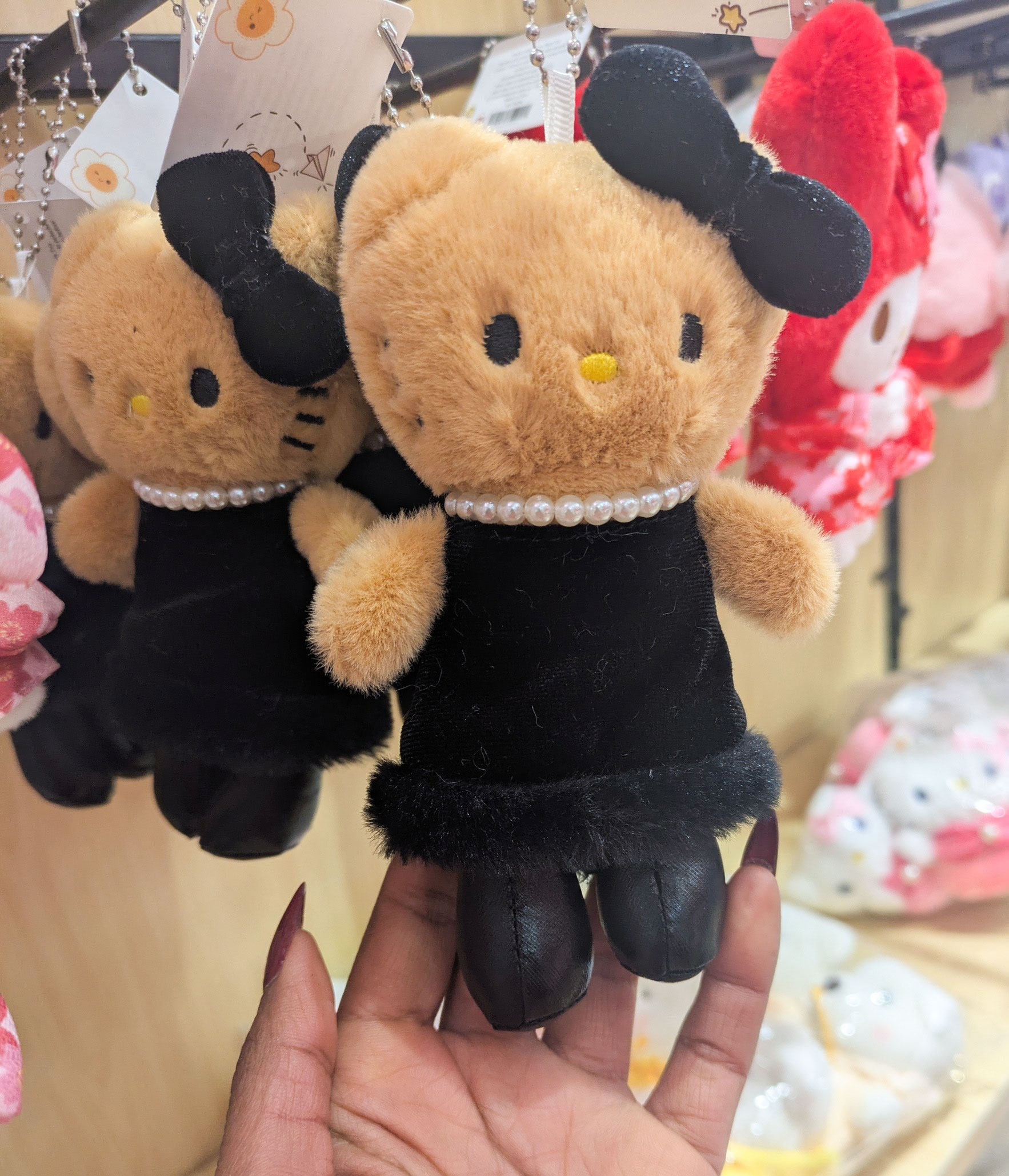
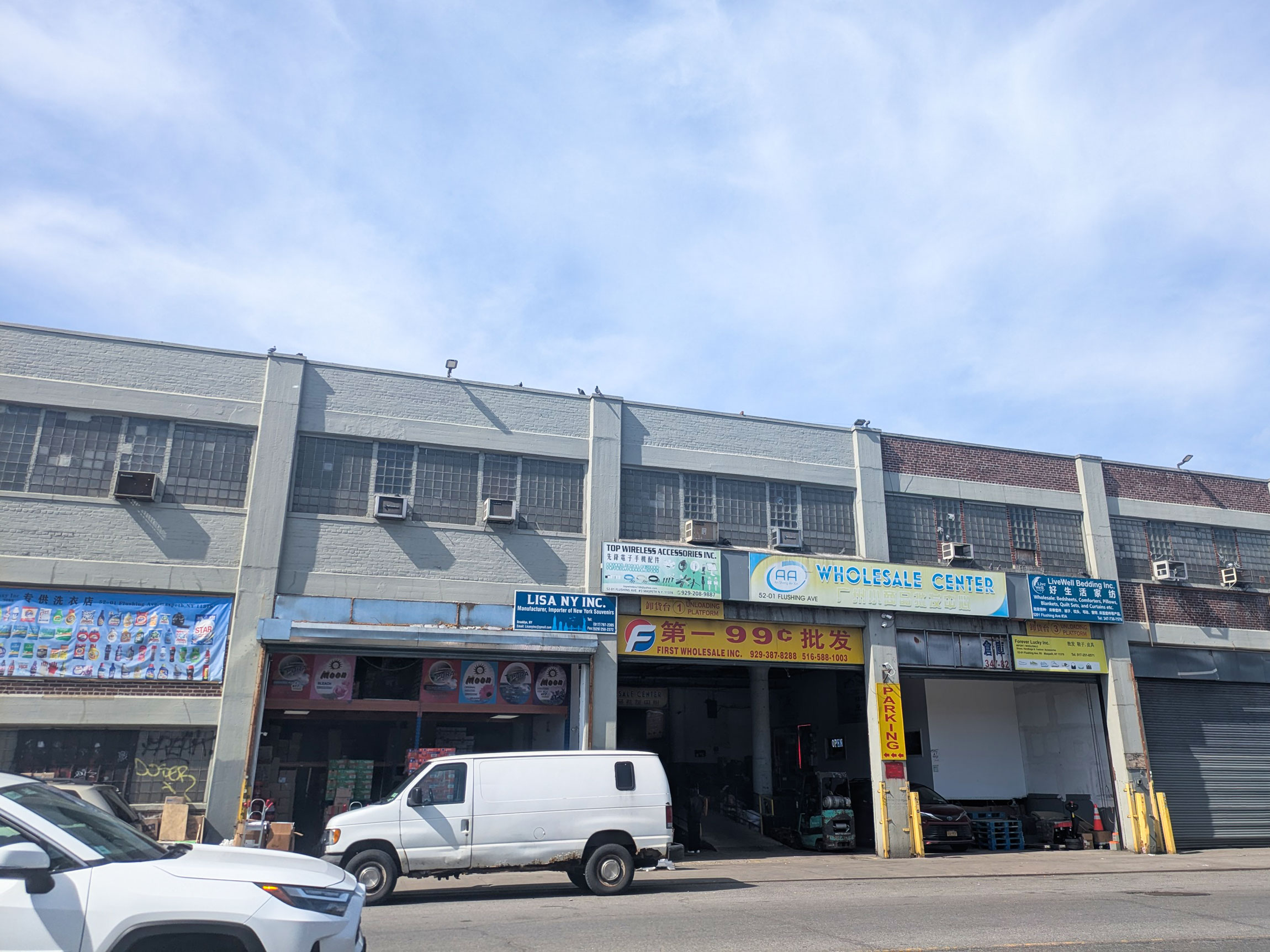
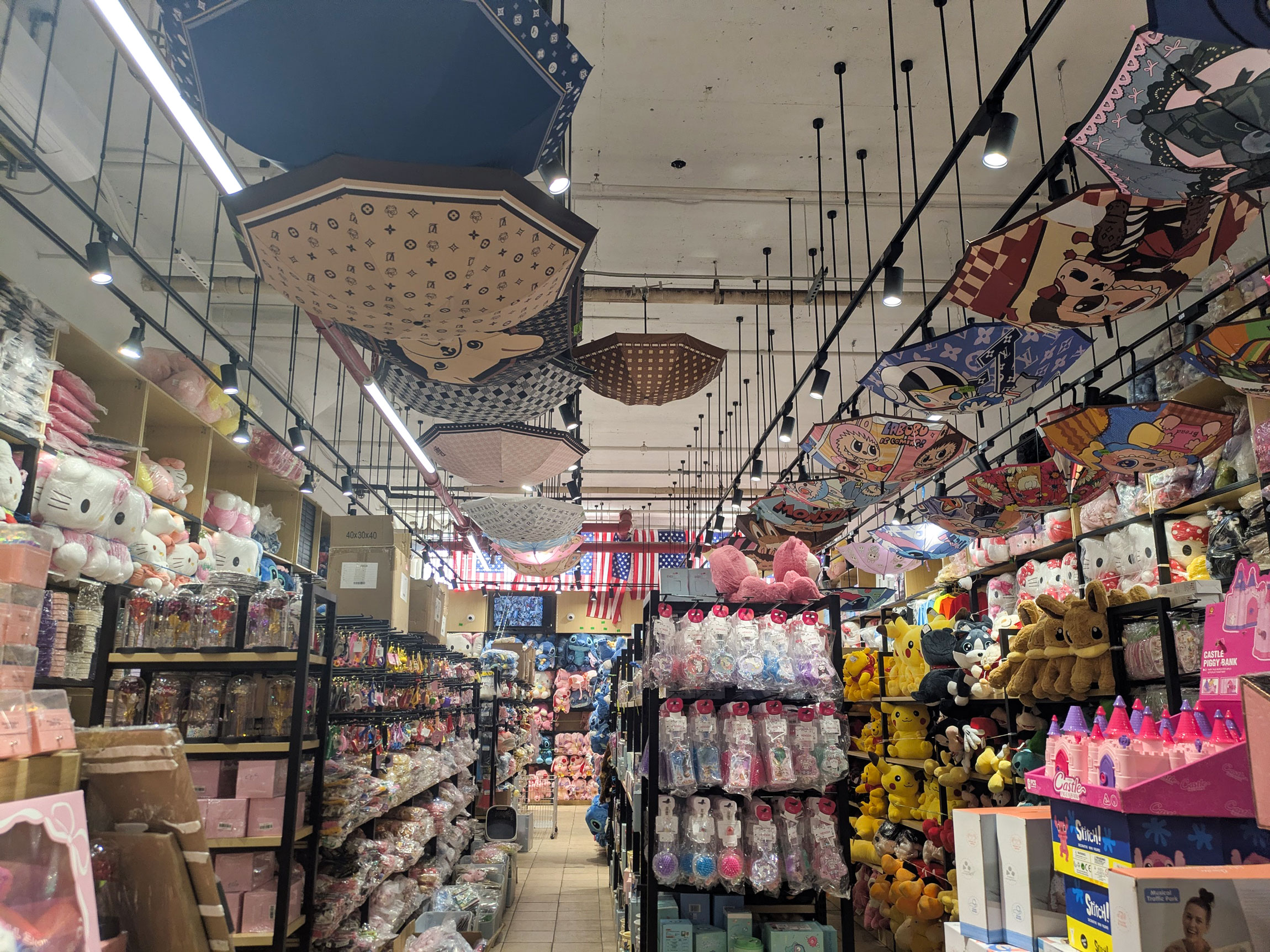
In a wholesale warehouse in Maspeth, Queens, I’m holding a Hello Kitty doll that is vaguely styled like Audrey Hepburn in Breakfast at Tiffany’s — in a black dress, with pearls around her neck. Hello Kitty Hepburns and other figures from the Sanrio universe surround me en masse. There are also delicate, would-be Valentine’s gifts: faux flower arrangements, plastic roses in rounded-glass terrariums, perfume bottles shaped like stilettos, Lilo and Stitch bouquets. As I wander through the complex, I come upon another shop that sells purses printed with bald eagles, miniatures of the Chrysler Building, Trump bobbleheads, and flags from a dozen countries. Most of these goods ship from manufacturers in Asia to the wholesalers in this warehouse, to then be distributed to dollar stores, neighborhood gift shops, and street vendors throughout the city, and finally into the hands of customers.
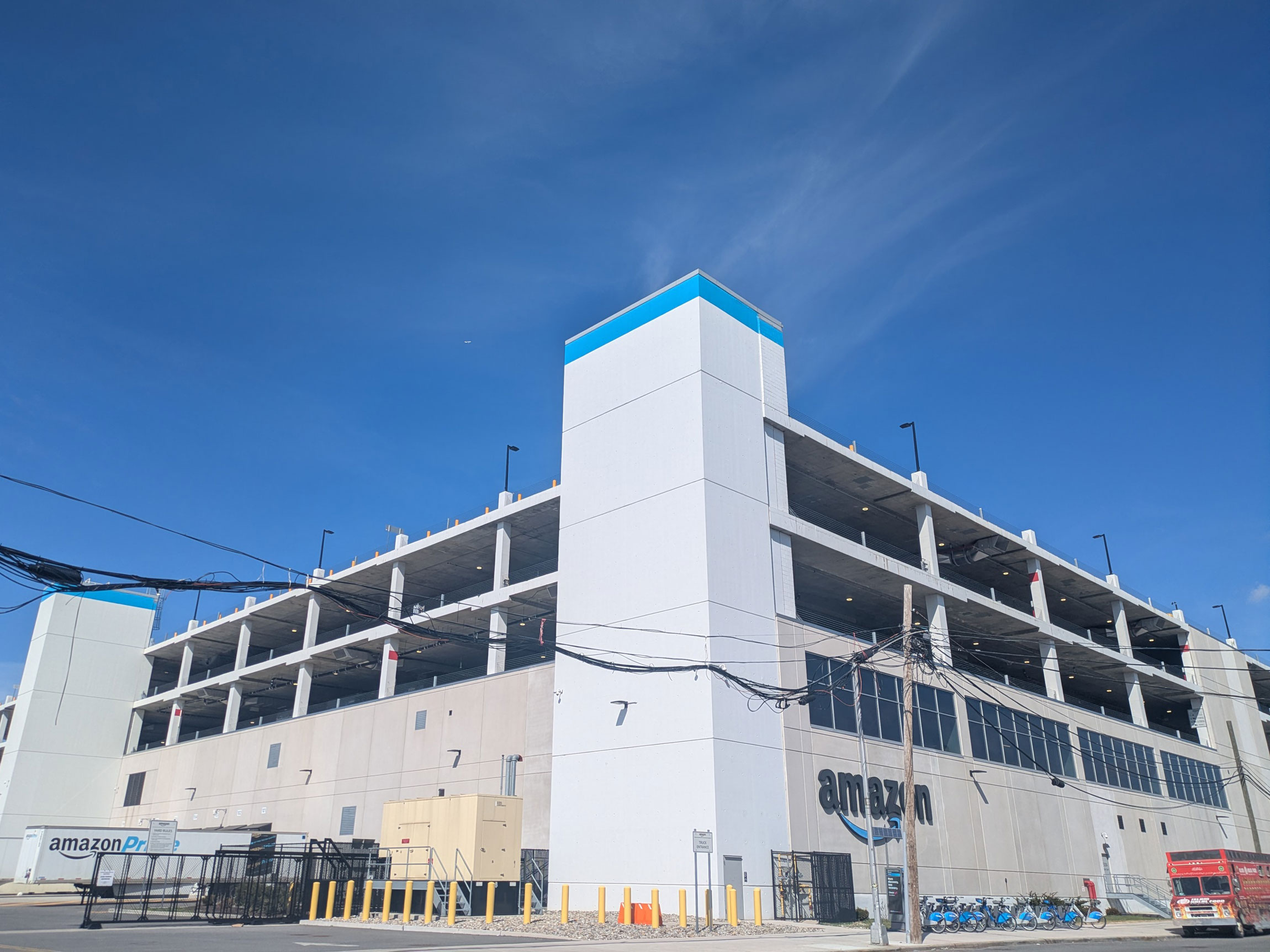
Consumer wholesale, the kind aggregated in this Maspeth warehouse, is on the decline. The rise of e-commerce in New York City and across the country represents a new kind of supply chain that bypasses intermediaries like wholesalers in favor of direct-to-consumer fulfillment. There’s a behemoth Amazon distribution facility within a ten-minute walk from the complex. I want to understand the city’s role in the future of places like this, so I visit the FiDi offices of the Department of City Planning (DCP), which recently co-led New York’s first Industrial Plan, published in the waning days of the Adams administration last December. The plan — mandated in 2023 by Local Law 172 and developed by DCP, in partnership with the New York City Economic Development Corporation and the Department of Small Business Services, along with support from other city agencies — “lays the foundation for strengthening and modernizing the city’s industrial sector.” The process entailed a detailed study resulting in 72 ideas for preserving and growing the industrial economy: the creation of a new land use framework to protect industrial uses, investing in “Blue Highways” and other freight transportation strategies, preparing industrial areas for climate threats, and more. The report is set to be updated every eight years in order to respond to “changing economic conditions, technological advancements, business needs, and community concerns.”
I’m here to speak with Carolyn Grossman Meagher, the director of economic development and regional planning at DCP and Andrew Jones, the DCP deputy director of economic development and regional planning — two key architects of the plan. They tell me that as the report conceives it, New York City’s industrial sector employs 550,000 New Yorkers, about 15 percent of the city’s private sector job base. Consider: metal fabricators, brick manufacturers, HVAC contractors, wholesale produce distributors, and the transportation of consumer goods like the cast of stuffed Sanrio characters. The NYC Industrial Plan characterizes activities into three alliterative categories: moving, making, and maintaining. “On the maintaining side,” Meagher says, “we’re talking about the auto industry, hugely important in New York. We’re thinking about infrastructure . . . even TV repair.” Making is manufacturing, but also includes less tactile forms of production, such as film and television. And moving is logistics and wholesale.
In the making of the report, Meagher and Jones spoke with hundreds of business owners, community-based organizations, and public officials, all of whom had varying visions of what “industry” ought to mean in 21st century New York. For many, the term carried an inescapable nostalgia — images of the early 20th century city as a manufacturing hub. “We were manufacturing textiles, we were manufacturing food, we were manufacturing metal . . . all kinds of things,” Meagher says. “It wasn’t possible to halt the loss of manufacturing that happened as a result of a global trend,” Meagher tells me, referring to the offshoring of these jobs. Manufacturing jobs numbered 1 million in 1950, and now stand at 57,000, having moved overseas or domestically to places with more space and a lower cost of land, and labor. Land use policy changes under the Bloomberg administration also explain the decline, most notably the once-industrial North Brooklyn waterfront was transformed into the lifestyle-driven neighborhood it is today. The warehouses of Maspeth persist largely because they fall within one of the city’s market-insulated Industrial Business Zones, one of 21 areas rezoned in 2006 to protect businesses within them from competition with more lucrative real estate uses.
Entangled supply chains are nearly impossible to map, but they reveal relationships and dependencies that are not always obvious — among companies, and between businesses and urban services. Meagher explains that most of the businesses that have remained after decades of displacement are often those that have a unique need to stay in New York, supplying a local end user: the corner store owner, the street vendor, the contractor, the restaurateur. For instance, Jones points out, “There’s one business that is one of the only companies in the region that manufactures code-compliant fire doors. If they get displaced, that is an essential service that enables the construction of new housing that is lost.”
At the same time, large-scale e-commerce has the potential to reshape relationships across the city. Post-pandemic, Amazon rapidly expanded across New York: from 2020 to 2022, the company acquired 50 warehouses across the metro area, including in waterfront Red Hook, the South Bronx, and more across the five boroughs. Where wholesalers contribute to a chain of local distribution, often immigrant-owned, small businesses — platforms like Amazon consolidate the supply chain, offering a frictionless experience for the end consumer. Jones wonders whether a platform like Temu might soon squeeze out both consumer-facing vendors and the wholesalers that supply them. Yet, I wonder if this necessarily must be true. Even if the city prioritizes job growth and preservation, there’s a meaningful difference between money flowing through local wholesale and street vendor ecosystems versus large multinational platforms.
I leave the DCP offices with a button that reads, “Ask me about the NYC Industrial Plan!” If someone were to ask me, I would speak to the intricate challenge of characterizing industry across the city. I would speak to the plan’s many goals: business modernization, climate resilience, and public realm improvements; about how the success of the plan will require a huge “interagency collaboration,” as Jones puts it, among agencies that rarely work together. What I can’t speak to is what might happen to the Maspeth warehouse and its small wholesalers over the next decade. As Meagher says, the public sector operates with the “limited tools of government” — shaping the city via incentives, zoning, and land use, and the cultivation of industry on city-owned land — while remaining constrained by broader seismic shifts in the market. For places like the Maspeth Wholesale Center, survival may depend less on the success of the plan’s 72 non-binding recommendations, than on the larger economic forces and consumer behaviors the plan cannot directly influence.
I recognize many of the goods from the warehouse in flower shops and discount stores across my neighborhood. I suppose there is some satisfaction in understanding, at least partially, the origin of a Hello Kitty doll despite all the questions that remain.
The views expressed here are those of the authors only and do not reflect the position of The Architectural League of New York.
Dispatches from the New City Critics fellows: new, fearless, and diverse voices to challenge the ways we understand, design, and build our cities.
Comments