
Series
City Habitats
In cities around the world, animals put human-built infrastructures to new and unanticipated uses. Russell Jacobs chronicles the anthropogenic ecologies of New York's concrete jungle.
We are celebrating 15 years — and counting — of stories that are deeply researched and deeply felt, that build a historical record of what the city has been.

In early April, just as the first big waves of birds on northward migrations were beginning to appear at New York City’s parks and beaches, I travelled out to Greenpoint to visit the Newtown Creek Nature Walk — a sliver of greenspace that snakes along the industrial waterfront, past warehouses and scrapyards and a semi-sanctioned marina with boats tied up in various states of disrepair. The 3.8-mile-long creek, which marks part of the boundary between Brooklyn and Queens, is reported to be one of the most polluted waterways in the United States, and might seem an unlikely place to look for birds. Its sediments contain too many chemical and biological contaminants to list here in full; the mixture includes a variety of petrochemicals, coal ash, and fertilizers that were once manufactured along the waterline, as well as waste byproducts from rendering animal carcasses (including one elephant) at a glue plant that operated in the 19th century. Below ground, partially contained by an ancient layer of clay, is an oil spill larger than the Exxon Valdez that seeped into the creek bed throughout the 20th century. The current landscape of transfer stations, concrete plants, and scrapyards that surrounds the creek isn’t exactly the cleanest assemblage of industries (indeed, I saw little bird life in the park itself) but I’d really come to peek at the Newtown Creek Wastewater Treatment Plant, where each year a surprising volume and variety of wildlife gathers to enjoy an eccentric urban oasis.
The 53-acre complex towers over the low warehouse roofscapes of Greenpoint and nearby Long Island City, a cathedral for the millions of gallons of sewage that pass through its elaborate network of aluminum tubes, tanks, and pools every day. It’s an industrial and architectural marvel: the buildings, with their simple shapes and primary colors, almost resemble enormous play blocks. The most prominent architectural features are eight shiny, 145-foot “digester eggs” that superheat the sludge, the final step of a treatment process that transforms everything that over a million New Yorkers flush down their toilets and sinks into a nutrient-rich soil additive.
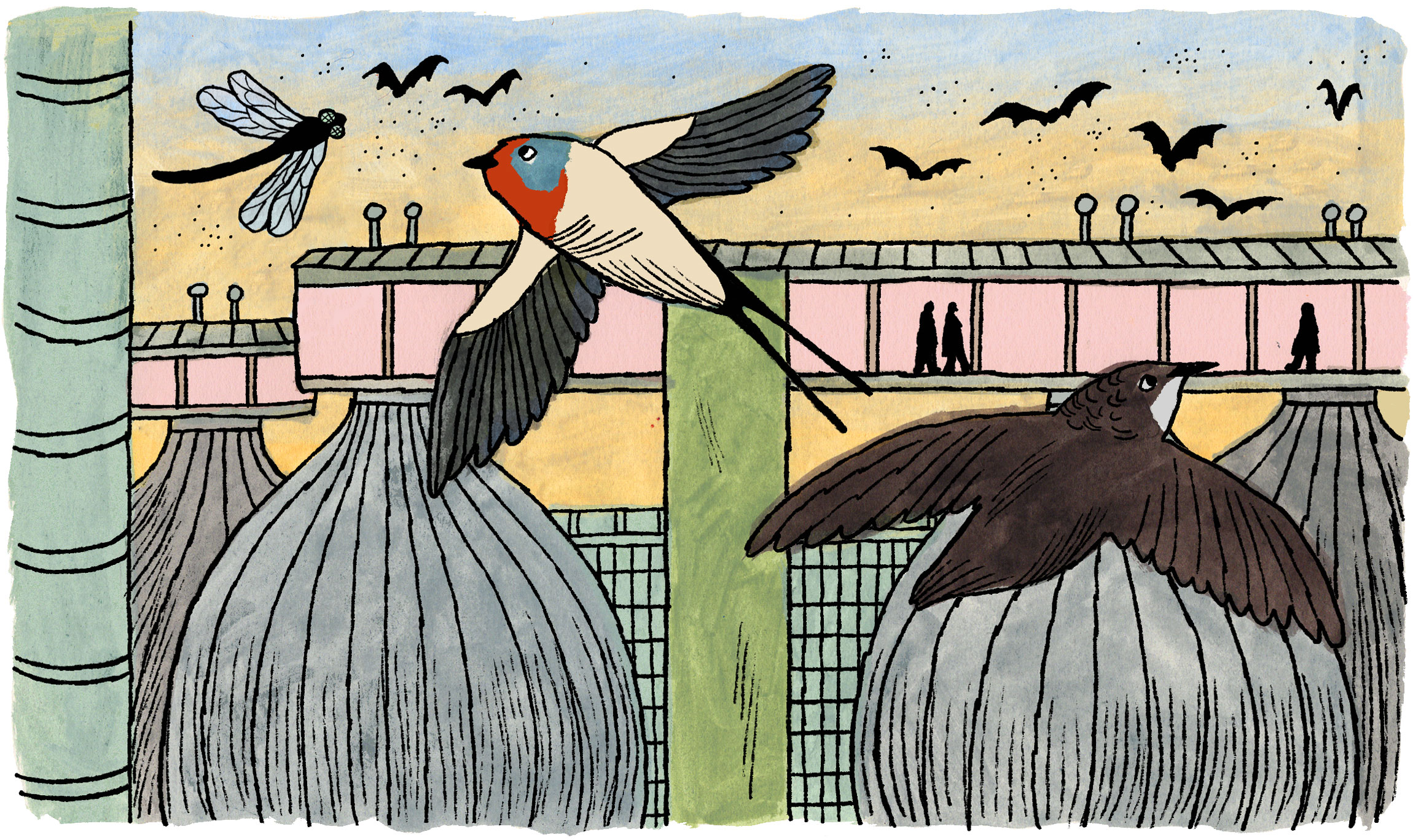
Over the years, I’ve been lucky enough to enter the plant a few times, picking up equipment for NYC Department of Environmental Protection fieldwork, and during those visits I’ve been able to glimpse up-close the intricate ecosystem that assembles there every year. In summer, above the open aeration tanks where microorganisms break wastewater down to sludge, dragonflies, swallows, chimney swifts, gulls, and bats can be seen wheeling through the air to feed on an invisible buffet of tiny insects. Occasionally, I’ve even spotted American kestrels hanging out above the digester eggs, scoping out the smaller birds feeding below.
On this spring visit, without any official business to get me through the gate, I traced the perimeter of the plant, peeking through the gaps in the fence with my binoculars. I had hoped to see my first barn swallow of the year, but it was still early in the season, when most were still making their way up from their winter grounds in Central and South America. What’s more, swallows, who swoop dramatically through the air to catch insects mid-flight, generally hold off on feeding when the wind speed is too high, and the breeze that day was a little stronger than predicted, narrowing my chances further. Still, laughing gulls were cackling everywhere throughout the plant, lined up with their black heads and red bills along the railings and pipes that surround the open sewage tanks, making clumsy dives at the surface to scoop up organic matter, and chasing one another from tank to tank. At the edges, European starlings hunted along the concrete, pausing every so often to scoop up an insect. The nature trail had been basically empty, but here at the sewage ponds, life sprang abundant.
Among the most significant environmental impacts of large cities is their reorganization of nutrients: an unparalleled sorting, sifting, and gathering of the basic building blocks of biological life. Those changes drastically alter the playing field for urban animals trying to survive, creating food deserts and, in some cases, gluts, where vast quantities of nutrients are concentrated in specific places. On a dry day, the plant in Greenpoint treats up to 310 million gallons of wastewater, with capacity to take in more by boat when the city’s other facilities are overwhelmed by rain. Each gallon is dense with nitrogen, hydrogen, and carbon — in theory, what all living things require to survive.
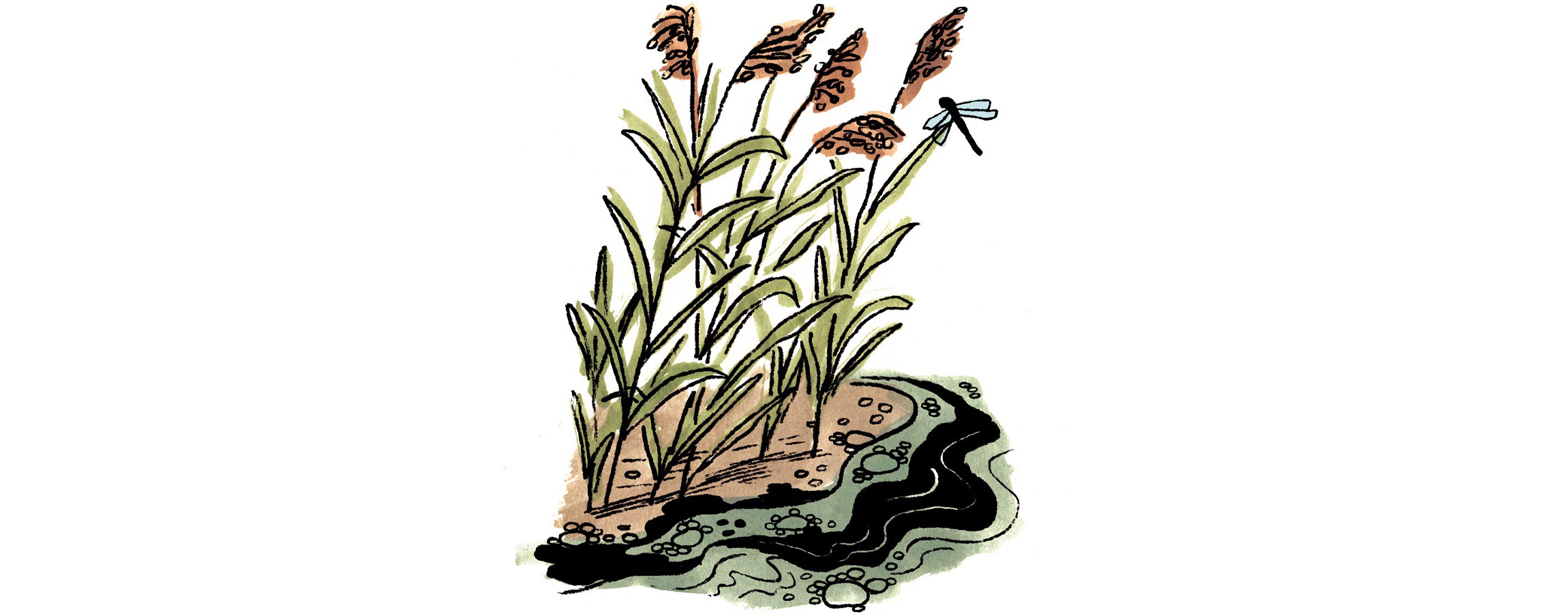
A build-up of nutrients might seem like a windfall for animals, but in nature, more isn’t always more. In wetlands and soils where sewage spillage or the dumping of garbage has increased the nutrient-content, the entire ecosystem can be destabilized from the bottom up in a lasting way. Phragmites — a tall, feather-tipped invasive wetland grass — is a hallmark of wetlands that have been inundated with sewage, sanitary garbage, or fertilizer, dominating shorelines, ponds, and estuaries around New York City. Often, it persists long after the pollution has stopped, preventing native plant communities from growing. Some animals can find meals or make nests in those environments, but for most, the nutrient-polluted wetlands are barren, offering little in terms of food or shelter. Likewise, clinging to waste watering holes like this one wouldn’t be a viable strategy for most wildlife; but for some urban animals, these environments, which might otherwise be considered nutrient-polluted, can be a lifeline.
For urban animals who already face chronic shortages of food and habitat, areas where nutrients pile up in excess can be precious. Generations of opossums, rats, and raccoons have adapted to find their meals in the same deposits of discarded food year after year, climbing out of the shadows by night to raid the garbage bags outside of restaurants and overflowing bins along park paths. While some laughing gulls haunt sewage tanks, many others make summer-long patrols of the city’s beaches to look for snacks that beachgoers leave behind (or, in some cases, simply fail to keep an eye on for a moment). For the savvy urban animal, some of the most wasteful, careless human behaviors represent critical opportunities to feed.
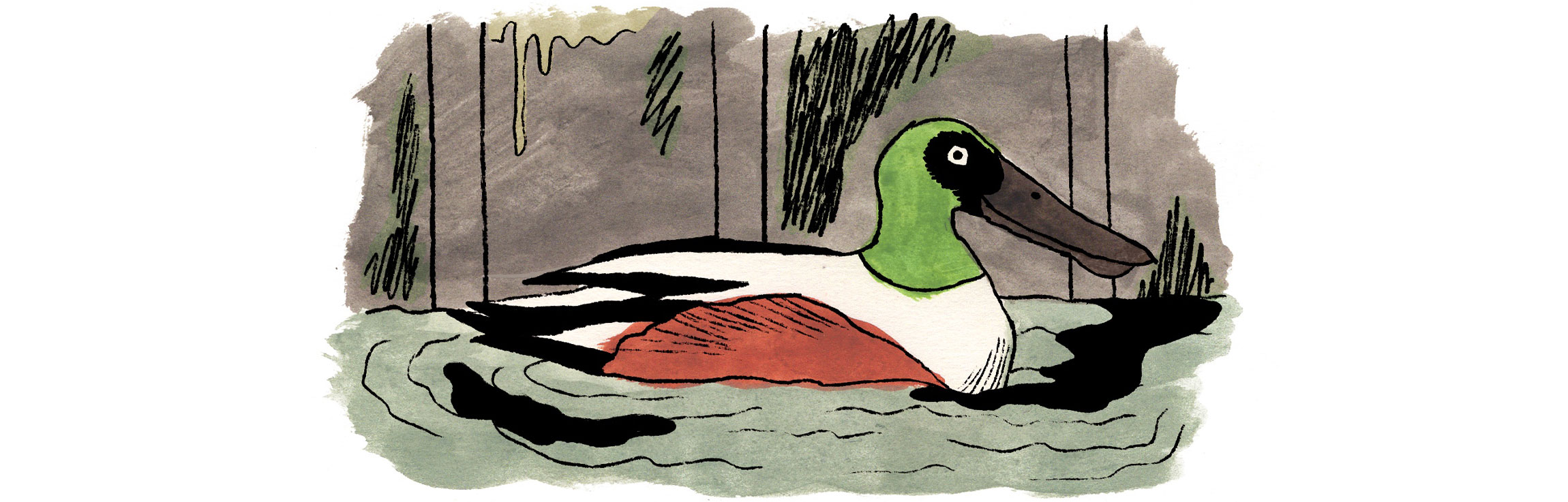
The unsavory nature (and unpleasant smell) of some of the places where large amounts of organic waste accumulate allow the animals that thrive there to fly under the radar, but municipal dumps have long been a draw for some intrepid bird watchers. When I lived in the Rockaways, I’d often visit a notoriously pungent sewage treatment plant along the bay, keeping track of the birds that came and went as passersby accelerated and covered their noses. On those visits, I saw northern shovelers — ducks with ludicrously long bills for filtering invertebrates from the water’s surface — as well as various gull species, and even a few diving ducks swimming on the surface of the tanks on colder days. One winter, an entire flock of tree swallows had camped out in the area, well to the north of their species’ usual winter range, surviving at least in part on insects gleaned over the pools.
As I walked around the sewage treatment plant in Greenpoint, watching the gulls dash into the filthy water for their lunch, and the starlings scrambling for meals along the edge, I thought about the various chemicals that make their way into New York City’s sewer system — the cleaning solutions, pharmaceuticals, motor oils, and other contaminants, that trickle into drains each day in unimaginable quantities — and wondered how they might affect the lives of the animals who feed over these sludge ponds.
The research, so far, is inconclusive. Some data points to these aeration tanks as important foraging sites, standing in for diminishing wetland habitats and creating crucial stopover habitat for animals on long, arduous migrations, but there are also alarming signs of contamination in the broader environment. A 2009 study found evidence that chemicals with the potential to alter animals’ hormones and neurology were traveling up the food web through aeration ponds, entering fly larvae on the surface, and then working their way into the various bats and birds that fed on them. Aquatic creatures — fish and salamanders — who live fully submerged in environments where these chemicals are present can suffer severe impacts, but the significance of the contamination for birds that forage over wastewater tanks remains unclear. It’s difficult to say whether the benefits of the sludge outweigh the costs.
As I made my way back towards the nature trail, the weather cleared, and the air along the creek warmed a little. Then, just as I was about to leave the treatment plant behind, my barn swallow appeared, forked tail trailing behind as it swooped out over the tanks in the wind shadow of one of the control buildings. I watched it turn, dive, and disappear over the building on the other side: the first of thousands that would feed over that sewage this summer, devouring flies, mosquitos, and small beetles. High overhead, a great blue heron eyed the aeration pools as it passed, then the creek, adjusting course and altitude before thinking better of it and continuing north over Queens. Walking back along the creek, where a sludge boat was docking, I noticed the large, bright yellow signs that had been posted along the water warning fishermen in English, Chinese, Polish, Korean, and Spanish not to eat anything they caught.
The views expressed here are those of the authors only and do not reflect the position of The Architectural League of New York.
In cities around the world, animals put human-built infrastructures to new and unanticipated uses. Russell Jacobs chronicles the anthropogenic ecologies of New York's concrete jungle.