
We are celebrating 15 years — and counting — of stories that are deeply researched and deeply felt, that build a historical record of what the city has been.
We are celebrating 15 years — and counting — of stories that are deeply researched and deeply felt, that build a historical record of what the city has been.

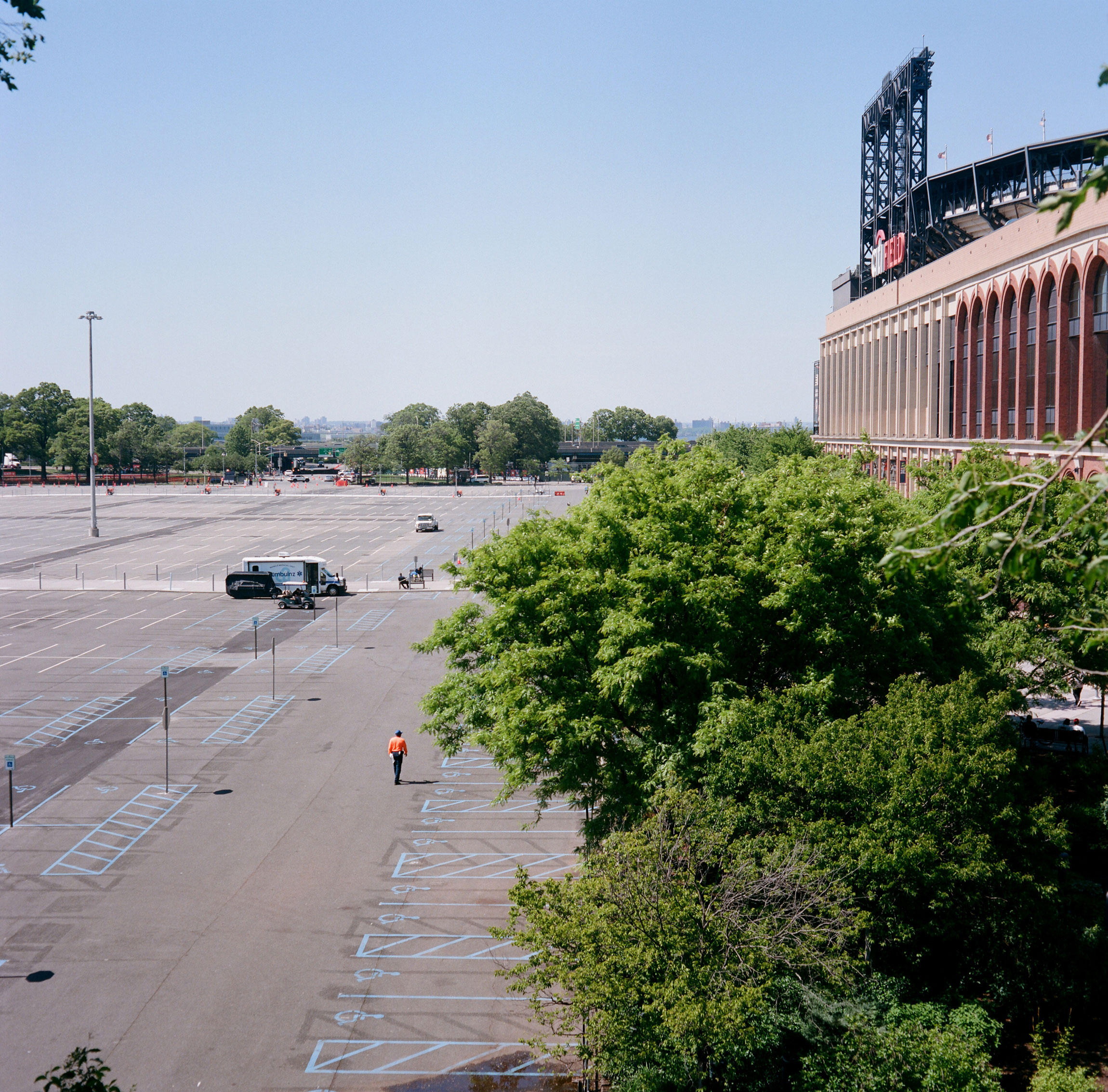
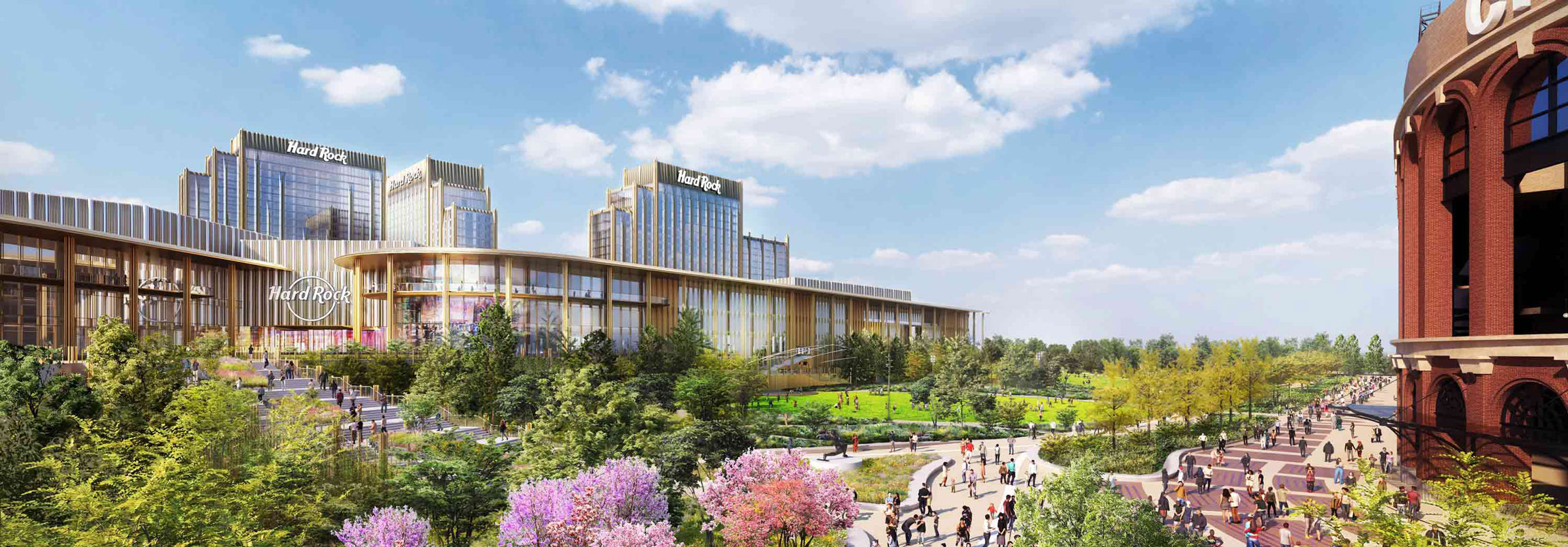
Despite early construction delays, and over the ongoing objections of some residents and officials, an $8 billion casino megaproject is actually coming to Queens. Metropolitan Park is one of three venues licensed by the state after the seal on downstate casinos was broken four years ago. Where the would-be Freedom Plaza could not convince Manhattanites of gambling as the best use for East Side real estate, when it comes to the parking lot abutting Citi Field, feeling seems to be, “might as well.” Rather than conjure slack-jawed slot machinists blinking back to consciousness at the end of a lost weekend, the developers prefer to call the intended 300,000 square feet of gaming space an “entertainment complex.” The plan trades sheer filthy lucre for a supposedly dazzling array of public benefits: green space (25 acres of loping infill gardens between the casino and the ball park); affordable housing (450 income-restricted units, being built oh-yeah-for-sure somewhere offsite); job growth (how lasting, and at what hourly wage?); a skybridge; a food hall. No one can say billionaire Mets owner Steve Cohen didn’t do it by the book, spending millions on outreach to locals, racking up electeds’ endorsements, deftly cutting deals against every imaginable objection. “No ceiling for the world’s borough,” cheered Queens Borough President Donovan Richards in September, when the plan was forwarded to the State Gaming Commission by unanimous vote of the Community Advisory Committee.
But to Jefferson Mao, the plan signals exactly the opposite. A keen observer and chronicler of both the surrounding neighborhoods and contemporary planning paradigms, Mao sees the casino as a bland inevitability of a double-negative approach to development, a kind of take-what-you-can-get urbanism that never fails to disappoint. Far from a dream of the future, it is not even interesting enough to be the nightmare that opponents claim. Is the idea of something else, something better, something more mom-and-pop and human-scale and immigrant-enclave, “the true Queens,” any less of a fantasy? Mao traverses the casino site, its park setting and its polyglot environs, looking for — not quite locating — the heart of the matter. – OS
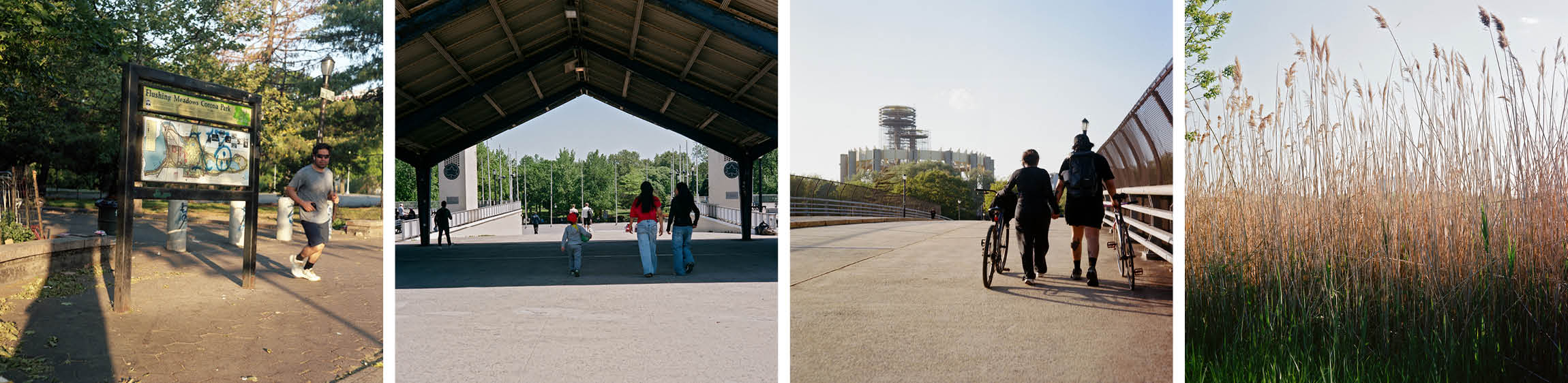
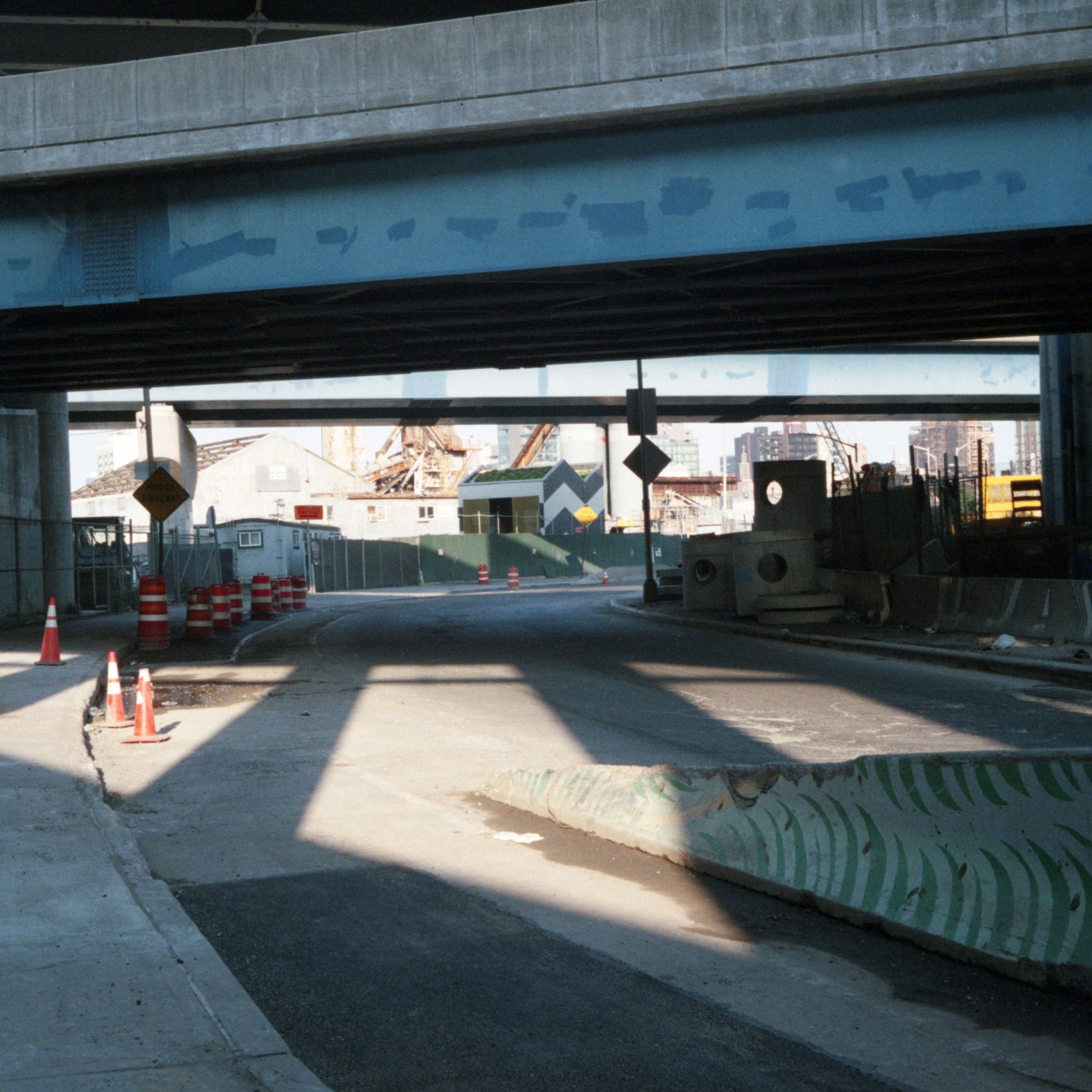
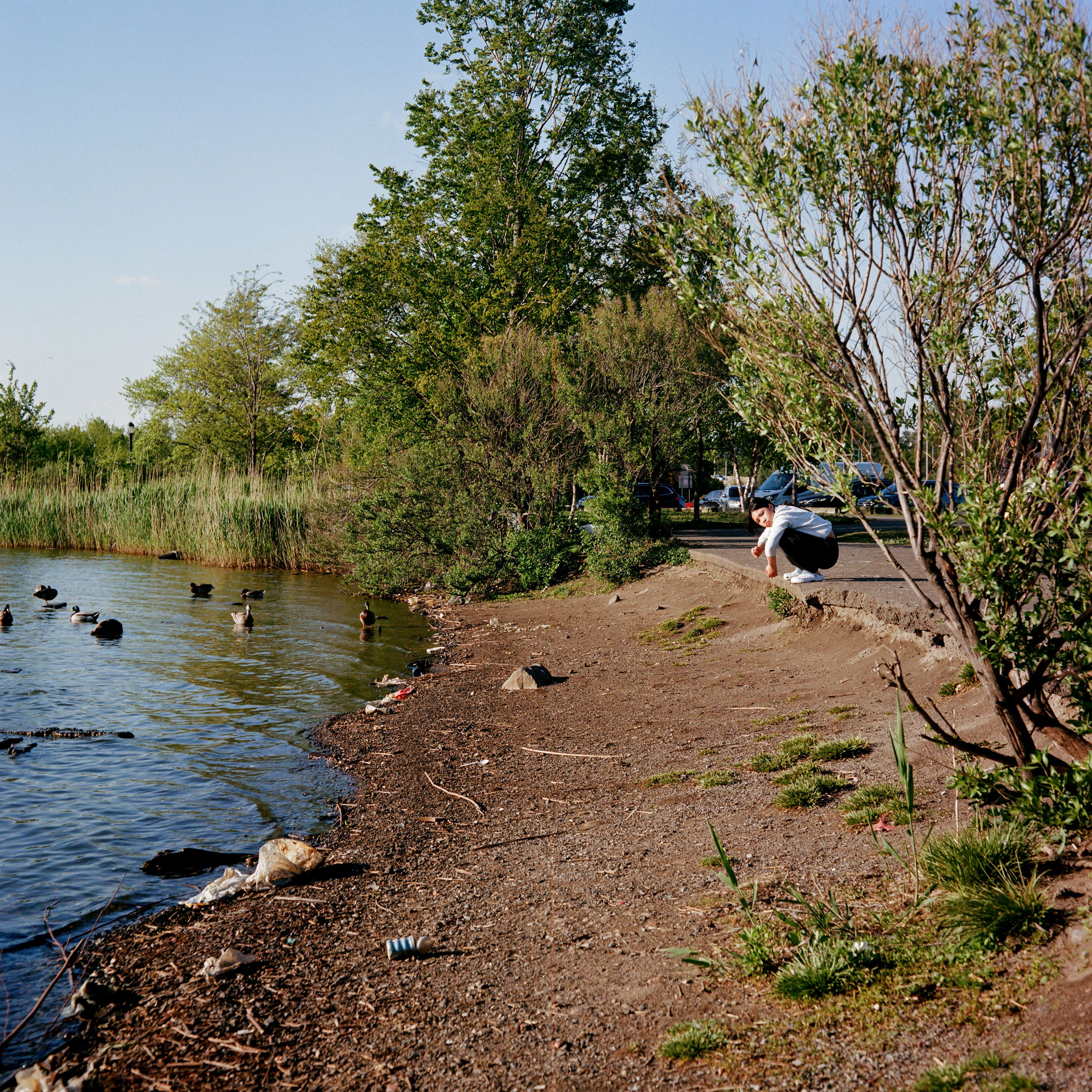
You can live around Flushing Meadows Corona Park all your life and approach it from every angle but still never hold it all together in your head. Coming from the north, you’re herded from the 7 train and the Long Island Rail Road over the raised wooden platform toward the tennis stadiums, straight into a circular enclosure. Walking from the east, the park slowly sprawls out like the horizon, flat and nondescript, and you can’t even see it until you cross over the Van Wyck Expressway. The western approach is the edge of 111th Street, the only straight angle of the park’s entire perimeter, oddly and parodically reminiscent of Central Park but with the low-slung brick buildings of Corona as its streetwall. Then from the south, as if approaching from an overgrown backyard, reeds obstruct your view; you are small and there are no vantage points, and only the occasional bird flies overhead. In none of these approaches do you get a sense of the others.
You can come across anything in the park. Nothing would surprise me at this point. Walking through there feels like a scavenger hunt, or an archaeological dig. There’s a museum, a theater, a zoo, sad bikes for rent along the reservoir, a bus depot, a train depot, a marina, a field for model aircrafts, Jurassic Playground, Triassic Playground, multiple parking lots, Cold War time capsules, a shrine commemorating a pope’s visit, an ice rink, a carousel, and acres of marshes and meadows and wetlands. It is not a coherent thing at all.
So, while one would like to say that a casino doesn’t belong in Flushing Meadows Corona Park, it makes about as much sense here as anything else. Clarity of program has never been a defining feature of Queens’ largest park. It’s hard to be too dogmatic about what sort of use is appropriate when the park has been the staging ground for all sorts of schemes dreamed up by New Yorkers over the past 86 years, and the resting place of our social and cultural detritus. What’s left over becomes part of the landscape, and it all kind of softly dissipates in your mind’s eye, so it always seems like there’s room for more.
Metropolitan Park is a venture by Mets owner Steve Cohen (as “Queens Future LLC”) to build an entertainment complex on the parking lot surrounding Citi Field, an $8 billion project on 50 acres, which would include a casino and hotel alongside the usual bars, restaurants, performance venues, and community amenities. After years of building alliances and sparring with local elected officials, a park alienation bill, a zoning modification for ULURP, and multiple Community Board votes, the proposal ultimately received one of three new downstate gambling licenses from the New York State Gaming Commission at the end of 2025. The plan for Metropolitan Park promises a whole host of community accommodations and negotiated benefits, including 25 acres of new parkland, athletic fields, and playgrounds; affordable housing; upgraded transit access and pedestrian and bike paths; $163 million for a Community Impact Fund and park upkeep; 23,000 union jobs; and tens of billions of dollars’ worth of forecasted economic activity. All this, for what is currently a parking lot. The development aims to open in the middle of 2030.
There is nothing remotely interesting left to say about the casino plan itself. Perhaps it will be financially successful, perhaps it will disappoint. Maybe it will fulfill its community benefit agreements, maybe it will not. Maybe, as many have suggested, instantaneous sports betting available on our phones and frictionless trading of dog-themed cryptocurrencies have made traditional destination-based gambling one more relic of the past. Certainly, Metropolitan Park does not represent the future of Queens. It’s barely the present. The casino and hotel complex hinge on a partnership with Hard Rock International, perhaps the least cutting-edge brand name imaginable, as if to double down on a nostalgic and anesthetic approach to hospitality and entertainment. The casino is old news before it even breaks ground.
But seen from another angle, against the eclectic accumulation of Flushing Meadows Corona Park, the casino represents an endpoint along a path of least resistance. It feels like a capitulation: as if the churn of fanciful wishes and half-baked ideas and debates about financial feasibility can finally come to a stop with this, the least imaginative plan of all. Because, while there is certainly spirited and very justified opposition, and no one is particularly enthusiastic about the moral implications of the casino, one cannot really say that the plan did not have the backing of the community, at least in the way designated by the public process. Queens Future LLC hired the best consultants that money could buy and engaged fully with the series of hoops set in front of it. The developer held public workshops, knocked on doors, meticulously courted stakeholders, and obtained approval from all relevant city and state regulatory bodies. The press releases run for pages with supportive comments from all kinds of civic groups, labor unions, business associations, and community nonprofits. The gorgeous mosaic of Queens has come together to say, “fine, whatever,” to the casino plan.
The success of the public engagement strategy depended in large part on the implication that the alternative to the Metropolitan Park plan is simply nothing. The alternative is a parking lot. Would you rather have a casino, with all the jobs and housing and millions for park maintenance, or would you rather have a parking lot? It’s difficult to argue with this logic, even for those who profess to be ethically opposed to gambling. State Senator John Liu, who played a pivotal role in introducing the park alienation bill into the State legislature, was firmly on the record about all the ways in which gambling preys on working class communities like the ones he represents in Flushing and Bayside. But he ultimately lent his support to the plan after securing commitments to build the “Flushing Skypark,” a pedestrian and bicycle bridge that would span the Flushing Creek. When asked about his change of heart, Liu said that he would prefer to outright ban gambling, but “that isn’t going to happen.” Better to get what you can.
You see this logic at work everywhere you look: any luxury tower with an affordable housing carve-out that would not be built if a special permit were not issued; a contentious rezoning, unenthusiastically pushed through approvals because otherwise the plan is apparently to do nothing. Public officials take on an ever more resigned and apologetic stance, and the strategies they employ are increasingly geared to shepherd a reluctant public toward a compromise position, where whatever moral or intellectual failings or deficiencies of imagination must be judged against the null empty blank void that is presumably the only alternative. This happens so often that one is not sure if it does not constitute the entire function of the planning discipline today. What’s at issue is not so much the objective quality of each individual project, but what feels like a structural thinning of the field. At this point almost any urban intervention can justify itself by producing any quantifiable good, however marginal, however orthogonal to the deeper question of what kind of city is being made. Back in planning school, the casino was the ultimate economic development reductio ad absurdum, a hypothetical that pushes revenue generation and job creation to their illogical conclusion through regressive taxation, the cannibalization of nearby markets, and total disregard for essentially all existing socioeconomic basis. But now the casino has somehow become the one thing people can agree on, focus-grouped from all sides.
It’s even more striking when one considers the usual circumstances for such a proposal. A casino is the development strategy of last resort for declining and deindustrialized regions, a risky play for those with few homegrown economic alternatives, long-suffering and far-flung places with exotic names like the Catskills or Schenectady. But in Queens? The diversity capital of the world, the largest borough in our most dynamic city, immigrant small businesses around every corner, an embarrassment of cultural riches? How can it be that the casino is the best, final offer here too? All this time, as we lived our lives and piled more stuff into Flushing Meadows Corona Park, we thought we were building something rather than nothing. Our real urban fabric, our street life, our mixed-use vitality: these were supposed to be a bulwark against the inward-facing and highly controlled world created and evoked by the casino. But in the end, here comes Queens Future LLC to fit a profoundly anti-urban environment into one of our most urban places. Whether upstate or downstate, it all reduces to the same set of conditions. Perhaps that is the most disquieting part of the casino proposal and its march through the public approval process: the tacit admission that Queens doesn’t believe the story it tells about itself anymore.
In a way, this kind of development logic — something is at least better than nothing — is quite fitting for Flushing Meadows Corona Park. Even today, no development pitch for the area can resist referencing the Valley of Ashes, as Willets Point was known when it was an ash dump so vast and polluted and desolate that F. Scott Fitzgerald could bludgeon you over the head with its symbolism in The Great Gatsby. The opportunity to build something grandiose out of the ashes was almost tailor-made for Robert Moses, who leveraged the site’s ignominious reputation in order to impose dramatic changes across these hundreds of acres in advance of the 1939 and 1964 World’s Fairs. Despite the financing problems and drainage issues that continue to plague the site in the present day, one can’t really say that it’s not an improvement. It’s easy to be a visionary when the alternative is an ash heap.
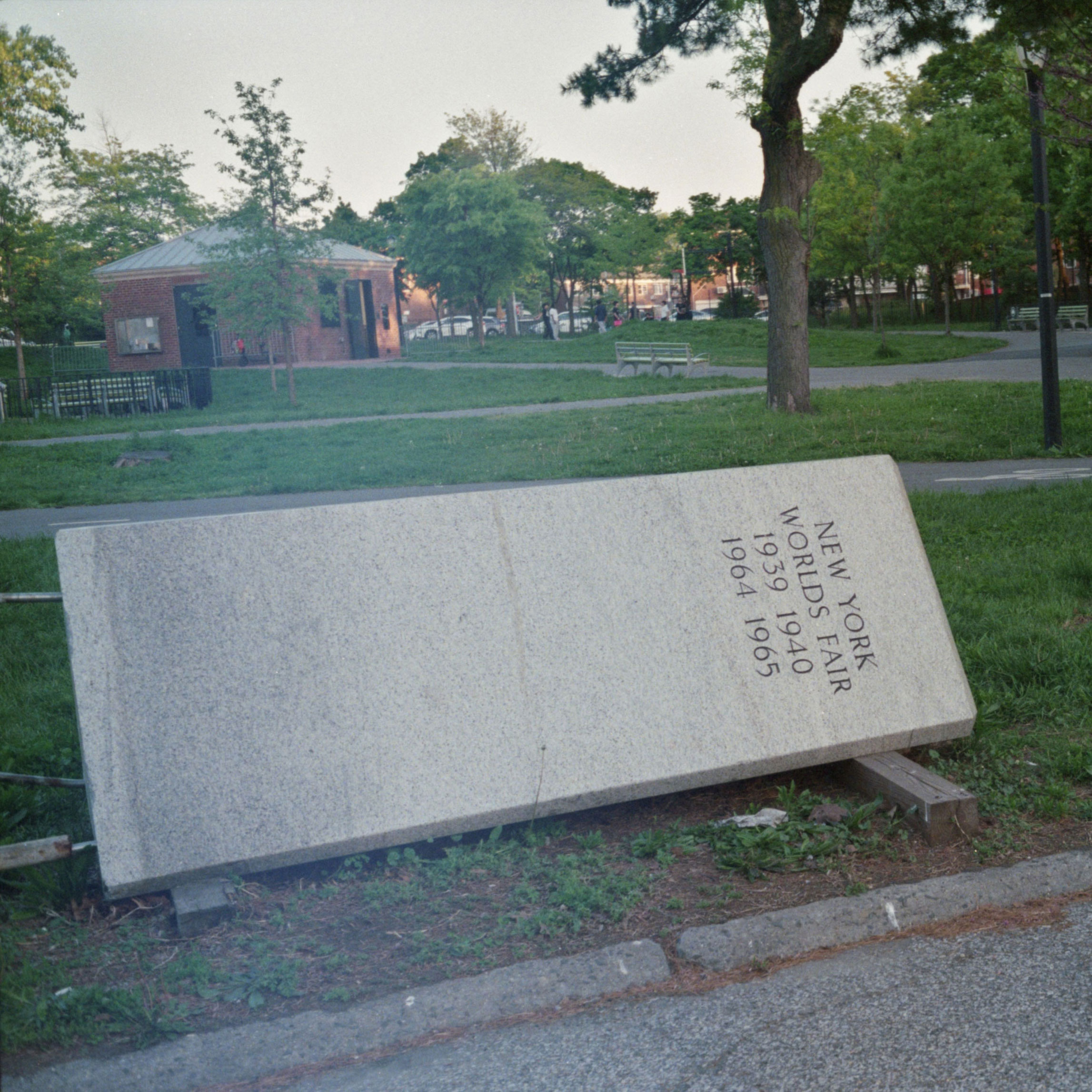
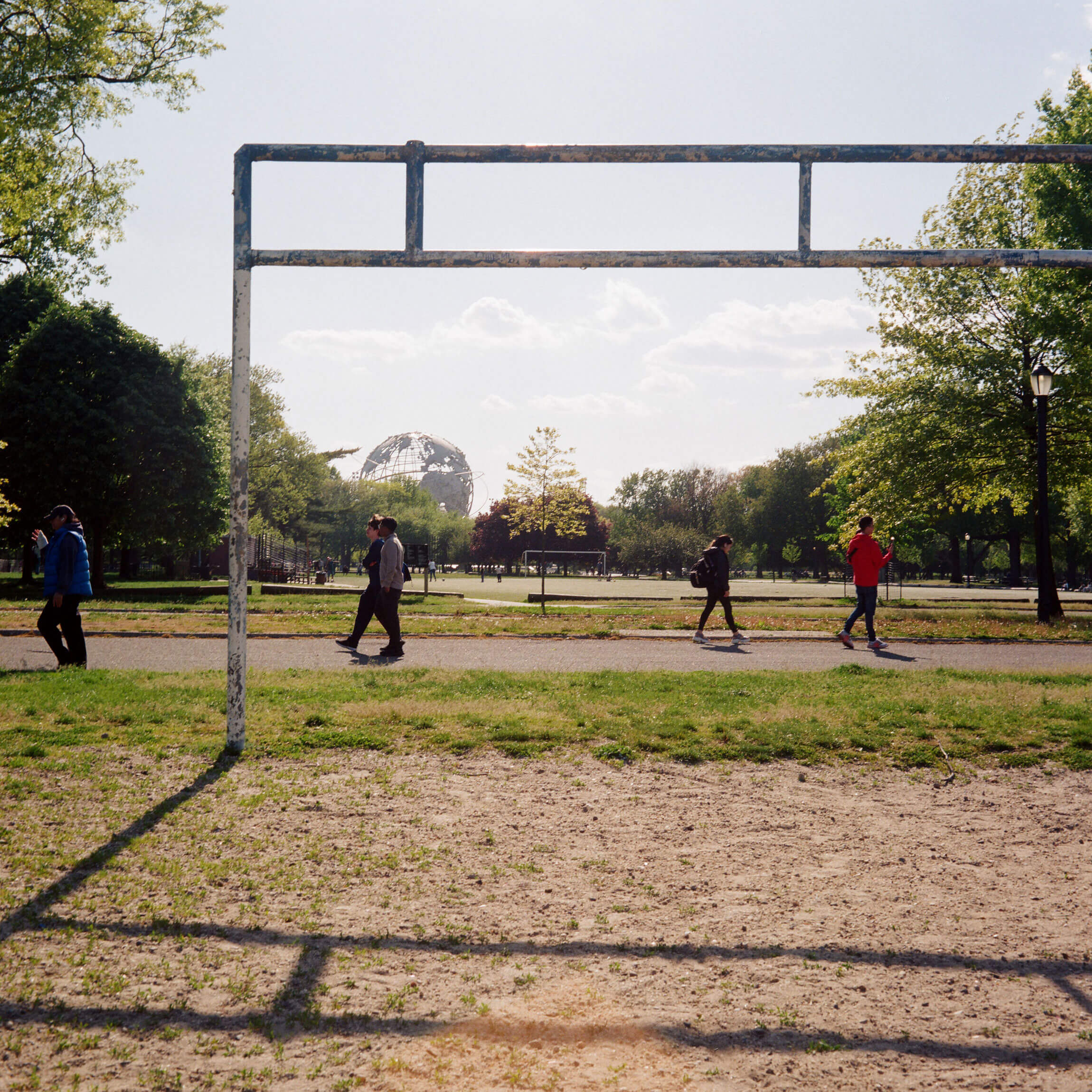
The two World’s Fairs are as much of an organizing principle as the park ever had, establishing it as a platform for Potemkin visions of the future. Even the supposed blank slate of today’s parking lot is a testament to Moses’s car-centric ’60s utopianism. But overall, their physical remnants give off a sense of retrofuturist kitsch these days, and everything is faded and genteelly decaying. Instead, the defining legacy of the World’s Fairs seems to be the urban transformation that happened around it. Against the background of the 1965 Immigration and Nationality Act, the internationalism of the pavilions proved prescient. One could see it projecting outwards to Flushing, Corona, Elmhurst, Jamaica, and then even further beyond. Commercial corridors were emptying out, manufacturing jobs went away for good, and white flight and suburbanization left gaping holes in the social fabric. But then came this influx of people and capital and energy from all over the globe. It was as if the World’s Fair had breathed this polyglot idealism into existence and then the different neighborhoods of Queens actually animated that into an organic urbanism: the replica villages broke containment and started cropping up all over the borough. But whereas the World’s Fairs were curated and aestheticized, a frictionless world experienced as circulation and consumption, the Queens neighborhoods became a messy mix, lived-in, interpenetrating, illegible. One was top-down, contrived, spectacular, accessible; the other bottom-up, lived-in, nuanced, esoteric.
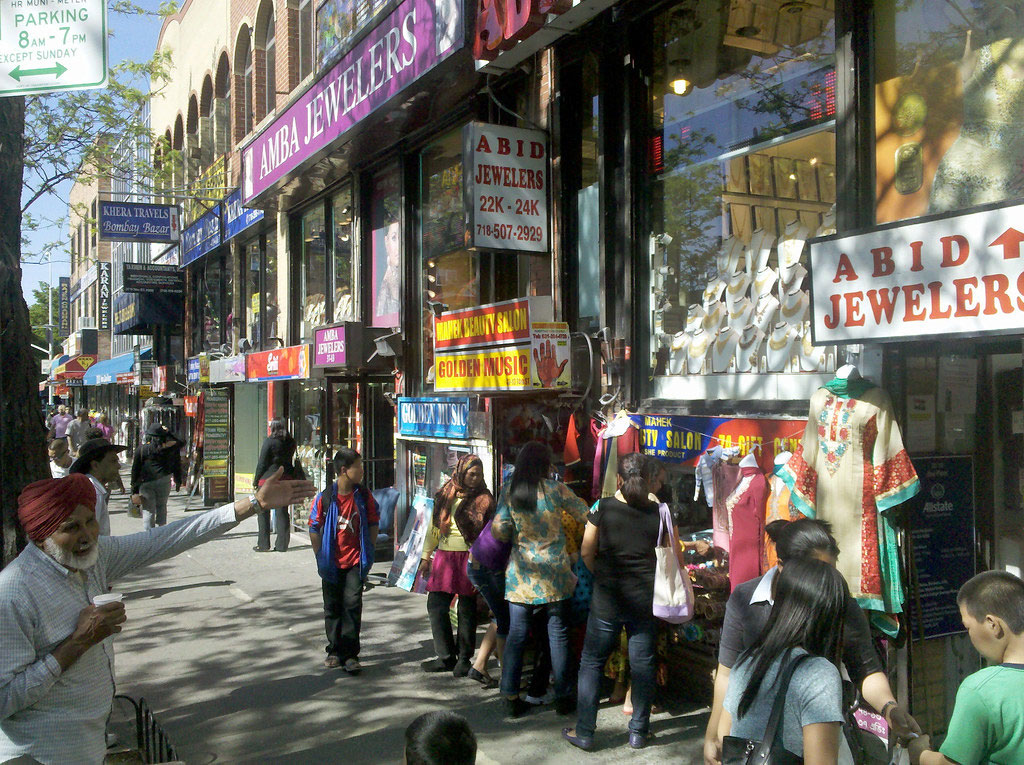
These two contrasting modes of development, of trying to build something out of seemingly nothing, have co-existed in Queens ever since. But could the borough really have it both ways? The World Village: combining the cosmopolitanism of the entire globe, all its sharp contrasts, with the intimacy of the drugstore and the roti shop, firmly grounded in concrete urban experience. The most linguistically diverse place on the planet, the crossroads between continents, the smells and sounds of remote vistas enshrined in cozy street food stalls, quaint storefronts stacked on top of one another, where everybody knows your name. It’s a lot to live up to for one borough, especially when this unifying vision of urbanism depended so much on specific conditions of place and time.
In the wake of the World’s Fairs, the neighborhoods around Flushing Meadows Corona Park developed as classic enclaves. Language or religion or customs served as enough of a barrier from the outside that within them, one needed to build up the stuff of life from first principles; everyone and everything in the immediate environment played some indispensable and palpably life-sustaining role. The personal connections that workers relied on to find jobs; the rudimentary system of classified advertisements for housing or services, circulated in ethnic newspapers or taped onto lamp posts; the cottage industries that arose to fill obscure niches; they all stitched together an urban environment with an internal logic born of mutual interdependence. These networks were also usually layered over existing, unfamiliar terrain, requiring each resident to triangulate and map their own territories. Growing up in one of these enclaves, one could experience the city not as continuous space but as a series of connected dots, each serving a vital and readily evident function. When life is hemmed in like that, geography becomes very clear, social ties are affirmed, and what’s good or bad for the community is easily graspable.
It’s extremely convenient and comforting to hold on to this version of Queens today. We want to believe that a place can be globalized but still hospitable to small businesses and street level interactions, that it can preserve distinctions while maintaining cohesion. Perhaps it’s all the more important these days because of the mounting evidence to the contrary elsewhere. In Queens especially, where demographic shifts are still subtle enough and the multiethnic character still visible and vaguely exotic enough, one can sometimes pretend that the fortuitous moment when “World” and “Village” came together can endure indefinitely, achieving some kind of idyllic stasis. Never mind the inherent contradictions between World and Village, and how one place is supposed to embody both at the same time to any meaningful extent. Never mind the intentional provisionality of these neighborhoods, and the temporary, slapdash infrastructure upon which they were built. But one can only strain credulity for so long, especially when one has to live here. The forward-propelling momentum of the initial, existential phase of immigration is necessarily fleeting. These neighborhoods are as much in flux as any other, and the human-scaled cosmopolitanism has only ever barely held itself together. From the park to the casino, the distinctions have been constantly wearing down.
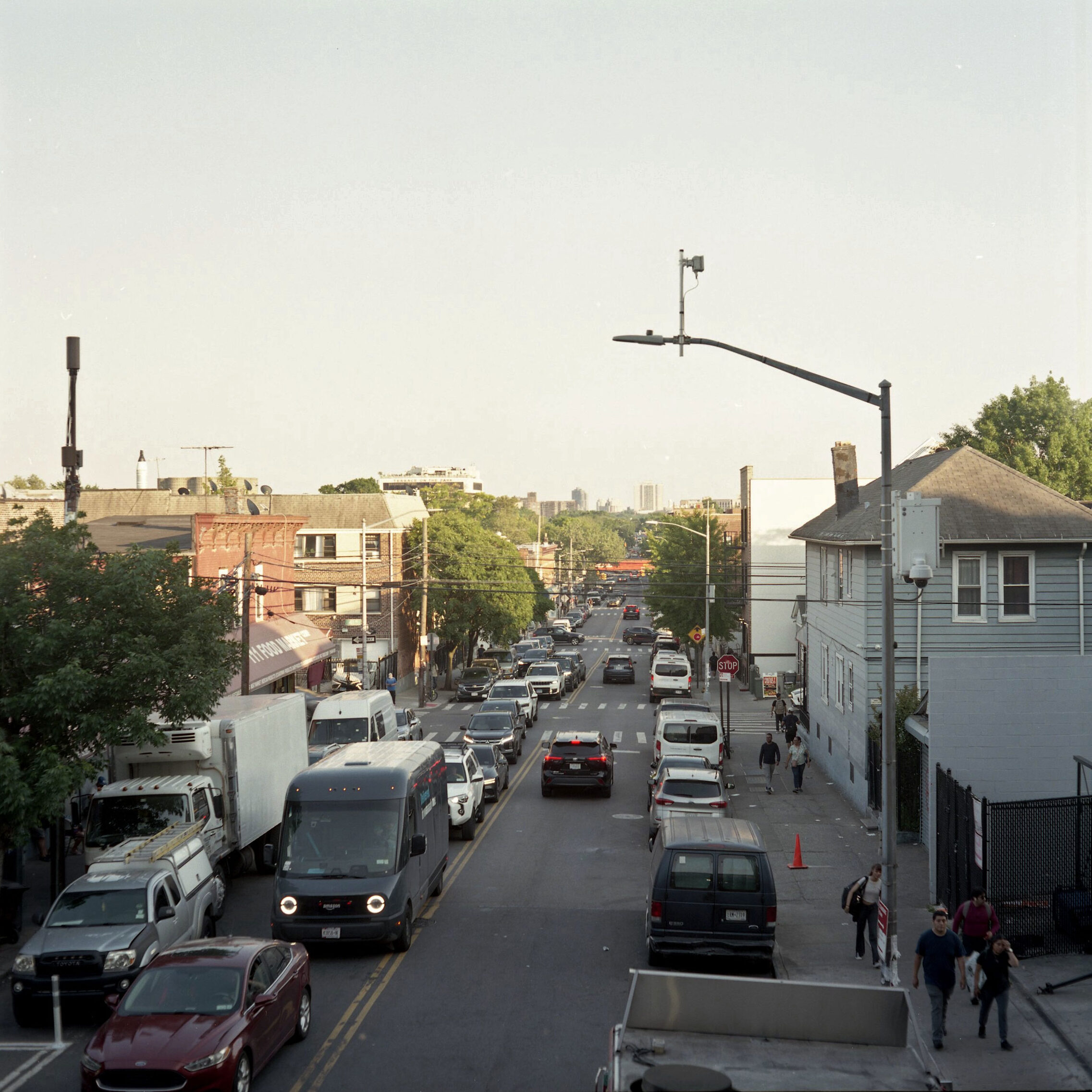
The children and grandchildren of the post-’65 cohort assimilated. We learned English, we gained a better sense of direction. Gradually we filled in the blanks in our mental map of the neighborhood, and more and more of the city opened up to us. We started shedding our previous attachments, not so much because we disliked them, but because New York rewards being light on your feet. We adopted the blasé attitude. Kids from Flushing commute downtown. Their parents work in civil service. Along Queens Boulevard, from the low-rise apartments to the aging co-ops with thin balconies, the ideological drama of our home countries has dissolved into strip malls, Zumba at the YMCA. The planes flying overhead become merely a nuisance. The butcher, the baker, and the cobbler don’t really live and work down the street from each other anymore. People shop at Costco, Trader Joe’s, and Amazon. Other storefronts, to the extent that they still exist, repackage and sell the same goods produced in China, and not just in the Chinese neighborhoods. We call private taxis for our burritos. We live economically streamlined and tech-mediated lives here in Queens too, not so different from everywhere else. It’s this strange, drifting mood after the initial scramble for survival is over, when the barriers that defined your sense of place come down one after another, that has come to define life in immigrant Queens.
The World cannot be contained within the Village. The enclaves were supposed to block out the rest of the world by maintaining a certain level of insularity and opaqueness: obscure second floor storefronts, hidden staircases, secret menus, basement apartments. It was a functional order, not expressive, not choreographed, where shared values, reputational consequences, and long-term co-presence meant that normative judgments about what the built environment should be arose naturally and intuitively from socioeconomic conditions. This kind of infrastructure was recreated in one neighborhood after another, next door from each other, often in inefficient and makeshift ways. Chinese driving schools, Filipino shipping services, Caribbean jitneys, and Korean travel agencies are all only possible in their particular context, serving to arbitrage the incidental market opportunities created by their social and cultural isolation. But by their very proximity, in the small interactions that permeate across neighborhoods, and through the sheer mundane entropy of time, the edges flatten out and the borders wear down. The economic development strategies of the Village are revealed to be suboptimal; redundant. In the end, inevitably, we arbitrage away what we built.
It is not so much that this obsolescence is inherently such a tragedy. It’s more that you’re left wondering what still ties this place together. We all cling to the feeling of that earlier period of immigration, and hope something of it remains. Maybe that original restless energy, that inner provisionality, just gets redirected outward again: toward travel, toward a house in Long Island or a condo in Chelsea, to a revanchist embrace of your native country and culture, to an obsession with place as the cause and solution to all life’s problems. Some of us even went on to work in urban planning. But whatever the result, one struggles to articulate an ethos and build a coalition around it here and now, even in the face of something so reductive, monolithic, and uninspiring as the Metropolitan Park plan. The diversity of Queens is now fully legible and consumable; cultural differences have been reduced to ambience. When local attachment is sentimental more than functional, any kind of development project can come in and justify itself with only cursory concessions to the particulars of place.
The great geographical equalizer, it turns out, is the casino. It is perhaps the most decisive severing of social and economic life from the people around you: a veritable World’s Fair of tourist-gamblers, wrenched out of time and place and dropped onto the windowless gaming floors, frozen before the slots for a single lost night or day, then gone. Forget multinational corporations or intricate supply chains, your fortunes are now in the hands of capricious gambling gods. Even the guilt and shame are yours alone, hidden from your friends and families.
The neighborhood is no longer some primary unit. Obligations are thin, and harm cannot be narrated locally. Instead, the casino is framed in terms of economic impact studies, job numbers, traffic flows, accounting. Moral responsibility used to be located somewhere: within a person, within a community. Moral language was admissible. Nowadays, moral language seems unserious unless translated into foregone tax revenue, marginal gains. Opposition to development is procedurally honored but very effectively absorbed, sedated, or evaded. Even losing in the public process didn’t used to be dishonorable; today, both presence and absence at the community visioning sessions feel like complicity. What else could go here that wouldn’t feel hopelessly quaint, financially unfeasible, exclusionary, or arbitrary? And so, the casino is where we end up. It’s not inspiring, it’s not fanciful, it’s not revanchist, it’s not imaginative: It’s just properly cynical enough for everyone to accept.
Some of my favorite memories of Queens are late nights spent alone in empty fast-food restaurants along Roosevelt Avenue. Usually it’s after work, and I’m coming back from Manhattan, and it’s late and I’m hungry so I get off the subway somewhere in the middle of Queens, and by then the World Village has turned its lights off. Maybe I’ve been at a community meeting or stakeholder focus group somewhere, for a neighborhood that’s not my own, trying to build consensus, pushing for some planning project or other, something rather than nothing. We all know that a city can make you feel unbearably lonely in the midst of huge crowds, but there’s a corollary to that, which is how it can fill you with magnanimity toward your fellow man, late at night, with no one around.
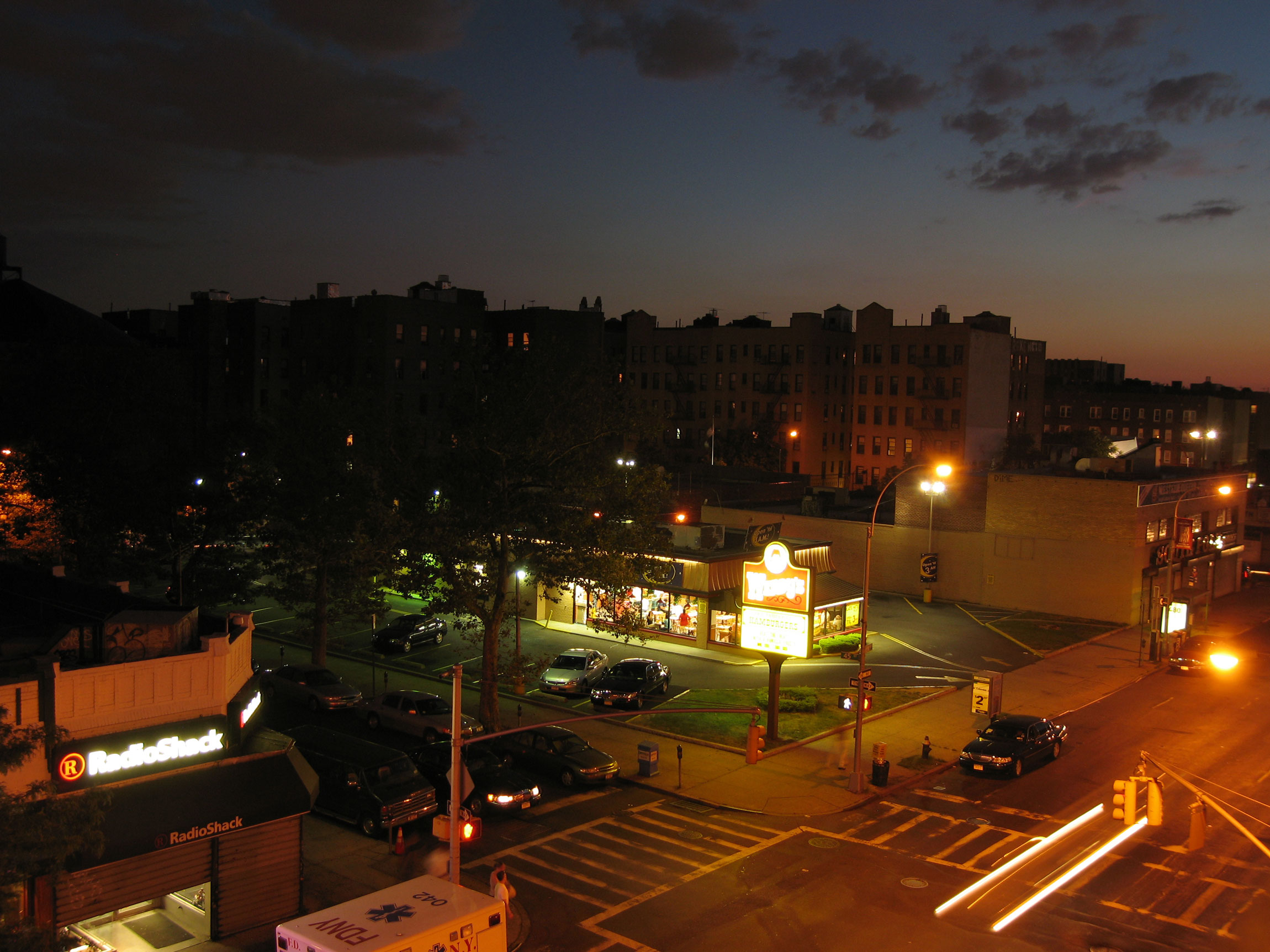
I know that these neighborhoods in Central Queens have vibrant signage and many types of foods. I’ve been there many times. Some of my best friends are from Central Queens. It is a real place. But late at night, the streets take on an uncanny quality, empty and artless and illegible, enveloping you like a blanket, and Queens becomes a blank slate again. You are who you are, stripped of all the narratives, in this Wendy’s.
There’s no going back. We can’t rezone antiquated grassroots relations back into place. It would be regressive to try to erect barriers again, and it would be impossible even if we wanted to, in this flattest of all boroughs. But at night along Roosevelt Avenue, there’s a convoluted, reverse-psychology, Zen sort of mind trick you play on yourself. If the visible, celebrated, bustling, cultural diversity-as-branding version of Queens can no longer hold you, when it feels like just another walk around the food court of a theme park, then what about its opposite? The bizarro world, the night side of our borough, when you are alone but the sense of subjective isolation vanishes. When you are in the middle of nothing, you suddenly feel like you’re connected to everything. If you depend on no one around you, then maybe that’s kind of the same thing as depending on everyone around you. Emptiness has a way of feeling expansive.
Central Queens late at night extends out in all directions. The dark storefronts blend into one another, and one neighborhood shades into the next seamlessly. There is rarely any nightlife around here because people still have to get up early. The nighttime hangs generally over everything, hiding all the differentiated and distinguishing accoutrements, and it creates the ideal conditions for self-reflection. After speed-running through the cold-water shock of first-generation immigration, after assimilation and the gradual wearing away of the load-bearing walls of the social environment, what remains, what connects the diverse immigrant communities of Queens together, seems to be merely the residual spirit of geographical arbitrage, as expressed in economic impact studies, job numbers, traffic flows, accounting. Surely this can’t be the end of the story. What was the point of speed-running through everything that came before? We are still here, living through the second act of our American lives.
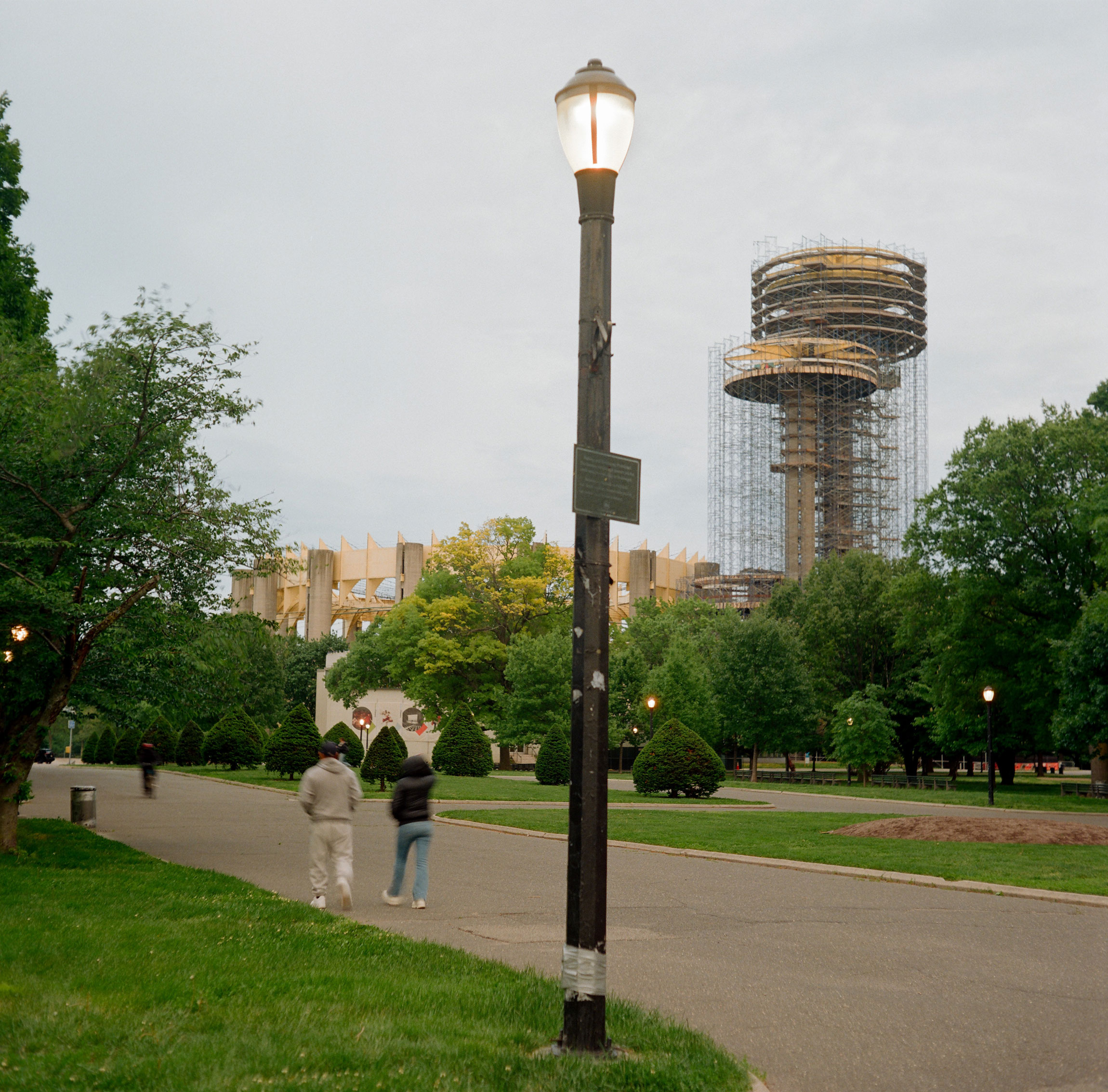
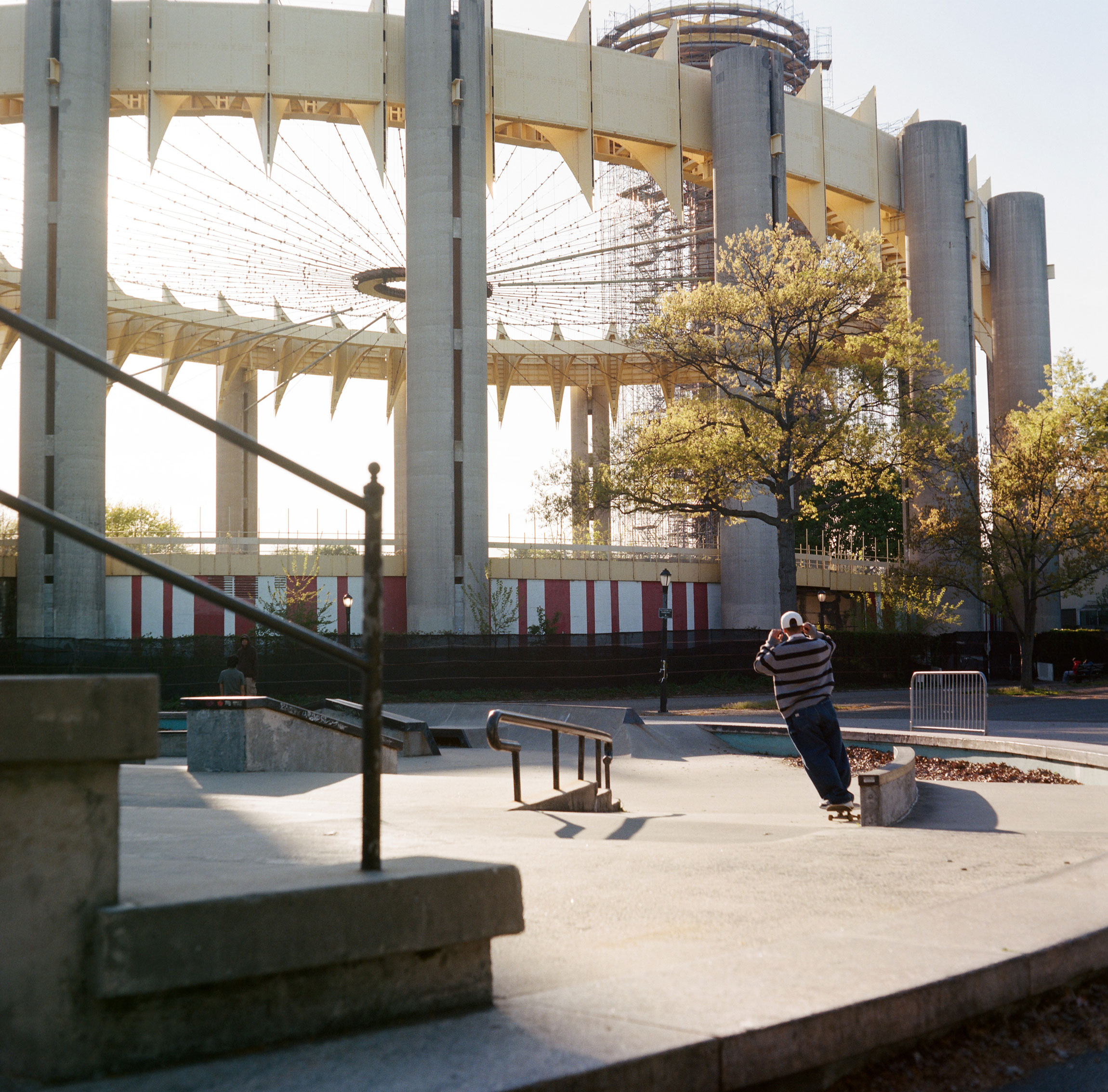
The remnants of the World’s Fairs were basically glorified ruins for most of my life. Over the past decade or so, there have been punctuated attempts to stabilize and preserve the New York State Pavilion, and recently renovation efforts have ramped up in earnest, with the first phase of restoration finishing in 2023. The Tent of Tomorrow and the towers are illuminated at night once again. But truth be told it never really bothered me that the pavilion was in ruins. Growing up here, we neither noticed it nor cared very much; there was a grandeur to them anyway. Whatever we build eventually submerges into the landscape. The casino too will become landscape. We acknowledge it, and then we let it be submerged. You keep piling stuff into Flushing Meadows Corona Park, but there always seems to be more space. It all becomes part of the great archaeological dig, the great scavenger hunt. It all just makes Queens bigger, piled higher, more massive: the perpetual ash heap.
The views expressed here are those of the authors only and do not reflect the position of The Architectural League of New York.
Comments