
Series
New City Critics
Dispatches from the New City Critics fellows: new, fearless, and diverse voices to challenge the ways we understand, design, and build our cities.
We are celebrating 15 years — and counting — of stories that are deeply researched and deeply felt, that build a historical record of what the city has been.

When blood started gushing out of Erin’s mouth on a Zoom call last November, she panicked. Her coworkers, including a new agent she was onboarding in her role at a literary agency, also panicked. Her Uber driver to the hospital did not panic. “It was so gross, but my Uber driver was so lovely and calming. I wasn’t able to talk because of the blood, but he was like, ‘We got this. We’re gonna get you there. This is not the craziest thing I’ve ever had in my car,’” she said.
The ride, from her apartment in Ridgewood to her oral surgeon on the Upper West Side, ended up being close to an hour and a half (in her panic, Erin routed them to the wrong hospital first) and came out to $117 — including the $50 tip.
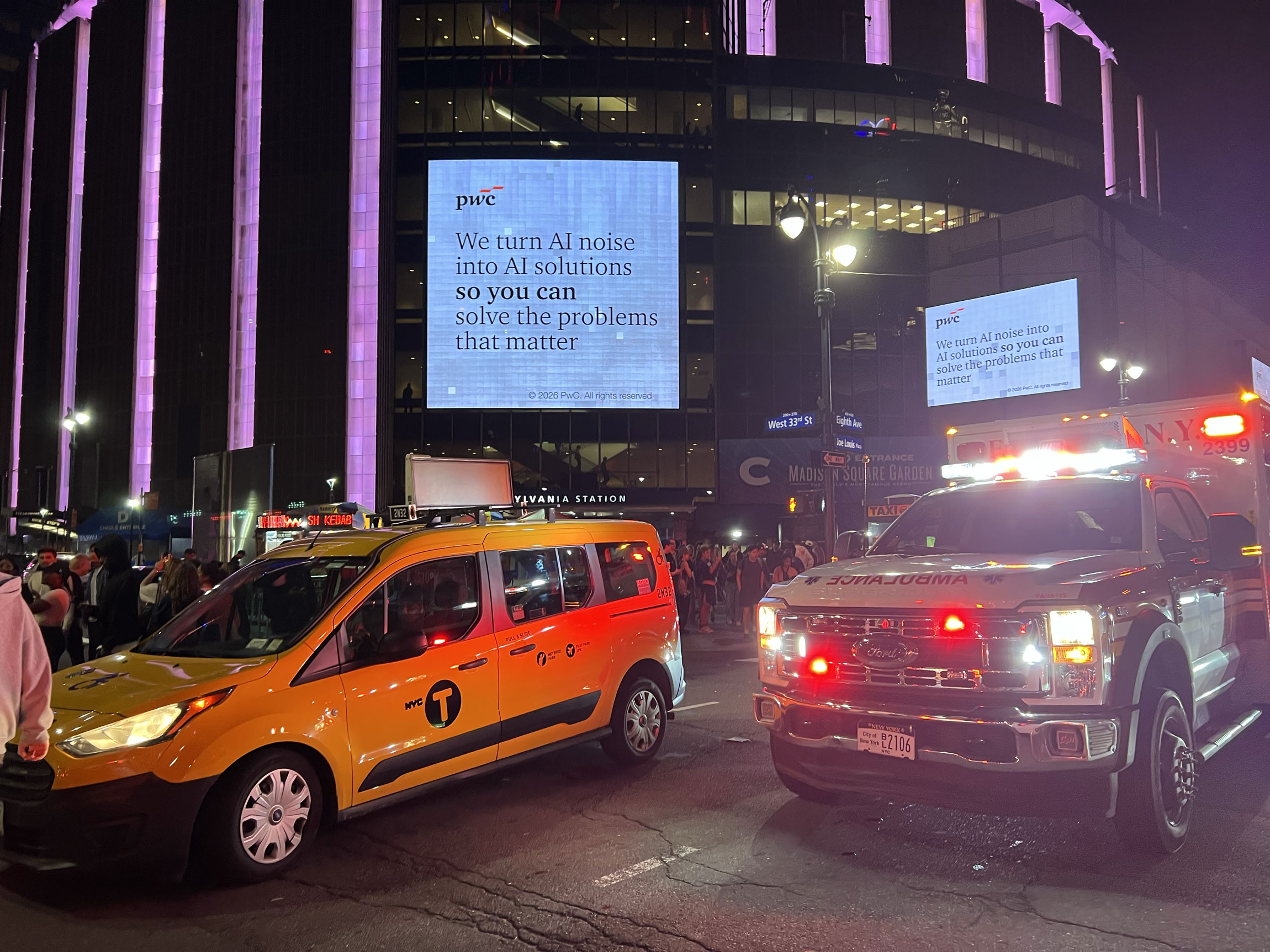
Stories of heroic drivers are not uncommon. Breaking an arm roller skating at Xanadu, blinding abdominal pain from a burst appendix, going into anaphylactic shock after eating soybeans, fainting in the bodega . . . almost everyone I know has taken a rideshare car to the hospital, or knows someone who has. Considering the cost of an ambulance, the time it would take for it to arrive at the door, and the fact that in an ambulance you can’t choose your destination hospital, they determined that a rideshare was their best — and maybe only — option. In some ways, taking an Uber to the hospital is not unlike hailing a cab: a simple standard facet of carless city life.
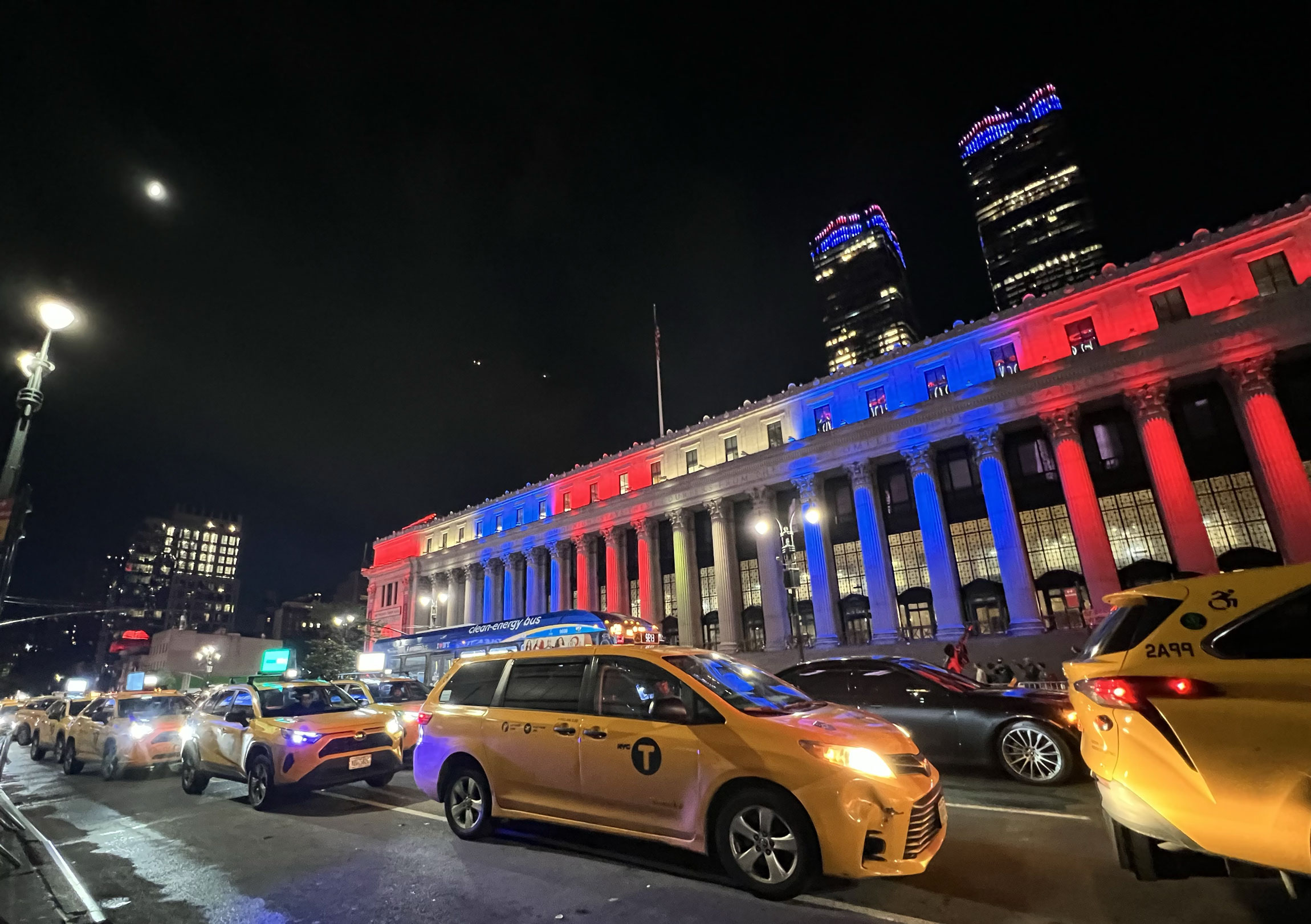
Think of all the stories of ’90s and Y2K babies born in a yellow cab’s backseat. If you were in Manhattan, or any city with frequent cab circulation, and feeling unwell but mobile enough to make it to the curb, you could hail a taxi to take you to the hospital (à la Carrie Bradshaw shoving Natasha into a taxi after she cracks her tooth chasing Carrie down the stairs in season three of Sex and the City).
But ordering an Uber is also fundamentally nothing like hailing a cab from the curb or calling a livery car service. When Uber first burst onto the New York scene in 2011, a slew of articles compared its response times to 911’s, and wondered if it was the future of emergency medical services. In the years since, Ubers, Lyfts, and other rideshare apps have become an essential part of the urban fabric, so much so that “ubering” is now a verb. Their ubiquity — the constant supply and convenience of hailing a car from your pocket — has made calling an Uber even more instinctual in urgent situations. But this convenience has a cost: It’s privatized infrastructure, algorithmically designed to exploit drivers and consumers, and with no public accountability.
The “Uberification” of medical transport has meant that the systemic informalization and precarity endemic to Uber are now part of many cities’ healthcare infrastructures. Confronted with the reality of astronomical ambulance bills, people are putting their lives in the hands of strangers with no training or and no protections if things go wrong, exposing structural gaps in cities’ interwoven healthcare and mobility systems.
**
The question, “How do I get to the hospital?” is deeply entangled with the history and ongoing pattern of spatial segregation in cities. Where someone lives is one of the primary factors shaping their health outcomes. Racially discriminatory planning processes and policies, such as redlining and urban renewal, have helped produce neighborhoods segregated by wealth and race — a geography predictive of unequal health outcomes and life expectancy, particularly for Black residents. In New York City, researchers and frontline community members in the Bronx famously challenged the system of medical apartheid that segregated New Yorkers in predominantly Black and Hispanic neighborhoods by relegating them to lower performing public safety net hospitals. Instead of mitigating health disparities, “the health care system itself is often subject to the same inequitable patterning associated with residential segregation,” according to a report from the NYU Furman Center.
Consider the following questions:
How far is the nearest hospital? Is it easily accessible via public transit?
How do health outcomes for your medical issue at this hospital compare to other hospitals?
Do you have access to a car?
Are your primary care services nearby and accessible?
The harder they are to answer, the more likely that good healthcare is far from reach.
Low-income, elderly, and disabled patients face additional mobility challenges. “Where people may have more limited insurance, or difficulty accessing primary care, they may end up not seeking medical care until a problem has gotten much worse, so that may then necessitate an ambulance,” says MIT professor Justin Steil, who studies EMS and health equity. “People who have low incomes are less likely to have a car, and if something has gotten to the point where your mobility is limited, then an ambulance may be the only option.”
In theory, Uber can help people avoid expensive ambulance fees. Close to a decade ago, early research found that ambulance use declined by seven percent in cities where Uber was introduced. Even with health insurance, an ambulance ride can cost hundreds to thousands of dollars. A 2024 study shows that New York State legislation aimed at eliminating surprise fees from out of network ambulance rides did not actually curb overall ambulance costs.
The growth of rideshare app usage has coincided with rising costs of ambulance services, especially in New York City. At the same time, their riders generally skew younger and more affluent. While reliance on Uber may be especially intuitive to them, this may not be the case for older, less wealthy residents who risk falling through the cracks. The question of whether rideshares close the equity and mobility gaps for healthcare access remains largely unanswered.
It feels a bit insane that it is normal to call a car driven by a stranger with no medical training to take you to the hospital in your most vulnerable moments. But the reality is Uber and other rideshare options can be the best choice for the patient, and the healthcare system, by the system’s design.
Deciding how to get to the hospital relies on personal judgment, notes Dr. Joshua Moskovitz, an emergency medicine physician and EMS specialist at NYC Health + Hospitals. “Emergency resources are finite, and our hospital systems manage an immense volume of patients every single day,” says Dr. Moskovitz. “When someone uses their own judgment to safely take alternative transit to the emergency department, it is a completely valid choice. Making that decision when appropriate helps ensure ambulances remain available for the absolute most critical, life-threatening emergencies.”
But relying on individuals to overcome an infrastructural deficit is tasking a rideshare driver with a critical role in the delivery of healthcare with little say in the matter and little protection against the risks.
In all his years of driving taxis, there was one only time Kareem declined to take a passenger to the hospital. Arriving at the pick-up spot in East New York, he encountered a passenger whose face was cut up, bloody. The nature of the injury wasn’t the reason he refused the ride — it was that the passenger didn’t have anything to cover the wounds or staunch the flow of blood. “It’s unsafe,” says Kareem, referring to the biohazard of exposed blood in his car. Usually, he assured me, he’s more than willing to help. Most drivers I spoke to expressed gratitude that they’d never had to drive anyone to the ER, concerned over the liability and stress at what might happen if a passenger had a medical emergency in their vehicle. But some brushed off any trips they’d made to the ER as ordinary. A broken leg is only a problem if the passenger can’t get in the car.
It could be that the drivers I interviewed as a paying passenger had some motivation to play it cool. After all, passengers can be friendly, chatty, leave a good tip, and still report the driver, out of spite or for a few free ride credits. For the driver, their livelihood is on the line. “Wanting to be helpful” carries big risks when you are vulnerable and unprotected from threats ranging from legal liability to physical harm.
Gig workers such as rideshare drivers are classified as independent contractors. Their pickups for the day are not driven by rider demand, but by the apps’ algorithms. A rideshare driver’s obligation to accommodate pickup requests is built into Uber’s operating system: Uber reserves the right to shut drivers out of the app for any reason. According to the New York Taxi Workers Alliance (NYTWA), a union representing over 20,000 yellow-cab, green-cab, livery, and rideshare drivers, there’s no independent investigation or trial to address passenger complaints. In a city like New York, with a surplus of drivers, NYTWA has found Uber’s internal review system almost always sides with the passenger.
“A lot of drivers, they see the drunk passenger coming with a violent attitude, they think about their family . . . If they don’t accept [that] rider’s Uber, [that person will] call Uber and get them kicked out of the app. This is a serious, serious issue,” says Biju Haider, a driver since 1985 and organizer with NYTWA. The sudden deactivation of drivers from ride sharing apps — being fired with no warning, cause, or recourse — has led drivers to endure abuse without reporting it, out of fear and in some cases suicide, according to NYTWA member testimonies. Uber and Lyft have spent billions of dollars fighting legislative efforts to classify drivers as employees entitled to benefits such as regular wages and healthcare.
The Covid pandemic highlighted this precarity. Especially in the early months, when masks and other protective equipment were in short supply and public health guidance was unclear, drivers were delivering sick patients to the hospital without the same protection as healthcare professionals. Instead of providing drivers with PPE, Lyft tried selling it to them.
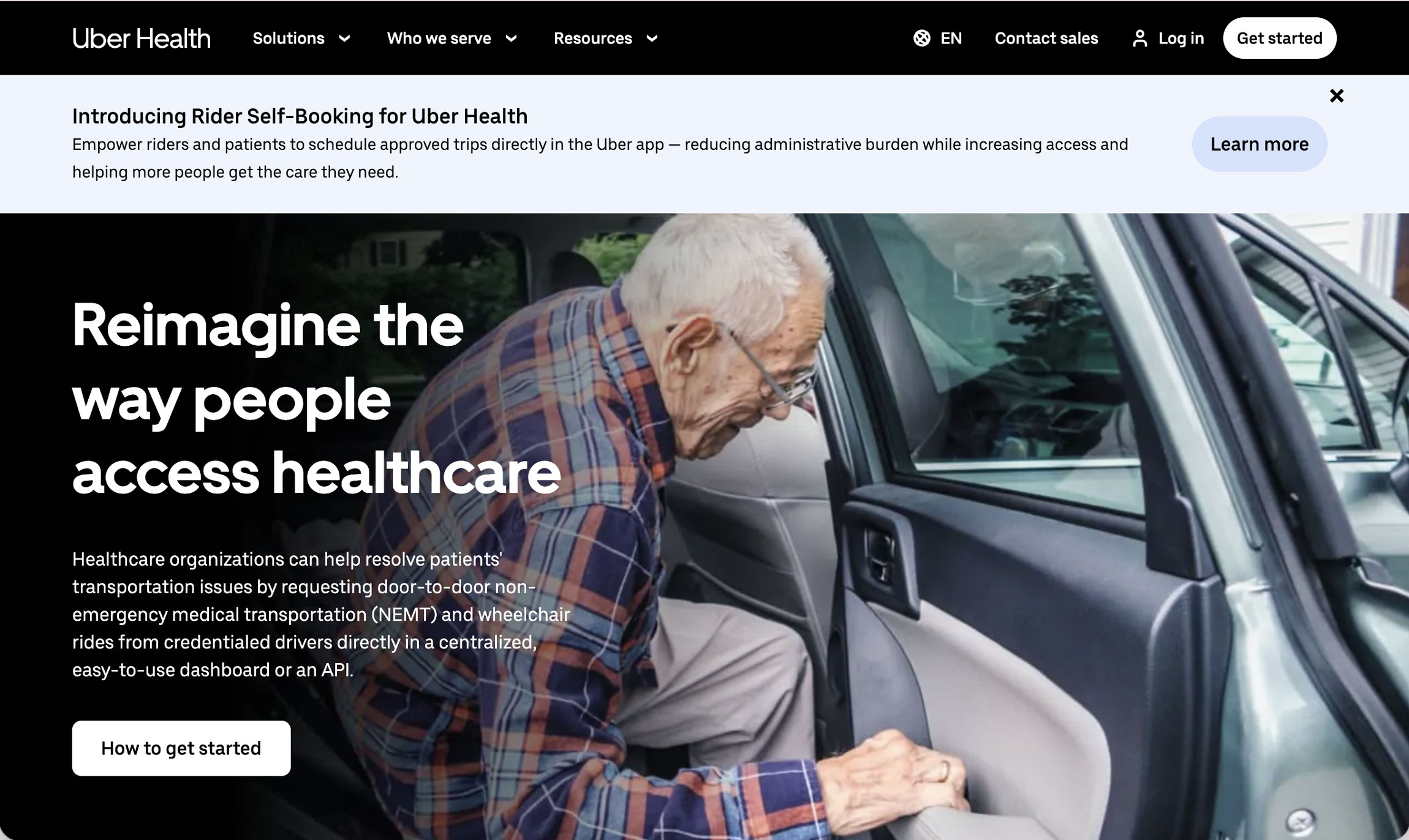
In 2018, Uber expanded their role in non-emergency medical transport (NEMT) systems through Uber Health, a platform on which healthcare providers can directly book patient transport. The platform offers HIPAA compliance and convenience for healthcare providers. With the exception of wheelchair accessible rides coordinated through NEMT providers, the rides themselves are no different from regular Uber rides. Drivers receive no additional pay or training for undertaking riskier work. Last October, a woman in Nashville made the news because she was unprepared and uninformed that she would be transferring an agitated and aggressive patient from the hospital to a psychiatric care facility, what she called a “nightmare ride.” (See also: season two of The Pitt, when Dr. Whitaker calls an ER patient a Lyft home and is hit with a $250 surcharge when said patient hurls vomit and leaves a racist complaint for her driver.)
The irony of Uber Health is sickening. Unlike official medical transport, or even the taxi and car service businesses that preceded them, rideshare apps operate on a scale that enables their business to treat both drivers and customers as disposable. Yet this system has expanded over the last decade and a half, forcing us to rely on private companies to provide health care services. Drivers have shouldered the responsibility in spite of, and also because of their precarity. Approximately 90 percent of New York City’s Uber drivers are immigrants, and with ICE agents targeting hospitals and rideshare driver waiting areas, the dangers of this work are especially high.
Driver-led organizations such as the NYTWA have been advocating for policies that create more safe and secure working conditions for drivers. After over half a decade of organizing and campaigning, NYTWA’s new legislation — going into effect in July 2026 — deems it “unlawful for Uber and Lyft to fire drivers without just cause and, in non-egregious cases, without advance notice or progressive discipline.” It establishes a third-party judiciary process for all future deactivations, and an appeal system for deactivations that have occurred in the last seven years.
At my work-mandated CPR training session, the instructor walks us through how to assess a medical emergency scene: Check for wounds, check for consciousness, check for breathing. If they don’t pass any of those tests, call 911. If they do pass, call an Uber. Unfortunately for me, no one else laughs. How can something so informal and risky be the official solution?
In December of last year, it was reported that a woman gave birth in the back seat of a self-driving car in San Francisco. The Waymo detected unusual activity, and the woman safely delivered her baby by herself in the car with the help of the disembodied voice of a Waymo staff member, watching her through the car’s camera, and arrived at the hospital before EMS reached her.
Uber has recently poured billions into AI and scaling their “robotaxi” network, staging a vision for the future where a driverless city is achieved through fleets of autonomous vehicles (instead of, say, through robust public transit). As the Waymo birth shows, human care and compassion cannot be replaced. Even in the best-case scenario, cab drivers should not be responsible for providing medical support. In 2019, a Brooklyn livery driver coached a woman through her delivery in his backseat, exclaiming: “Dayum! You gotta breathe mama . . . God bless the baby . . . Boom. We gucci.”
With the Uberification of different systems — from rideshare to food and grocery delivery and ambulances — it feels as though we’ve become systematically dependent on the opiate of convenience they provide. But a just vision for the future of healthcare systems won’t come from companies who have repeatedly sidelined human welfare in their business model. It probably looks like a minimum wage for rideshare drivers, without the precarity that subjects them to the whims and risks of algorithms. It would entail higher wages for EMTs, many of whom make barely over minimum wage, which is driving a workforce shortage. It looks like universal healthcare, and a public health approach to emergency care as modeled by other countries who sound off on Reddit forums and social media, commenting on the unfathomable idea of paying for an ambulance. Decisions around health and healthcare have life-or-death stakes, and in the moments where you’re bleeding or giving birth in someone’s backseat, you hope the person behind the wheel, if there even is one, can make the choice to try and help you.
The views expressed here are those of the authors only and do not reflect the position of The Architectural League of New York.
Dispatches from the New City Critics fellows: new, fearless, and diverse voices to challenge the ways we understand, design, and build our cities.