
Series
City Habitats
In cities around the world, animals put human-built infrastructures to new and unanticipated uses. Russell Jacobs chronicles the anthropogenic ecologies of New York's concrete jungle.
We are celebrating 15 years — and counting — of stories that are deeply researched and deeply felt, that build a historical record of what the city has been.

Recently, as I was traveling up the Hudson by night, I encountered an odd nature scene. I was returning from the East River’s abandoned islands, finishing up my narration of a boat tour. Along Pier 59, in Chelsea — a unique sliver of shoreline that’s been netted off, covered in astroturf, and floodlit to create an eye-catching waterfront driving range where urban golfers whack balls into the river at all hours — the boat was briefly engulfed by a cloud of gulls frantically swatting at the surface of the water. It was an unlikely feeding frenzy, with birds fanning out around the boat and then descending, as we passed, upon the turbulent water our engine left in the halo of light that spilled onto the river. The gulls had lucked into one of the little human-created opportunities that urban wildlife exploit throughout New York’s estuaries: the light was drawing fish to the surface, and the passing traffic throttling them up for easy taking.
The water that circulates constantly through New York City is the region’s wildest, most dazzling natural feature. Twice each day, over the course of six hours, billions of gallons from the Atlantic push up through the Narrows, inching at first and then building to a deluge at the peak of the floodtide. The current carries in plankton, fish, and other animals from the ocean before slowing and reversing, ebbing back out to make room for the accumulated trickles of freshwater lakes and streams from all the way up in the Adirondacks that feed into the Hudson and enter the harbor on their way south. Along the East River, water from the Long Island Sound and the Bronx River sluices in through Hell Gate, churning toward Manhattan at 92nd Street.
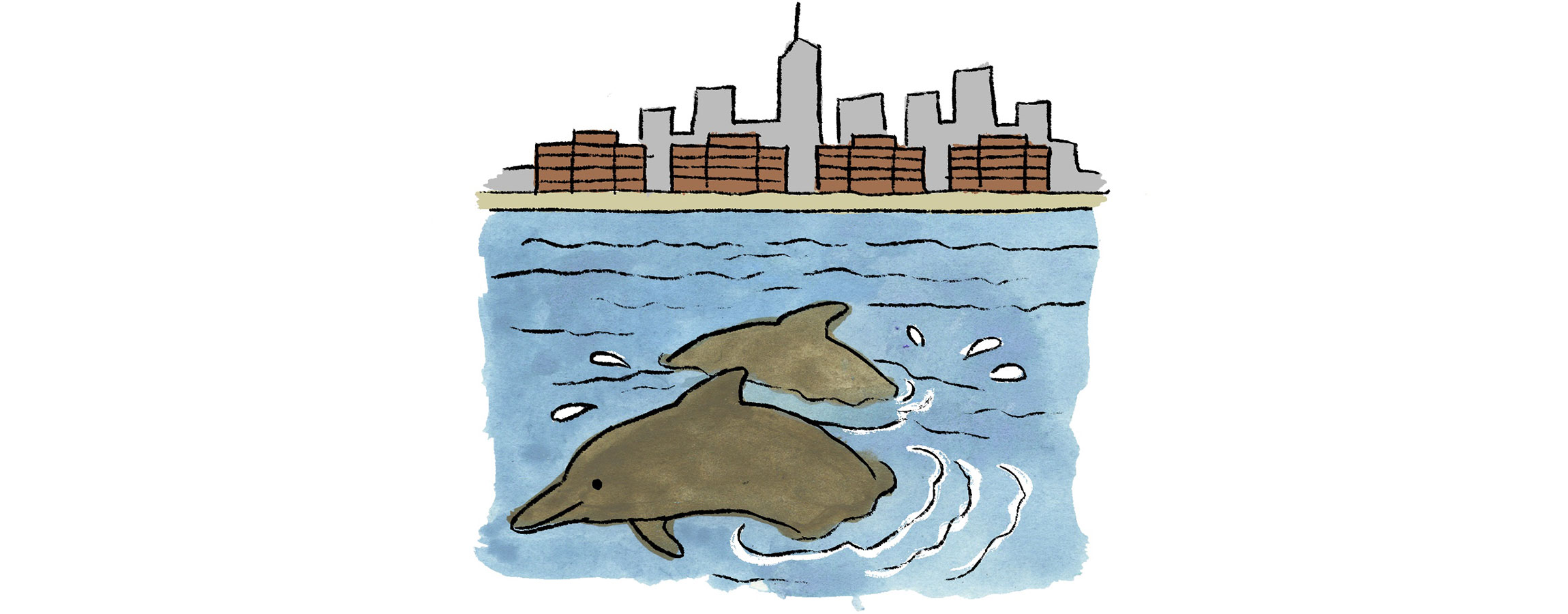
The interactions between these various bodies of water create currents, eddies, bays, and beaches: features that attract birds, fish, and even larger marine animals such as dolphins and sharks. It’s from these overlapping marine ecosystems that the city derives much of its biological diversity and some of its most spectacular landscapes, like the Jamaica Bay Wildlife Refuge and Pelham Bay Park. But the city’s marine environments are also some of its most heavily altered, and wildlife on the harbor needs to work constantly to adapt to the changes brought by people: dodging (sometimes literally) the threats we impose and taking advantage of unlikely opportunities. Throughout New York City, birds, fish, and even seals can be seen incorporating our maritime infrastructure into their day-to-day lives, as they find their way in the human harbor.
The most obvious anthropogenic features of these environments are the boats themselves, masses of steel, fiberglass, and wood that carry passengers, natural gas, gravel, scrap metal, and more back and forth across the water. The vessels have unleashed their share of environmental problems. In the early years of European colonization, house sparrows and brown rats arrived as stowaways on trans-Atlantic voyages, altering the local ecology greatly, while smaller hitchhikers continue to enter on their undersides and ballast water today. Sensitive to the noises that ships make, whales have been observed through satellite data making exhausting ocean circuits to avoid tankers, as heavy shipping traffic converges around urban ports. Every year in spring I see large Atlantic sturgeon and striped bass with unmistakable propeller gashes floating on the surface. But the vessel traffic also plays an under-appreciated role in organizing the behavior of birds and fish that live here.
Common terns, ring-billed gulls, and laughing gulls can often be seen following the largest boats, hovering over the whitewater behind tankers, barges, and other vessels to glean the small fish churned up in their wakes. Often, I see birds falling in behind the stern of a vessel to cheat their way over the water by draughting in its wind shadow, saving energy in the same way as bicycle racers riding in a tight line, or geese flying in a “V” formation.
Questions of energy retention and expenditure loom large in the lives of wild animals: deciding where they can nest, and how far they can travel in search of food, and whether they can afford to stay put in adverse conditions when finding food is more difficult. But boats rewrite these rules somewhat, providing some species with chances to save energy. Bigger barges and tankers, with their expansive decks free of people and boasting a range of textures and equipment, create perches that birds will sometimes use for a free ride south towards better fishing, or north away from heavier weather, saving nearly all of their energy. Over the years, I’ve seen gulls, pigeons, crows, and even a few bald eagles riding up- or downtown that way, using boats the way we do.
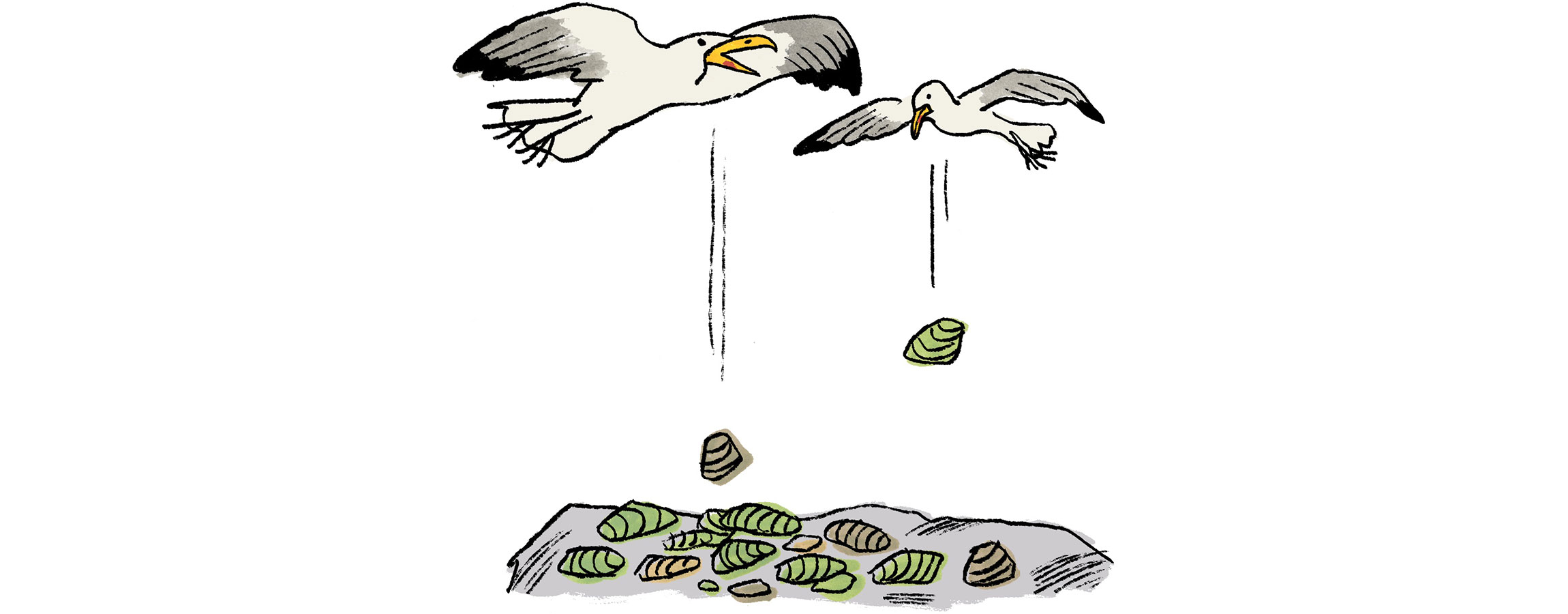
I’ve spent a lot of time out on the harbor, working on smaller vessels of various kinds and leading tours on boats with seasonal routes through different parts of the city, but the ingenuity of the animals on the local waterways still surprises me. I’ve seen terns colonizing old shipping piers, and osprey tucking nests into everything from channel markers, to old pilings, to abandoned powerboats. Virtually every flat, hard surface along the water, from the roofs of the dock-houses that operate the drawbridges to the crumbling concrete piers scattered around the more derelict sections of the shoreline, is littered in shattered clam shells that gulls have dropped, using the force of gravity to break through to the meat inside. Each winter, little grey birds with orange legs called purple sandpipers take refuge from the frigid, rocky coastlines in Canada and Greenland where they breed, descending onto the riprap along the Belt Parkway. They hop back and forth on the rocks piled up along the edge of land to prevent erosion, gleaning invisible invertebrates amid lapping waves and tide swings. Their presence here is a relatively recent phenomenon. The riprap itself, and jetties installed along the coast to brace the areas people use, have created favorable habitat in what was previously soft sand and mud, allowing the birds to expand their winter range southwards.
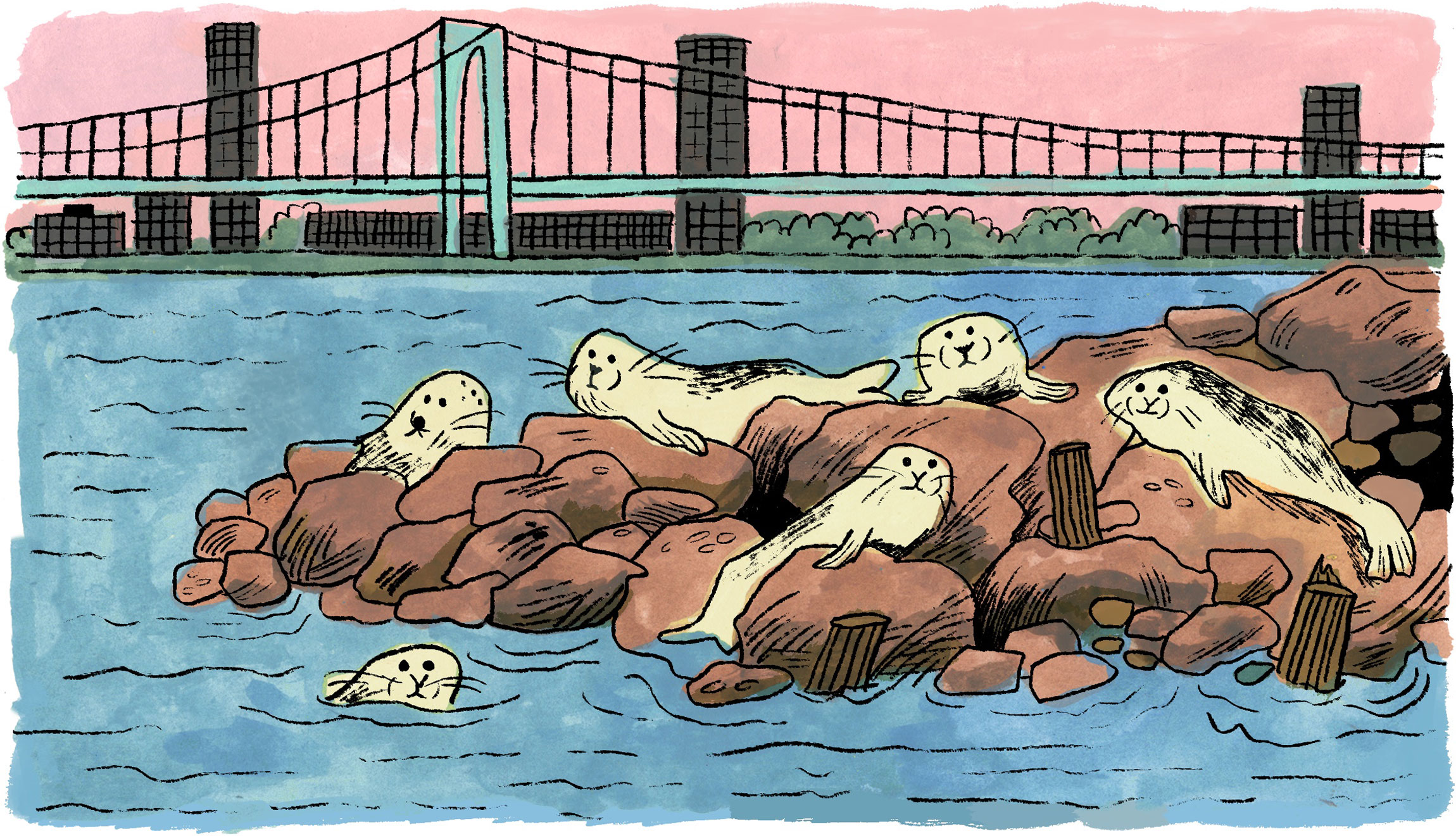
The boat tours I lead go up the Hudson River to the Palisades in the fall, when raptors are migrating down along the cliffs, and out into Hell Gate in summer to visit the vast rookeries where egrets, herons, and cormorants nest on abandoned islands. In winter, we push out through the Narrows to the lower New York Bay, towards a pair of grim human-made islands called Hoffman and Swinburne. These landmasses were constructed in the 19th century to quarantine passengers arriving from trans-Atlantic passages where infectious disease had broken out, but the facilities have been closed since the 1930s, leaving the islands more or less abandoned. These days, beginning around December, a group of seals arrives to wait out the urban winter on the rocky ledges there, hauling onto a jetty in front of the crumbling ruins of the facilities. The return of seals to the city after nearly 200 years of local absence is an improbable success story, and a testament to the ability of city-dwelling animals to make use of even the bleakest, most derelict maritime structures.
The views expressed here are those of the authors only and do not reflect the position of The Architectural League of New York.
In cities around the world, animals put human-built infrastructures to new and unanticipated uses. Russell Jacobs chronicles the anthropogenic ecologies of New York's concrete jungle.