
Series
New City Critics
Dispatches from the New City Critics fellows: new, fearless, and diverse voices to challenge the ways we understand, design, and build our cities.
We are celebrating 15 years — and counting — of stories that are deeply researched and deeply felt, that build a historical record of what the city has been.

New York City has a constant din. Its soundtrack is a dense composition of traffic rumbling, people babbling, buses roaring, and sirens wailing. The result can be cacophonic: an indistinct urban chatter with no discernible single voice.
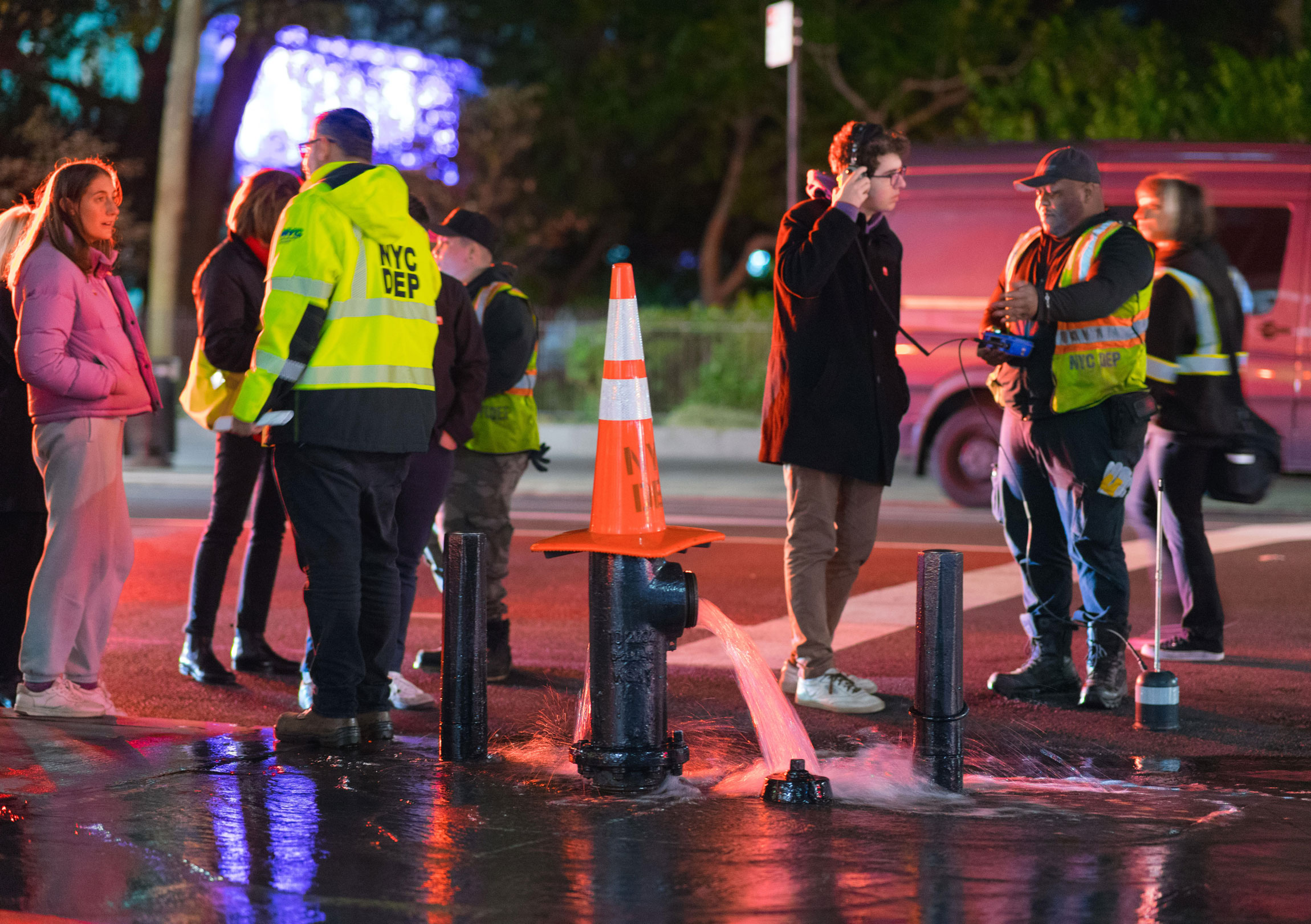
Interpreting this cacophony is a crucial urban life skill that can be particularly useful for communicating with the infrastructure around us. It requires training, field exposure, and endurance. That is the task of the Leak Detection team; to harken the water flowing through a 6,800-mile-long network of pipes beneath our feet. Usually, they gather at midnight, a time when, allegedly, the city is quieter. When I met them one cold October night in City Hall Park, however, cars still roared, sirens wailed, and revelers shouted — and water flowed beneath Broadway.
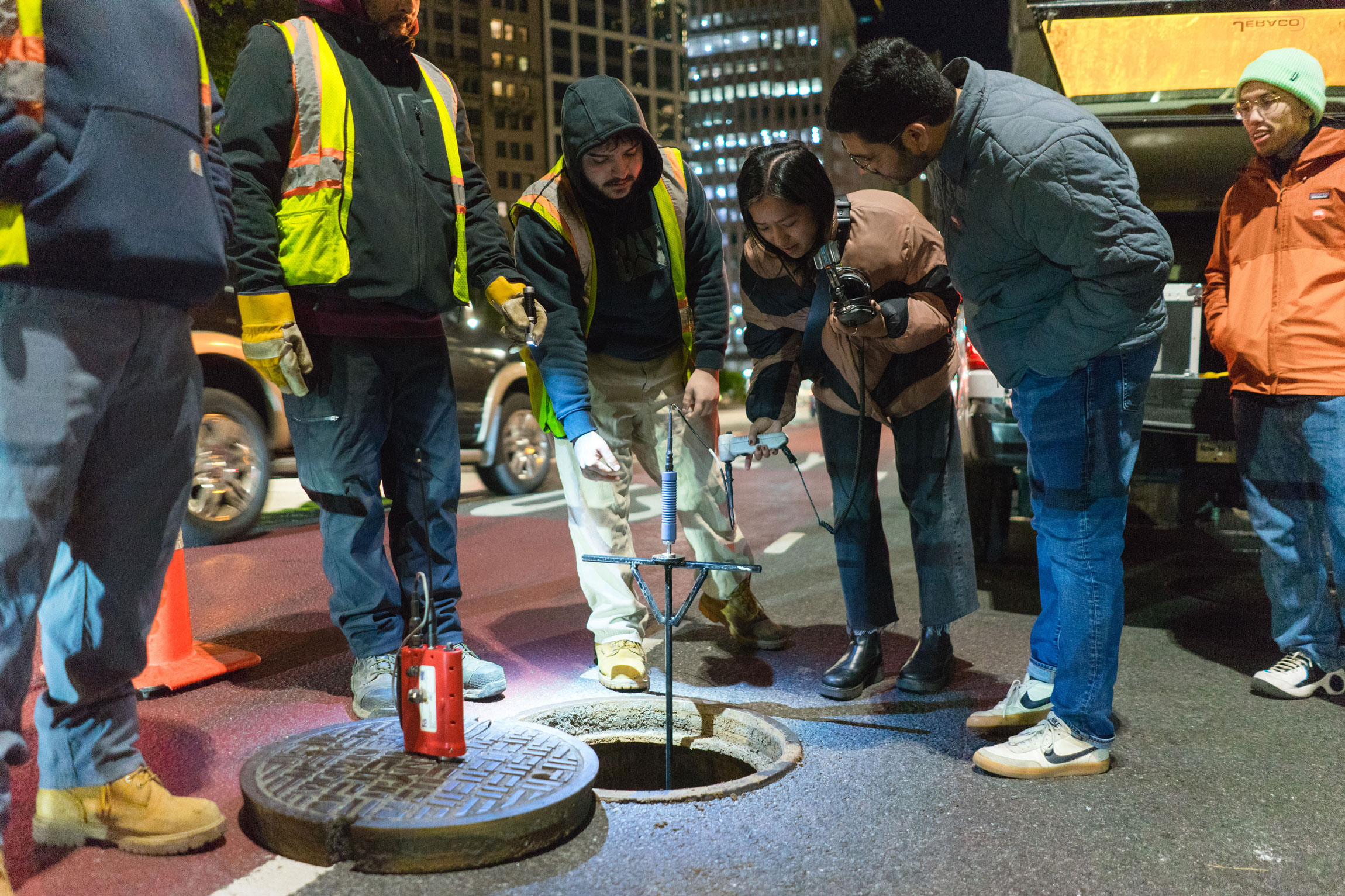
Part of the NYC Department of Environmental Protection (DEP), this team of eleven civil servants specializes in listening for water sounds that might indicate malfunction. The goal is to identify leaks when they are still small and easy to fix. To auscultate water pipes, the team uses cutting-edge technology: a contact microphone called a Lmic that functions similarly to a physician’s stethoscope. You attach it to valves, manholes, or the asphalt to hear what is not visible on the surface.
If there is a leak, the sound captured is undoubtedly that of water flowing: a slow, rhythmic, whoosh resembling a creek. Listening through headphones, one might describe it as an endless toilet flush. The device also amplifies other urban tunes, such as a train crossing underground, the mechanical clangs of HVAC systems, and even the songs playing in a car parked nearby. Using the Lmic on Broadway to hear a combination of natural wooshes and industrial horns feels like attending a Björk-themed silent disco while the city is asleep.
When a water main breaks, the water doesn’t whisper, it gushes; causing hours-long service disruptions — as was the case in Inwood this past September and in Times Square in 2023. The city’s underground is messy; an endless layer of “spaghetti” (as the team refers to it) made up of water mains, telecommunications tubes, and utility tunnels. It is through this nearly century-old system that one billion gallons of water arrive daily in the homes of New Yorkers. When a pipe bursts, streets and basements flood, subways come to a halt, utility distribution is suspended, and residents are left stranded. The good news is that these disruptions are decreasing, due in large part — according to the DEP — to the team’s nightly search for subtle whooshing amidst the jarring subterranean soundscape. These positive results may already justify the agency’s investment in the new technology, but the advantages of listening to urban infrastructure go beyond this, generating an awareness of the things that sustain our collective life and the relationships around them.
Every shift, the midnight crew auscultates roughly six miles of pipes, or 0.08% of the water supply system. Making sense of the city’s soundscape is a delicate job that requires a keen ear. Stewardship might take time, but it is through constant listening that the endless web of people, things, and places that our urban infrastructure becomes perceptible. This slow pace is inherent to maintenance work: a never-ending, repetitive task to preserve and renew the city. Luckily, in New York we have eleven public sound engineers who take care of our water pipes, and another 300,000 city workers who take care of the rest.
The views expressed here are those of the authors only and do not reflect the position of The Architectural League of New York.
Dispatches from the New City Critics fellows: new, fearless, and diverse voices to challenge the ways we understand, design, and build our cities.