
Series
New City Critics
Dispatches from the New City Critics fellows: new, fearless, and diverse voices to challenge the ways we understand, design, and build our cities.
We are celebrating 15 years — and counting — of stories that are deeply researched and deeply felt, that build a historical record of what the city has been.

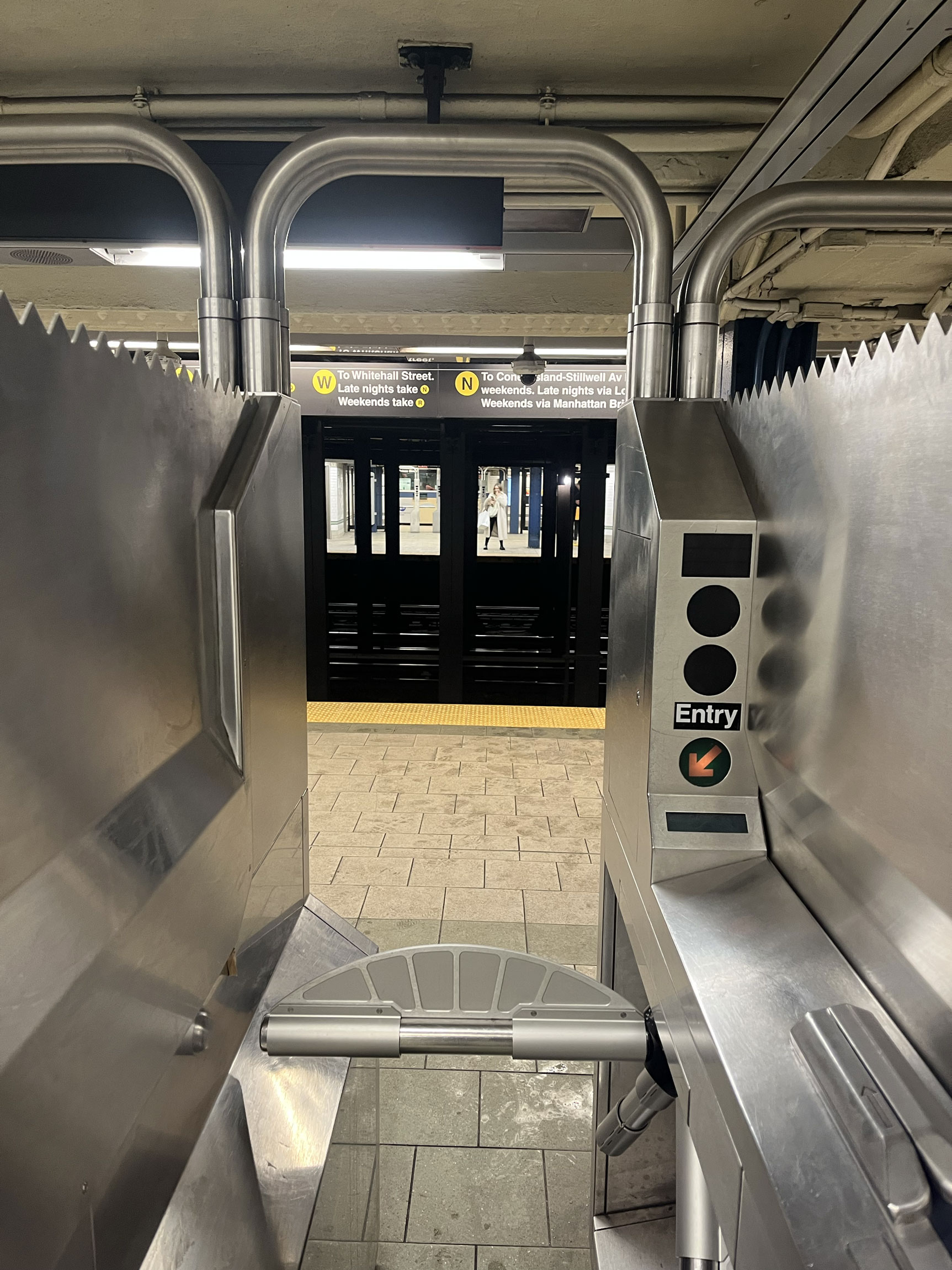
The New York City Subway workforce is composed of thousands of train operators, station clerks, track workers . . . and turnstiles. The system counts about 3,800 of the latter, working around the clock to direct passengers to train tracks and, above all, collect the $3.00 fare. Last year, these frontline workers adopted a new uniform to enhance their field performance against fare beaters. Turnstile arms were outfitted with metal, crescent-shaped epaulets, and each side of the gate adopted a new spiked barricade topper — in a plate-armor-inspired makeover.
These armored gates are part of a soldierly strategy to tackle revenue losses from fare and toll evasion ($1 billion in 2024). The City and State seem to be addressing this issue as a threat to national security. Former Mayor Eric Adams and Commissioner Jessica Tisch ordered police officers to patrol the subway and ticket toll-jumping riders. Governor Kathy Hochul deployed the National Guard to enhance safety, and the MTA is fortifying its turnstiles to battle fare evasion.
At first encounter, the turnstiles’ spiked teeth feel hard to reach and uncomfortable to touch, ringing the subway station like castle crenellations. In practice, they can be easily used to gain leverage without a trebuchet or other siege technology. It seems like a costume from a medieval-themed amusement park meant to appear harmful, but in fact, it is not. Countless videos on social media show it’s still possible to jump — using gloves, crawling, taking long steps — or walk freely through the emergency exit. More than military equipment, the fortified turnstiles resemble BDSM paraphernalia, pushing riders to be widely creative in their use.
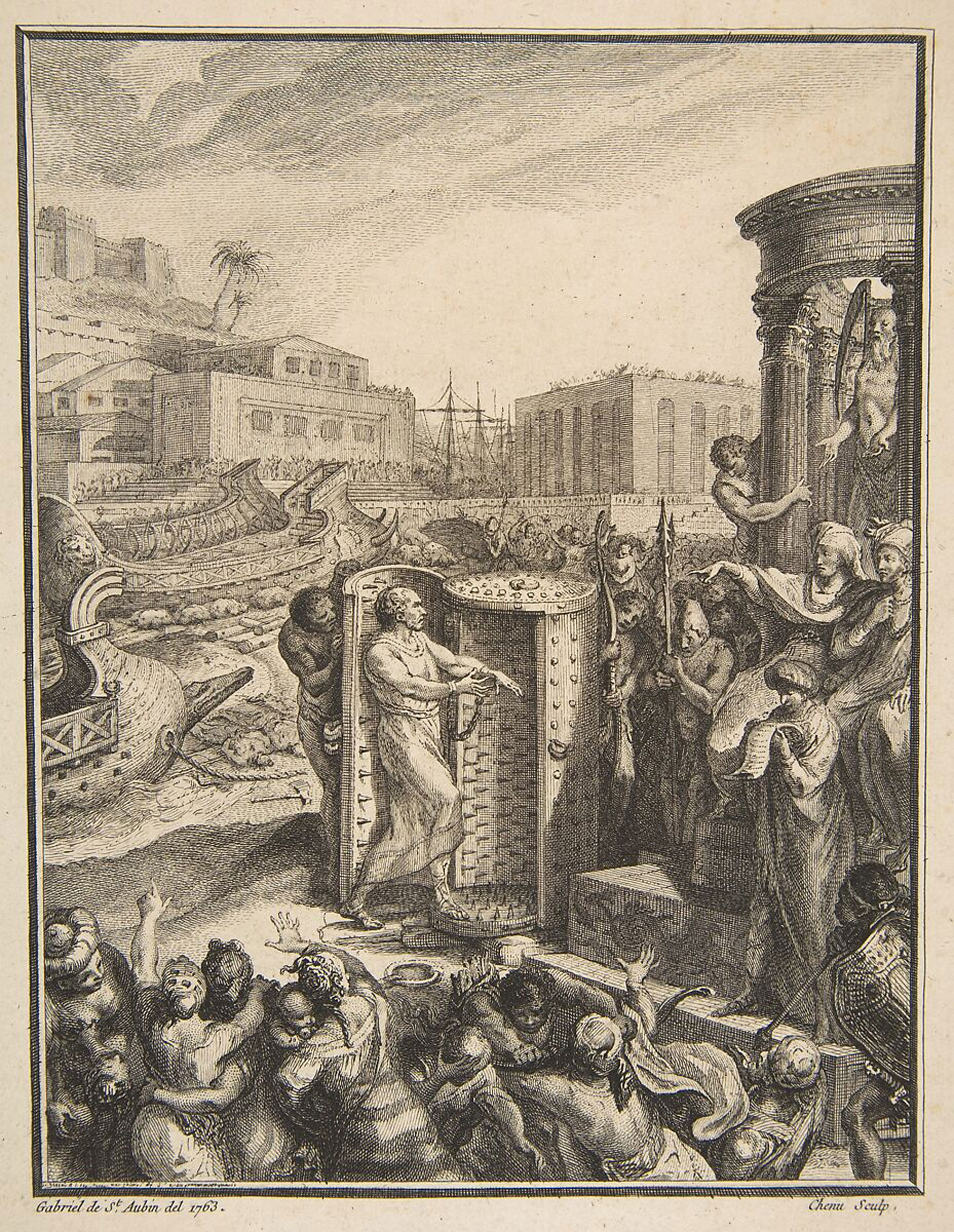
It is not the first time turnstiles seem to come out of the Met’s collection of medieval armor — or the wardrobe of a dominatrix. In 1931, the subway introduced a new turnstile design for stations without human agents: a metal floor-to-ceiling caged door. Riders would add a nickel at the entrance and push the revolving door to arrive at the train platform, minimizing interaction with train staff. The device, which would often trap passengers inside the cage, ultimately gained the nickname “Iron Maiden” after the most horrible torture device ever imagined.
Setting aside the occasional injury or trapped passenger, the primary motivation for all new turnstile designs has been efficiency in collecting fares and combating evasion: adjusting the size of slips to make it harder to accept slugs, or introducing new payment media to deter people from stealing fare boxes. The last mass turnstile change came with the introduction of the MetroCard and new gates in 1993. To accomplish this, the City commissioned Cubic Corporation, a multinational company specializing in both military and public transportation technology. The new device was meticulously designed to prevent fare beating, featuring sharply slanted sides to reduce leverage for jumping and a slim, 15-inch-wide passageway to deter crawling and “backcocking.”
In a way, the current plate armor add-ons have been effective. Last September, the MTA reported a 29 percent drop in subway fare evasion, attributing it to the combined effect of new turnstile designs, patrolling emergency exits with unarmed guards, and aggressive ticketing. The agency is now turning its attention to its buses, deploying a civilian corps of fare inspectors who roam the lines at random.
At length, the fare gates wear their new armors not to attack, but to defend themselves. The problem with this approach is that it sees the rider trying to jump the turnstile as an assailant, avoiding really understanding why someone is not paying the fare. The crenellations do not address common complaints that erode trust in the subway system, like delays and service reliability, nor do they make it easier for people who cannot afford the $3.00 fare to access public transit. Instead, the fortified turnstiles are the material manifestation of a securitization politics that suggests that social issues can be policed away. Their armor continues to signal that the response to budget and policy debates involves deploying military technology rather than finding ways to make the service more affordable and dignified.
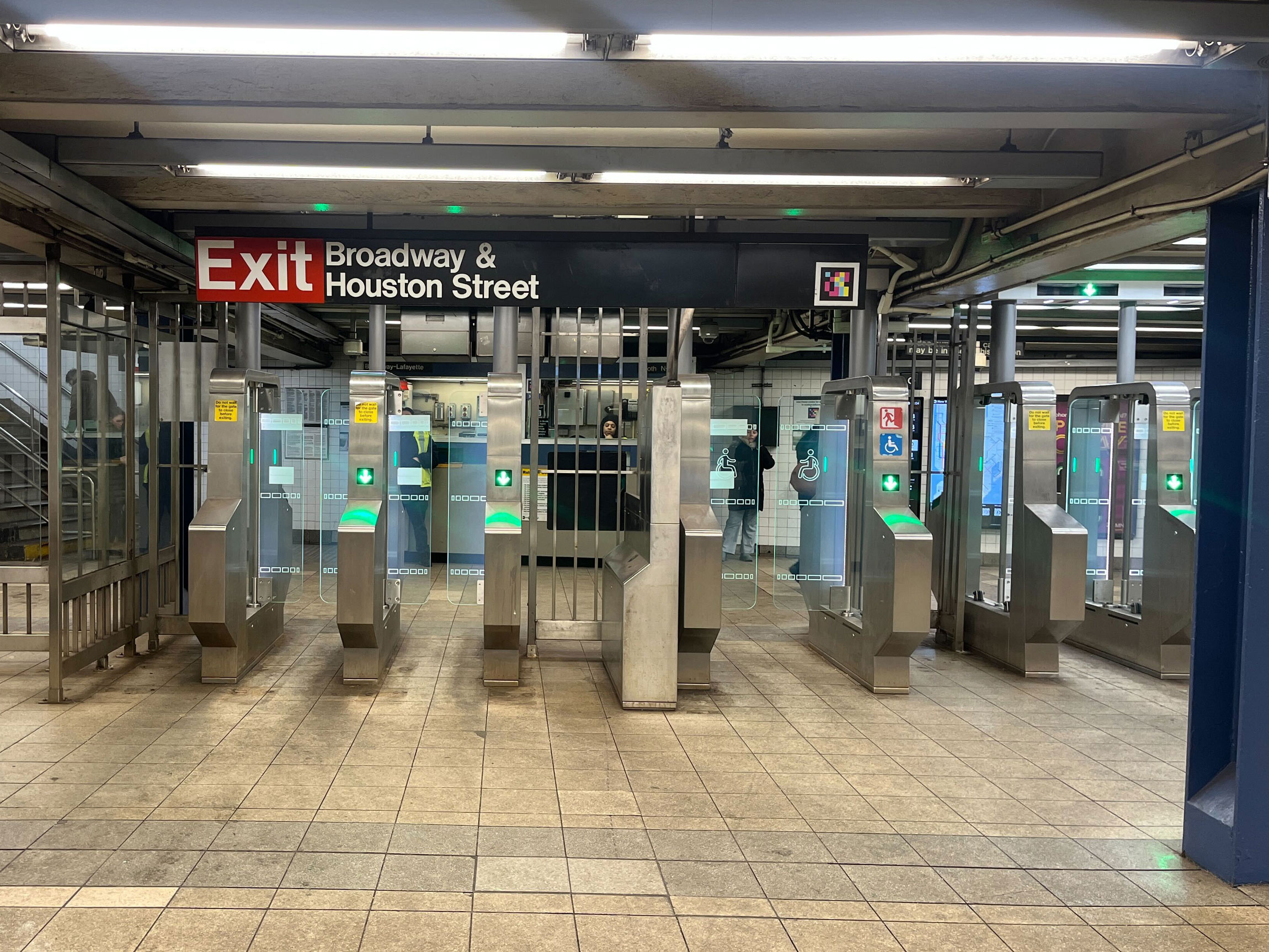
Now that the scale armor has reached almost all of the city’s 472 subway stations, the MTA is piloting several new fare gate designs in 20 locations to determine the best one to roll out to the entire system. The agency is investing another $1.1 billion to change 150 fare gates by 2029 with the goal to “improve fare compliance, system accessibility and passenger flow.” Manhattan’s Broadway-Lafayette Station is the first to test high-tech, plexiglass fare gates embedded with special sensors and AI technology, which are allegedly even harder to evade. During their first days on duty, the sci-fi saloon-style doors have trapped riders, and New Yorkers have already begun experimenting with new ways to hop, dodge, and slide.
Corporate or medieval, mid-century modern or wild west, people seem to always find a way to jump the turnstiles. Rather than deterring riders from fare evasion, aesthetic makeovers ultimately push people’s imaginations to find new ways to resist. The knight is met with Robin Hood-style antics. Redesigning turnstiles, one budget crisis after another, seems like a game impossible to win. Instead of outfit changes, perhaps the time has come for a shift in direction for our civic imagination. If we started the conversation about making buses free, it might be time for us to dream of decommissioning turnstiles after a hundred years of service.
The views expressed here are those of the authors only and do not reflect the position of The Architectural League of New York.
Dispatches from the New City Critics fellows: new, fearless, and diverse voices to challenge the ways we understand, design, and build our cities.