We are celebrating 15 years — and counting — of stories that are deeply researched and deeply felt, that build a historical record of what the city has been.
We are celebrating 15 years — and counting — of stories that are deeply researched and deeply felt, that build a historical record of what the city has been.

The new mayoral administration has promised a transformative reorientation: from a business-as-usual city organized to grease the wheels of private development and capital accumulation to one where residents come first. Mamdani’s vision is one where each New Yorker has access to affordable and safe housing, functional — nay, world-class! — transit, childcare, and all the arts, culture, recreation, and enjoyment the city can offer. While changing municipal policies and shifting city vibes require rearrangements of our shared built environment, architecture and design have largely been missing from early discussions of the shape of Mamdani’s New York. The presence of only one licensed architect on a 400-person transition committee tackling topics such as Housing and Transportation, Climate, and Infrastructure may be more a problem of symbolic representation than material influence. But such a marked absence has raised questions about how (and whether) the incoming administration values architecture. More importantly, it brings into question the readiness of the design world to meet this moment: How can architects and designers contribute to shaping a social democratic New York City?
We posed this question to a selection of architects, all practicing in New York City, with a demonstrated commitment to public, civic, and/or community-engaged work. Acknowledging designers’ existing and ongoing contributions to the quality of life in the city, we started from a shared commitment to the social value of a better designed environment. But recognizing the degree to which extreme constraints have created a culture in which we celebrate small victories in difficult circumstances, we also pressed these practitioners to imagine brighter futures in a changing landscape.
Where is the greatest potential for design to contribute to a city that works for working New Yorkers, and what are the barriers standing in the way? What are design’s most important ideas for the next four years, and for our lifetimes? Below, insights for the Mamdani administration and beyond from our conversation with Nandini Bagchee, Andy Bernheimer, Karolina Czeczek, Richard Dattner, Ifeoma Ebo, Deborah Gans, Adam Lubinsky, and Georgeen Theodore. – MM
Architecture and design can play a role in the envisioning, the design, and the development of the key pillars of the agenda: increasing access to affordable housing, access to transit, access to universal childcare. We really want to elevate the design excellence of these things, because access to housing, access to parks and open space, access to education, are at the heart of a social democratic city. – Georgeen Theodore
Universal childcare needs spatial models that work in existing buildings, not just new construction. Affordable housing requires design that doesn’t visually code as less-than. I’ve seen trauma-informed design principles — often considered soft — fundamentally reshape how public spaces function for the most vulnerable New Yorkers. It’s about prototyping dignity at the building-block scale. – Ifeoma Ebo
We need to broaden our scope of what we think the critical design problems are. That runs from shaping the fundamental goals of projects, all the way to shaping how implementation is carried out. There’s a huge focus on the number of housing units that we need, and that’s important. Architects and designers and planners can help achieve that. But we also need to ensure that there’s a quality of place: housing that creates a sense of community, that enhances the city’s vitality and the climate’s viability, and increases people’s life chances. We, as architects and planners, need to think about what it means to create that kind of housing, and we need to be hard-nosed and critical about what that looks like. – Adam Lubinsky
There is an interest among young designers in shaping cities, housing, all aspects of the built environment, not just through esthetics. Esthetics themselves are not going to solve the kind of problems we’re dealing with. So we need to have a deeper engagement with what any specific project is dealing with — if that’s housing, what type of housing is it? What number of units is it? What are the types of units? Is there public space around the housing? In the end, the esthetics are very subjective, and whose esthetics we are trying to promote is a big question. – Karolina Czeczek
Social democracy requires transparency. We can design for accountable governance. Our contribution is creating built environments where municipal responsiveness is visible, where residents can see their input shaping outcomes. This is design as democratic infrastructure. – Ifeoma Ebo
We’re often at the end of the food chain as architects. Sometimes there is a policy and architectural projects are results of that policy. But I think in many cases architects could be engaged way earlier in order to actually inform policy, or projects could inform policy. – Karolina Czeczek
“The Big Ideas for Small Lots competition, under the de Blasio administration, aimed to develop small city-owned lots. The RFP was structured in such way that architects could lead the process, not the developer.” – Karolina Czeczek
Architects, designers, and planners need to lean into the technical challenges and policy issues that are barriers to creating quality places. We don’t want houses that are just boxes, so how do we push for reforms to the New York City Building Code, to HPD regulations, to the state Multiple Dwelling Law? How do we prioritize and push for performance-based standards over dimensional requirements only? We want to create density, but how do we do that in ways that also enhance active streets, for example with multiple building entrances? What does that look like from a typological perspective? Those are things that require reform, which gets us involved in heavy bureaucratic processes. – Adam Lubinksy
For me, it’s this weird dichotomy of increasing regulation, but also increasing smoothness of project delivery. When I say more regulation, I don’t mean more bureaucracy, more red tape. I mean more standards that make architects integral to processes, but also that make healthier and better cities. The city has Operational Performance and Maintenance Standards, but there aren’t really any carbon standards. There aren’t any real legal standards around healthy materials and how our buildings impact the mental and physical health of residents. Those regulations can make us really present in a design process. At the same time. I think the speeding up of ULURP, reducing bureaucracy, is vastly important to make the pipeline move faster. – Andrew Bernheimer
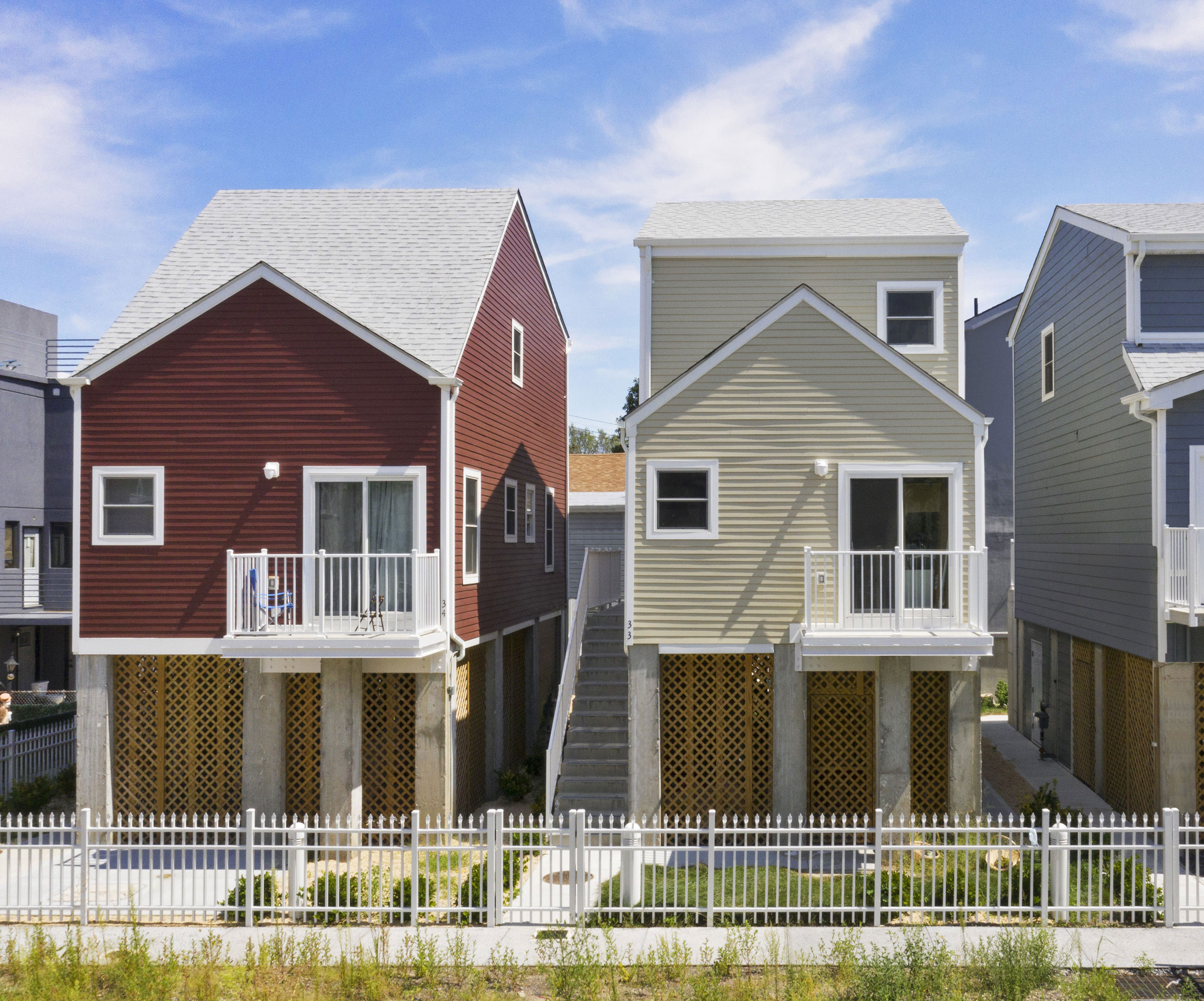
“Sometimes it takes a disaster to make the city more flexible. One thing that really helps is when agencies speak and collaborate with one another; after Hurricane Sandy, one could do that. We did some work in Sheepshead Bay that was very community-focused, that integrated DEP and HPD and DCP. That kind of synergy helps design quality.” – Deborah Gans
I don’t think you need more regulation to de-silo agencies. You want DEP to tell HPD what green is. And so if you can get those people at the same table, some of what you’re asking for outside of the agencies happens simply through their conversation. – Deborah Gans
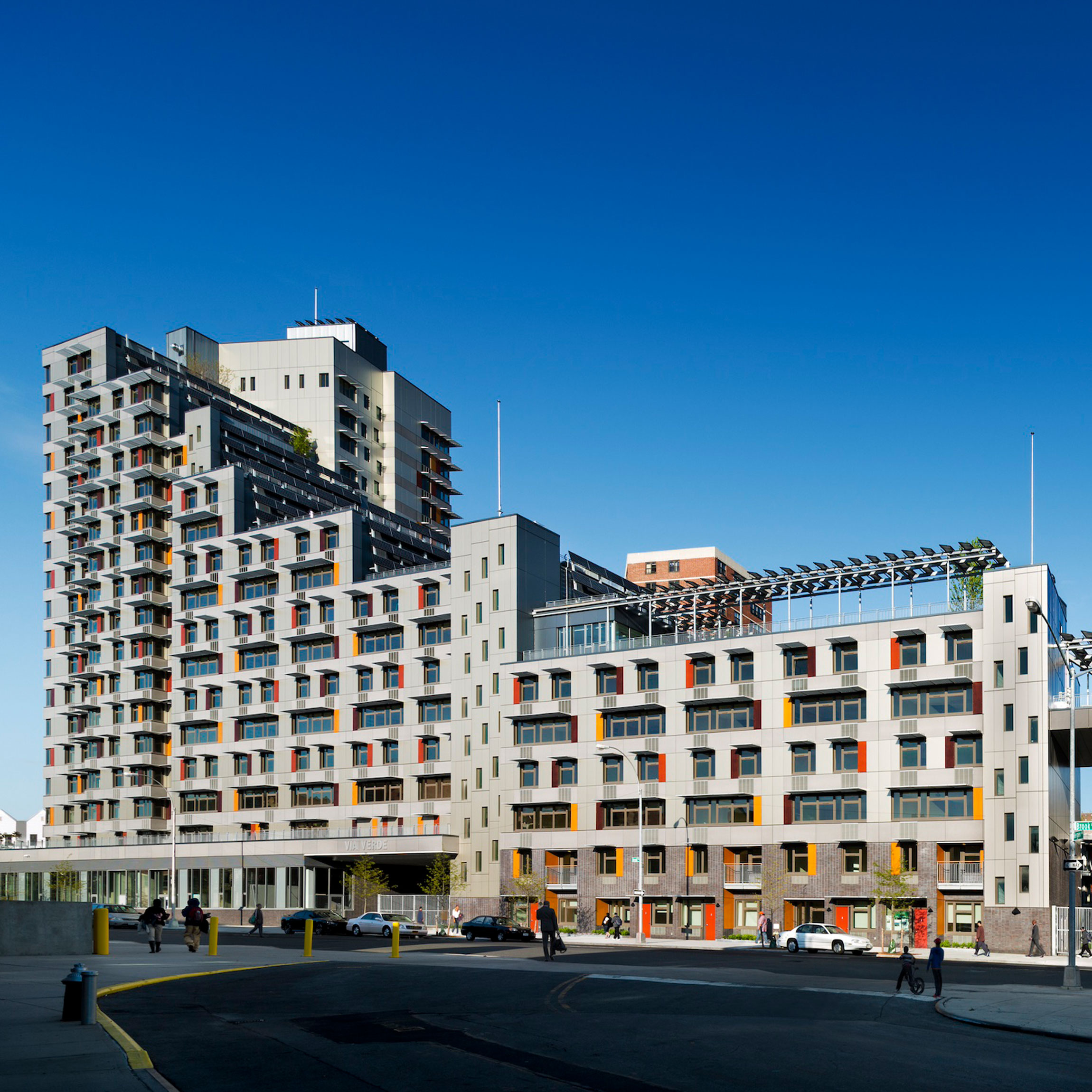
I will use Via Verde as an example of what I think would be great for the Mamdani administration to do, which is to enhance the coordination among all the city agencies involved. Often each agency is looking at how a project does not comply, and how they can stop it because someone didn’t fill out this form, or this certification wasn’t done in time. On the Via Verde project, three of the city agencies — HPD, DCP, and DOB — agreed to work together. They would meet periodically with our team and with each other, and if there was a minor issue about needing another foot of rear yard, the Department of City Planning would say, Okay. And if there was a minor Department of Buildings item that was not significant — and in no way affected the safety of the project — they said, “okay.” And if the project had to depart a little bit from an HPD rule, that was approved, too. That coordination helped realize and speed the project. – Richard Dattner
I would also like to see greater coordination. From a design perspective, I’d like to see the investments that will be made in the built environment — in housing, in public buildings, in childcare, in parks and open space, in mobility and transit — be fully leveraged by thinking about how everything works together and adds up to something bigger and more impactful. If you create new affordable housing units, they’re going to be much better if they’re connected smartly to parks, to transit, to the local daycare. I would be interested in seeing an entity that works in a strategic way to help shape and connect what’s happening between different departments and agencies. There could be an Office of City Design or an Office of the Built Environment housed in City Hall. This would not be about review or reaction — it would be proactive and visionary and strategic. Where should design be in the city? It should be everywhere, but it should also be in City Hall. – Georgeen Theodore
Architectural practices now seem to be either very tiny or huge. The tiny ones can’t engage with an HPD project, and the huge ones are beyond the management capacity of any agency or even developers. Hudson Yards, Atlantic Yards — these projects get so huge that they’re hard to humanize. There are only so many firms that have the organizational capacity to do them, and they’re usually developer-driven. EDC gives a project to a developer, and the developer has to bring it under a bottom line, so quality and humanity end up taking a backseat to getting it done at a certain scale. This gigantism does not serve cities, and it is in our control, and in the control, to a certain degree, of the agencies. One thing we could do is break these projects down more. The middle scale produces quality. It gives a voice to the architect in relationship to the developer in relationship to the agency. – Deborah Gans
One way to advance Mamdani’s agenda is to build more capacity in city governments and agencies. The best projects, the most innovative, are the ones that have great clients. And this is true in public projects where the client is the city. The cost of transit projects in the US is something like ten times higher than other countries, mostly in Europe. Why? One of the key factors increasing costs in the US is the lack of capacity and experience within public agencies. And because of that lack of capacity and experience in the US, public agencies hire consultants to do pre-planning. In Europe, there’s typically more experience and more capacity in those agencies. They do the pre-planning and they have a clear picture, so that results in lower costs, and then they get more transit projects and more transit options. I would urge the Mamdani administration to invest in people, expand the capacity of good government, of the public sector. Invest in public workers, especially in departments and agencies that deal with complex, long term projects connected to the built environment. – Georgeen Theodore
We’re collaborators with the agencies, and we do, in a certain sense, have a voice there. Why can’t they change the way they choose their architects? Take the Design Excellence program. It’s done by competition. It gives architects who aren’t part of large machines, an opportunity to participate. NYCHA has some examples, DDC has some examples of how this works pretty well already. What they do in Switzerland, and what NYCHA is trying in one of their RFPs, is to create a list of designers and a list of developers and pair them so that if the designer wins a contract, the developer has to work with that architect for the contract. These are ways to start to empower not just esthetic thinking but design thinking in a broader sense, within the way that the city’s operating. – Deborah Gans
The Urban Design Group has a wonderful history beginning under Mayor Lindsay, which is when I started my practice, and then again under Mayor Bloomberg and City Planning Commission Chair Amanda Burden. It was a very powerful group that thought about the city in holistic ways and came up with planning suggestions. Another group that’s had terrific influence is the Public Design Commission, which has raised the level of public architecture so it is really now at a high level. The way it was done is not by micromanaging the architects, although it did that sometimes, but by giving out design awards to the agencies — who would then compete to raise their level of design. – Richard Dattner
A specific role that architecture and architects can play is signaling in the architecture itself that dignified architecture belongs to everyone. I do think architecture can help develop the language, that it is very visible, that this belongs to everyone. – Georgeen Theodore
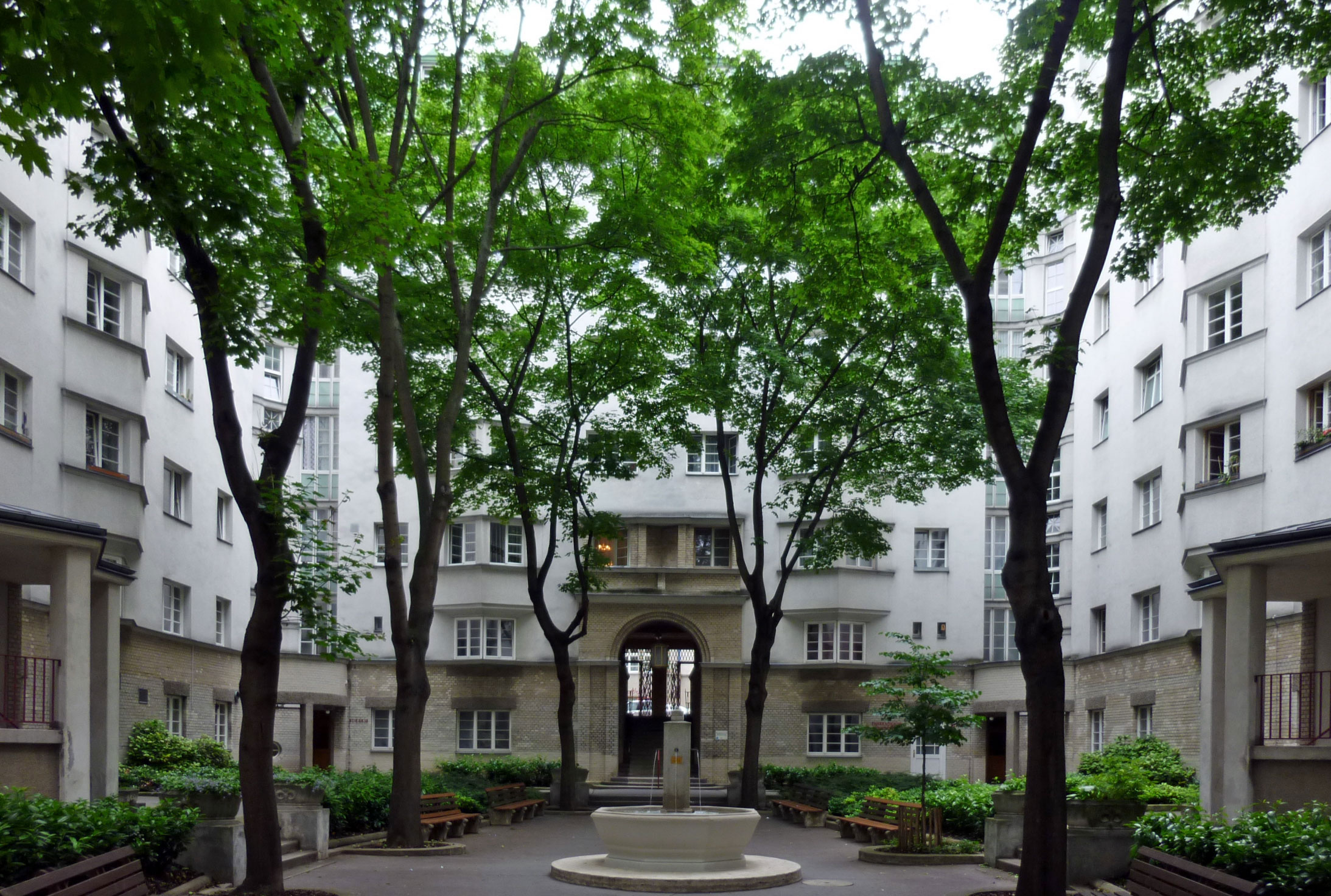
“I was thinking about Red Vienna. At that time, when they produced so many new housing projects, there was an identity of the buildings. New typologies emerged. And people knew that that social housing was for everyone, but it was something that had a materiality. It had a way of meeting the ground. It had it had a certain scale.” – Georgeen Theodore
As architects and designers, we must position ourselves as translators between policy, aspiration, and lived experience. In my work with government and with communities, I’ve learned that our most critical contribution isn’t rendering the administration’s vision, but surfacing the spatial intelligence that already exists in communities and giving it form. Mamdani’s agenda centers everyday residents. We can contribute by making that centering tangible and measurable. We can steward collective memory and aspiration. Every neighborhood holds stories of what came before and dreams of what could be. Design that. Amplify rather than erase these narratives. We don’t impose visions. We spatialize community visions into implementable reality. The shift from development-first to people-first governance creates unprecedented opportunity for design to do what it does best: make abstract commitments concrete, testable and improvable. – Ifeoma Ebo
The way that we can contribute is less through the design of any given project, or trying to convince politicians, administrators, or policymakers that our design solutions are just too good to ignore, but rather to take the tenets of what we do, how we work, how we serve a collective public, and depict those to politicians. We need to collect data. We need to collect stories. We need to gather testimonials. We need to show politicians and policymakers and our fellow citizens how and where we should be involved. – Andrew Bernheimer
In addition to thinking about policy, we can also have a more direct intervention in how we shape our clients’ priorities. If you’re working with community groups, you should get in there, find your place at the early stages, and create frameworks, rather than being brought in by the developer. The developer will appear, even in community-initiated projects, but at that point, you should have already been a part of the formation the goal of the project. Claim your civic role and don’t just be seen as the problem-solver for entities involved in the longer term. – Nandini Bagchee
I’ve always found communities to be the most risk-taking, open-minded clients one could have. If you can directly get to a community rather than through an agency or even a nonprofit, those are the clients we as architects want, because they don’t come with a lot of baggage about what things should be or can’t be. – Deborah Gans
There is a lot of fear bound up with public realm investments and improvements. The underlying goals for these projects are really critical. You can have public projects that are really focused on uplifting a place, but are we talking about improving people’s lives and enhancing the vitality of a place, or are they preparing the ground for development? That question has come up a lot in our engagement work over the last 15 years: People are nervous about esthetic improvements, because they don’t know why we’re doing them, or what they will cause. That question about uplifting life and making parts of the city more vital is important, but it’s important to do it in such a way where it doesn’t carry this fear of some other underlying goal. – Adam Lubinksy
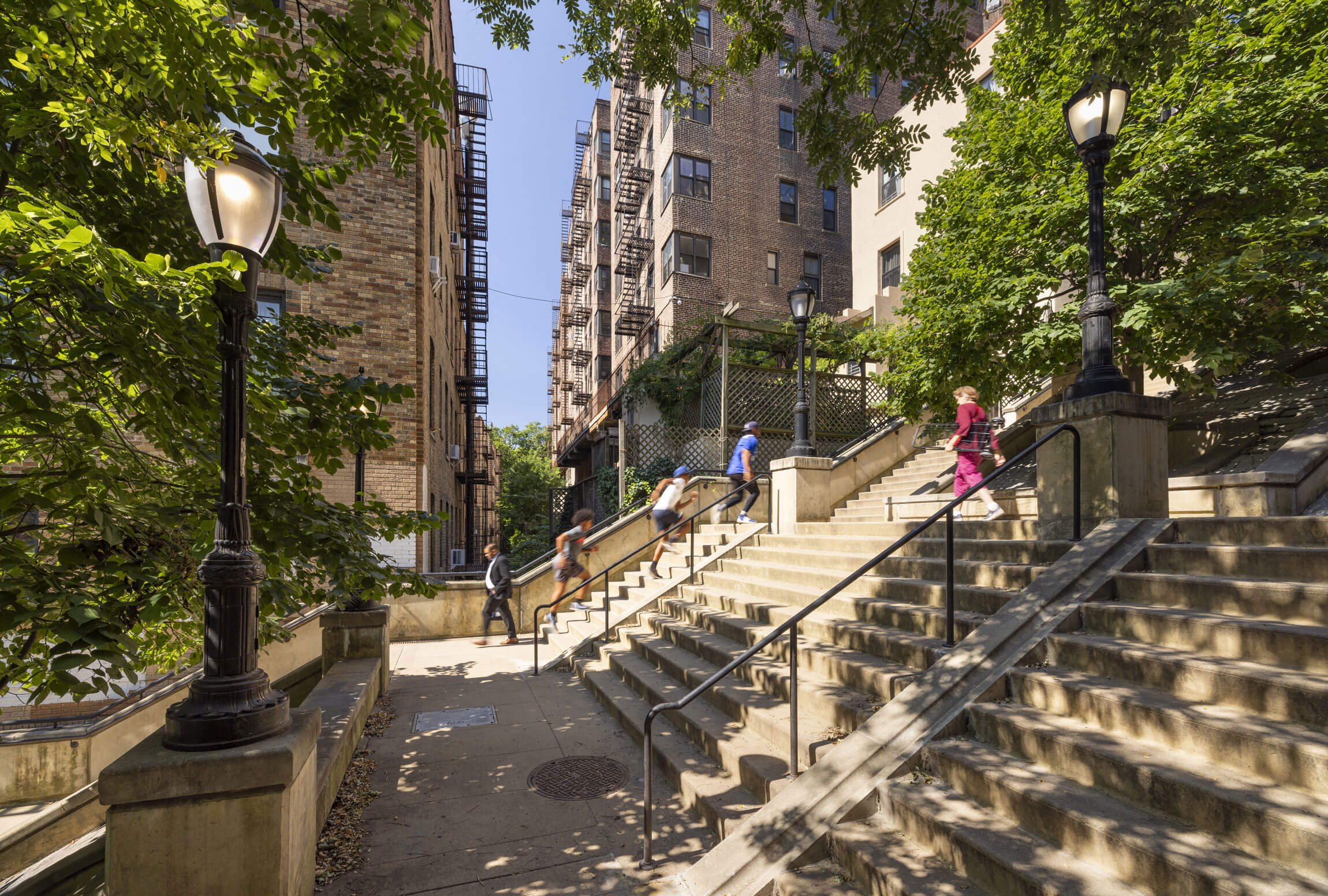
“Our Step Street projects in Inwood and the Bronx are tactical infrastructure projects that take really prosaic things and make them beautiful and poetic to experience. But there’s no sense that someone’s going to build giant new private developments next to them.” – Adam Lubinsky
Most people have never experienced a process of designing with an architect, and communities might only do one project in their whole life with an architect. It comes out in this idea that we’re just technical experts or that design is icing on the cake. But you can change that by being involved in the longer process, taking part in educating clients, and creating a process for collaboration to then be able to convince everyone that this is a design that we have done together. That takes time. The structural impediment is the deep entrenchment of austerity in public life; that is what is stopping us from engaging in those kinds of deeper design processes. – Nandini Bagchee
Whenever I talk to my students, these questions come up: Where do the architects fit in? What makes our work more impactful? When do we get to be part of this? Why aren’t we more involved? Why aren’t we more important? Why aren’t we more present? And I always default to the fact that we need money — fund our goddamn work, raise fucking taxes. Seriously, we should all be advocating with our politicians to raise taxes. When Mamdani proposes this two percent wealth tax, we can push for that. That has nothing to do with architecture and urban design, and it has everything to do with architecture and urban design. Fund the work. Pay for green infrastructure, pay for affordable and public housing, pay for public space, pay for energy generation. Advocate for more money for the public. – Andrew Bernheimer
We live in a capitalist society where our work is commissioned by public agencies, funded by taxes from the state, from the feds. We also currently are in an administration whose goals are the exact opposite of social housing. And much of the money that we need for housing, for infrastructure, for transportation, comes from our federal government. There’s only one way to get money in our profession: Find a client. Find a public client, find a private client, or sometimes think of a project, develop it, and then try to find a client. Ultimately, the money flows from a client. There should be more taxes, not just for us architects, but to build the public environment. – Richard Dattner
We should align ourselves with projects that expand cooperative control over land and resources. We should think about how public goods and services could be more fairly distributed, including to the outer boroughs where resources are needed — design, of course, being part of those goods and services being distributed. – Nandini Bagchee
In the rush and the excitement of a new administration, there’s a risk of not taking time into account. Fixing the bump on the Williamsburg Bridge was great — it’s useful, it’s symbolic — but let’s consider the time that it takes to truly transform the built environment. Consider housing: it’s going to take time to roll out a program to increase the number of affordable units. City of Yes was approved a little more than a year ago, and architects and developers are still figuring it out. Overall housing hasn’t increased, and prices are higher than ever. It’s going to take years for the policy to have an impact. Or if we think about infrastructure projects connected to water, we’re talking about timelines that are tens of years, maybe a lifetime, to plan and implement. If we really want to build a lasting, accessible, livable, and excellent city for all we have to play a long game, one that stretches and adapts and survives and hopefully thrives across administrations. – Georgeen Theodore
The idea of municipal socialism is really nascent. Over the past 100 years, wherever social democracy has gained some kind of electoral traction, it has been only briefly in power. And even when in power, it is surrounded by a capitalist urban infrastructure. So what does it mean to be promoting that idea within that contradictory framework? As we look back at those moments when socialists were able to implement parts of their agenda, the most compelling outcomes weren’t about solving stubborn problems like housing, childcare, or implementing a minimum wage. They did do that, but what really mattered was that the that they made investments in institutions that over time, even as the socialists themselves lost power, continued to be gains that could be locked in and made durable. – Nandini Bagchee
We live in a country that is not as focused on public construction and public infrastructure as other advanced societies. We are more focused on the individual. How big can your house be? How big can your yard be? How big can your car be? We, all of us, need to focus back to a more shared public infrastructure. When you ride on the subway, when your kid goes to a public school, all these things are shared, and we need to spend more effort, more money, and more political capital on our shared environment, rather than our own personal environment. – Richard Dattner
Why aren’t there more architects on these transition committees? It’s a moment for self-reflection. Architects come out of architecture school with a really special way of viewing problems, but we also tend to avoid looking at rules and looking at policies. There aren’t many courses where we look at code, cost, market viability, zoning. We don’t want every studio to be focused on that, but we have to get intimate with those things and bend them to our will so that they’re made useful for good design. Getting out more, learning how to listen and ask questions and convert that into city-making work, is really important. Designing an apartment for one client is really different from designing with multiple stakeholders, multiple languages, multiple agencies, and we’re just not practiced at doing that. So how do we scaffold up our pedagogy and curriculum to get there? – Adam Lubinksy
A lot of students that I’m teaching really want to be involved in creating policies, rules, regulations under which buildings are made. Many of those students have backgrounds in other fields, whether that’s sociology, arts, policy, and those combinations are very fertile. – Karolina Czeczek
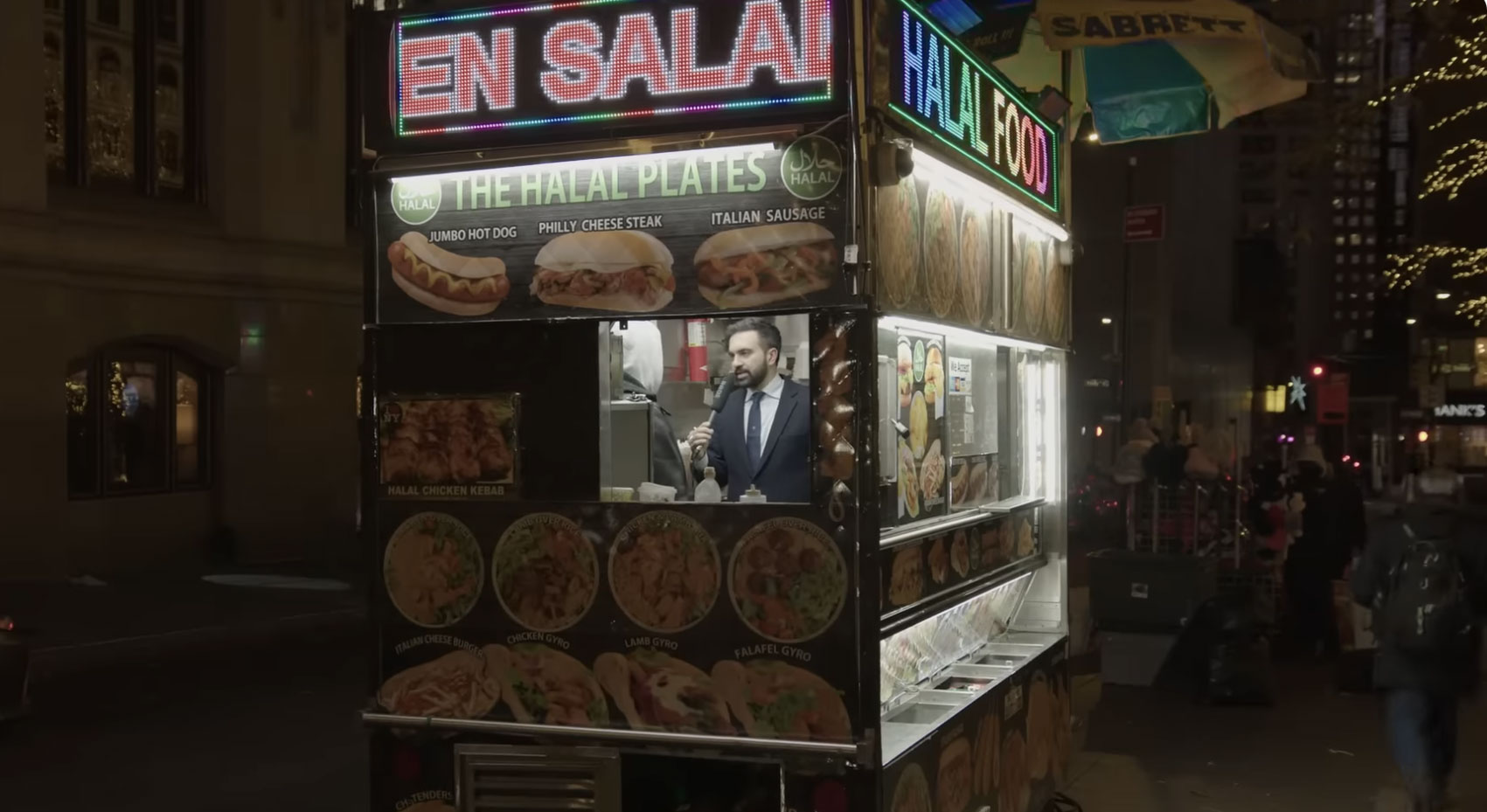
The view of New York that the campaign presented was grounded in the informal design sector: hanging out at the halal carts, being in Queens. It was all about the streets. Mamdani never stood in front of any grand edifice or even a housing project. With our students, at least at City College, coming more and more from the city itself, how do we bridge that gap between the vision of architecture that we’ve been taught and what is really going on out there? How do we create new ways of visualizing and also approaching design problems from a different cultural and accessibility perspective? – Nandini Bagchee
There are some codified restrictions on the political activities of the not-for-profit, professional organizations that many of us are members of. But I think that these organizations need to be way more aggressive. They need to push boundaries, they need to be willing to shift the Overton window as to what professional advocacy organizations can appropriately say and do to promote and protect the profession, including our labor. And more importantly, to promote the health and the welfare of the people who we serve on a daily basis. – Andrew Bernheimer
We’re more powerful when we’re working through the AIA, or the Architectural League, or any group that represents the voices of many professionals. All of us should be knocking at the door of the new administration with offers to contribute and collaborate. Our goals are the same: the creation of the best shared environment possible for all New York City residents! – Richard Dattner
Collective action and collective voice is critical. Our impact as designers actually is pretty slight, especially as individuals. And that’s not to say that we don’t have real impact on people, or that we aren’t agents of improvement who can help dignify and improve the lives of people across the city. We do that. But architects and designers as individuals, authoring individual projects, I think, are less likely to shape an agenda, than if we actively and collectively organize to portray to the new administration which issues are important to us as practitioners. – Andrew Bernheimer
The views expressed here are those of the authors only and do not reflect the position of The Architectural League of New York.