
Series
New City Critics
Dispatches from the New City Critics fellows: new, fearless, and diverse voices to challenge the ways we understand, design, and build our cities.
We are celebrating 15 years — and counting — of stories that are deeply researched and deeply felt, that build a historical record of what the city has been.

Hardly a minute passes without Javaid Tariq’s phone buzzing, or someone walking through the door and beelining to him with a question (most often in Urdu and Punjabi). Despite the demands on his time, when we meet on a frigid Wednesday afternoon at the offices of the New York Taxi Workers Alliance (NYTWA) in Long Island City, Tariq generously recounts his journey from student organizer in Pakistan to Rastafarian DJ in Germany to co-founder of the NYTWA.
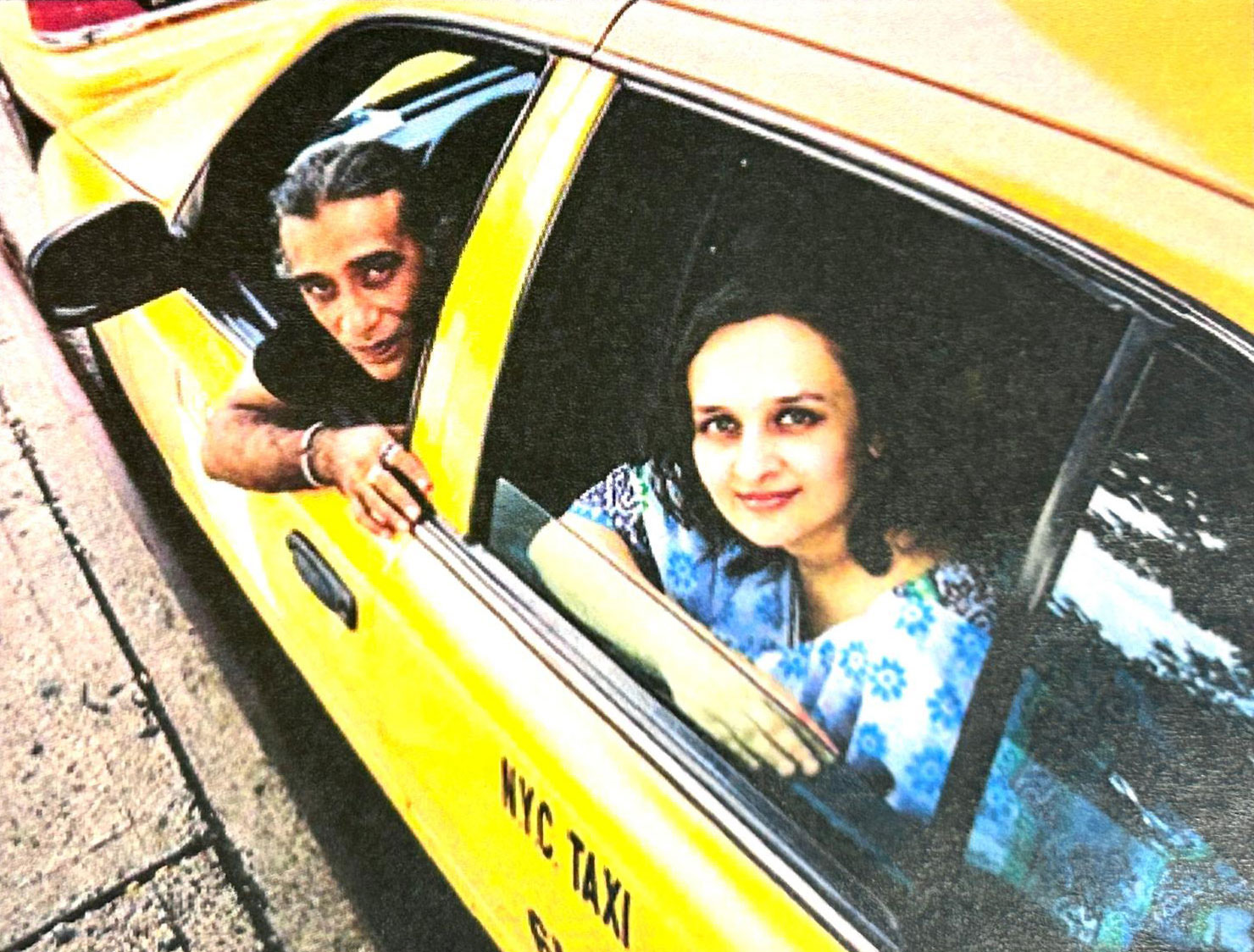
It’s a story he has told often. Tariq is the subject of multiple documentaries: one on Japanese television, one uploaded 17 years ago to YouTube, and one in production now. He has been interviewed on radio shows and featured in an academic book, and his own photography of taxi drivers has landed on magazine covers.
Born in 1956 in the Punjab province of Pakistan, Tariq stepped into socialist politics and activism as a student general secretary in his college’s chapter of the Peoples Students Federation, the student organization affiliated with the Pakistan People’s Party at the time. His politics were shaped by Mao’s Little Red Book (translated into Urdu), which convinced him that the system needed to change. In 1979, after a military dictatorship had taken over the Pakistani government, Tariq sought asylum in Cologne, Germany, where writings by revolutionaries like Che Guevara and Nelson Mandela deepened his political education. What most impacted his spirituality and worldview, though, was encountering the music of Bob Marley. He grew out his hair, embraced Rastafarianism, and started DJing in a reggae club in Germany. After five years, Tariq returned to Pakistan, now under another military government which hampered his ability to continue living the free-spirited and free-thinking life he had enjoyed in Europe. In 1990 he left again and moved to New York City, where he resided with nine friends in a lively, cramped apartment in the Bronx, making $27 per day as a perfume salesman, before moving on to construction work.
It was while taking photography courses at the New School for Social Research that Tariq, by then an aspiring journalist, came across an article on murdered cab drivers. “There, I got an idea in my mind that [these drivers] are mostly South Asian people. They are half a world away [from home], living here, working very hard and sending remittances back home for their family. But for $10, $20 they got shot, and now who is the person who can earn the bread for their family? That, I wanted to know,” Tariq says. He decided to make his photo project about the lives of cab drivers.
Tariq considered simply approaching drivers to interview them, but he felt that would be insufficient. So in 1994, he got his own Taxi and Limousine Commission (TLC) license, leased a car from a garage, and started driving a cab. “I started talking to drivers, driving by myself, and capturing their real photos,” Tariq recalls.
Tariq’s story is compelling, enhanced by his gravelly voice and steady presence. But he doesn’t share it to entertain. Nor does he have any notions of bootstrapped exceptionalism with regard to the “American Dream.” Tariq is here to organize: his own story is inextricably linked to those of his fellow drivers and immigrants.
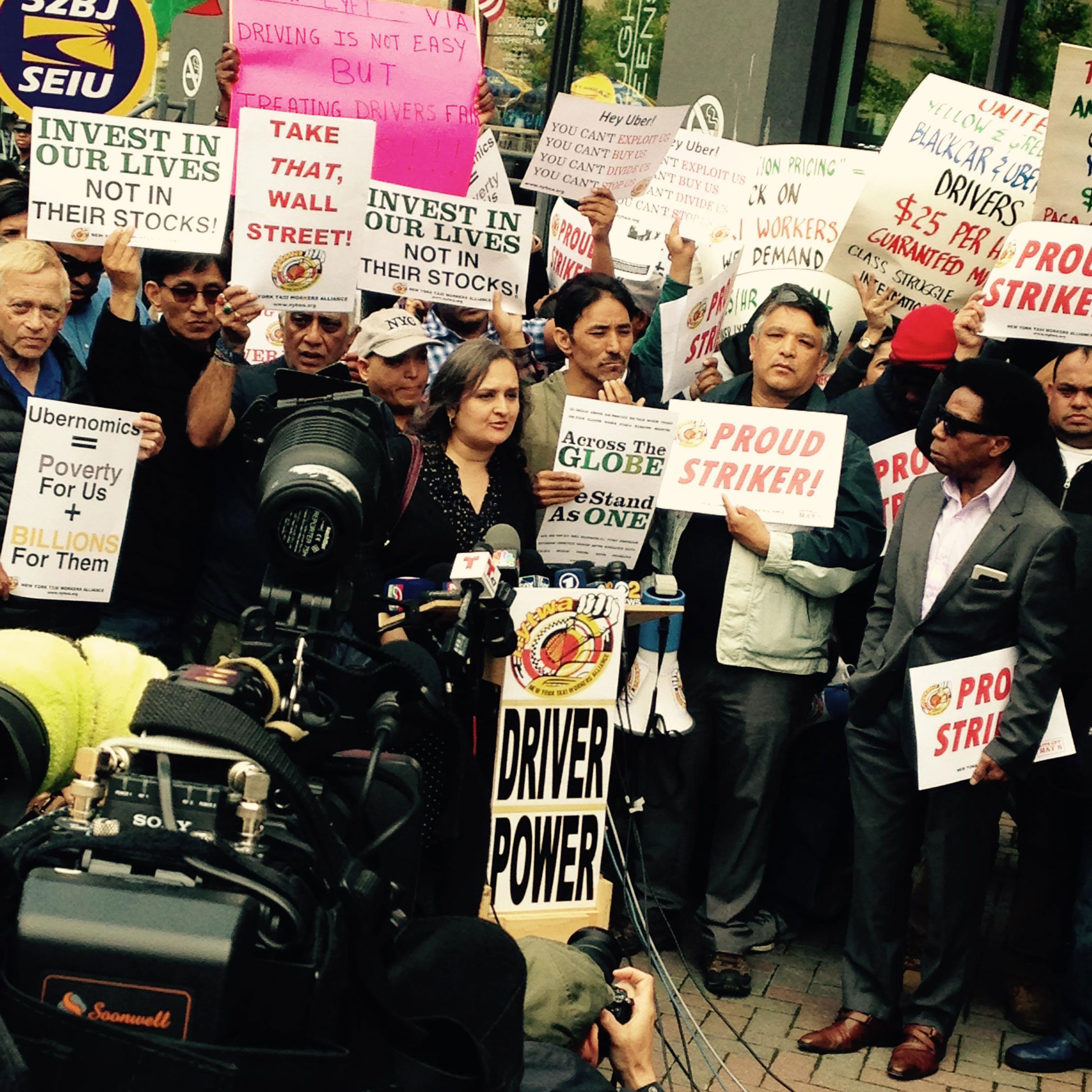
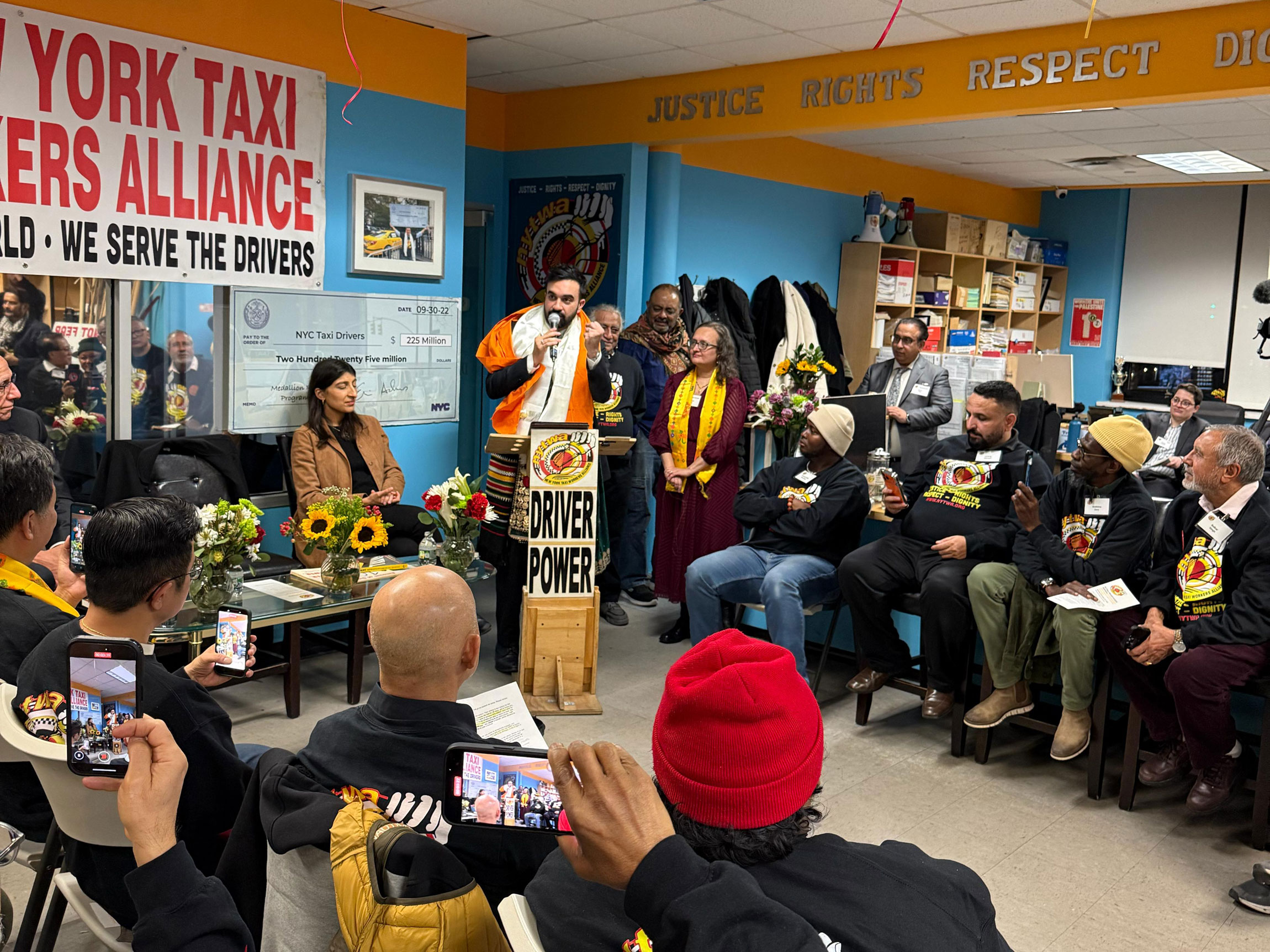
In 1998, he met Bhairavi Desai and Biju Mathew, labor organizers who were looking to unionize cab drivers, and together they co-founded the NYTWA. The NYTWA is an AFL-CIO member union currently representing over 25,000 rideshare app, livery, black car, yellow cab, and green cab drivers. For $100 in annual dues, each individual member gets access to a wide range of support services, including immigration and housing eviction support, support in accessing workers compensation and disability benefits, and discounted legal representation for DMV tickets. But this is not the sole focus of NYTWA’s work. A force over almost three decades, they’ve organized tens of thousands of drivers — an isolated workforce with no shared workplace to organize around — to take on multi-year, multi-pronged campaigns against giants like Uber and Lyft, ultimately winning debt relief and settlements to the tune of hundreds of millions of dollars.
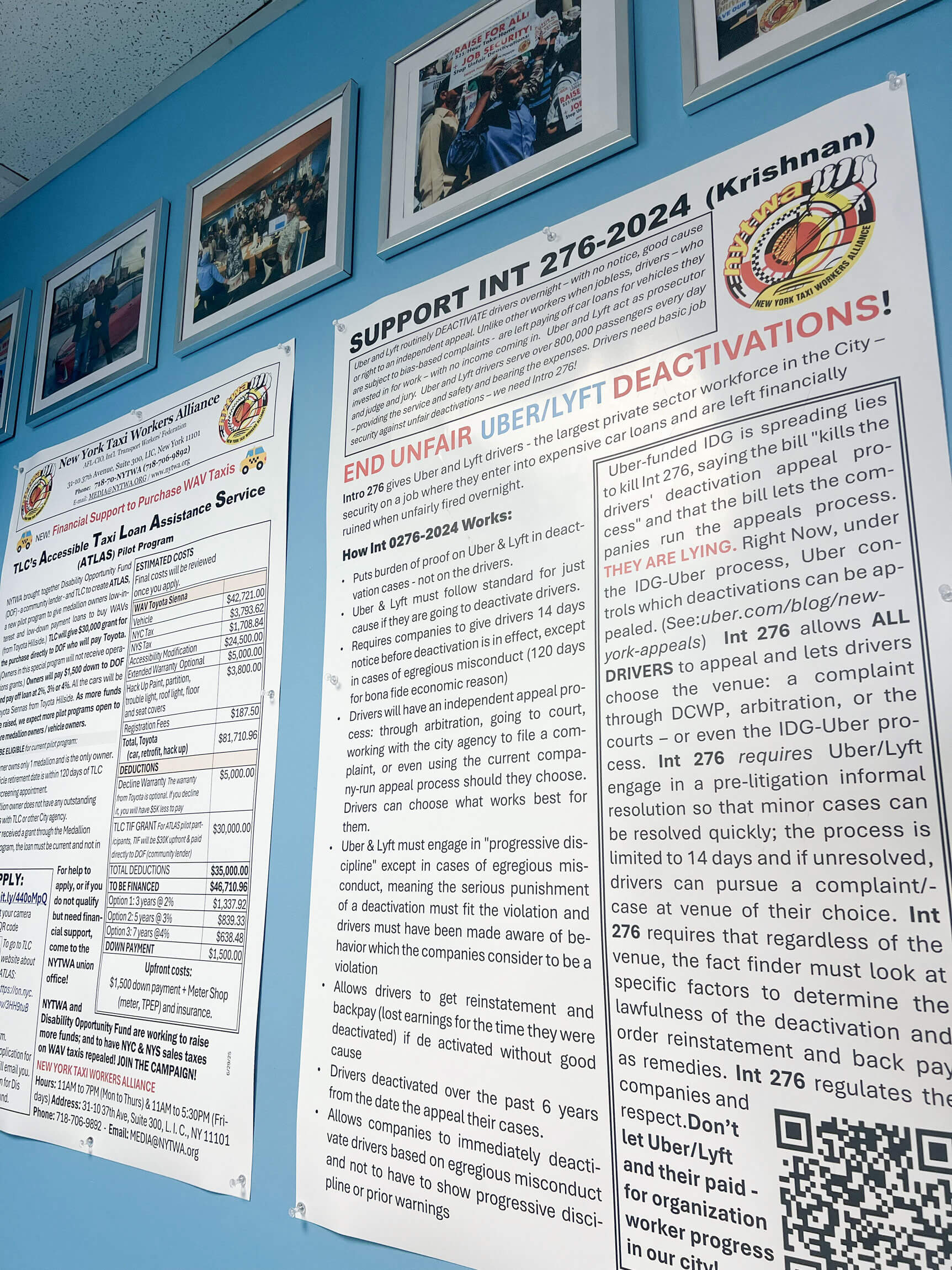
Behind the folding table where we sit in NYTWA’s lobby is a wall so cluttered with award plaques and massive posters that the aquamarine paint barely peeks through. The union-designed posters, more like five-foot-tall Microsoft Word documents, are crammed to the edges with information: one listing NYTWA’s victories, another the current legislative campaigns, another with union benefits. Tariq talks me through one bullet point that reads: “2021–2025: After 45-days, 24-hours camp outside City Hall + 15-Day Hunger Strike: Won City Backed Guarantee + Medallion Debt Forgiveness from Lenders: $475 million.” Below that, in no particular order, is a list of other union wins, including close to half a billion dollars in stolen back-pay recovered from Uber and Lyft, settlements, loan assistance, solidarity strikes against Trump’s “Muslim bans,” and so on.
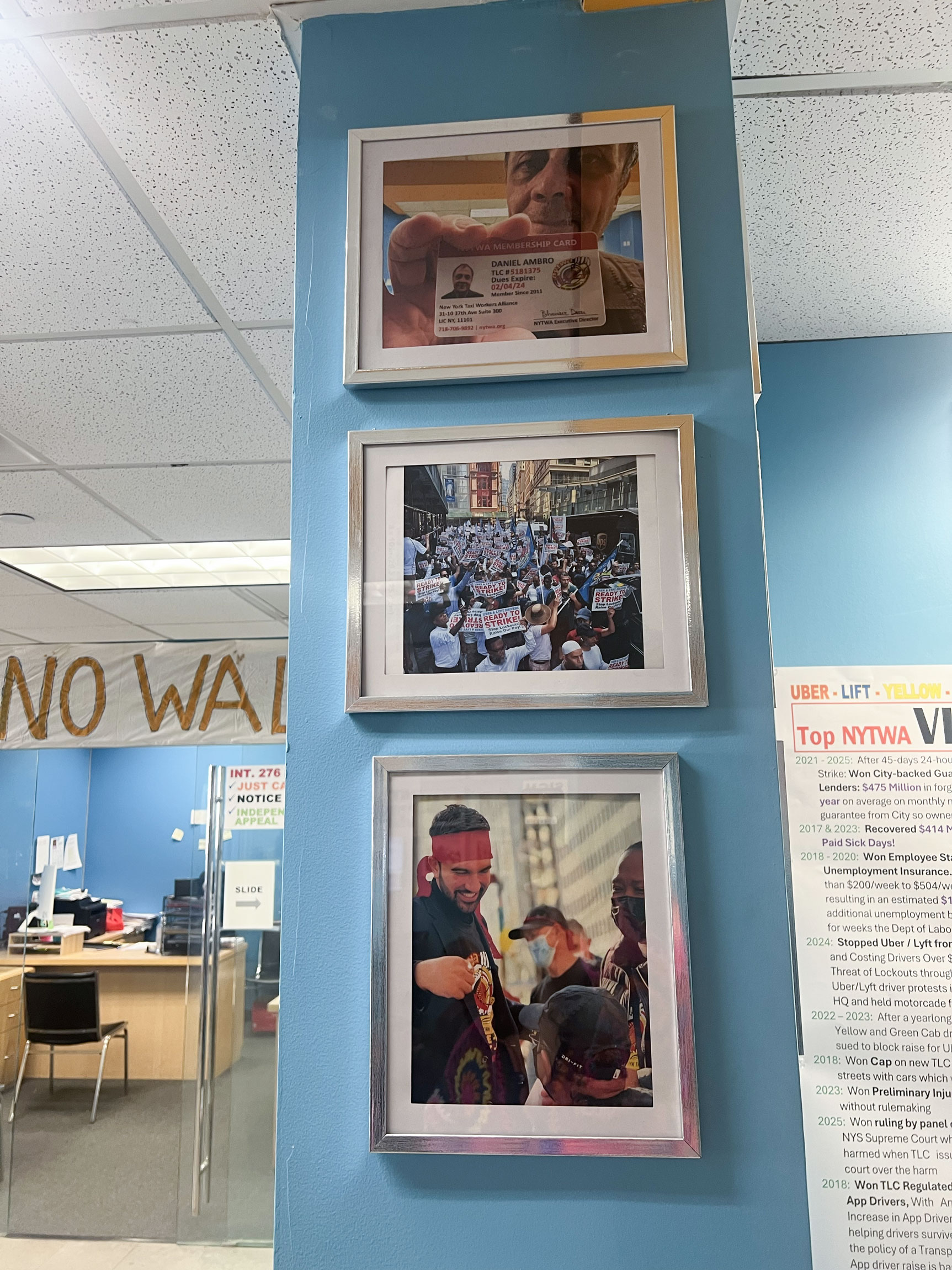
Crowding around the posters from floor to ceiling are dozens of photos in matching silver frames. Walking along the wall is like hopscotching back in time, accompanied by familiar characters along the way.
Tariq points to a photo of him and Bhairavi Desai. Tariq is leaning against a red car and has the same long ponytail he sports today. The photo, taken in 1998, documents the success of their first big protest. What had started with Desai (all of 26 years old at the time) putting together plans while perching on the hoods of cabs in garages across the city, grew through word of mouth broadcast across special cabbie radio channels in multiple languages, and ended with a motorcade of over 2,000 drivers heading to Giuliani’s City Hall.
It’s hard not to be moved, and deeply impressed, looking at this photo of the two of them next to the long list of nine-figure settlements and lifesaving debt relief, won by and for NYTWA members in the decades following that initial protest.
Today, one of NYTWA’s most prominent fans is newly elected Mayor Zohran Mamdani. In the days before November’s mayoral general election, Mamdani’s final campaign video — now the second most viewed on his YouTube channel — featured a visit to the cab line at La Guardia Airport during the night shift (before a visit to the NYTWA office, says Tariq). When Mamdani won the election, Desai, who is still the executive director of the NYTWA, was appointed to the transition committee on Worker Justice. Mamdani’s support has continued since taking office. He called the NYTWA “home” while joining an iftar with drivers at the NYTWA office last month.
Taxi drivers, and the work of the NYTWA, have had a huge influence on Mayor Mamdani’s vision for the city, and, it seems, on his campaign strategy and messaging. As an assemblyman in the State legislature, Mamdani supported the NYTWA’s lobbying efforts in Albany. Over time, he became a regular at NYTWA demonstrations. “Whenever we have any demonstration here in New York or anywhere, he always comes,” says Tariq. This relationship only deepened after Mamdani participated in the NYTWA’s 15-day hunger strike in front of City Hall for taxi medallion debt relief in 2021.
During the campaign, drivers, many of whom Mamdani forged relationships with during the hunger strike, were frequent figures in his signature videos: immigrant, working class ambassadors to the city. “His campaign was so good,” says Tariq, referencing how he kept fighting, knew what he wanted, and got it. “And he acknowledged that he learned how to strategize from the Taxi Workers Alliance. Because he was looking at what Desai decided and calculated, [because] she calculated everything.”
At the end of our conversation, Tariq takes me on a tour of the other photos on the gallery wall. I ask if he still practices photography or DJs. Those days are behind him now, he says. His focus is entirely on his drivers. We pause in front of a photo of Mamdani during the debt relief campaign: fist bumping a fellow hunger striker, and wearing a NYTWA t-shirt under his blazer, a red scarf tied around his head, and his signature smile.
“He always calls me uncle [instead of brother] because I’m old,” Tariq laughs and points to the logo on the shirt in the photo. “We are very proud of our logo. We earn this logo, and we love this. Our logo shows power on wheels.”
The views expressed here are those of the authors only and do not reflect the position of The Architectural League of New York.
Dispatches from the New City Critics fellows: new, fearless, and diverse voices to challenge the ways we understand, design, and build our cities.