We are celebrating 15 years — and counting — of stories that are deeply researched and deeply felt, that build a historical record of what the city has been.
We are celebrating 15 years — and counting — of stories that are deeply researched and deeply felt, that build a historical record of what the city has been.

We at Urban Omnibus believe wholeheartedly in the power of the printed word to make or break a brighter urban future. And that’s not just because New York City has long been a hub of the high-powered publishing and news media industries. Our city has been a bastion for independent publishing and radical bookstores for centuries. Every movement for urban and social justice that has rooted and grown here has relied as much on printed matter as peer-to-peer persuasion to push their visions out and forward. But today, attention is at a premium and the power of mass publishing sits with a few wealthy platform and paper owners, all too willing to aid and abet ascendant fascism. While a proliferation of nonprofit and cooperatively owned digital outlets has local and community news (relatively) booming, the power of print circulation to spark connections and build power mostly lays fallow.
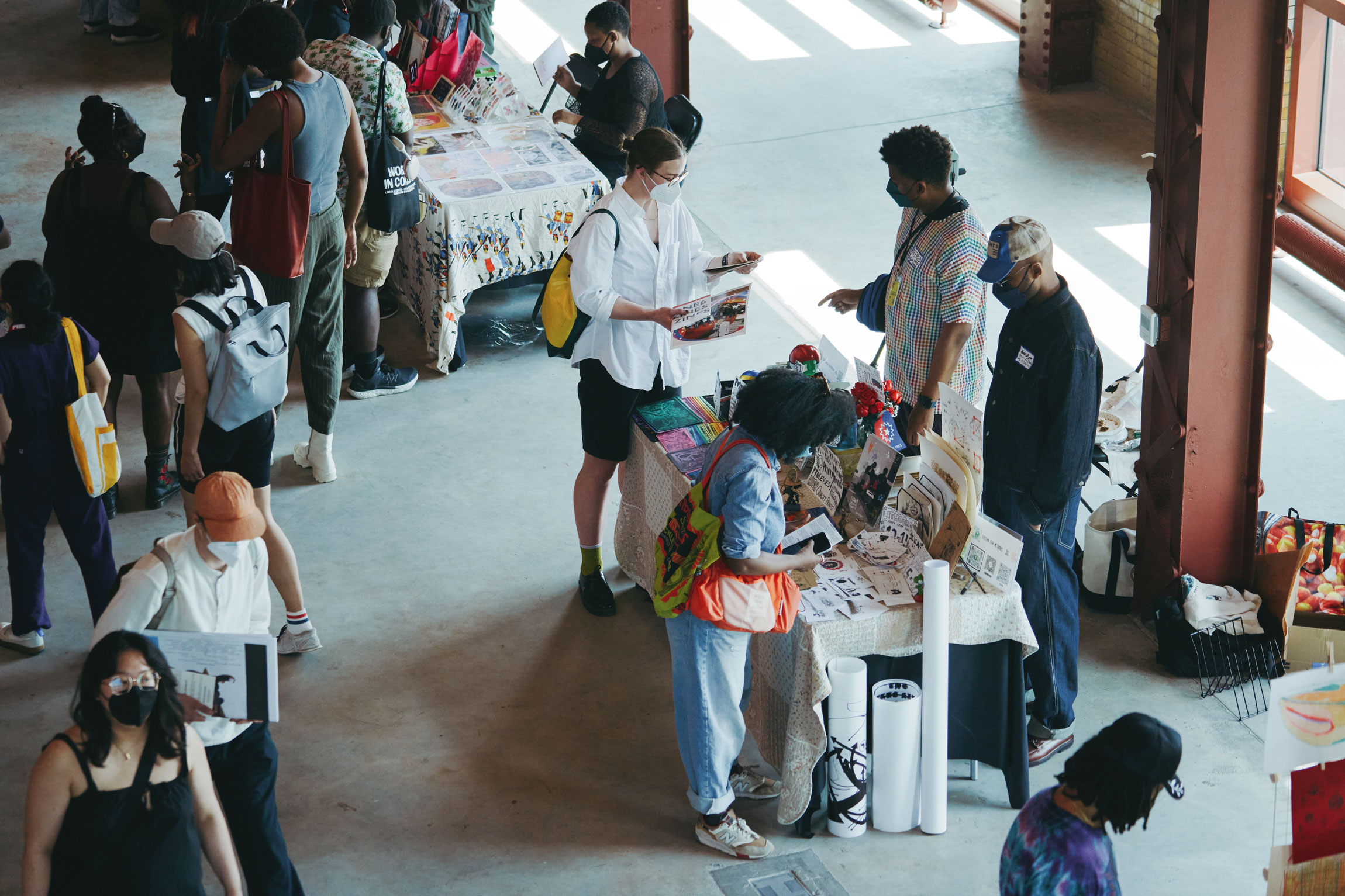
Now in its third year, the did-it-ourselves vision of publishing for community justice on display at the Black Zine Fair is needed more than ever. A project of Neta Bomani and Mariame Kaba’s Sojourners for Justice Press, the fair (taking place May 9, 2026, at Powerhouse Arts in Brooklyn) extends the Black radical publishing tradition for a new era. The fair showcases independent Black publishers based in New York and beyond, retaining strong ties to local media, organizing, and history through public programs and a reading room of archival media. Below, Bomani and Kaba trace a lineage of Black independent publishing from 19th-century New York to the present day and showcase titles from their reading room that illustrate the unique role and potential of DIY publishers in documenting, organizing, and shaping the city. – IB
Just like the enslaved African people who built the city’s roads, bridges, docks, and public buildings, in print we make the city with our hands. The legacy of Black publishing is as much an infrastructure of city-making as a strategy for survival and a means of political education.
The racist exclusions of corporate publishing are well documented, and Audre Lorde named the limits of using the master’s tools to dismantle the master’s house. But even “independent” publishing can be constrained and exclusionary. For every two or three individual Black writers or publishers who make it past the doors of New York’s rarified art book and zine fairs, there is a chorus of many more making within the margins of the margins.
New York has long been a hub for Black politics, culture, and publishing. In the 19th century, David Ruggles opened a grocery store on Cortlandt Street that also served as a circulating library and reading room for Black New Yorkers shut out of the city’s subscription libraries. Ruggles went on to write, print, and publish the first Black magazine in the United States, The Mirror of Liberty, and opened the first Black-owned bookstore, on Lispenard Street near St. John’s Park.
Since Ruggles’s time, Black publishing has gone hand in hand with Black liberation. An abolitionist who organized within New York City’s Underground Railroad and helped over 600 enslaved fugitives find their way to freedom, including Frederick Douglass, Ruggles understood the importance of anti-slavery publications and periodicals. Newspapers and circulars were the “trumpets of freedom,” he wrote in The Emancipator, an abolitionist weekly, in 1835. Ruggles self-published pamphlets against the proposed deportation of free Black people to Africa, and printed warnings in his magazine about the “kidnapping club” of police officers and slave catchers who disappeared Black people regardless of whether they were free or enslaved. His bookstore offered “anti-slavery publications of every description,” according to a 1834 newspaper ad, as well as letter press printing.
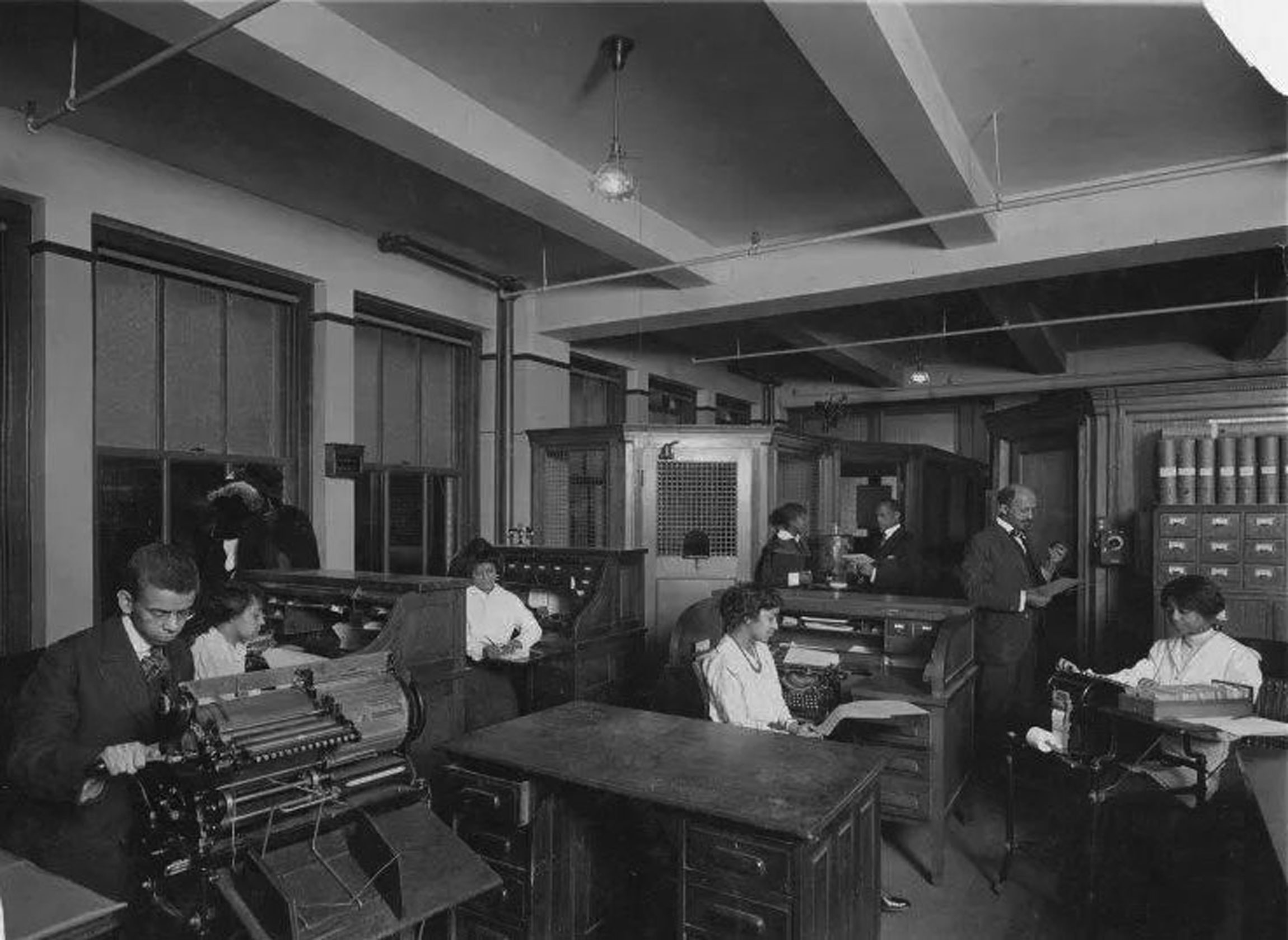
Throughout the city’s history, freedom movements have made New York what it is, drawing in the people, power, and resources that animate radical ideas. In the close confines of a city, even a single neighborhood, ideas bounce off one another, changing shape and taking on new energy. In early-20th-century Harlem, street preachers, anti-war activists, union organizers, and Black separatists dueled for air time on Speakers’ Corner, located at 135th Street and Lenox Avenue. Publications were the channels through which those ideas coursed. In 1910, The Crisis, the long-running official magazine of the National Association for the Advancement of Colored People (NAACP), set out from West 125th Street with W.E.B Du Bois at the helm, advocating for equal rights and “the highest ideals of American democracy.” In 1918, blocks away on 138th Street, Marcus Garvey’s The Negro World imagined another movement, international in scope and more interested in self-reliance than mainstream inclusion. A. Phillip Randolph and Chandler Owen’s The Messenger, socialist-aligned and headquartered at 513 Lenox Avenue, promoted Black unionism and decried the World War’s impact on Black communities.
Black publications — magazines, pamphlets, journals — are movement tools, not just media. Over decades, New York has remained a magnetic center of Black politics, and, therefore, Black publishing, networked by intellectual and social connections to other vibrant urban centers of Black life in Detroit, Chicago, Baltimore, Philadelphia, and elsewhere. In the 1950s, the Congress of Racial Equality (CORE), founded in Chicago, moved its headquarters to New York, and went on to print and distribute newsletters and educational materials to chapters throughout the country. As the Black feminist movement took shape in the 1960s and ’70s, New York was home to groups like the National Black Feminist Organization, while many leading Black feminists also led local efforts in Boston, Oakland, New Jersey, and beyond. These local and national leaders knitted together vibrant networks of informed and coordinated organizers fighting for change — connected, more often than not, by print.
For Black feminists, especially, the power of the press was critically important and remained crucially out of reach, for all that the “merger fever” of the 1970s made New York City the center of a publishing industry increasingly dominated by corporate conglomerates and mass market outputs. By the 1970s, books by many Black women writers like Zora Neale Hurston and Ann Petry were out of print. Professor, writer, publisher, and activist Barbara Smith, frustrated but clear-eyed, understood that Black women could not count on getting published “at the mercy or whim” of the white-dominated publishing industry — whether its commercial or “alternative” wings. But Black women’s self-publishing has a proud history, if one rooted in injustice. Authors like Sojourner Truth, Ida B. Wells, Alice Crolley Browning, Barbara Smith, and Honeychild Coleman all self-published, bypassing white-controlled sources of financing, printing, and distribution to bring some of the most important texts in American history to the public.
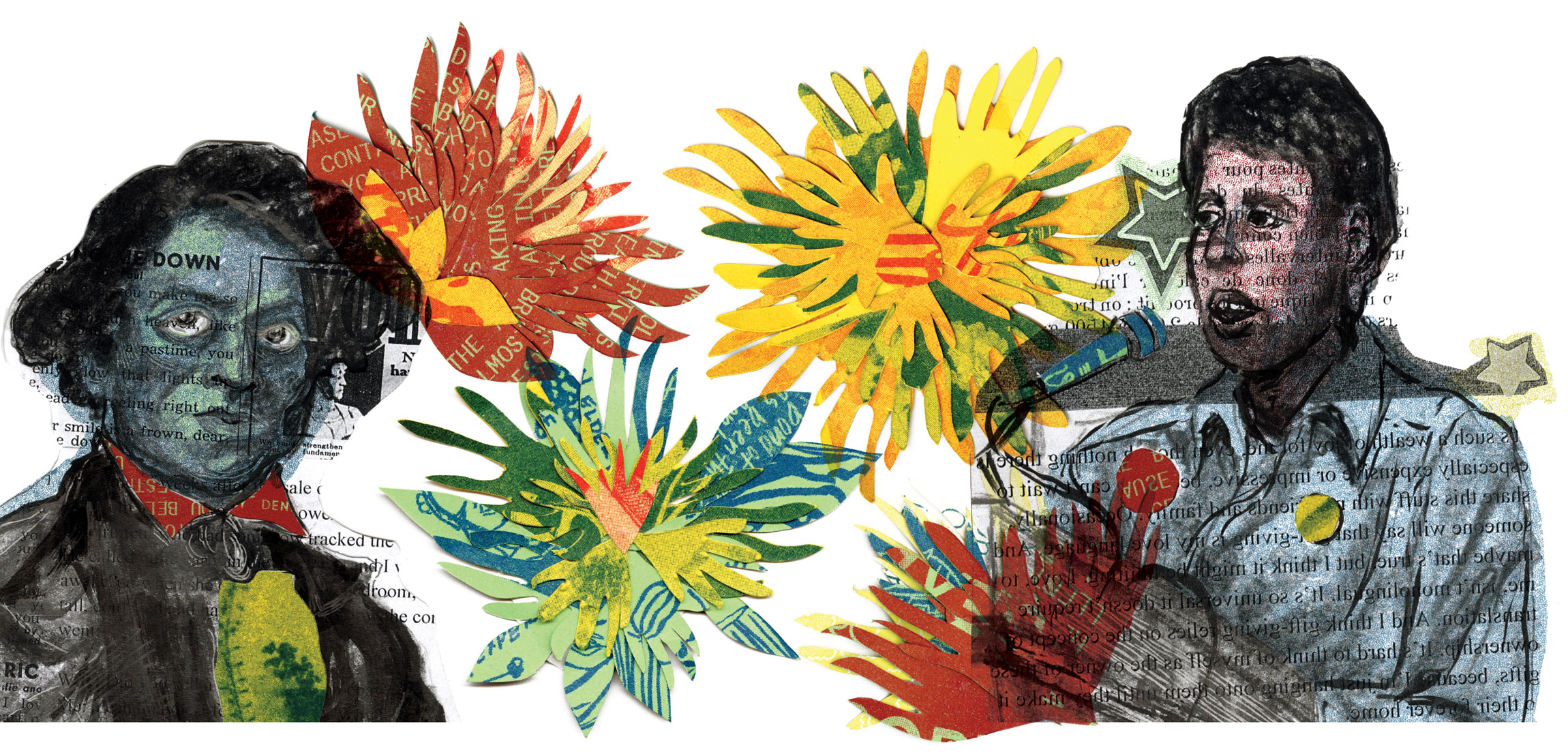
In 1980, Smith, poet Audre Lorde, and others in their circle founded Kitchen Table: Women of Color Press; in 1981, the press moved to New York City. For the next decade, Kitchen Table put out a series of influential feminist books, including Cherríe Moraga and Gloria Anzaldúa’s anthology This Bridge Called My Back: Writings by Radical Women of Color. Kitchen Table approached print as political infrastructure, publishing literary writing with high artistic standards alongside rigorous leftist politics.
In 2022, Smith generously passed the torch from Kitchen Table to our press, Sojourners for Justice. Our name is a nod to the self-publishing and activist legacy that Sojourner Truth blazed for us. It also recalls the Sojourners for Truth and Justice (STJ), a short-lived but influential organization of Black women socialists and communists in the early 1950s who embodied Black feminist thought through manifesto, collective action, and public speech. Several of the founding members of STJ, including Louise Thompson Patterson, Eslanda Robeson, Claudia Jones, lived, worked, and published in New York.
A sojourner is someone who finds their way by passing from place to place temporarily rather than settling permanently. The term acknowledges the ephemerality of publishing: pamphlets lost, newspapers faded by the sun, zines unbound after years of handling. Ideas sojourning, surging, circulating, building power as they move.
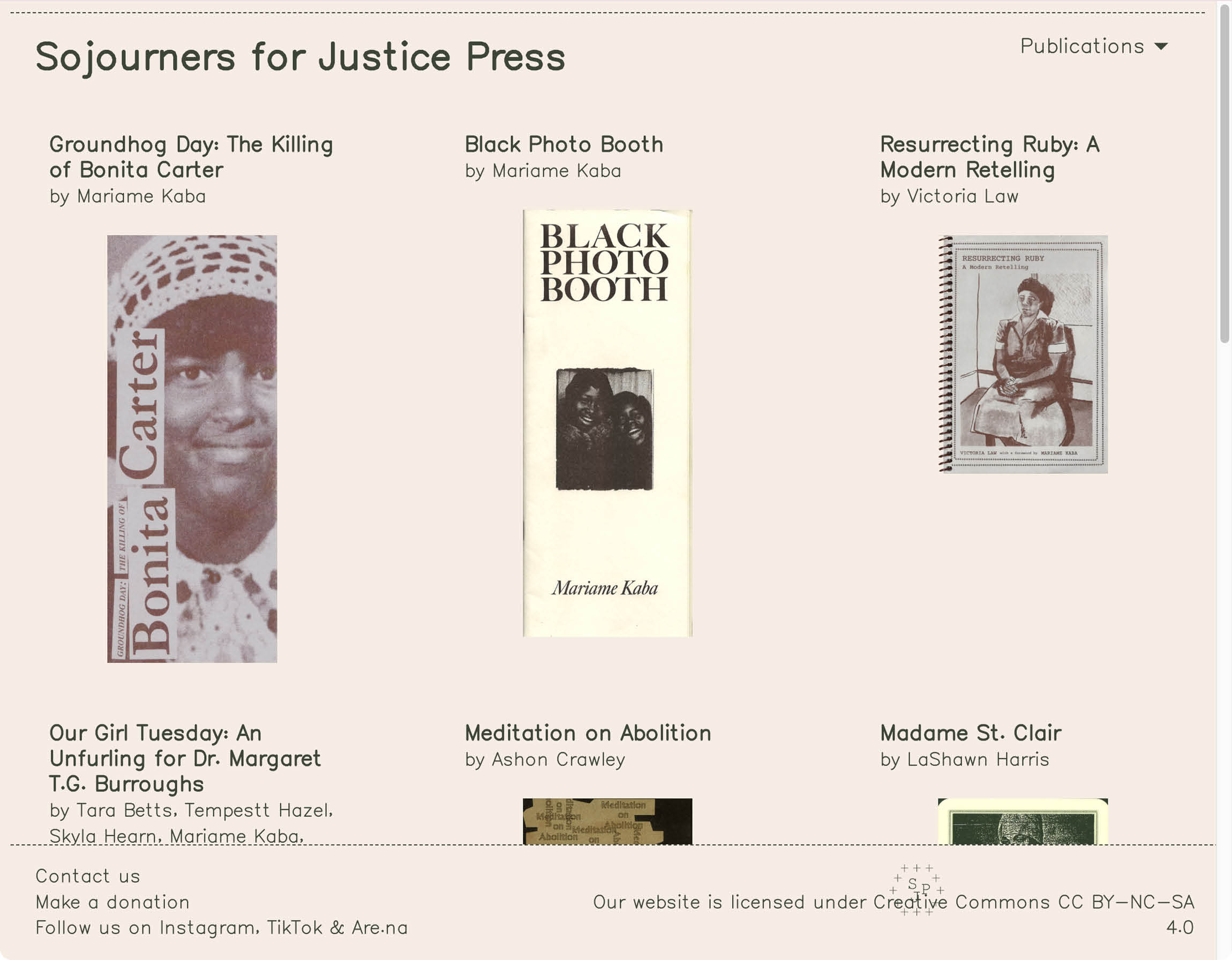
Today, we publish short-form printed matter (zines, booklets, broadsides, and other small publications) that engage Black feminist and abolitionist thought while remaining inexpensive and portable. Many of SJP’s publications focus on New York’s history and culture. A Riot at the United Nations tells the story of a 1961 protest organized by Maya Angelou and others after the CIA-sanctioned assassination of Congolese Prime Minister Patrice Lumumba. Searching for Joan Bird focuses on the New York Black Panther Party’s Joan Bird and the trial of the Panther 21. We commissioned historian LaShawn Harris to tell the story of Madame Stephanie St. Clair, one of the richest and most feared Black women in Harlem in the early 20th century. A publication about organizer Mae Mallory who (among other things) fought segregation in New York public schools as one of the “Harlem Nine” — and whose broader legacy deserves to be better known — is forthcoming.
We also organize the Black Zine Fair in New York City. Just as Kitchen Table understood print as a way to intervene in the literary crisis of its time, SJP seeks to break the blockades of attention and access that characterize our contemporary moment. Many people struggle with reading not for lack of intelligence or curiosity, but because reading has increasingly been structured as a productive obligation rather than a leisurely pleasure. As a result, fewer people encounter texts that expand political imagination.
Meanwhile, the pressures on reading and publishing continue to mount. Protestors are criminalized for reading and distributing abolitionist zines. Book bans move through school districts with bureaucratic brutality. Public libraries remain one of the last civic institutions where free reading is possible, yet they are chronically underfunded. Universities continue to absorb the language of radical critique while violently discarding scholars and archivists advocating for the movements that produced it. In contrast, the Black Zine Fair is a space that convenes artists, archivists, publishers, and readers while actively cultivating alternative infrastructures for the circulation of radical ideas.
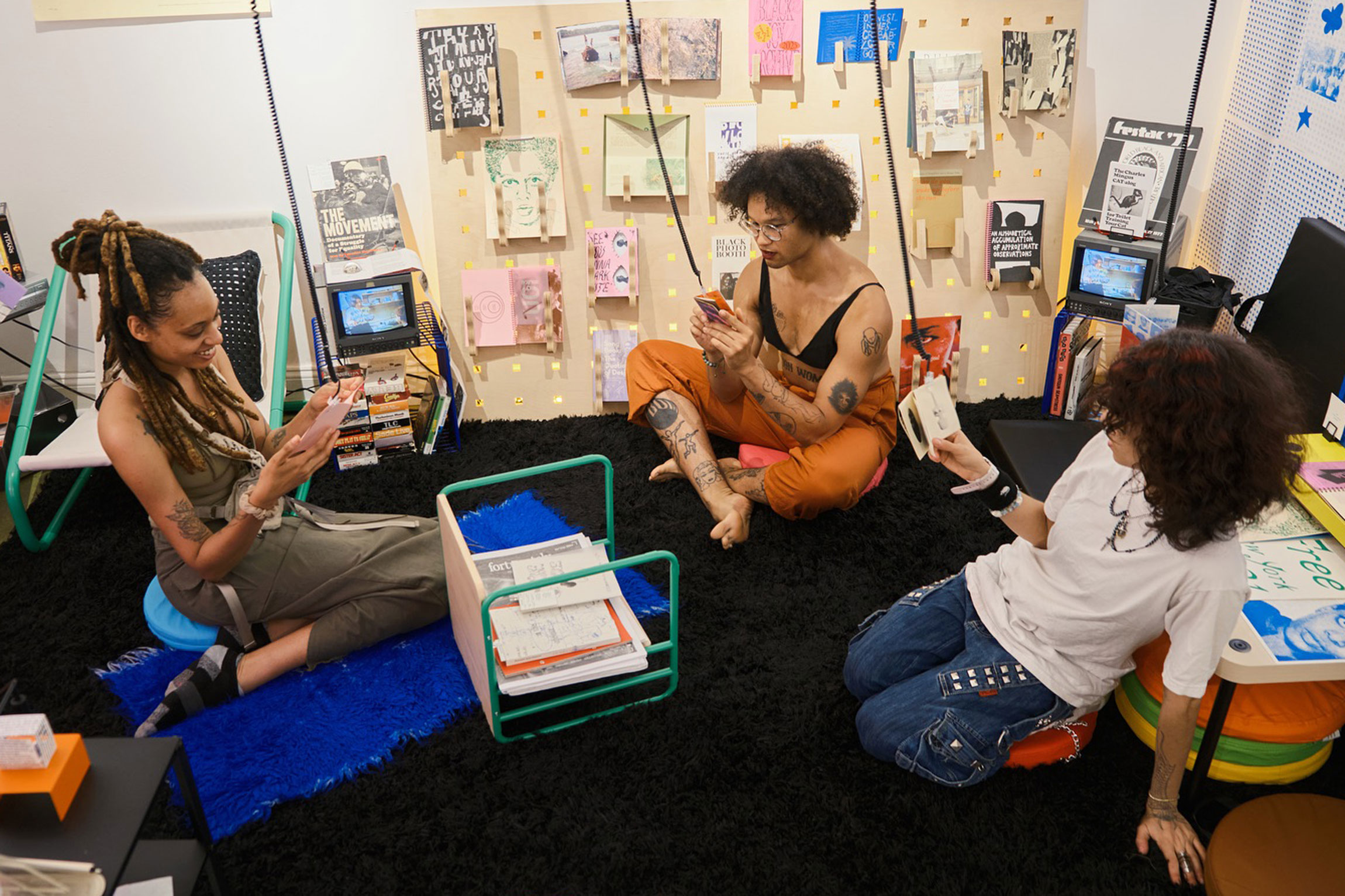
At the center of the Black Zine Fair is the Black Reading Room, a site-specific installation which brings together historical and contemporary zines, pamphlets, and small press publications into a shared space for reading — foregrounding collectivity, leisure, and the social life of print. Radical Black publishing has always existed outside the mainstream by necessity. Pamphlets, newspapers, and little magazines historically moved through informal networks: union halls, church basements, barbershops, beauty salons, community centers, and kitchen tables. The Black Reading Room provides these publications as working materials, not artifacts in an institution scrambling to catch up. The point is to read them, not just see them behind glass. Readers are invited to spend time with the materials and recognize their echoes in the present moment, particularly within New York City, where longstanding histories of Black literary, political, and cultural life continue to inform how texts are produced, circulated, and read.
Printmaker Amos Kennedy once offered a simple directive to fellow bookmakers that their audience should extend beyond the small circle of collectors, book artists, and institutional archives. Radical Black publishing has long followed that advice. These materials were never meant for elite home libraries or stuffy stacks. They were meant to be shared and read freely. The Black Reading Room returns them to that purpose. Visitors are invited to sit, read, linger, and sojourn between generations of print — encountering the work of publishing predecessors alongside the zines and artist books produced by contemporary exhibitors at the Black Zine Fair. The city, once again, in our hands.
The publications in the Black Reading Room, predominantly drawn from the collection of Kameelah Janan Rasheed, move across decades, formats, and editorial traditions, but share a common commitment to Black political education. Some emerged out of major organizations and intellectual networks, while others come from small presses or independent publications distributed underground. Together, they trace how Black readers and writers have used print to interpret the world and organize within it. Several have deep ties to the city, while others arrived here through the migratory circuits of Black intellectual life, from Detroit or Chicago and beyond.
The reality of Black publishing is not simply a linear timeline or a beautiful spread of publications and presses. It is a complex, decentralized system, and a terrain of struggle where powerful resonances can be found. David Ruggles’s magazine warning of slave catchers’ tactics in the 19th century reverberates in a zine explaining how to report ICE raids today. Gwendolyn Brooks’s chapbook responding to the uprisings after the assassination of Martin Luther King, Jr. sits next to a zine about the assassination of a Stop Cop City protestor. To hold these publications together in one room is to feel and see history, and the city in which history is made, differently.
The archive is not a closed record of the past, but an ever-unfolding, always-under-construction scaffolding for the present — from democracy pamphlets in the 18th century, to civil rights pamphlets in the 19th century, to journals, little magazines, beat poetry chapbooks, community newspapers, feminist pamphlets, sci-fi fanzines, and punk zines in the 20th century.
If the archive lays the scaffolding, the next generation decides what to build with it. Black publishing moves in this way: not through neat succession, but through disruption, conversation, inheritance, and improvisation. The tools change — mimeograph, risograph, offset press, photocopier — but the underlying practice remains the same. Each generation studies what came before and finds its own way forward.
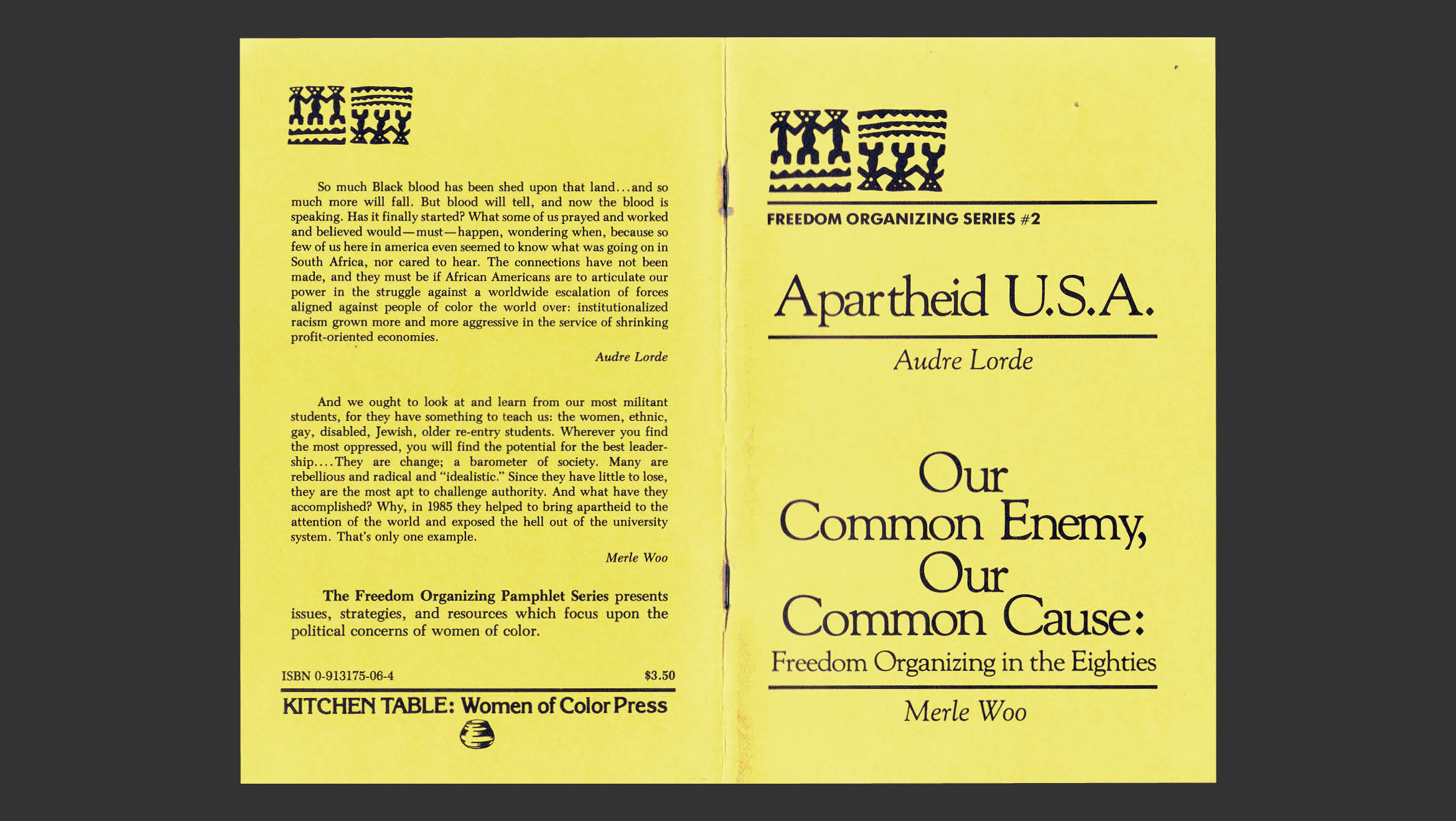
Freedom Organizing Series #2 (1985)
Kitchen Table’s Freedom Organizing Series, which Smith began in the late 1980s, exemplifies the press’s commitment to literary and political rigor. The press operated within feminist scholarly and advocacy networks that extended throughout New York City, where bookstores, conferences, and community spaces sustained the circulation of feminist thought by women of color. The pamphlets were small, vibrant, and deliberately accessible — Smith chose bright colors that reminded her of crayons. Each title was paired with a wearable pinback button, connecting reading with self-fashioning, aesthetics with politics, meaning with message: Ideas should circulate widely, not sit quietly on shelves.
The second installment of the Freedom Organizing Series brought together two essays that read like field notes for movement work in the 1980s. In “Apartheid U.S.A.,” Audre Lorde connected the system of racial segregation in South Africa to the structures of racism operating in the US. Opening with an evocative description of a 1985 New York summer — “The high sign that rules this summer is increasing fragmentation” — Lorde drew parallels between the murders of Black children in Soweto, South Africa in 1976 and Bernhard Goetz’s infamous shooting of four Black teenagers on the New York City subway in 1984. Lorde wrote from within activist circuits that included New York’s anti-apartheid organizing to argue that apartheid was not a distant geopolitical crisis. Instead, Lorde asserted, solidarity must move beyond symbolic support to include material pressure (boycotts, divestment, and sustained political organizing) while also challenging Americans to confront the ways white supremacy structures everyday institutions at home.
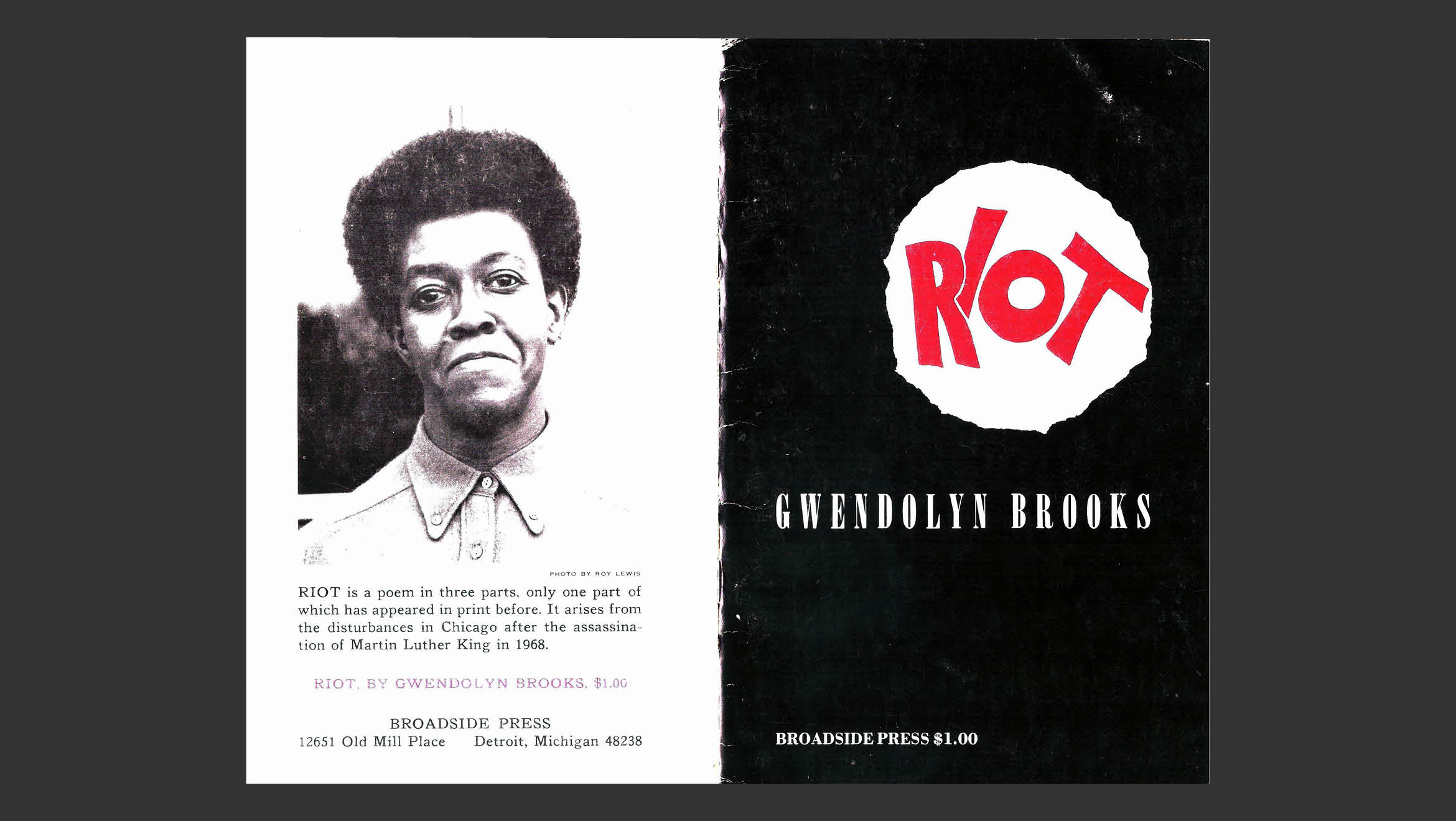
Riot (1970)
Published by Broadside Press, Riot is Gwendolyn Brooks’s response to the urban uprisings that followed the assassination of Martin Luther King, Jr. in 1968. Although drawing directly on her home city of Chicago, Brooks’s poetry served as a record of the moment by naming the anger, grief, and contradictions that surfaced amidst a collective confrontation of systemic violence that reverberated nationally.
Cities like Memphis, Chicago, Newark, and Washington, D.C. saw immediate and large-scale uprisings, but New York City remained comparatively calm the night King was assassinated. Some onlookers credited then-mayor John Lindsay, who traveled to Harlem shortly after the news broke, for maintaining the city’s relative quiet. But rather than signaling an absence of tension, the moment marked a shift: sustained organizing through the same conditions Brooks named back to the surface in the weeks that followed, including in the 1968 protests against displacement and the Vietnam War. Today, the university remains a site of student protest, most recently around the genocide in Palestine — a sign of how moments of rupture extend into longer struggles.
Founded in Detroit by Dudley Randall, Broadside Press played a critical role in the Black Arts Movement by publishing chapbooks and broadsides that spoke directly to the urgency of Black political life. Broadside Press circulated widely through New York City, a node within the larger network of the Black Arts Movement, and especially in Harlem, where bookstores, community centers, and readings sustained Black literary exchange. Within these networks, works like Riot were not only read, but performed, debated, and mobilized as part of a broader cultural and political discourse in the city.
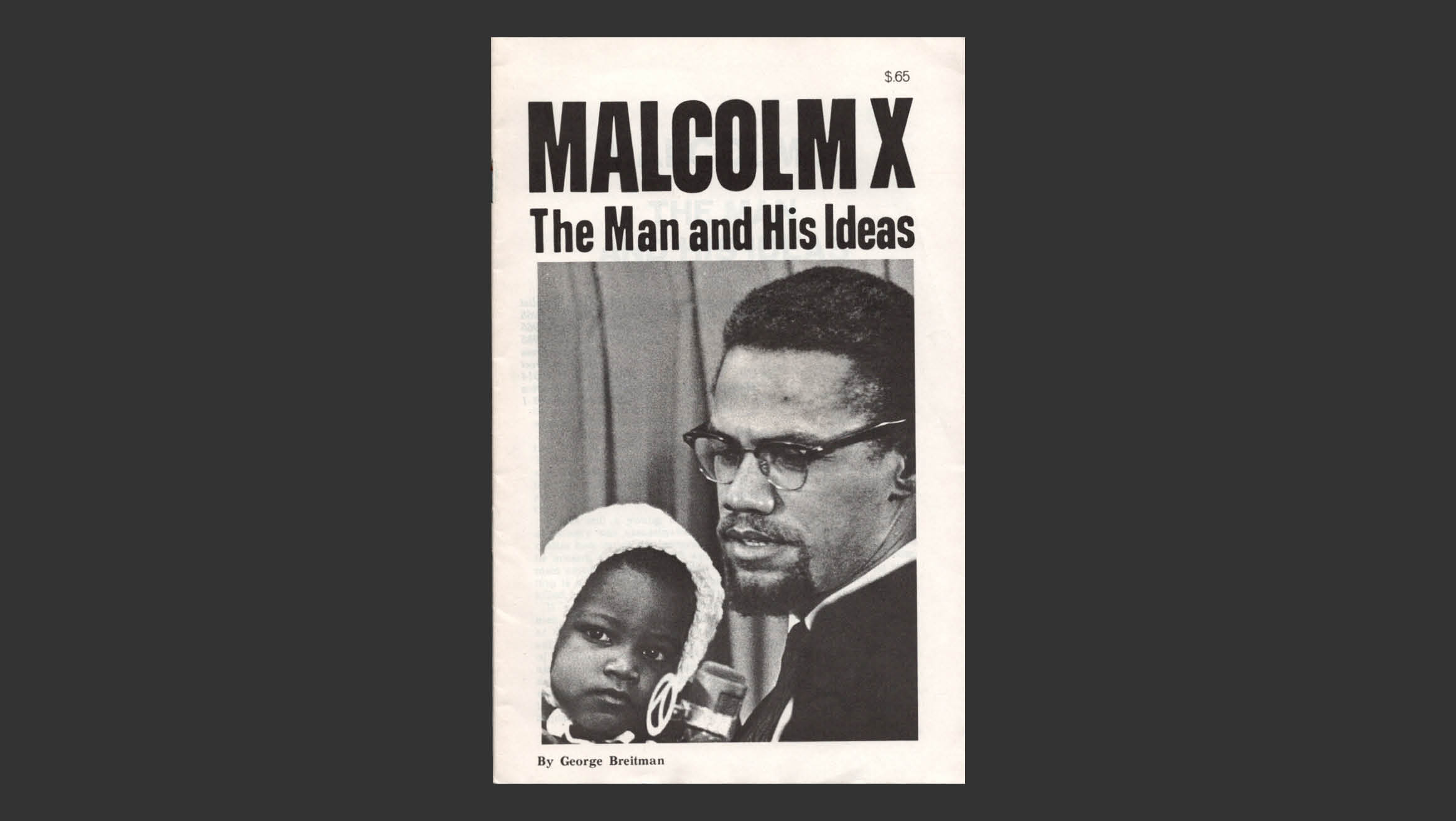
Malcolm X: The Man and His Ideas (1965)
Published less than a month after Malcolm X was assassinated in Manhattan at the Audubon Ballroom, Malcolm X: The Man and His Ideas was an urgent primer for readers trying to understand the political philosophy of a leader whose vision was especially contested and misrepresented posthumously. The pamphlet was written by George Breitman, a socialist organizer and publisher who was active in left labor organizing circles in New York City and Newark.
The text originated as a lecture of the same name at the Friday Night Socialist Forum in Detroit, a weekly gathering that convened labor and Black liberation organizations. Cheap to produce and easy to distribute, pamphlets like this extended political education beyond universities and formal institutions, and instead to community bookstores, meetings, and organizing networks in New York City and elsewhere.
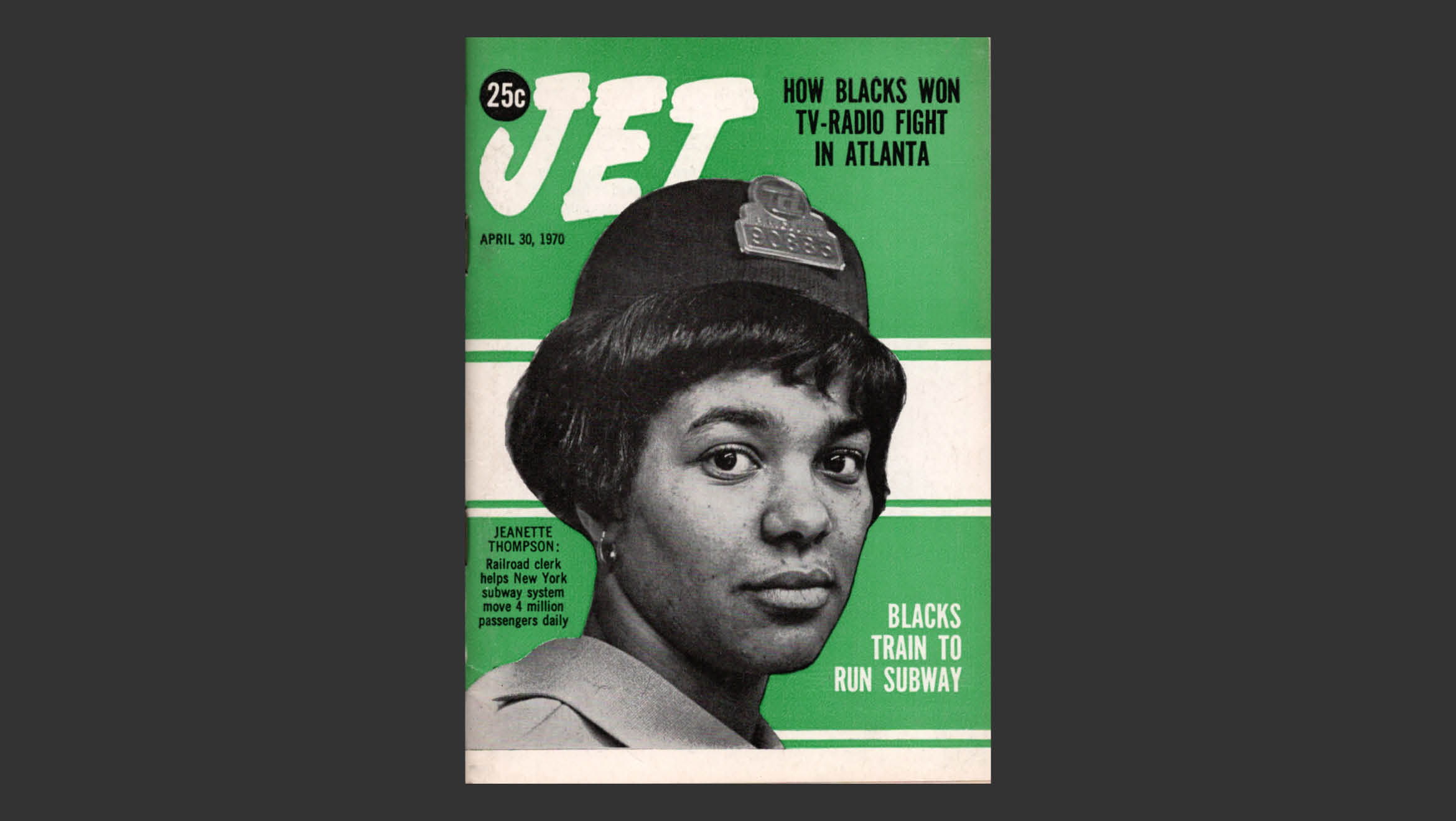
Jet, Vol. 38 No. 4 (1970)
First published in 1951 by Johnson Publishing Company in Chicago, Jet was designed to move fast. Small enough to fit in a pocket (long before pocket computers) and inexpensive enough to circulate widely, the magazine condensed the pace of Black news into a weekly format meant for everyday readers on buses, in waiting rooms, and at kitchen tables.
In New York City, Jet’s pocket-sized format made it a staple of newsstands and subway rides, where readers encountered coverage of Civil Rights demonstrations, performances at the Apollo Theater, and speeches of political figures like Malcolm X. One article from 1970, “Transit Retirees Create New Job Opportunities for Blacks,” detailed pathways into public transit work, highlighting how Black workers were trained across roles — from conductors to railroad clerks — and positioning public transit as a vital and expanding source of employment.
In the pre-Internet era, Jet anticipated the logic of always-on, always-connected digital culture. In its first issue, publisher John H. Johnson wrote that “in the world today everything is moving along at a faster clip. There is more news and far less time to read it.”
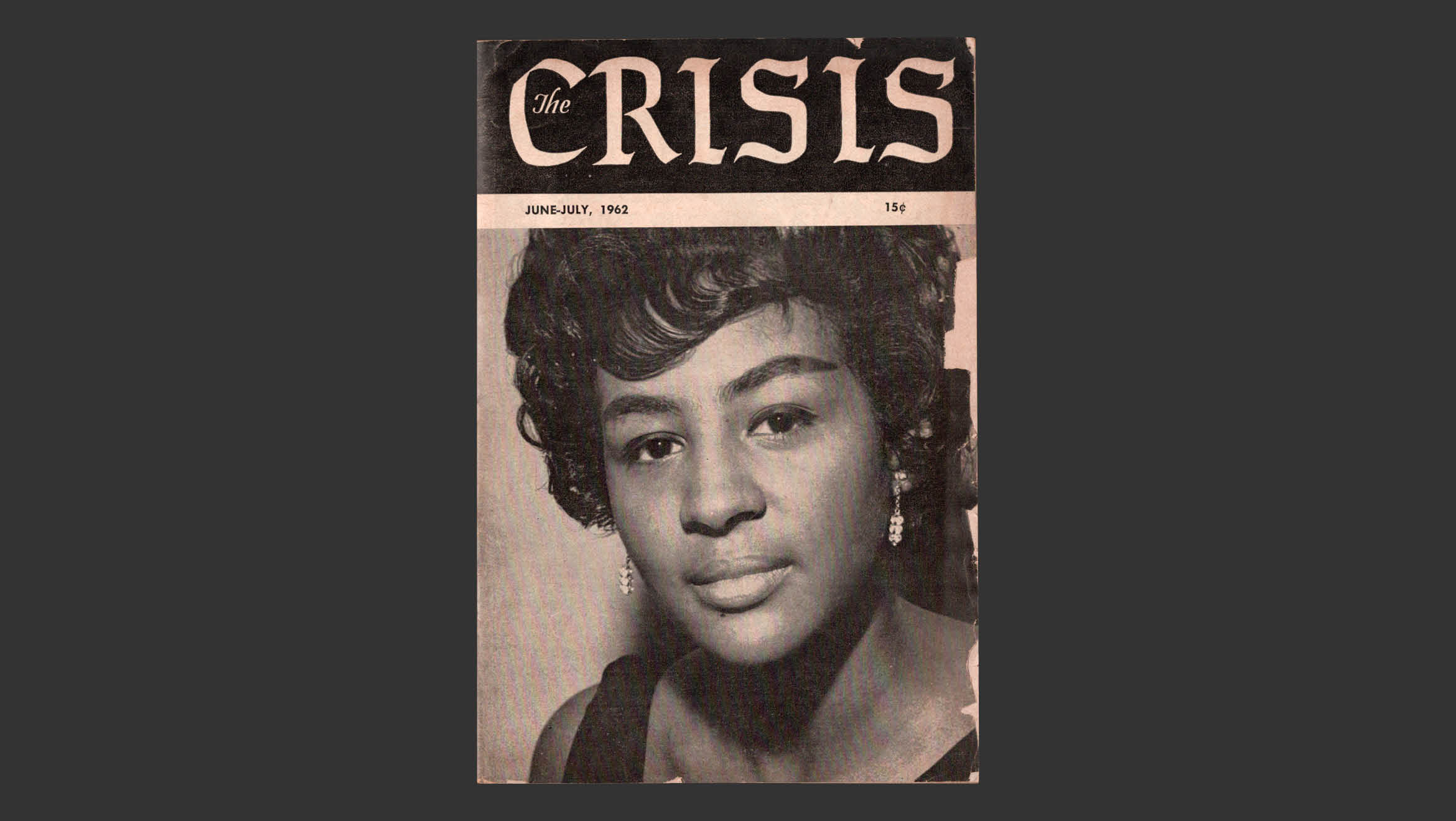
The Crisis, Vol. 69, No. 6 (1962)
Founded in 1910 as the official magazine of the NAACP in New York City, The Crisis is one of the longest-running Black publications in the US. Under the direction of its founding editor W.E.B. Du Bois, the magazine established a model for zines that would also openly state the opinion of its editor and that combined literary production with community journalism.
During a period of rapid migration of Black Americans from the south which would become widely known as the Great Migration, The Crisis embedded itself into the cultural and intellectual networks of Harlem. Its pages helped start the careers of writers who went on to populate other publications during the Harlem Renaissance, including Zora Neale Hurston, Langston Hughes, and Claude McKay. The synthesis of art and politics presented by The Crisis would later become a blueprint for later small presses and periodicals, from Negro Story to The Black Scholar.
At the same time, the journal documented the city itself: housing conditions in Harlem, labor organizing, racial violence, and the shifting demographics of New York City. A 1962 article, “On Desegregating Advertising” by Sylvia Appelbaum, argued that advertising was a critical site of racial representation, emphasizing that because it is “seen by millions of people day in and day out,” integrating Black people into visual ads could reshape public perception and produce “a new and more accurate image” of Blackness. In New York, the heart of the advertising industry at midcentury, Appelbaum’s argument rang particularly loud.
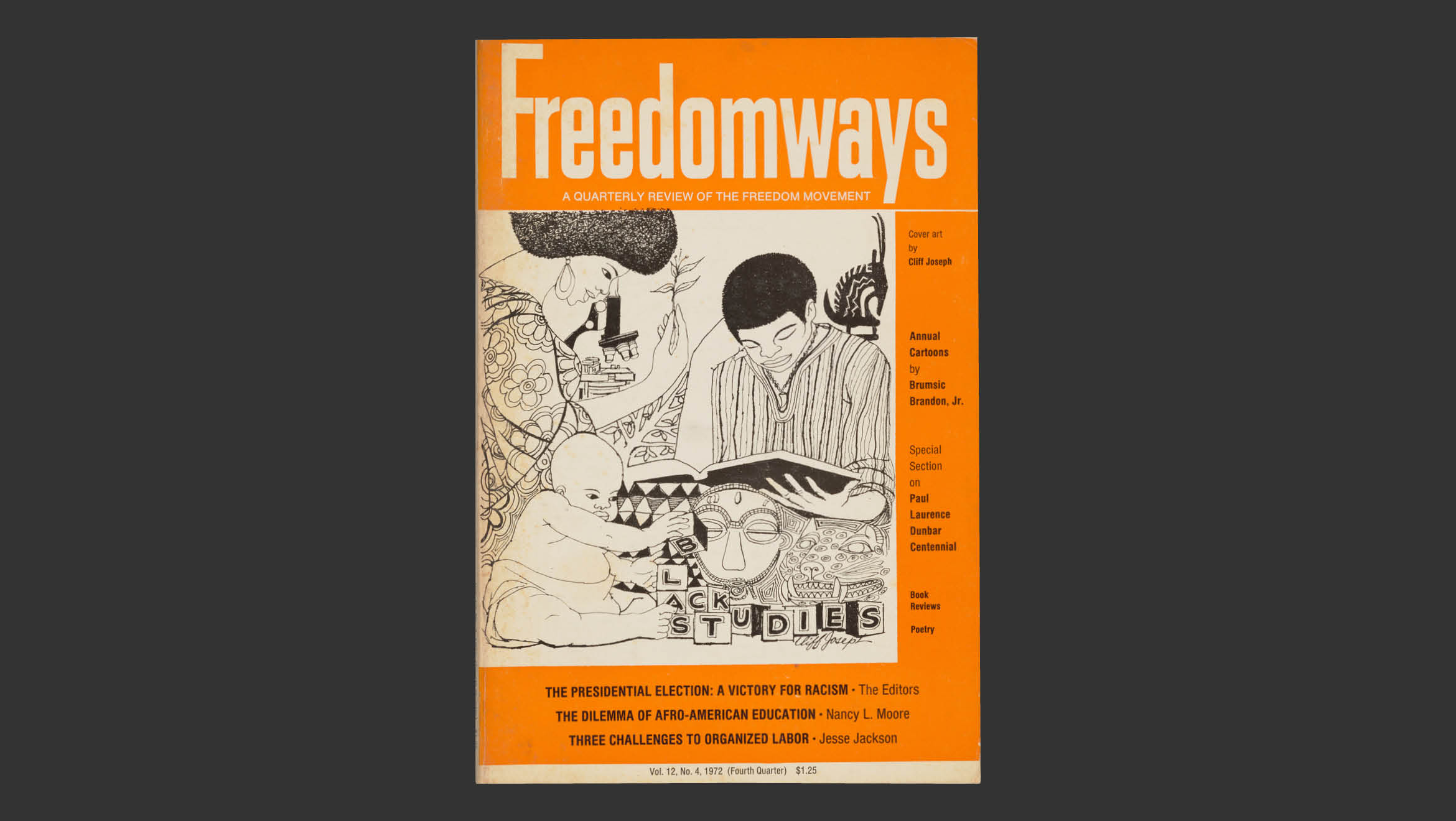
Freedomways, Vol. 12 No. 4 (1972)
Freedomways debuted in New York City in the spring of 1961. Lewis Burnham and Edward Strong co-founded the journal, and it benefited from the steady hand and advice of its first general editor, Shirley Graham Du Bois, wife of W.E.B. Du Bois. Freedomways actively covered the Civil Rights Movement and vocally supported African freedom movements around the world. It published articles by Caribbean intellectuals like C.L.R. James and Cheddi Jagan, as well as African liberation leaders like Kwame Nkrumah, Julius K. Nyerere, Agostinho Neto, and Jomo Kenyatta. After 1965, Freedomways shifted to primarily focusing on Black arts and culture, publishing poets like Pablo Neruda and Derek Walcott, as well as writers like James Baldwin and Alice Walker.
In a 1983 article, “The Schomburg Library Then and Now,” Yusef A. Salaam reflected on the Schomburg Center for Research in Black Culture as both a historical archive and a living space shaped by the intellectual energy of Harlem. Salaam traced the Center’s roots through the collecting work of Arturo Schomburg, who sought to refute the idea that Black people had “no history” by building a global archive of Black life and thought.
The views expressed here are those of the authors only and do not reflect the position of The Architectural League of New York.