
Series
New City Critics
Dispatches from the New City Critics fellows: new, fearless, and diverse voices to challenge the ways we understand, design, and build our cities.
We are celebrating 15 years — and counting — of stories that are deeply researched and deeply felt, that build a historical record of what the city has been.

“It’s a carousel for children,” my friend Maddie says. “It’s not that serious.” I can acknowledge that the whole scene is a bit ridiculous. Me, clutching my notebook, loudly strategizing a course to beat out a group of five-year-olds to my favorite seven-foot-tall animatronic fish; and Maddie, already regretting the $6 I made her spend on this three-minute ride before it’s even started.
Five minutes later, we’re both back in line for round two.
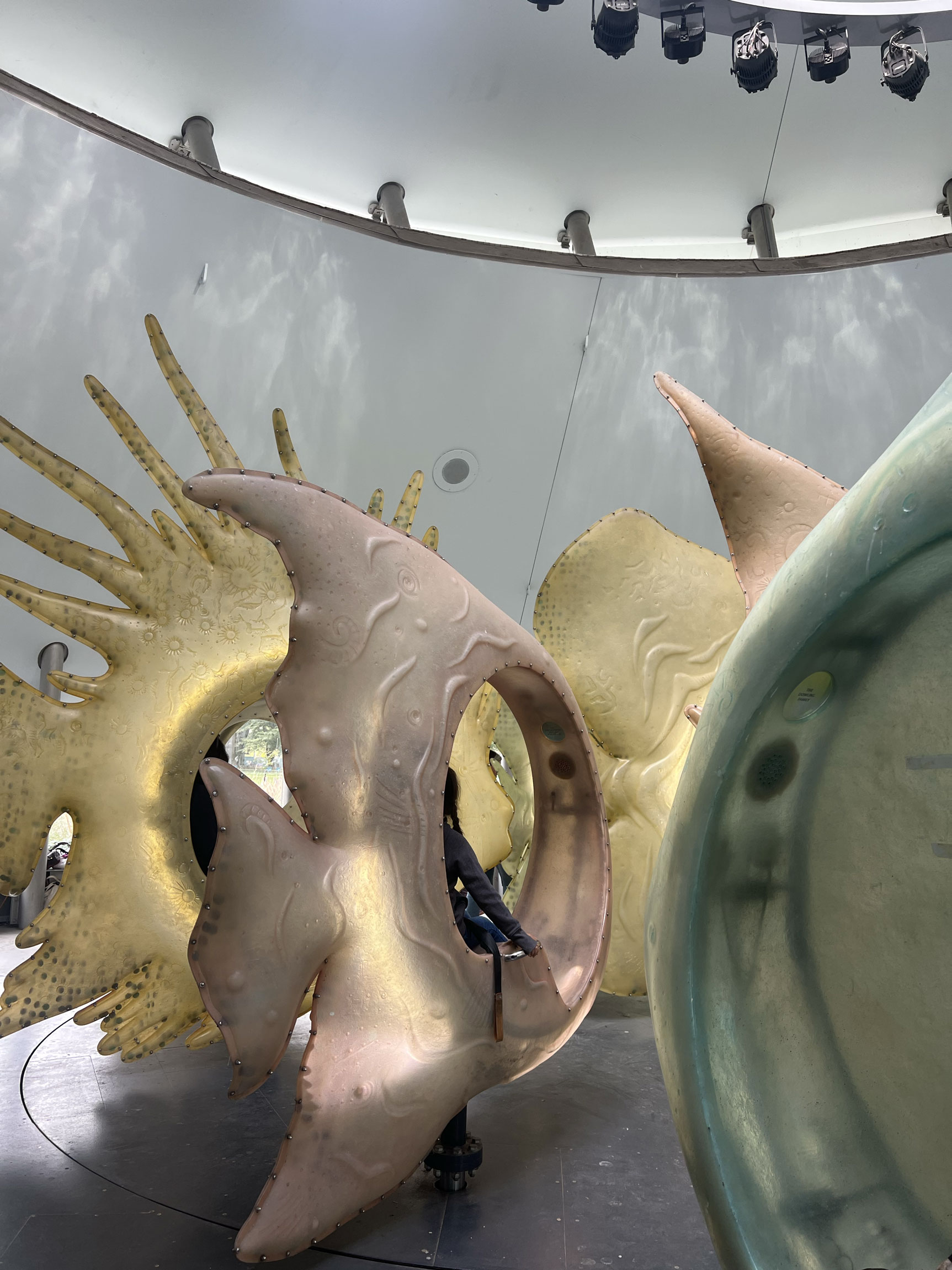
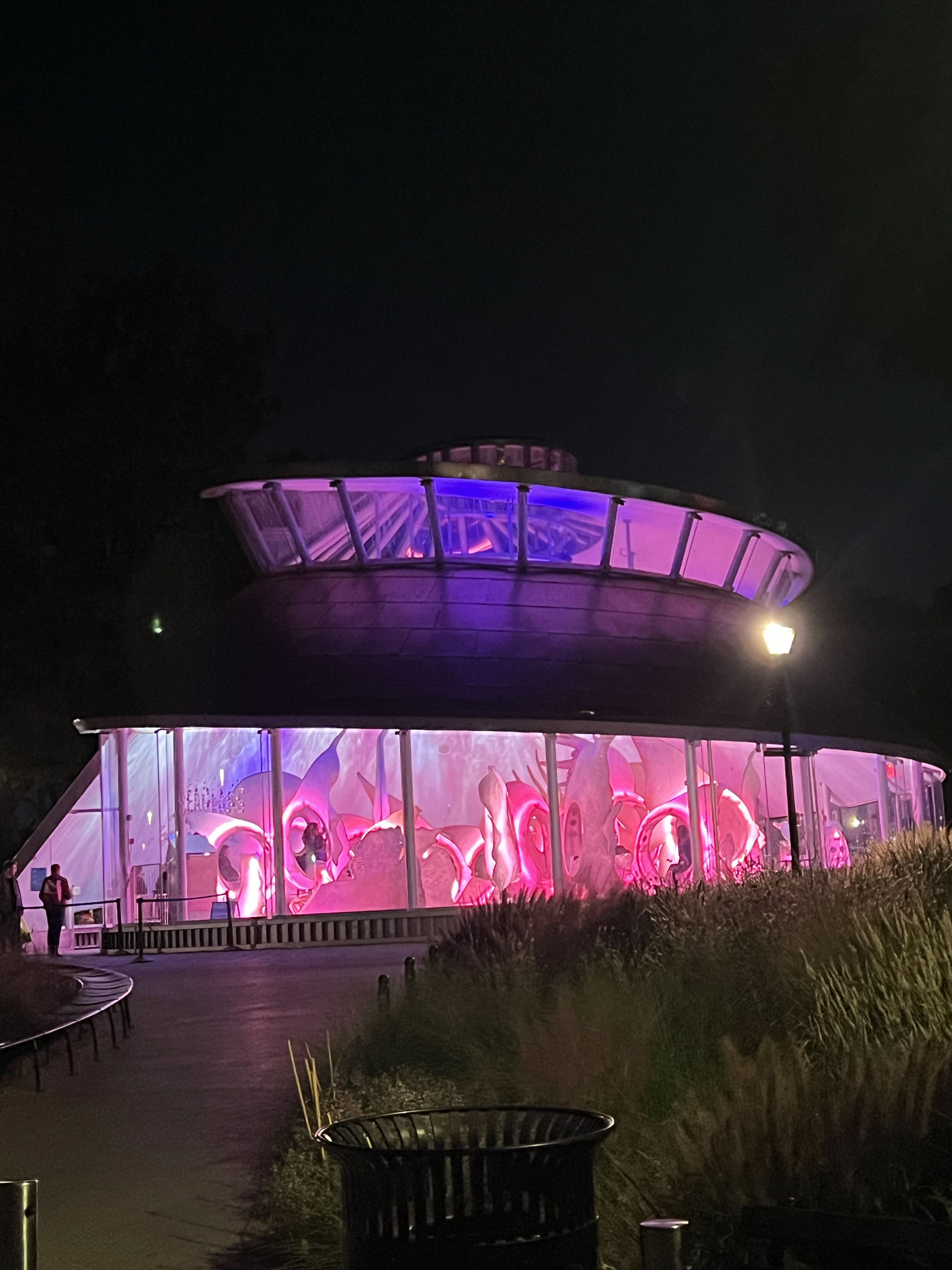
A swirling, conch-shaped contraption, SeaGlass Carousel is an alien in the green habitat of Battery Park. It is not even a proper carousel. Instead of sitting on a classic horse, riders sit inside one of 30 iridescent fish sculptures (an homage to its location near the former site of the New York Aquarium). It would be silly for fish to trot along a circular track, so instead they swim, rising, spinning, and rotating from the ground on concentric turntables.
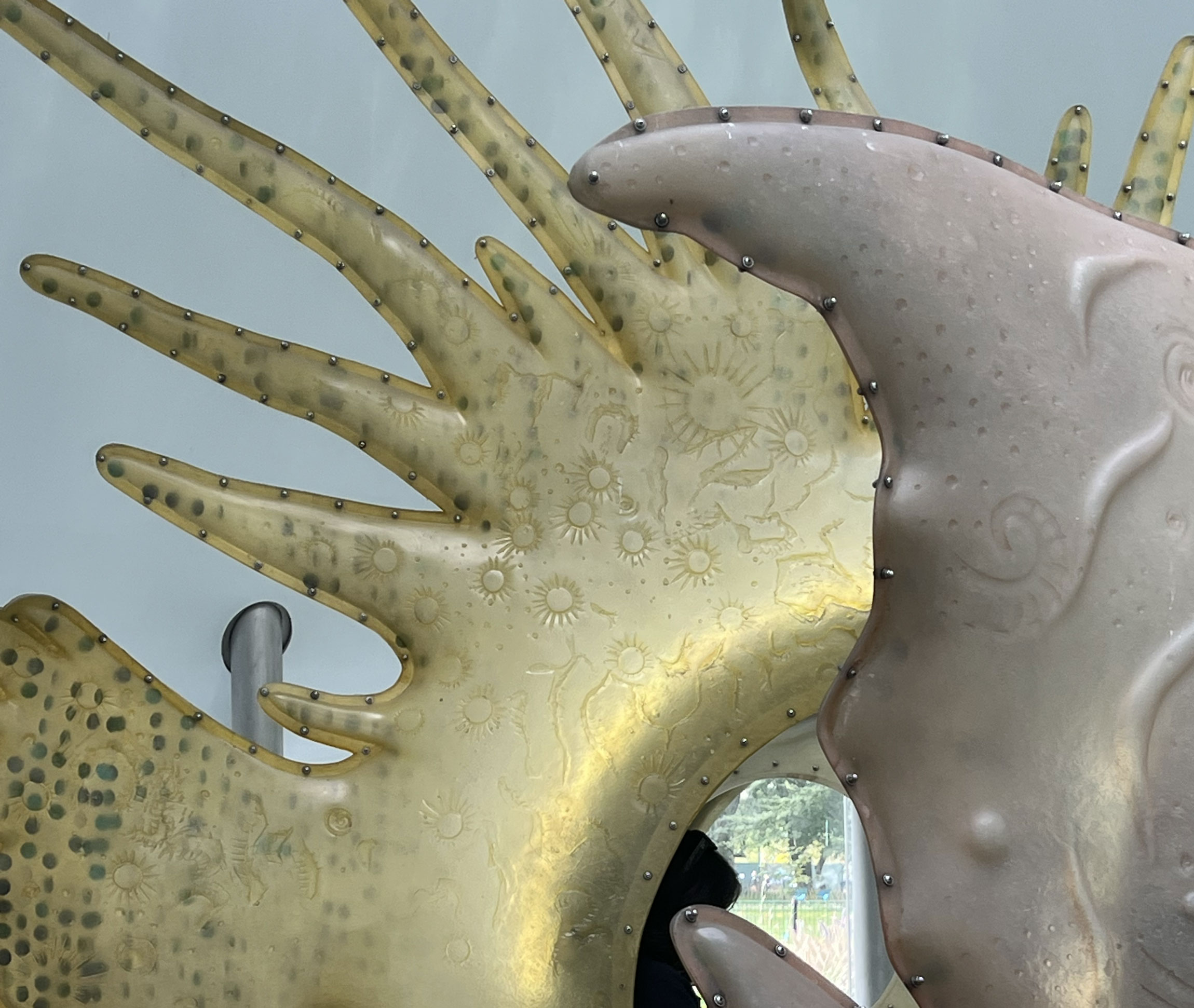
When I first climb into my pearly blue, plexiglass fish, I’m not sure what to expect. I trace the ridge where the smooth interior surface arching above me folds into the textured exterior, feeling the grooves of the sun, and moon, and swirl etchings that stamp the bodies like ancient ammonite fossils. Scale-like sequins are smooth just beneath the surface. Pink lights flash from the light fixture above, and from within the surrounding sculptures. The first sweeping chords of a music box melody envelop the room, and outside a slice of the city swirls past me. A toddler wriggles in her parent’s lap, straining towards the glowing tail of a passing fish; a school of teenagers laughs louder than sobriety warrants; a guy my age fixes his eyes on the spiraling ceiling, entranced by the light show, his date’s eyes fixed on him. As we come to a stop, I hear children already begging their parents to ride the carousel for a seventh time in a row. I too had a deliriously fun time.
Every detail of SeaGlass — from the conch-shell architecture to the water-droplet logo — speaks of an immense amount of effort and earnestness. Over the course of a decade, The Battery Conservancy — whose herculean fundraising efforts are visible in the donor-plaques the fish wear — worked with architecture and urban design firm WXY to spearhead an uncompromising artistic vision, in collaboration with Show Canada Industries, the fabricators behind several Cirque du Soleil productions; George Tsypin, renowned set designer for Broadway’s The Little Mermaid; Piet Oudolf, who designed the surrounding gardens; and over a dozen other engineers, fabricators, contractors, and designers. To me, untrained and a stranger to this process, a decade feels like a long time, especially with the Avengers-level campaign I imagine was needed to muscle such a project through. But the financial impossibility of finding exterior glass that curves at the radii of a spiral birthed the overlapping gill-like panes through which the structure breathes. Standard flame retardants left the fish looking “snot colored,” so the fish were reconfigured and tested again and again through alternative fire safety compliance processes in order to keep their glittering translucence. The original fabricator went bankrupt at some point, so the whole attraction — puzzle of underground turntables included — was assembled in Canada, disassembled, and reassembled in New York. Through it all, a dash of luck: the turntable mechanism had been installed when Hurricane Sandy struck, but avoided catastrophic flooding by a few dozen feet, bringing the carousel to its opening day in 2015.
Is a charming adherence to an aesthetic worth the dogged labor over the course of a decade and the $16 million — fundraised from private donors and funded by city, state, and federal grants — that went into its creation?
Scroll through the most viral TikToks about the carousel, and you’ll find a lot of people in the comments crying — a reaction I’m somewhat embarrassed to have shared. But how long has it been since I’ve been so sincerely caught off guard by a moment and lingered in it? Somewhere in the blur of the rise, fall, and turn of the fish, I relived that fleeting, awestruck feeling of light catching the skyline in an unexpected way, that thrill of being seven years old.
Intentional attractions in the age of virality often feel flat; they exist in the physical world, but only to be captured, documented, and shared later in the digital realm. SeaGlass is a rare experience that grounds you in the moment, moves you through space, cues you to look, notice, remember. And though every aspect of SeaGlass is choreographed, it doesn’t lose its feeling of spontaneity. Ten years on, the carousel is still wonderful and whimsical. It stands as a testament that investment into exceptional experiences in the public realm is not extravagance. Serious or unserious as it may be, it’s a remarkable accomplishment to manufacture an experience that provides anyone the opportunity to stumble upon some wondrous, unexpected treasure in their ordinary life.
Once the sun has set, SeaGlass is transformed. The dazzling light show that’s hardly visible during the day commands the attention of any passerby. Inside, a gentler tune plays, more audible without the intensity of the young children who are there during the day. A soft light refracts against the walls; you’re underwater, looking up at the sun. Sitting in a work of art, I feel cared for. For three minutes, I don’t think of anything else at all.
The views expressed here are those of the authors only and do not reflect the position of The Architectural League of New York.
Dispatches from the New City Critics fellows: new, fearless, and diverse voices to challenge the ways we understand, design, and build our cities.