
Series
New City Critics
Dispatches from the New City Critics fellows: new, fearless, and diverse voices to challenge the ways we understand, design, and build our cities.
We are celebrating 15 years — and counting — of stories that are deeply researched and deeply felt, that build a historical record of what the city has been.

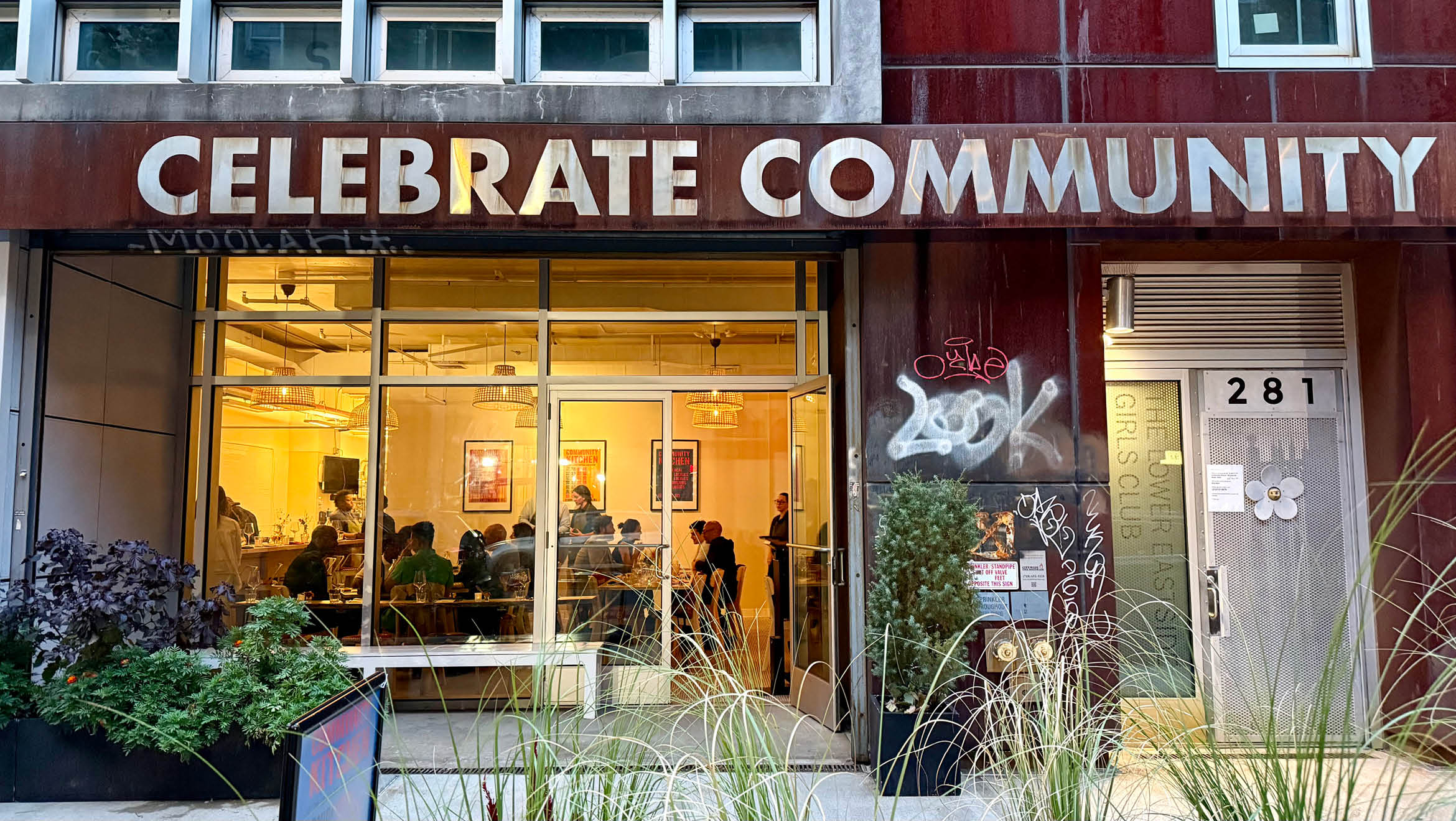
If the phrase “public restaurant” sounds like an oxymoron to you, you’re not alone. But for food writer Mark Bittman, that’s mostly due to a lack of imagination. His latest project is a sliding-scale restaurant called Community Kitchen — operated out of the Lower East Side Girls Club — is under the guiding belief that “access to good food is a universal right.” For the pilot, which ran from September to December 2025, the project raised over a million dollars from multiple donors, assembled a team of award-winning chefs, and an advisory board that counts culinary superstars José Andrés and Alice Waters — the latter of whom is often credited with ushering in the farm-to-table movement.
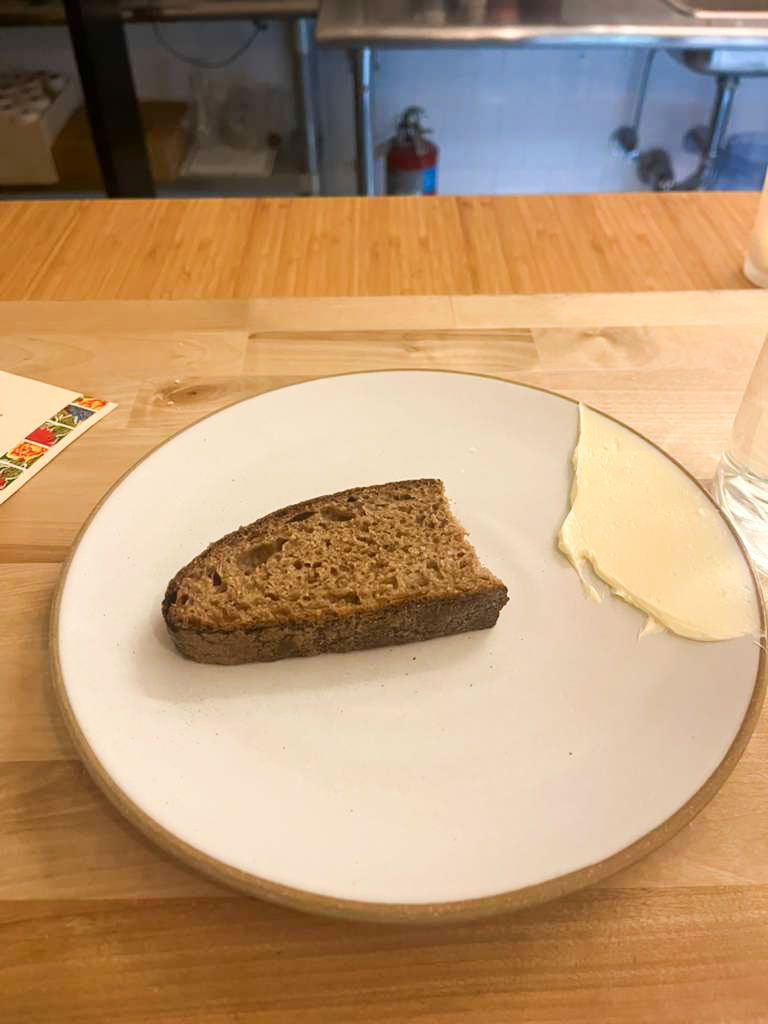
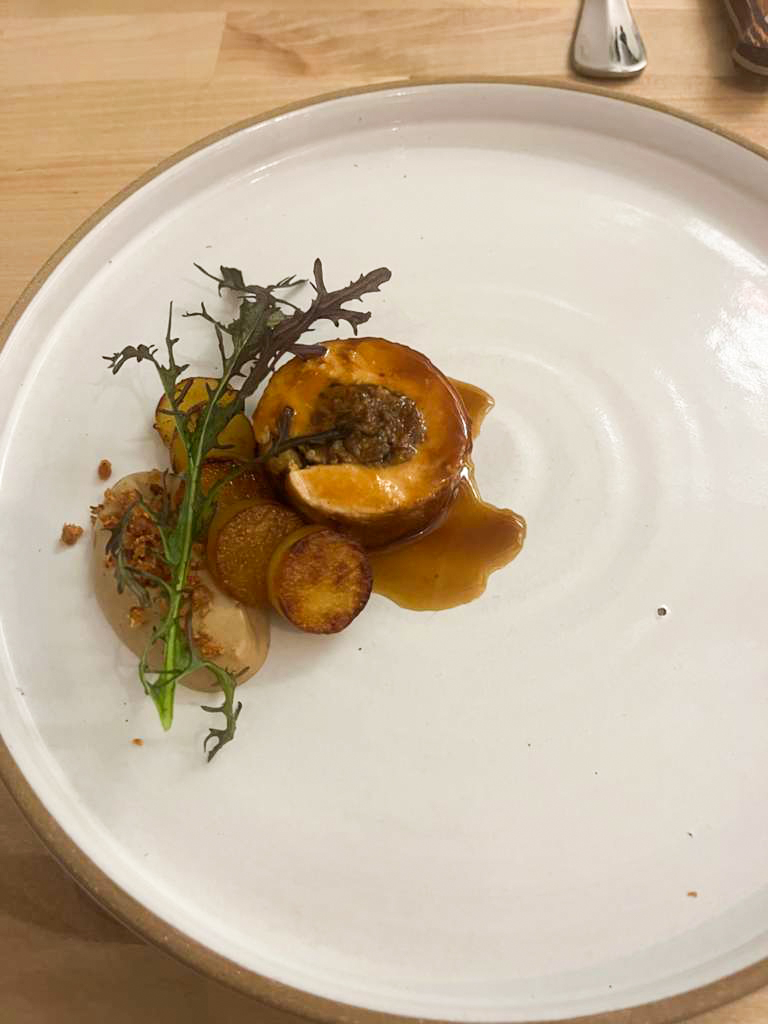
When I visited in December, the rotating tasting menu, which prominently reflected Bittmanisms of flexitarianism and minimalism, was centered around seasonal, locally grown produce. First, I was presented with a plated ball of salt that the servers instructed me to hit with a spoon until, like an egg, it cracked open. They then drizzled olive oil atop the shriveled apple which had been baked inside. The start of every subsequent course for the remainder of the night was announced by the whacking overture accompanying this Montessori-like sensorial exercise. Other courses included an intriguing but performative combination of carbonated grapes and smoked grape juice delivered in a miso soup bowl; simple, if underdressed, preparations of roasted vegetables; and one not particularly memorable chicken dish. The meal concluded, after two hours and eight courses, with a coconut black rice porridge. I didn’t care much for my ultra-ethically sourced, ethnically ambiguous food, though maybe as some of the staff I had spoken with suggested, that was beside the point.
I shared the room with roughly ten other parties of garden-variety Brooklyn types, seated among Japandi furniture, colorful patterned textiles, and warm lighting fixtures in a converted café. Friend groups, families, couples, and an occasional solo diner like myself were ostensibly united under one roof by a belief in food justice and, perhaps less explicitly, the optics and low-hanging afterglow of conscious consumption. Unsurprisingly, most of my fellow diners looked like they could be eating at any number of comparably priced upscale — albeit not prix fixe — restaurants in the city (the suggested mid-tier contribution is $45, which covers the full cost of the meal before tax and tip). Their presence here tonight was a statement.
Even at a very reasonable low end of $15, the project will need to seriously contend other barriers if it aspires to open its doors to all. Despite cultivating a welcoming and casual environment, the tasting menu format likely excludes the very populations most impacted by the food system inequities it’s attempting to correct for. After all, dining out, like any public activity, is a performance with a set of unspoken expectations of codes and behaviors; taste is undeniably a class signifier; and “good food” is not the exclusive purview of fine dining. (To its credit, the project hired an organizer to draw in local residents, including those living in the Jacob Riis and Lillian Wald public housing complexes across the street. It’s also trying to get in the room with Mayor Zohran Mamdani, who ran on a campaign promise to establish city-run grocery stores.) Still, any future iterations of the project would probably fare better dispensing altogether with the multi-course small plates.
Elsewhere in the city, public dinner parties run out of apartments are being advertised on Instagram, while cookbook clubs abound. FOOD — a reincarnation of an artist-run canteen originally conceived in 1971 by Gordon Matta-Clark and the Anarchitecture Group as part performance work, part artist cooperative — opened in Chinatown last fall. Intrigued by the concept, I visited with a friend but left disappointed when the “FOOD” in question turned out to be $25 fried rice sold on the backs/plates of its downtown art world affiliations.
Notably, all of these experiments in collective dining insist that where we eat, how we eat, and who we eat with are equally, if not more, important than the food itself (though good food, of course, never hurts). What once was understood as self-evident truth across generations and cultures is now being “rediscovered” and positioned as a radical alternative in the wake of foodie culture’s social media supercharged tyranny, which over the last decade has transformed eating for many, especially young urbanites, into a consumption-driven hobby, spectacle, even identity.
By far the evening’s highlights were conversations I shared with one of the servers, an affable comedian writing a TV pilot pitched as The Bear but about his dad’s soul food restaurant, and another diner, a worldly doctor and first-time father-to-be who lived a few blocks away. After my meal had concluded, I stayed a couple more hours until close, talking to these strangers. I left feeling grateful to live in a city where these kinds of encounters can be found in abundance by anyone with an open enough heart; where the ways that we live amongst one another are constantly being reexamined and reimagined, even when those efforts sometimes fall short of their aims.
The views expressed here are those of the authors only and do not reflect the position of The Architectural League of New York.
Dispatches from the New City Critics fellows: new, fearless, and diverse voices to challenge the ways we understand, design, and build our cities.