

Series
City Habitats
In cities around the world, animals put human-built infrastructures to new and unanticipated uses. Russell Jacobs chronicles the anthropogenic ecologies of New York's concrete jungle.
We are celebrating 15 years — and counting — of stories that are deeply researched and deeply felt, that build a historical record of what the city has been.

At the very western edge of upper Manhattan, a small pedestrian path follows the Hudson River for about 15 blocks, wedged between the Amtrak rail line on one side and the water on the other. It’s not very convenient to visit. The combination of the train tracks and the Henry Hudson Parkway blocks access from the east, and the path dead-ends to the south with the slab of schist that supports the Manhattan tower of the George Washington Bridge. The only official entrance or exit is at Dyckman Street, on the north end, which means that anyone who wants to walk this path has to enter and leave at the same point, or scramble over rocks, weeds, and chain-link fencing to exit near the Little Red Lighthouse.
As a result, there’s not much human activity here. Small groups of fishermen hang out in the warmer months, waiting for a bite as they put back beers and chat. The path runs through a tangle of mulberry and cottonwood, with a patchwork of plant communities running wild in the undergrowth. Along the way, small byways branch off through the vegetation towards the water, creating pockets isolated enough that, some years, elaborate waterfront homesteads spring up in the more hidden enclaves. I’ve seen small gardens, charcoal grills, and even, for a while, a jet ski ramp made of corrugated metal that allowed access from the river at high tide.
At a glance, this little stretch of forested shoreline looks like any other neglected corner of the city’s waterfront, but the isolation has also created a small oasis for wildlife: Every spring, the sleepy waterfront corridor crowds with Baltimore and orchard orioles (the latter only rarely breeding in Manhattan), as well as warbling vireos, cedar waxwings, and other birds. Tucked up against a desolate stretch of the Hudson, shielded by steel and concrete, these nesting birds have found conditions that allow them to succeed, improbably, in large numbers.
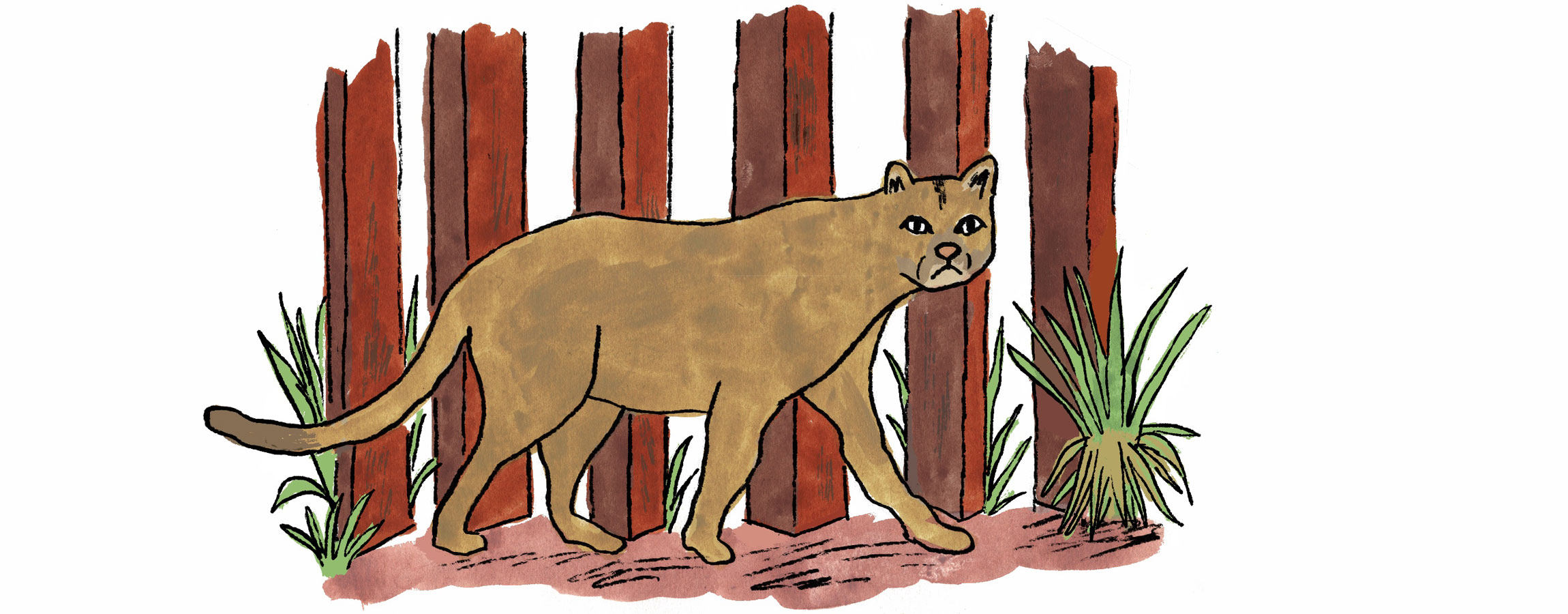
Ecologists generally agree that the segmentation of wildlife habitat by roads and other infrastructure is a serious problem for the animals and plants that inhabit a given area. Roads and railways box species out of essential territory and expose them to the perils of traffic; concrete, asphalt, and steel create noise and heat, serving as conduits for the spread of invasive species, especially through pristine wilderness. Along the hundreds of miles of the border wall between the US and Mexico, bears, mountain lions, and jaguars have greater difficulty finding food and water. But the ecologies of cities, intricate and compact as they are, can work differently in this respect.
Urban animals that live along road and rail are subject, of course, to the same risks these features bring to animals elsewhere. But here, where areas undisturbed by people are in short supply, that fragmentation can create a kind of protective buffer, turning a given patch of land into something of a safe haven from the stresses of urban environments. On this little stretch of the Hudson, I’ve found yellow warblers — stunning, bright birds that are normally fairly spread out — so densely packed that they spend much of the day fighting with their neighbors over territory. A decrease in human crowds and sounds, apparently, makes living in closer quarters with fellow birds more tolerable (if not entirely free of conflict).
There are habitat islands like this scattered all over New York City, I’ve realized: places that, because of the geometry of the streets, highways, trains, and other urban infrastructure, are cut off the map for our purposes, but all the more hospitable to wildlife as a result. Just as life plugs the holes created on the faces of buildings and bridges, and takes shelter in the textures below the piers, it flocks to fill the gaps we leave on urban maps, congregating in areas we’ve boxed ourselves out of through planning.
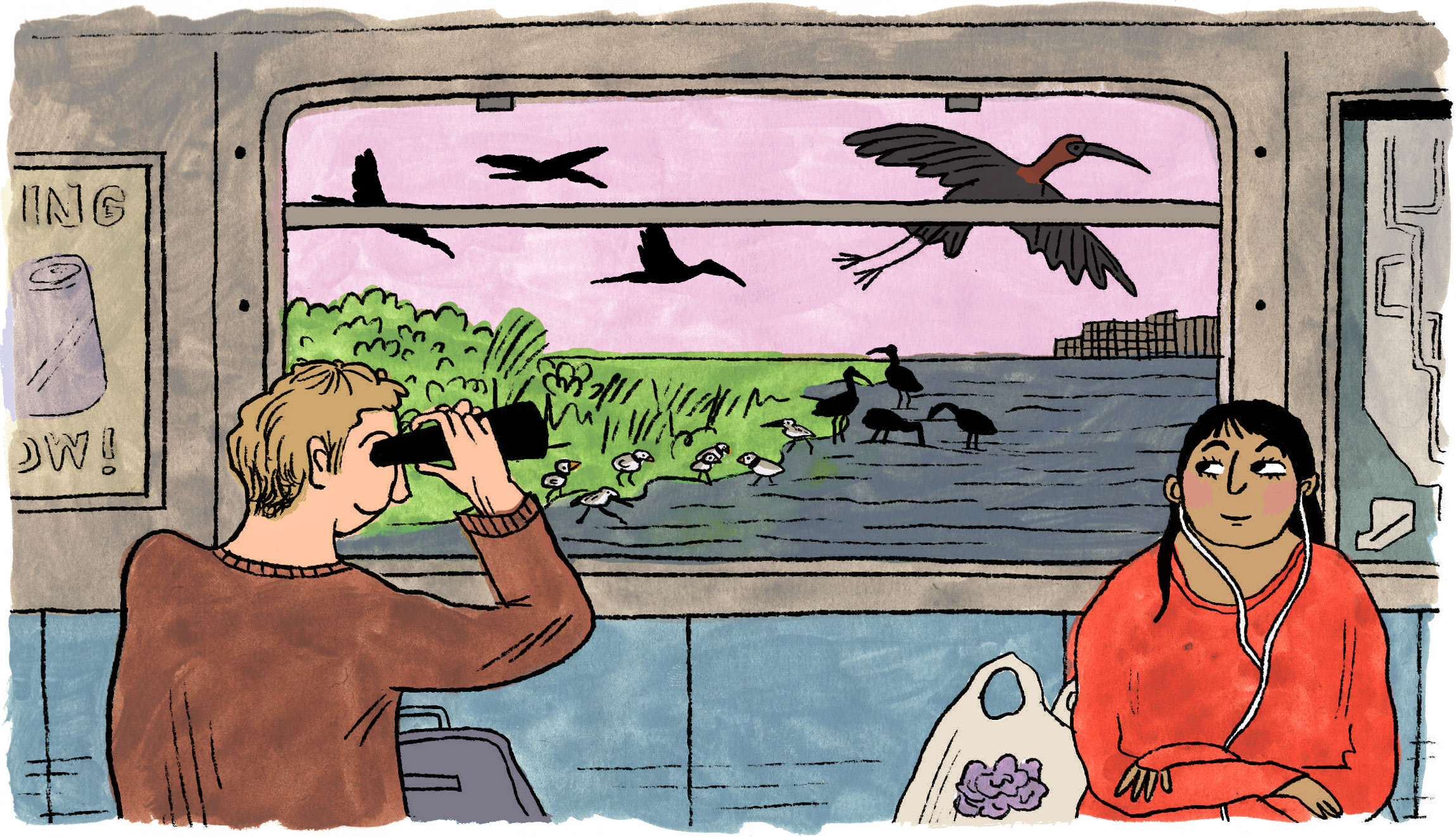
When I commuted to Rockaway for work each day, gliding on the A train out over Jamaica Bay, I got to spend a lot of time staring out at what became one of my favorite bits of incidentally protected habitat. Jamaica Bay Wildlife Refuge sat on the west side of the track, a world-famous birdwatching destination. But it was often on the east side, where a little sliver of inaccessible saltmarsh and tidal sandflats had accumulated along the train, that I saw the best birds.
In winter, snow geese crowded the shallows along the narrow shoreline there, while raptors called northern harriers glided over the thin bands of marsh in search of small mammals and birds. Later, as the weather got warm, I’d see great and snowy egrets hunting in the tidepools and flats, and sometimes spot small groups of glossy ibises: gorgeous chicken-sized birds with black-purple iridescence and long, deeply curved bills they use to probe for crabs in marshes. In late summer, as sandpipers and plovers were making frantic migrations down the coast (some on journeys from the upper reaches of the Arctic all the way down towards lower South America) I’d often ignore the windows looking out at the wildlife refuge altogether, keeping my eyes on the fragmented habitat for the duration of the trip. The relative shortage of soft, sandy shoreline that wasn’t overrun with people made the sand there all the more valuable to hungry, exhausted birds probing for food at the tide’s edge. I’d strain my eyes against the glass, binoculars at the ready, drawing the occasional odd look from fellow passengers as I watched hundreds of these little shorebirds flit by, scurrying around in their tiny patch of paradise. Even in ideal conditions, when they’re standing right in front of you, those tiny sandpipers can be difficult to identify, but occasionally I got lucky and a big flock would pass close to the moving train, keeping pace long enough that I could pull out the individual species.
The more I’ve thought about it, the more I’ve come to feel that this fragmentation of habitat is something of a basic principle of urban ecology: a fundamental aspect of how wildlife organizes itself and gets by in large, heavily built-up cities. Parks are, of course, constructed through an inverse of that fragmentation process — the green “gap” in the map deliberately conceived and embedded in the streetscape — but the basic principle is the same. They’re an oasis for plant and animal life cut out of the grid, sure, but also, in a different sense, a kind of ecological fortress, protected from other threats by asphalt, glass, and steel.
To this day, Central Park boasts one of the most impressive collections of elm trees found anywhere in the world, including, at the park’s famous Mall, one of the largest stands of American elms that remains within the species’ native range. The species is of particular value to wildlife, flowering and seeding early in spring to provide sustenance to a variety of insects and other animals looking for pollen and nectar, as well as the various birds and small mammals that feast on its soft, papery samaras. Often, before oak and maple trees have much to offer to wildlife, elm branches are busy with animals, from finches gleaning samaras from their bunches, to flies and bees roving for pollen and nectar, to the warblers and vireos there, in turn, to feed on the insects.
The persistence of those elms the face of Dutch elm disease — a fungal infection that arrived in the 1930s and wiped out the majority of these trees across North America in the subsequent decades — is due, no doubt, to the hard work of generations of arborists, who monitor and care for them, applying fungicide, occasionally culling trees that succumb to infection, and, more recently, sourcing resistant subspecies and cultivars. The trees are subjected constantly to the various threats of urban existence, from pollution, to increased manhandling, to the soil compaction caused by the park’s millions of annual visitors, but the city around them, the primary source of those risks, also provides a kind of service to the trees. The Art Deco and Gilded Age apartment buildings that flank the park like ramparts, and the sewers, subways, and electrical infrastructure that encase its soil below, have likely played a role in keeping the beetle that spreads the infection at bay. Tucked into a moat of pavement and asphalt, the Central Park elms have fared better than their cousins elsewhere across the country.
The views expressed here are those of the authors only and do not reflect the position of The Architectural League of New York.
In cities around the world, animals put human-built infrastructures to new and unanticipated uses. Russell Jacobs chronicles the anthropogenic ecologies of New York's concrete jungle.